
The story of Hawaii’s incorporation into the United States is a complex narrative rooted in economic ambition, political maneuvering, and cultural clashes. Far from a simple territorial acquisition, it involved the overthrow of a sovereign monarchy, a period of republican rule, and intense debates within American political circles. Understanding this pivotal moment in history requires a deep dive into the islands’ rich past, the escalating influence of foreign powers, and the dramatic events that ultimately sealed their destiny as the 50th state. This historical journey provides invaluable insights into the enduring legacy of colonialism and the multifaceted process through which nations expand their dominion.
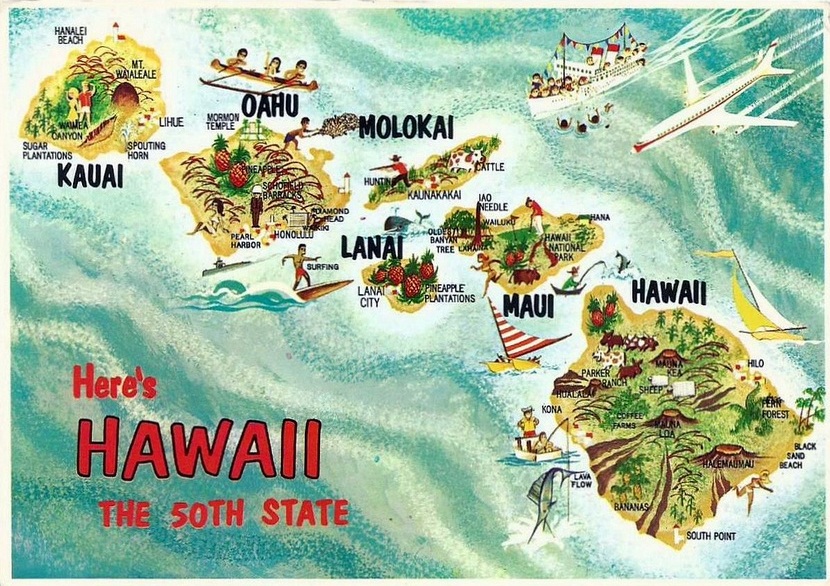
The Sovereign Kingdom of Hawaii
Before the mid-19th century, Hawaii was a fully independent and internationally recognized kingdom, boasting a vibrant culture and a sophisticated social structure. Its history dates back centuries before European contact, shaped by waves of migration and the unique environment of the Pacific.
Early Polynesian Settlement and European Contact
The Hawaiian Islands were first settled by Polynesian voyagers, likely from the Marquesas Islands, sometime between 300 and 800 CE. These master navigators brought with them their distinct culture, language, and social systems, establishing a thriving society sustained by sophisticated agricultural practices and aquaculture. For over a thousand years, the Hawaiians developed a complex spiritual and political landscape, divided into various chiefdoms.
European contact began in 1778 when British explorer Captain James Cook arrived. While his arrival initiated trade and introduced new technologies, it also brought devastating diseases against which the native population had no immunity, leading to a drastic decline in numbers. Despite this, the independent spirit of the islands remained strong, leading to the unification of the archipelago.
Unification Under King Kamehameha I
At the turn of the 19th century, the islands were consolidated under a single rule by King Kamehameha I. Through a combination of strategic warfare and diplomacy, he successfully brought all the major islands under his control by 1810, establishing the Kingdom of Hawaii. This marked a significant era of stability and prosperity, as the new kingdom developed its own system of governance, laws, and foreign policy.
The monarchs who followed King Kamehameha I continued to modernize the nation, embracing constitutional monarchy and engaging in international relations. The Hawaiian flag, featuring the Union Jack, symbolized its early ties with Britain, while treaties with various Western powers affirmed its sovereignty.
A Century of Independence and International Recognition
Throughout much of the 19th century, the Kingdom of Hawaii maintained its independence, a remarkable feat given the era of aggressive colonialism. It exchanged ambassadors with major world powers, including the United States, Great Britain, and France. Its neutrality was generally respected, and it played a crucial role as a refueling and provisioning stop for whaling ships and traders traversing the Pacific. However, this era of recognized sovereignty would gradually erode under increasing external pressures, particularly from the burgeoning United States.
Growing American Influence and Economic Ties
The mid-19th century witnessed a significant shift in Hawaii’s geopolitical landscape, as American economic and cultural influence began to overshadow all others. This growing presence laid the groundwork for future political ambitions.
Missionary Arrivals and Cultural Shifts
Beginning in the 1820s, American Protestant missionaries arrived in Hawaii, primarily from New England. While their stated goal was religious conversion, they also brought Western education, legal systems, and cultural norms that profoundly impacted Hawaiian society. Many missionary descendants became prominent landowners, businessmen, and political advisors within the kingdom, forming a powerful, influential, and increasingly vocal foreign elite. Their push for land privatization and Western commercial practices directly challenged traditional Hawaiian communal land tenure systems, paving the way for large-scale agricultural enterprises.
The Rise of Sugar Plantations and American Capital
The fertile volcanic soil and favorable climate of Hawaii proved ideal for growing sugarcane. With the influx of American capital and entrepreneurial spirit, sugar plantations rapidly expanded in the mid to late 19th century, becoming the driving force of the Hawaiian economy. These plantations were largely owned and operated by a small group of American and European businessmen, many of whom were descendants of the early missionaries. The demand for labor led to significant immigration from China, Japan, the Philippines, and Portugal, creating a diverse, multi-ethnic society, but also establishing a socio-economic hierarchy where the native Hawaiians often found themselves marginalized.
Reciprocity Treaty of 1875 and Pearl Harbor
The economic ties deepened with the signing of the Reciprocity Treaty of 1875 between the Kingdom of Hawaii and the United States. This treaty allowed Hawaiian sugar to enter the U.S. market duty-free, providing a massive boost to the sugar industry and further integrating Hawaii’s economy with that of the mainland. In exchange for these lucrative trade benefits, the United States gained exclusive rights to establish a naval coaling and repair station at Pearl Harbor on the island of Oahu. This provision was particularly significant, marking the first time the United States secured a permanent military foothold in the Pacific, a strategic asset that would prove invaluable in later decades. The treaty, while economically beneficial, clearly demonstrated American strategic interests in the islands.
The Overthrow of the Monarchy
The increasing influence of American businessmen and planters, coupled with their desire for political control to protect their economic interests, ultimately led to the downfall of the Hawaiian monarchy.
The Bayonet Constitution of 1887
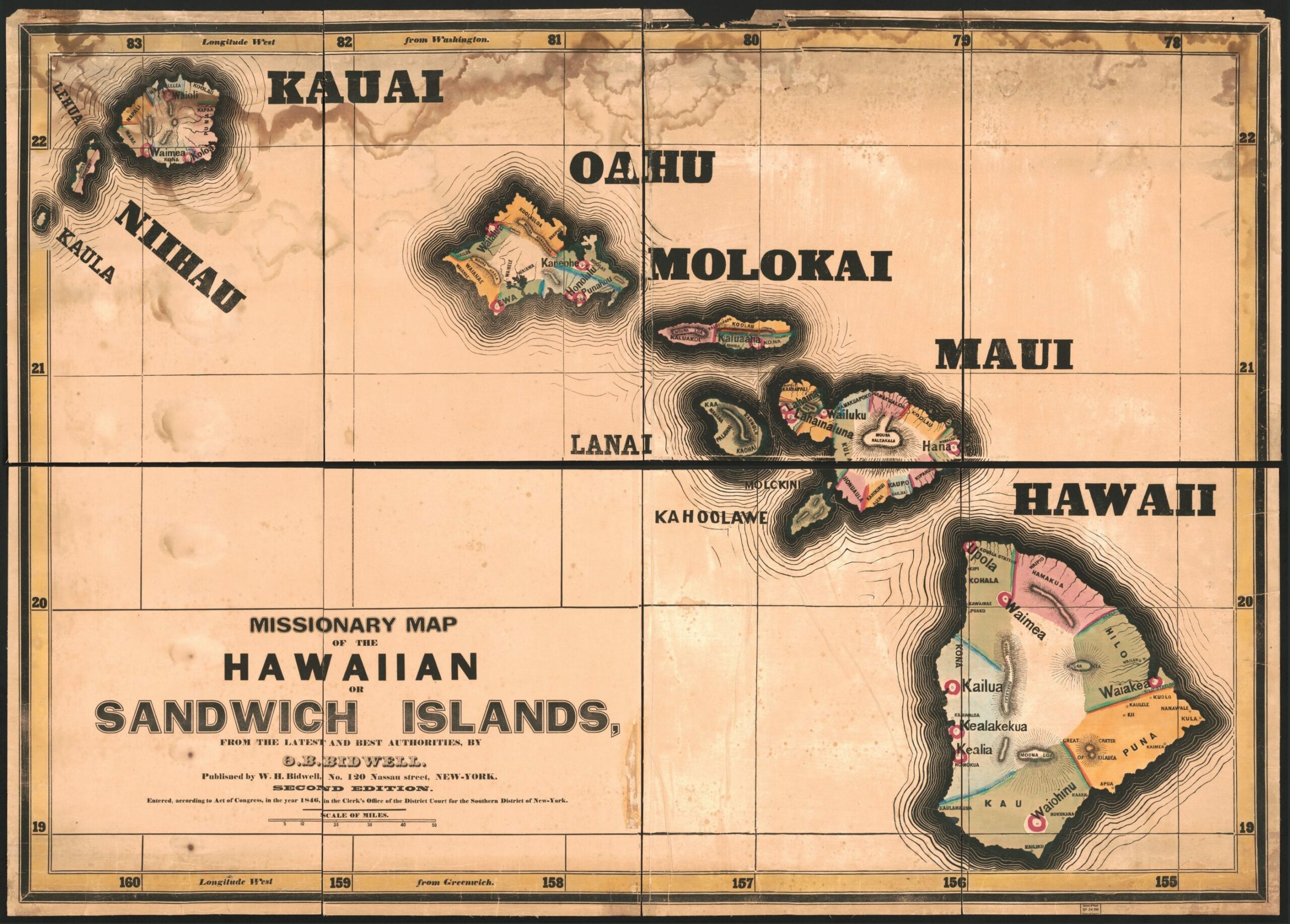
By the late 1880s, the power dynamic within Hawaii was severely skewed. King Kalākaua, a progressive monarch, faced immense pressure from a group of largely American and European businessmen and planters known as the Hawaiian League. In 1887, this group, with the backing of an armed militia, forced the king to sign a new constitution. Known as the “Bayonet Constitution,” this document drastically curtailed the monarch’s power, effectively making him a figurehead. More critically, it imposed property qualifications for voting that disenfranchised most native Hawaiians and Asian immigrants, while granting voting rights to non-citizen American and European residents, solidifying the political power of the foreign elite.
Queen Liliʻuokalani and Her Efforts to Restore Power
Upon her ascension to the throne in 1891 after the death of her brother, Queen Liliʻuokalani immediately recognized the injustices of the Bayonet Constitution and vowed to restore power to the monarchy and the native Hawaiian people. She proposed a new constitution that would revoke the provisions of the 1887 document, re-establish the monarch’s authority, and restore suffrage to her subjects. Her efforts to enact these reforms were met with fierce resistance from the pro-annexationist elements.
The 1893 Coup and the Provisional Government
The queen’s attempts to promulgate a new constitution became the catalyst for a coup. On January 17, 1893, a group of thirteen non-native conspirators, largely American and European residents, organized as the “Committee of Safety,” initiated an overthrow of the monarchy. With the crucial and controversial support of U.S. Minister John L. Stevens and the landing of U.S. Marines from the USS Boston, the monarchy was overthrown without bloodshed. Queen Liliʻuokalani, to avoid further violence and bloodshed, yielded her authority under protest, appealing to the United States for justice. The Committee of Safety then established a Provisional Government, immediately seeking annexation by the United States.
The Path to Annexation
Following the coup, the path to annexation was neither smooth nor immediate. It involved significant political debate and shifts in American foreign policy.
President Cleveland’s Opposition and the Blount Report
Initially, the annexation efforts faced a major hurdle in President Grover Cleveland. A staunch anti-imperialist, President Cleveland was deeply troubled by the circumstances of the overthrow. He launched an investigation, led by James H. Blount, into the coup. The subsequent “Blount Report” concluded that the overthrow was an illegal act carried out with the complicity of Minister Stevens and the presence of U.S. troops. President Cleveland condemned the actions, withdrew the annexation treaty from the Senate, and unsuccessfully attempted to restore Queen Liliʻuokalani to her throne. His efforts were thwarted by the Provisional Government, which refused to relinquish power.
The Republic of Hawaii
With President Cleveland’s administration unwilling to pursue annexation, the Provisional Government declared Hawaii a republic in 1894, establishing the Republic of Hawaii with Sanford B. Dole as its president. This independent republic, though recognized by the United States and other nations, was largely controlled by the same small group of American and European businessmen who orchestrated the coup. They continued to lobby vigorously for annexation, believing it was the only way to secure their economic interests and political stability in the long term.
The Spanish-American War and Manifest Destiny
The political tide turned dramatically with the outbreak of the Spanish-American War in 1898. The war highlighted Hawaii’s strategic military importance as a mid-Pacific coaling station and naval base, essential for projected U.S. operations in the Philippines and Asia. The concept of “Manifest Destiny,” which fueled American expansion across the continent, now extended to overseas territories. Pro-annexationists argued that acquiring Hawaii was a military necessity and a natural extension of American influence in the Pacific. This shift in public and political opinion created the perfect window for annexation.
Hawaii’s Incorporation into the United States
With renewed political will and a strategic imperative, the formal incorporation of Hawaii into the United States became inevitable.
The Newlands Resolution of 1898
Despite the moral concerns raised by President Cleveland years earlier, the push for annexation intensified under President William McKinley. Unable to achieve a two-thirds majority in the Senate required for a treaty, annexationists pursued a different legislative route: a joint resolution of Congress. This bypass strategy allowed for approval by a simple majority in both the House and Senate. On July 7, 1898, President McKinley signed the “Newlands Resolution,” formally annexing Hawaii as a territory of the United States. The transfer of sovereignty officially took place on August 12, 1898, with the Hawaiian flag lowered and the American flag raised over ʻIolani Palace in Honolulu. This act concluded the century-long struggle for control of the islands, extinguishing the independence of the Kingdom of Hawaii.
From Territory to Statehood
Following annexation, Hawaii was administered as the Territory of Hawaii. Over the next six decades, the territory experienced significant economic growth and cultural integration. Its strategic importance was further underscored by events like the attack on Pearl Harbor in 1941, which propelled the United States into World War II. Despite persistent calls for statehood from its diverse population, some mainland politicians harbored concerns about Hawaii’s racial demographics and its distance from the continental U.S.. However, by the mid-20th century, the momentum for statehood became irresistible. On August 21, 1959, Hawaii officially became the 50th state of the United States, marking the culmination of a process that began with early American missionary arrivals and economic expansion.

The Enduring Legacy and Contemporary Perspective
The history of how the United States gained Hawaii remains a subject of considerable discussion and debate. For many native Hawaiians, the annexation is viewed as an illegal act of colonization, a profound loss of sovereignty, and a cultural wound that continues to resonate today. Efforts to reclaim cultural identity, preserve the Hawaiian language, and address historical injustices are ongoing.
From a broader historical perspective, Hawaii’s annexation exemplifies the era of American expansionism at the turn of the 20th century, alongside the acquisitions of Puerto Rico and Guam. It highlights the complex interplay of economic interests, military strategy, racial attitudes, and political ideologies that shaped the United States’s role on the global stage. While Hawaii is now a beloved state, its history serves as a powerful reminder of the intricate and often contentious path of nation-building and the enduring quest for self-determination. The majestic beauty of the islands today stands as a testament to its vibrant past, intertwining indigenous heritage with the profound impact of American influence.
LifeOutOfTheBox is a participant in the Amazon Services LLC Associates Program, an affiliate advertising program designed to provide a means for sites to earn advertising fees by advertising and linking to Amazon.com. Amazon, the Amazon logo, AmazonSupply, and the AmazonSupply logo are trademarks of Amazon.com, Inc. or its affiliates. As an Amazon Associate we earn affiliate commissions from qualifying purchases.