
For many travelers planning a voyage to the middle of the Pacific Ocean, the imagery of Hawaii is often defined by its emerald peaks, golden sands, and vibrant marine life. Among the many creatures that inhabit the crystal-clear waters of the archipelago, one particular fish stands out not just for its striking colors, but for its incredibly long and melodic name: the Humuhumunukunukuapua’a. As the official state fish of Hawaii, this species is a cornerstone of Polynesian culture and a must-see for anyone participating in the local tourism scene. Understanding the history, biology, and cultural weight of this fish enhances any visit to the islands, offering a deeper connection to the natural heritage of the United States‘ only island state.
The Cultural Significance and History of the Humuhumunukunukuapua’a
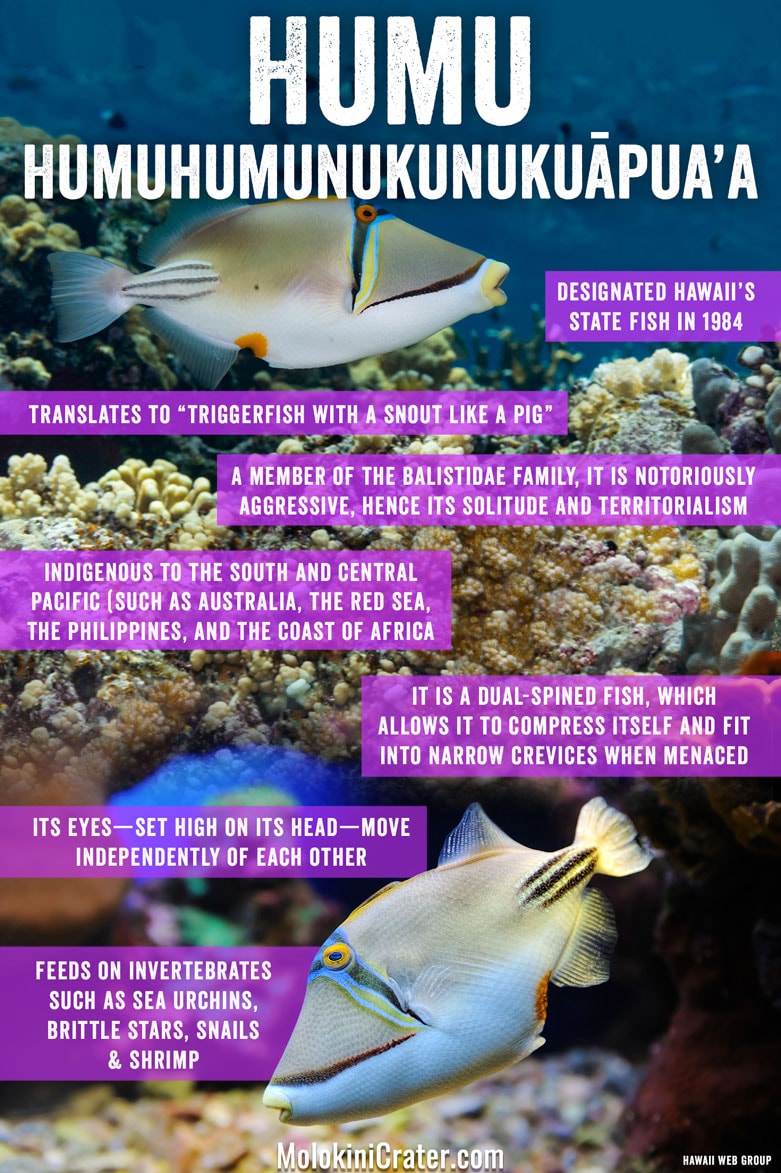
The name Humuhumunukunukuapua’a is often one of the first tongue-twisters visitors learn when they arrive in Honolulu. While it may seem daunting to pronounce, the name is deeply descriptive and rooted in the Native Hawaiian language. To understand the fish, one must first understand its name, which translates roughly to “triggerfish with a snout like a pig.” This nomenclature is not accidental; it refers to the fish’s ability to make a grunting sound when it is stressed or captured, remarkably similar to the sounds of a terrestrial swine.
The Legend of Kamapua’a
In Hawaiian Mythology, the Humuhumunukunukuapua’a is linked to the powerful demigod Kamapua’a. According to legend, Kamapua’a was a shape-shifting deity who could take the form of a man, a giant hog, or a fish. His turbulent relationship with Pele, the goddess of fire and volcanoes, is a foundational story in local culture. When Pele would chase Kamapua’a with her molten lava, he would transform into the Humuhumunukunukuapua’a to hide in the cool depths of the ocean. The fish’s thick skin and ability to wedge itself into rocky crevices were said to be gifts that allowed the deity to survive the goddess’s heat.
The Path to Official State Status
Interestingly, the Humuhumunukunukuapua’a was not always the permanent state fish. It was first chosen in 1984 through a public survey and legislative action, but the law was written with an expiration date. For several years in the late 1990s and early 2000s, Hawaii technically had no official state fish. It wasn’t until a groundswell of support from schoolchildren and local conservationists reached the desk of Governor Linda Lingle that the status was made permanent in 2006. Today, it remains a symbol of the state’s unique biodiversity and a point of pride for residents across Oahu, Maui, and the Big Island.
Physical Characteristics and Behavioral Traits
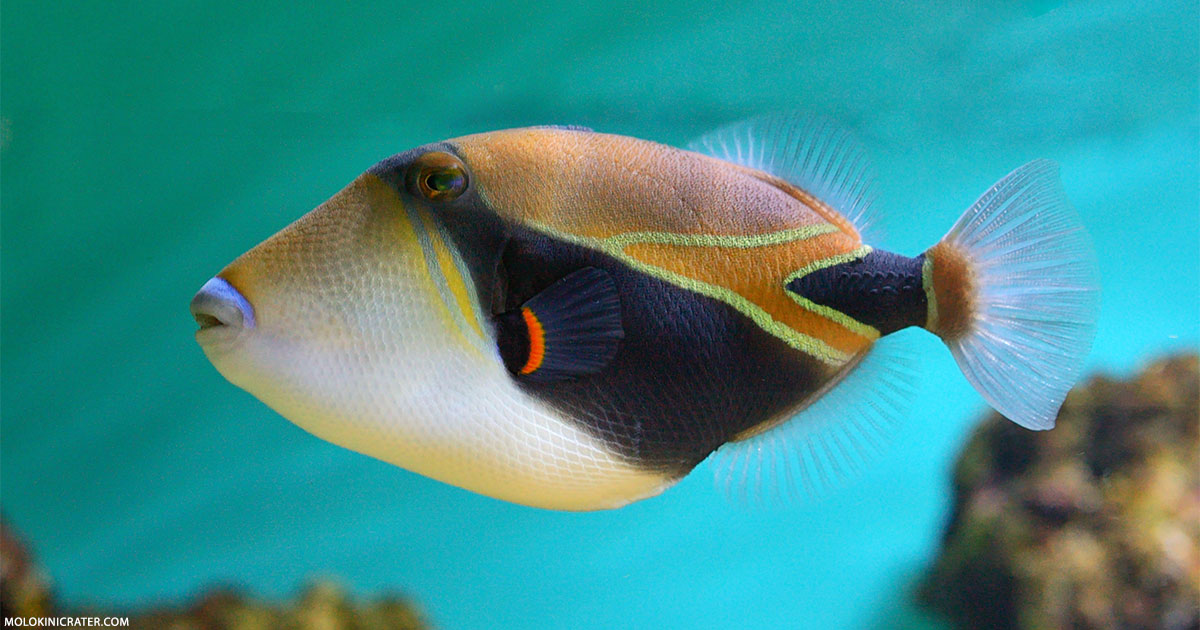
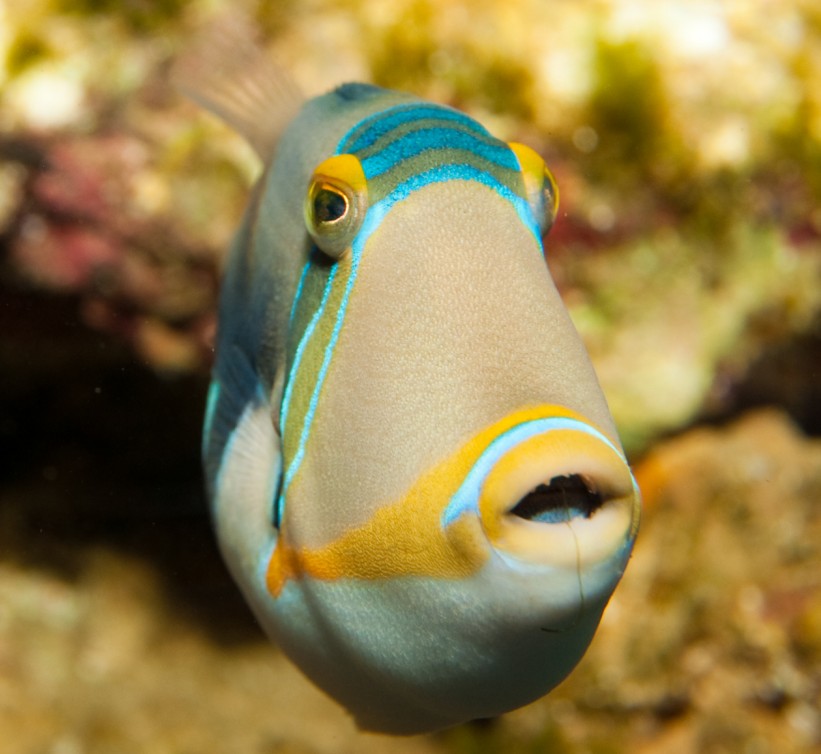
The Humuhumunukunukuapua’a, or the Rectangular Triggerfish (Rhinecanthus rectangulus), is easily identifiable by its unique geometric patterns. It features a tan body with distinctive black and yellow stripes, and a blue “mustache” across its snout. For tourists snorkeling for the first time, spotting one is often the highlight of their excursion, as the fish’s vibrant palette seems to mimic the very colors of a Hawaiian sunset.
Defensive Mechanisms and Survival
As a member of the triggerfish family, this species possesses a fascinating defense mechanism. It has two dorsal spines; the first is large and can be locked into an upright position by the second, smaller “trigger” spine. When threatened by a predator or heavy surf, the fish swims into a small hole in the coral reef and flips up its spine, wedging itself so firmly that it is nearly impossible to remove. This behavior is a primary reason why the fish thrives in the shallow, high-energy reef environments that characterize the Pacific Ocean surrounding the islands.
Diet and Interaction with the Reef
The Humuhumunukunukuapua’a is a carnivorous feeder, primarily consuming small crustaceans, snails, and sea urchins. Its powerful jaws and sharp teeth are capable of crushing shells that other fish cannot penetrate. From a tourism perspective, watching these fish “hunt” along the sandy floor is an engaging activity. They often blow jets of water into the sand to uncover hidden prey, a behavior that showcases their intelligence and specialized adaptation to the reef ecosystem.
Best Destinations to Spot the State Fish
For those visiting the islands with the specific goal of seeing the state fish in its natural habitat, certain locations offer significantly higher success rates. The fish prefers shallow outer reef flats, making it highly accessible to snorkelers and shore divers.
Snorkeling at Hanauma Bay, Oahu
Hanauma Bay is perhaps the most famous snorkeling destination in the world. Located on the southeast coast of Oahu, this volcanic crater turned marine sanctuary is home to hundreds of species of tropical fish. Because the bay is a protected area, the marine life—including the Humuhumunukunukuapua’a—is relatively unafraid of humans. Visitors can often find the state fish darting between coral heads near the “Keyhole” or the outer edges of the reef.
Diving at Molokini Crater, Maui
For travelers staying in Kihei or Wailea, a boat trip to Molokini Crater is essential. This crescent-shaped islet off the coast of Maui offers some of the clearest water in the world, with visibility often exceeding 100 feet. The interior of the crater provides a calm environment where the Humuhumunukunukuapua’a can be seen patrolling its territory. While exploring the crater, tourists might also catch glimpses of the West Maui Mountains in the distance, providing a stunning backdrop to their aquatic adventure.
The Big Island’s Kealakekua Bay
On the Big Island, Kealakekua Bay offers a pristine underwater environment that is historically significant as the site of the Captain Cook Monument. The steep underwater drop-offs and lush coral gardens here are a favorite haunt of the triggerfish. Because the bay is somewhat remote, the fish here tend to be larger and the coral more intact, providing a premium experience for those looking to escape the crowds of Kailua-Kona.
Responsible Tourism and Marine Conservation
While the Humuhumunukunukuapua’a is not currently listed as an endangered species, its health is inextricably linked to the health of the coral reefs. As tourism to Hawaii continues to grow, the importance of “Pono” (doing what is right) in the ocean becomes paramount.
The Role of the Hawaii Division of Aquatic Resources
The Hawaii Division of Aquatic Resources works tirelessly to manage the state’s marine life. They implement seasonal fishing bans and manage the Marine Life Conservation Districts that protect the state fish. Tourists are encouraged to visit the Polynesian Cultural Center or the Waikiki Aquarium to learn more about the scientific and cultural efforts being made to preserve these species for future generations.
Tips for Reef-Safe Exploration
When heading out to spots like Poipu Beach on Kauai or Tunnels Beach on the North Shore, there are several steps travelers can take to protect the state fish:
- Wear Reef-Safe Sunscreen: Chemical sunscreens containing oxybenzone can bleach coral reefs, destroying the habitat of the Humuhumunukunukuapua’a.
- Observe from a Distance: Triggerfish can be territorial. While they aren’t dangerous to humans, getting too close can cause them stress and interrupt their natural feeding patterns.
- Never Touch the Coral: The reef is a living organism. Stepping on coral can kill colonies that have taken decades to grow, removing the “homes” that the state fish relies on for protection.
Why the State Fish Matters to Your Hawaii Experience
Beyond being a trivia fact, the Humuhumunukunukuapua’a represents the spirit of Hawaii. It is a creature that is resilient, beautiful, and deeply tied to the land and sea. When you spot one while snorkeling near Diamond Head or along the shores of Waikiki Beach, you aren’t just seeing a fish; you are witnessing a piece of living history.
For the modern traveler, understanding the state fish is a gateway into the broader world of Hawaiian ecology and tradition. It encourages us to look closer at the tide pools of Lanai or the rugged coastlines of Molokai. Whether you are staying at a luxury resort in Kapalua or backpacking through Kauai, the presence of the Humuhumunukunukuapua’a is a constant reminder of the vibrant, fragile, and magnificent world that exists just beneath the surface of the waves. By respecting this iconic species and its environment, we ensure that the “triggerfish with a snout like a pig” remains a thriving symbol of Hawaii for centuries to come.
LifeOutOfTheBox is a participant in the Amazon Services LLC Associates Program, an affiliate advertising program designed to provide a means for sites to earn advertising fees by advertising and linking to Amazon.com. Amazon, the Amazon logo, AmazonSupply, and the AmazonSupply logo are trademarks of Amazon.com, Inc. or its affiliates. As an Amazon Associate we earn affiliate commissions from qualifying purchases.