
Stepping off a plane in Honolulu, visitors are immediately greeted by a sensory experience unlike any other in the United States. The scent of plumeria, the humidity of the Pacific Ocean, and the rhythmic sounds of a unique linguistic landscape define the Aloha State. For many travelers, the question of what language is spoken in Hawaii seems simple at first—after all, it is the 50th state of the American union. However, the reality is far more complex and culturally rich. Hawaii is the only state in the country with two official languages, and it is also home to a vibrant, unofficial third language that serves as the heartbeat of local identity.
Understanding the linguistic nuances of the islands is more than just an academic exercise; it is an essential part of responsible tourism. Whether you are trekking through the lush valleys of Kauai, attending a traditional luau in Maui, or exploring the historic sites of Oahu, knowing how the locals communicate offers a deeper connection to the land and its people. This guide explores the official, indigenous, and colloquial languages that make the Hawaiian Islands a fascinating melting pot of communication.
The Two Official Languages: English and Hawaiian
In 1978, the State of Hawaii took a historic step by amending its constitution to recognize two official languages: English and Hawaiian. This move was a cornerstone of the Hawaiian Renaissance, a period of renewed interest in the indigenous culture, music, and language of the islands.
The Dominance and Role of English
English is the primary language used for government, business, education, and daily life across all the islands, including Lanai and Molokai. From the moment you check into a resort in Waikiki to your interactions with tour guides at Pearl Harbor, English will be the standard medium. However, the English spoken here often carries a “local” flavor, influenced by the cadence and vocabulary of the other languages present in the environment. Even in the most formal settings, it is common to hear Hawaiian words integrated into sentences, a testament to the enduring influence of the indigenous tongue.
Olelo Hawaii: The Indigenous Language
Olelo Hawaii, or the Hawaiian Language, is a Polynesian tongue closely related to Tahitian and Maori. At one point in the late 19th century, it was a thriving language with high literacy rates. However, following the overthrow of the Kingdom of Hawaii and the subsequent annexation by the United States, the language was banned in schools and discouraged in public life.
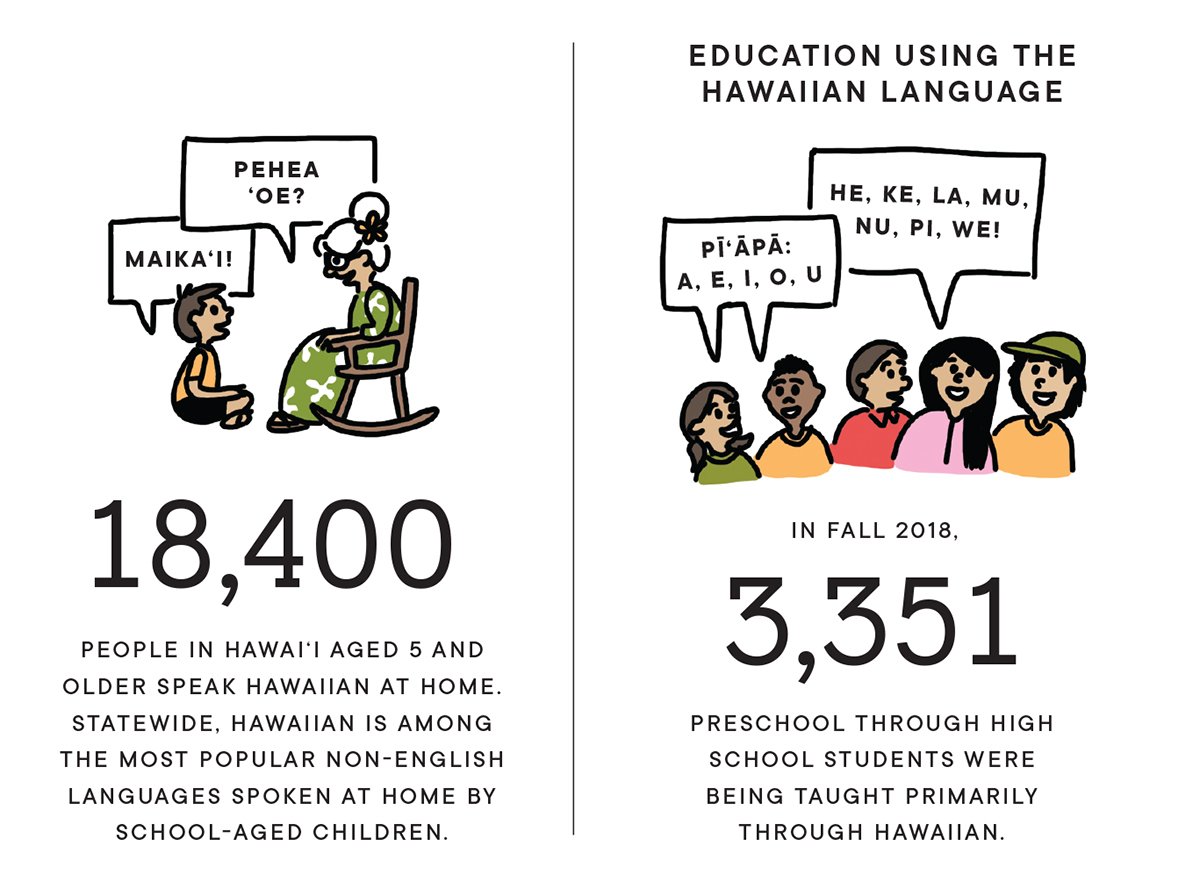
Today, Olelo Hawaii is experiencing a powerful revival. While only a small percentage of the population speaks it fluently as their primary language—most notably on the “Forbidden Island” of Niihau—it is visible everywhere. You will see it on street signs, in government documents, and at cultural institutions like the Bishop Museum and Iolani Palace. For the visitor, hearing the melodic vowels of Hawaiian during a greeting or a hula performance is a reminder of the islands’ sovereign history and indigenous resilience.
Hawaii Creole English: The Language of the People
While English and Hawaiian are the official designations, the language you will most likely overhear at a local “plate lunch” spot or on the beaches of the North Shore is Hawaii Creole English, commonly known as Pidgin.
The Plantation Roots of Pidgin
The origins of Pidgin are rooted in the multi-ethnic history of Hawaii during the 19th and early 20th centuries. As the sugar and pineapple industries expanded, thousands of immigrant laborers arrived from China, Portugal, Japan, the Philippines, and Korea. Working side-by-side in the fields, these workers needed a common way to communicate.
They blended elements of their native tongues with English and Hawaiian to create a functional “pidgin.” Over generations, this evolved into a “creole,” a fully formed language with its own grammatical rules and distinct vocabulary. For many residents, Pidgin is a source of local pride—it signifies that someone is “from here” and shares the collective history of the islands.
Understanding the Nuance of Pidgin for Travelers
For a tourist, Pidgin can sometimes be difficult to follow. It uses a different rhythm and shortens many English words. For example, you might hear “Brah” (brother/friend), “Grindz” (delicious food), or “Choke” (a large amount).
While it is fascinating to listen to, visitors should be cautious about trying to speak Pidgin themselves. Unless you have lived in Hawaii for a long time, attempting to mimic the dialect can come across as mocking or disrespectful. Instead, appreciate it as a living cultural artifact of the Pacific melting pot. Understanding the context of Pidgin helps travelers realize that Hawaii is not just a beach destination, but a complex society with a deep immigrant history.
Language as a Window into Local Culture and Tourism

Language in Hawaii is deeply tied to the concept of “Malama Aina” (caring for the land). For tourists, learning a few key terms and understanding how to navigate the linguistic landscape is a sign of respect.
Essential Words Every Visitor Should Know
There are several Hawaiian words that are so ubiquitous that not knowing them might lead to confusion.
- Aloha: While famously used for “hello” and “goodbye,” it carries a deeper meaning of love, peace, and compassion.
- Mahalo: This means “thank you” and is seen on everything from trash cans to high-end menus at the Royal Hawaiian Hotel.
- Ohana: Meaning “family,” this term extends beyond blood relatives to include close friends and the community.
- Mauka and Makai: These are essential for navigation. “Mauka” means toward the mountains, and “Makai” means toward the ocean. In a place like Honolulu, directions are rarely given as “North” or “South,” but rather by these landmarks.
- Pono: Doing what is right or just.
Respectful Communication at Landmarks and Sacred Sites
When visiting landmarks like Hanauma Bay or the Volcanoes National Park on the Big Island, you will encounter signs that use traditional Hawaiian names. Many of these sites are “Wahi Pana” (sacred places). Using the correct names for these locations, rather than just their English nicknames, shows an appreciation for the cultural significance of the land.
Furthermore, when visiting sites like the Polynesian Cultural Center or attending a ceremony at Puuhonua o Honaunau National Historical Park, pay attention to the pronunciation. Hawaiian is a phonetic language where every vowel is pronounced. Mastering the basics—like knowing that “W” is often pronounced as a “V” sound—can greatly enhance your interactions with local guides and residents.
The Global Influence: Asian and European Linguistic Roots
Because of its central location in the Pacific Ocean, Hawaii has always been a crossroads for different nations. This is reflected in the various languages spoken by the many ethnic groups that call the islands home.
The Impact of Japan and East Asia
Japan has a massive influence on the tourism and linguistic landscape of Hawaii. Due to the high number of Japanese tourists and the large local Japanese-American population, it is very common to see bilingual signs in English and Japanese, particularly in shopping districts like Ala Moana Center. Many hotel staff members in Waikiki are fluent in Japanese, and the local vocabulary is peppered with Japanese loanwords. For example, “Bento” (boxed lunch) and “Shoyu” (soy sauce) are standard terms used by everyone in Hawaii.
Portuguese and Filipino Contributions
The Portuguese influence is perhaps most famously felt through the “Ukulele” (a word of Hawaiian origin for an instrument inspired by Portuguese lutes) and food terms like “Malasada” (a fried doughnut). Similarly, the large Filipino community has introduced terms and dialects like Ilocano and Tagalog into the mix, further diversifying the sounds you might hear in local markets or community centers in Kalihi.
Preserving a Linguistic Legacy for the Future
The linguistic diversity of Hawaii is not just a relic of the past; it is a vital part of its future. For the tourism industry, the preservation of the Hawaiian Language is seen as a way to maintain the authenticity of the “visitor experience.”
Education and Immersion Programs
Across the islands, from Hilo to Lihue, there is a growing movement of immersion schools where children are taught primarily in Olelo Hawaii. The University of Hawaii also offers extensive programs in Hawaiian studies and language. These efforts ensure that the indigenous tongue remains a living, breathing part of the community rather than something confined to history books.
How Travelers Can Support Cultural Integrity
As a traveler, you play a role in this preservation. By showing interest in the correct pronunciation of place names like Kapiolani Park or Diamond Head (known locally as Leahi), you signal that you value the culture beyond the surface-level attractions. Supporting local businesses that emphasize Hawaiian culture, attending festivals like the Merrie Monarch Festival, and reading local literature are excellent ways to engage with the linguistic heart of Hawaii.
In conclusion, while English will get you through your vacation, it is the blend of Olelo Hawaii and Pidgin that provides the true soundtrack to the islands. Hawaii is a place where language is more than just communication; it is a reflection of history, a tool for cultural survival, and a bridge between the diverse people who inhabit these beautiful islands in the middle of the Pacific. When you visit, listen closely—the stories of Hawaii are written in every word spoken under its tropical sun.
LifeOutOfTheBox is a participant in the Amazon Services LLC Associates Program, an affiliate advertising program designed to provide a means for sites to earn advertising fees by advertising and linking to Amazon.com. Amazon, the Amazon logo, AmazonSupply, and the AmazonSupply logo are trademarks of Amazon.com, Inc. or its affiliates. As an Amazon Associate we earn affiliate commissions from qualifying purchases.