
The island of Maui, often referred to as the Valley Isle, is world-renowned for its dramatic landscapes, lush rainforests, and, perhaps most iconically, its celestial displays. For travelers visiting Hawaii, the timing of the sunset is more than just a logistical detail; it is a daily event that dictates the rhythm of evening activities, from beachfront dining to high-altitude excursions. Understanding the nuances of the solar cycle in the Central Pacific is essential for anyone looking to capture the perfect photograph or simply soak in the fleeting “green flash” over the Pacific Ocean.
Understanding the Seasonal Rhythms of Maui Sunsets
Because Hawaii is located relatively close to the Equator, the variation in daylight hours throughout the year is much less dramatic than in the mainland United States or Europe. However, subtle shifts occur that can impact your travel itinerary.
Summer Solstice and Long Evenings
During the peak of summer, specifically around the summer solstice in June, the sun sets at its latest point in Maui. At this time, you can expect the sun to dip below the horizon at approximately 7:10 PM to 7:15 PM. These extended daylight hours are ideal for those exploring the Road to Hana, as they provide a safer window for the return journey before darkness settles over the winding coastal cliffs.
Winter Solstice and Early Twilights
Conversely, during the winter months, particularly in December, the sunset occurs much earlier. The sun typically vanishes between 5:45 PM and 5:50 PM. This earlier shift means that “Golden Hour”—that magical period of soft, warm light highly coveted by photographers—begins as early as 4:45 PM. Travelers staying in Wailea or Lahaina should plan their dinner reservations accordingly if they wish to enjoy a cocktail while the sky transitions through hues of violet and orange.
The Speed of Tropical Sunsets
One phenomenon many visitors from northern latitudes notice is how quickly the sun appears to set in Hawaii. Due to the angle of the sun’s path relative to the horizon near the tropics, the transition from daylight to dusk is rapid. Once the sun touches the horizon, it often disappears entirely within minutes. This makes timing your arrival at a viewpoint critical; arriving even ten minutes late can mean missing the most vibrant colors of the day.
Prime Viewing Locations Across the Valley Isle
Choosing where to watch the sunset is just as important as knowing what time it happens. The geography of Maui offers diverse microclimates and vantage points, each providing a unique perspective on the horizon.
West Maui: The Classic Coastal View
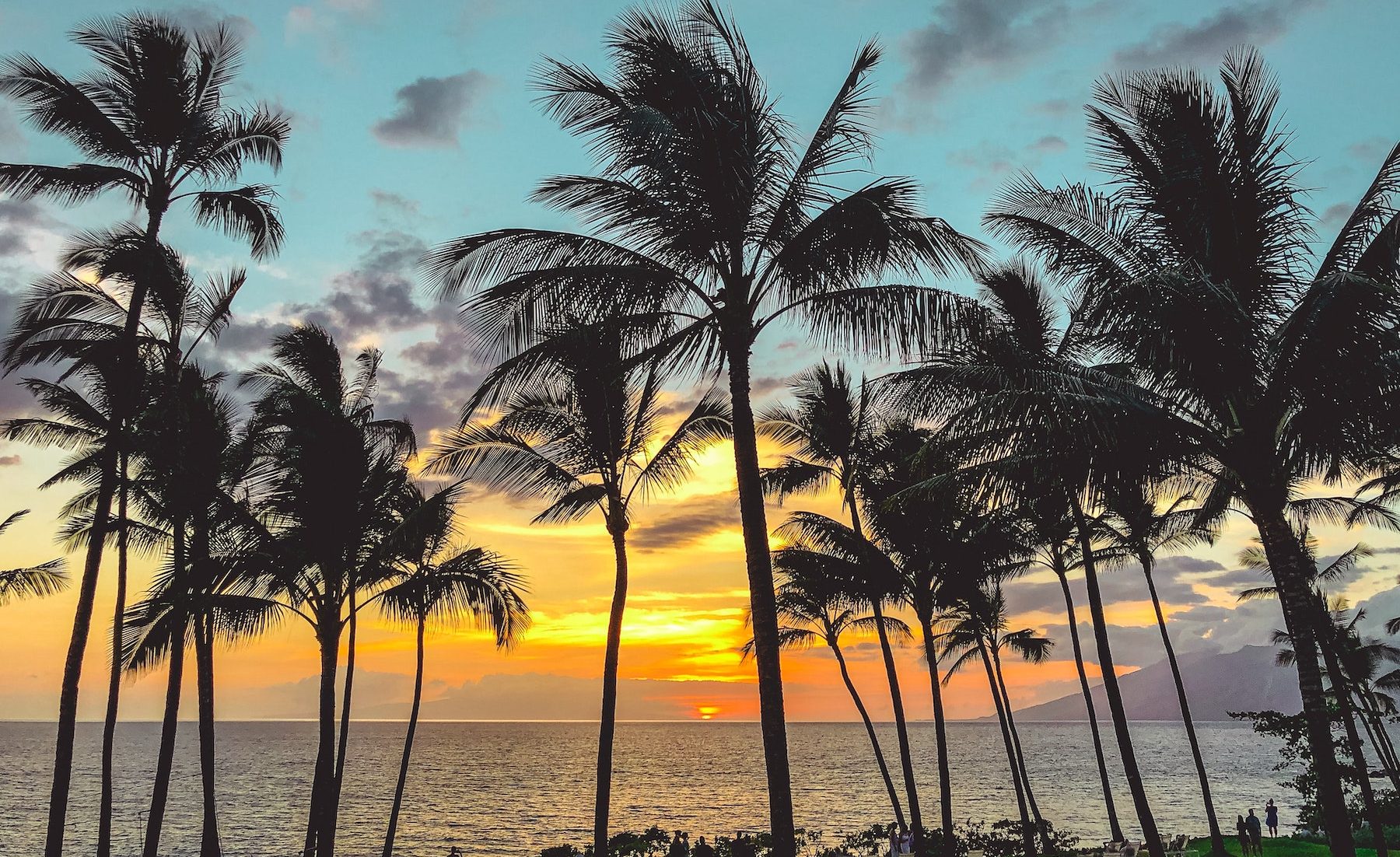
The western coastline, encompassing Kaanapali and Kapalua, offers some of the most accessible sunset views. From the shores of Kaanapali Beach, the sun often sets between the neighboring islands of Lanai and Molokai. The silhouetted profiles of these islands add depth to the horizon, creating a multi-layered landscape that is a favorite for landscape painters and tourists alike. A notable spot here is Black Rock, where a daily cliff-diving ceremony coincides with the setting sun, honoring the history of King Kahekili.
South Maui: Expansive Horizons
In South Maui, particularly in Kihei and Wailea, the view is more expansive. Places like Keawakapu Beach provide an unobstructed view of the Pacific Ocean. On clear days, you can see the tiny crescent of Molokini Crater and the distant island of Kahoolawe. The lack of immediate mountain obstructions to the west ensures that you get every last second of direct sunlight.
The North Shore and Rugged Cliffs
For those seeking a more rugged experience, the North Shore near Paia offers a different aesthetic. While the sun sets more toward the west, the cliffs near Ho’okipa Beach Park provide a dramatic foreground of crashing waves and world-class windsurfers catching the final gusts of the day. The light here hits the cliffs of the West Maui Mountains in a way that turns the verdant peaks into glowing emeralds.
The High-Altitude Experience: Sunset at Haleakalā
No discussion of Maui sunsets is complete without mentioning Haleakalā National Park. Rising 10,023 feet above sea level, the summit of this dormant volcano offers a celestial experience that feels detached from the rest of the world.
Above the Clouds
At the summit of Haleakalā, you are frequently standing above a thick layer of trade wind clouds. When the sun sets here, it does not set into the ocean, but rather into a sea of white, fluffy clouds. This creates a “double sunset” effect where the colors reflect off the atmosphere above and the cloud deck below. Because of the elevation, the air is thinner and clearer, making the colors significantly more intense than they appear at sea level.
Logistical Planning for the Summit
While sunrise at Haleakalā requires a reservation through the National Park Service, sunset currently does not. However, the journey from sea level to the summit takes approximately two hours of driving on steep, switchback roads. If the sunset is at 6:30 PM, you should aim to be at the summit by 5:30 PM to secure a parking spot and acclimate to the altitude. It is also important to note that temperatures at the summit can drop below freezing, a stark contrast to the tropical heat of Wailea. Proper attire, including jackets and blankets, is essential for a comfortable experience.
The Descent in Darkness
One aspect of the Haleakalā sunset that travelers must prepare for is the drive down. Once the sun sets, the mountain becomes incredibly dark, with no streetlights. The descent requires focus and caution, especially with the potential for wandering cattle or Nene (Hawaiian geese) on the road. Despite the drive, the opportunity to see the star-filled sky immediately following the sunset makes this one of the premier travel experiences in Hawaii.
Practical Tips for Your Sunset Excursion
To make the most of your time in Maui, a bit of preparation goes a long way. The sunset is a popular time for both locals and visitors, and certain spots can become crowded.
Arrive Early for “The Show”
In Maui, the best part of the sunset often happens 15 to 20 minutes after the sun has actually dipped below the horizon. This is known as the “afterglow,” where the light refracts through the atmosphere to create deep pinks, purples, and fiery reds. Many people leave the beach as soon as the sun disappears, missing the most spectacular colors. Plan to stay at your chosen location for at least 30 minutes after the official sunset time.
Check the Weather and “Vog”
While Maui is generally sunny, the weather can vary by region. The West Maui Mountains often trap clouds, which can block the sun if you are positioned too close to the base of the peaks. Additionally, “vog”—volcanic smog from Kilauea on the Big Island—can occasionally drift over. While vog can cause respiratory issues for some, it often results in incredibly vivid, blood-red sunsets due to the way the volcanic particles scatter light.
Photography and the “Green Flash”
If you are hoping to capture the elusive “green flash”—a rare optical phenomenon where a green spot or ray is visible for a second or two at the top of the sun—you will need a clear, unobstructed horizon and a steady hand. This is most commonly seen from the beaches of South Maui or from the deck of a sunset cruise in the Auau Channel. For photography, use a tripod and a graduated neutral density filter to balance the bright sky with the darker foreground of the beach or ocean.

Sunset Cruises: A Different Perspective
For a truly immersive experience, many travelers book a catamaran tour departing from Maalaea Harbor or Lahaina Harbor. Being out on the water removes any terrestrial obstructions, providing a 360-degree view of the island’s coastline as it glows in the evening light. During the winter months, these cruises often double as whale-watching expeditions, as Humpback Whales migrate to the warm Hawaiian waters to breed and give birth. Seeing a whale breach against the backdrop of a setting sun is a quintessentially Maui travel moment.
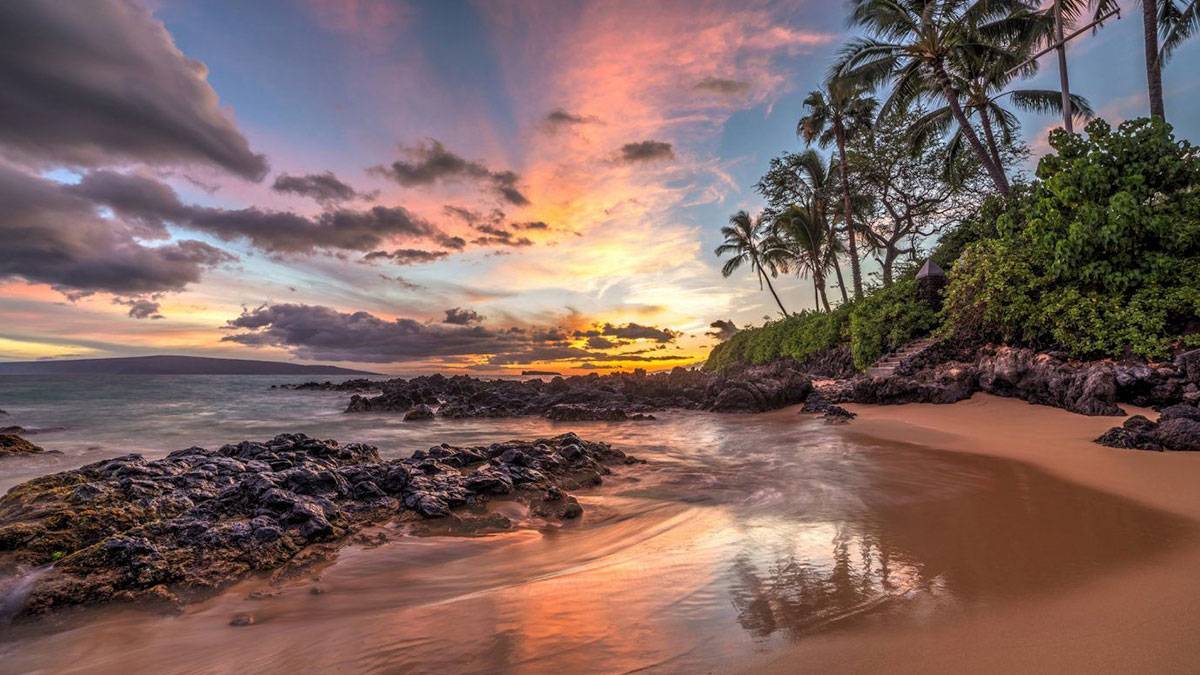
In conclusion, while the clock will tell you the exact minute the sun will set in Maui, the experience itself is timeless. Whether you are standing on the volcanic sands of Makena Beach State Park, dining at a world-class restaurant in Kapalua, or shivering in awe at the top of Haleakalā, the Hawaiian sunset remains one of the most profound natural displays on the planet. By planning ahead and choosing your vantage point wisely, you ensure that every evening on the island ends on a high note, leaving you with memories that last long after the light has faded.
LifeOutOfTheBox is a participant in the Amazon Services LLC Associates Program, an affiliate advertising program designed to provide a means for sites to earn advertising fees by advertising and linking to Amazon.com. Amazon, the Amazon logo, AmazonSupply, and the AmazonSupply logo are trademarks of Amazon.com, Inc. or its affiliates. As an Amazon Associate we earn affiliate commissions from qualifying purchases.