
The story of the Hawaiian Islands is one of the most captivating chapters in the geological history of the Earth. Unlike many landmasses formed by the collision of tectonic plates, this isolated archipelago in the heart of the Pacific Ocean emerged from a “hotspot” deep within the planet’s mantle. To understand when Hawaii was formed, one must look back millions of years, tracing a process that is still active today. This journey through time reveals how fire and water collaborated to create some of the most iconic landmarks in the United States.
The Geological Genesis: The Hotspot Theory
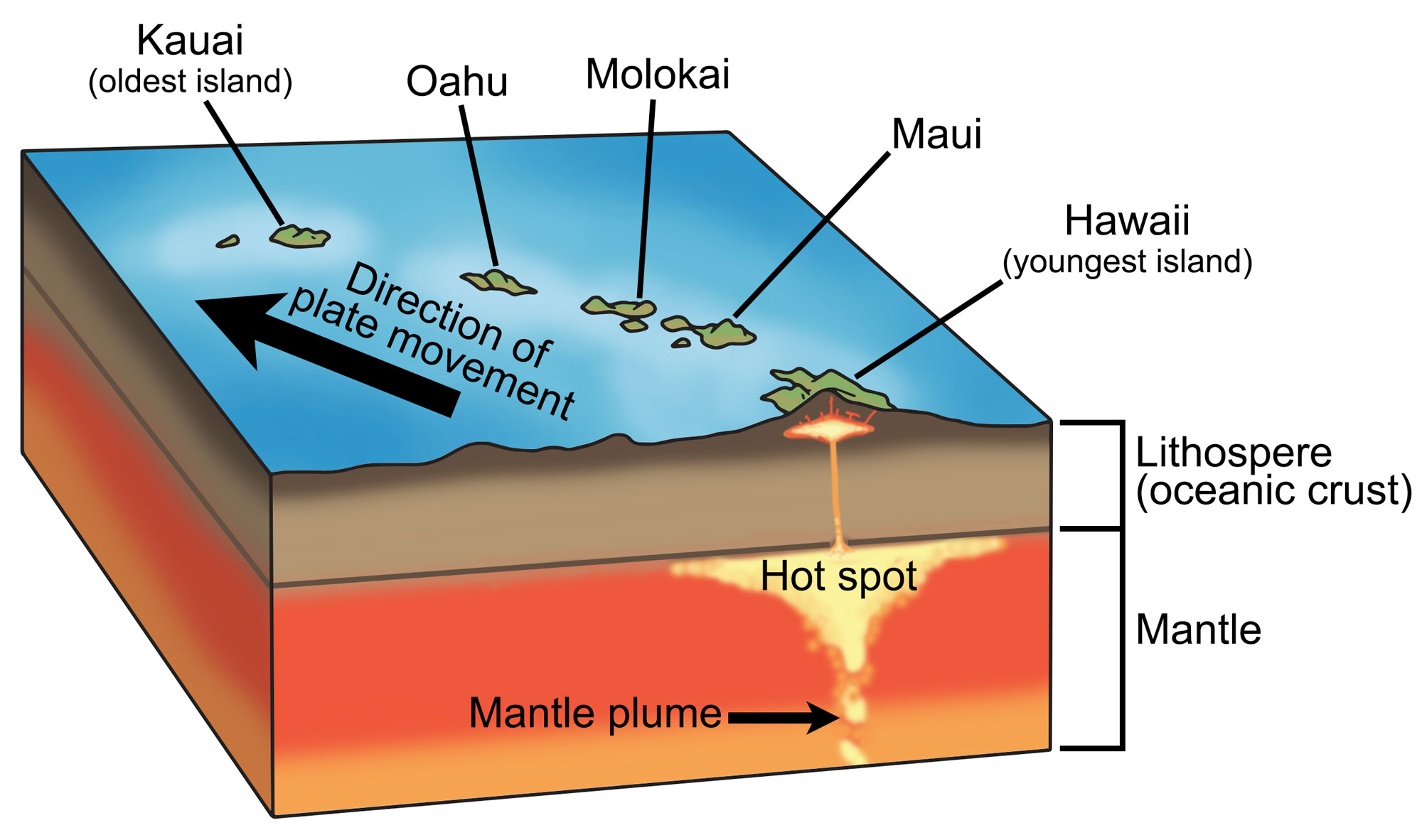
The formation of Hawaii is fundamentally different from the formation of the Rocky Mountains or the Andes. While those ranges were created by the buckling of the Earth’s crust, the Hawaiian Islands are the result of a stationary magma plume known as the Hawaiian Hotspot.

The Mechanism of the Pacific Plate
Approximately 70 million years ago, a point of intense heat began melting the crust of the Pacific Plate. As the plate slowly migrated northwest at a rate of about 3 to 4 inches per year, the stationary hotspot continued to pump molten rock through the seafloor. This process created a conveyor belt of volcanic activity. Each time a volcano grew high enough to break the surface of the Pacific Ocean, an island was born. Over eons, this movement created the Hawaiian-Emperor Seamount Chain, a massive underwater mountain range that stretches all the way to the Aleutian Trench near Russia.
The Age of the Current Islands
While the hotspot has been active for tens of millions of years, the main islands we recognize today are relatively young in geological terms. The oldest of the primary inhabited islands is Kauai, which emerged from the sea roughly 5.1 million years ago. As you move southeast along the chain, the islands become progressively younger. Oahu followed about 3.7 million years ago, while Maui began its formation approximately 1.3 million years ago. The Big Island, or the island of Hawaii, is the youngest, having first breached the surface less than 500,000 years ago.
A Chronological Journey Through the Archipelago
To appreciate the landmarks of Hawaii, one must view them as stages in a biological and geological life cycle. From the weathered cliffs of the oldest isles to the barren lava fields of the newest, each island tells a specific part of the story of time.
The Elders: Kauai and Niihau
Kauai, often called the Garden Isle, represents the “retirement” phase of an island. Having moved far away from the hotspot, its volcanic engines have long since cooled. Over the last five million years, the relentless rains of the Pacific Ocean have carved deep canyons and jagged cliffs. The most famous of these is Waimea Canyon, often referred to as the Grand Canyon of the Pacific. Adjacent to it, Niihau stands as a testament to the erosive power of time, having been reduced to a fraction of its original volcanic height.
The Central Icons: Oahu and the Maui Nui Complex
Oahu is home to the capital city of Honolulu and some of the world’s most famous natural landmarks. Formed between 2.2 and 3.7 million years ago, its landscape is defined by the remnants of two massive shield volcanoes: Wai’anae and Ko’olau. Landmarks like Diamond Head and Punchbowl Crater are secondary volcanic features that formed long after the main shield-building phase.
Further south, the islands of Maui, Molokai, Lanai, and Kahoolawe were once a single massive landmass known as Maui Nui. About 1.2 million years ago, this giant island was larger than the current Big Island. As the island aged and the crust sank under its own weight, rising sea levels flooded the low-lying valleys, separating the peaks into the distinct islands we see today. The massive Haleakala crater on Maui remains one of the most imposing volcanic landmarks in the world.
The Big Island: Hawaii’s Modern Frontier

The island of Hawaii is unique because it is the only island in the chain still actively growing. It is composed of five separate volcanoes: Kohala, Mauna Kea, Hualalai, Mauna Loa, and Kilauea.
Mauna Kea and Mauna Loa: The Giants
Mauna Kea is a dormant volcano that stands as the highest point in the state. If measured from its base on the ocean floor, it is actually the tallest mountain in the world, surpassing Mount Everest. Its sister peak, Mauna Loa, is the world’s largest subaerial volcano by volume. Together, these giants dominate the landscape, creating a rain shadow that results in the diverse climates found across the island, from the tropical rainforests of Hilo to the arid lava deserts of Kona.
Kilauea and Volcanoes National Park
The most active participant in the ongoing formation of the islands is Kilauea. Located within Hawaii Volcanoes National Park, this volcano has been erupting almost continuously since 1983. The landmark is a living laboratory for geologists. Here, visitors can witness the literal birth of the Earth as molten basalt flows into the sea, cooling instantly to form new coastline. This constant activity ensures that the Big Island continues to expand, even as the older islands to the northwest slowly erode and sink.
The Future of Hawaii: Loihi Seamount
The story of Hawaii’s formation is far from over. Just as the Pacific Plate carried Kauai away from the hotspot, it is currently carrying the Big Island toward the northwest. As this happens, a new island is already beginning to take shape.
The Next Hawaiian Island
Located about 20 miles off the southeast coast of the Big Island lies Loihi Seamount. This active submarine volcano is the newest member of the Hawaiian Islands chain. It currently sits about 3,000 feet below the surface of the Pacific Ocean. Scientists estimate that Loihi Seamount will breach the surface and become the next Hawaiian island in approximately 10,000 to 100,000 years.
The Endless Cycle of Nature
Eventually, millions of years from now, the Big Island will become dormant and weathered like Kauai, and the landmarks we know today—like the cliffs of the Na Pali Coast or the crater of Diamond Head—will disappear beneath the waves. They will become seamounts, joining the long trail of submerged mountains that lead toward Japan and the Aleutian Islands.
Cultural Significance of Geological Formation
The formation of the islands is not just a matter of science; it is deeply woven into the cultural fabric of the Polynesians who first settled here. The indigenous Hawaiians possessed an intuitive understanding of the islands’ ages and the volcanic processes that created them.
Pele and the Volcanic Legacy
In Hawaiian mythology, the fire goddess Pele is said to have traveled down the island chain, searching for a home where she could dig her fire pits. She started in the north on Kauai, but was repeatedly driven out by her sister, the goddess of the sea. She eventually moved to Oahu, then Maui, and finally settled in the Halema’uma’u Crater at the summit of Kilauea. This oral tradition mirrors the geological reality of the hotspot: as the older volcanoes became extinct, the “fire” moved southeast to the younger islands.
Preserving the Landmarks
Today, many of these geological landmarks are protected as state and national parks. From the Hanauma Bay Nature Preserve on Oahu to the Iao Valley State Monument on Maui, these sites offer a glimpse into the raw power of nature. They serve as reminders of the volatile and creative forces that shaped the Pacific Ocean basin.
Understanding when Hawaii was formed requires us to think on a scale that dwarfs human history. It is a process that began 70 million years ago, defined the modern landscape 5 million years ago, and continues to create new land with every eruption. Whether standing atop the snow-capped peak of Mauna Kea or watching the sunset over the Waikiki skyline, one is witnessing a brief moment in an epic geological saga that is far from finished. The islands are not static landmarks; they are living, breathing entities, constantly being reshaped by the very forces that brought them into existence.
LifeOutOfTheBox is a participant in the Amazon Services LLC Associates Program, an affiliate advertising program designed to provide a means for sites to earn advertising fees by advertising and linking to Amazon.com. Amazon, the Amazon logo, AmazonSupply, and the AmazonSupply logo are trademarks of Amazon.com, Inc. or its affiliates. As an Amazon Associate we earn affiliate commissions from qualifying purchases.