
The legendary surf break known as Jaws is a natural phenomenon that commands respect and awe from the global community. Located on the northern coastline of Maui, the second-largest island in Hawaii, this site is far more than just a destination for elite athletes; it is a profound natural landmark that illustrates the raw power of the Pacific Ocean. To understand where Jaws is, one must look beyond a simple pin on a map and explore the rugged geography, the unique underwater topography, and the cultural history that has cemented this location as one of the most famous landmarks in the United States.

The Geographical Heart of Jaws: Peahi, Maui
To find Jaws, one must travel to the rural and lush district of Haiku on the northeastern shore of Maui. The traditional Hawaiian name for this specific coastal area is Peahi. While the world knows it by its cinematic nickname, local residents and cultural historians recognize the land as a place of historical significance long before the first tow-in surfers arrived in the late 20th century.
Navigating the North Shore Landscape
The journey to the Peahi cliffs is an adventure in itself, requiring a departure from the typical tourist routes of Hawaii. Most visitors begin their trek in the town of Paia, a vibrant hub known for its bohemian atmosphere and proximity to the North Shore surf culture. From Paia, one travels east along the iconic Hana Highway.
The turn-off for Jaws is located near mile marker 14, where the paved road gives way to a network of red-dirt paths. These tracks are notorious for their difficulty; during the rainy season, the clay-rich soil transforms into a treacherous mud that can trap even the most robust four-wheel-drive vehicles. The seclusion of this landmark is part of its identity, acting as a natural barrier that preserves the intensity and solitude of the site.
The Overlook at Peahi
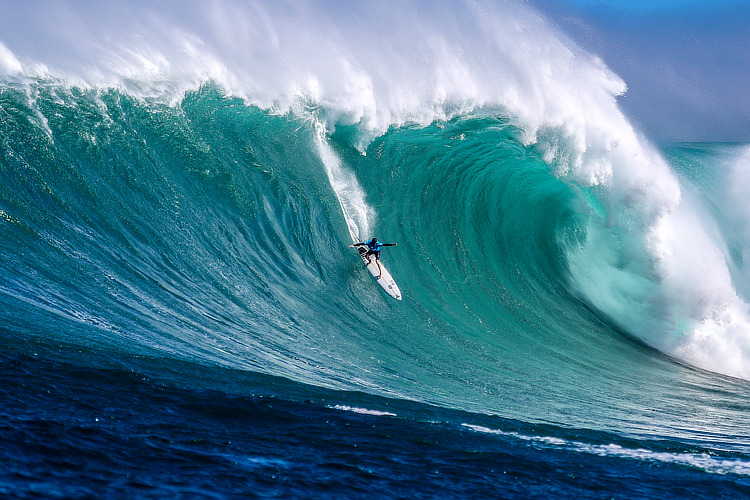
Upon successfully navigating the dirt roads, visitors reach the Peahi Lookout, a high vantage point atop jagged volcanic cliffs. From here, the vast expanse of the Pacific Ocean unfolds. The landmark is not a beach in the traditional sense; there are no sandy shores or swimming areas here. Instead, the “location” of Jaws is the specific patch of water where the deep-ocean swells collide with a submerged reef, creating waves that can reach heights of 60 to 80 feet. Standing on the cliffs, one feels the vibration of the crashing water, a testament to the sheer scale of this natural amphitheater.
The Science Behind the Giant: Why Waves Break Here
The reason Jaws exists in this specific coordinate of Hawaii is a matter of geological and oceanographic perfection. It is not a random occurrence but the result of a unique underwater formation that funnels energy with surgical precision. As a landmark of nature, it serves as a classroom for understanding how the Earth’s crust and the ocean’s currents interact.
The Peahi Deep-Water Trench
The secret to the massive waves at Peahi lies beneath the surface in the form of a deep-water trench. Most surf breaks occur when a wave moves from deep water to a shallow reef or sandbar gradually. However, at Jaws, a deep canyon extends far out into the ocean, allowing the swells to maintain their speed and energy without being slowed down by friction against the sea floor.
When these high-velocity swells finally hit the sudden, shallow reef at the mouth of the bay, the energy has nowhere to go but up. This creates the “Jaws” effect—an explosive, vertical rise of water that forms the world’s most terrifying and beautiful wave peaks. This geological anomaly makes the North Shore of Maui a focal point for researchers and big-wave enthusiasts alike.
Seasonal Cycles and Swell Conditions
Jaws is a seasonal landmark. For much of the year, particularly during the summer months, the waters off Peahi can appear deceptively calm. The landmark “activates” during the winter months, typically from November to March, when massive storms in the North Pacific send powerful swells toward the Hawaiian Islands.
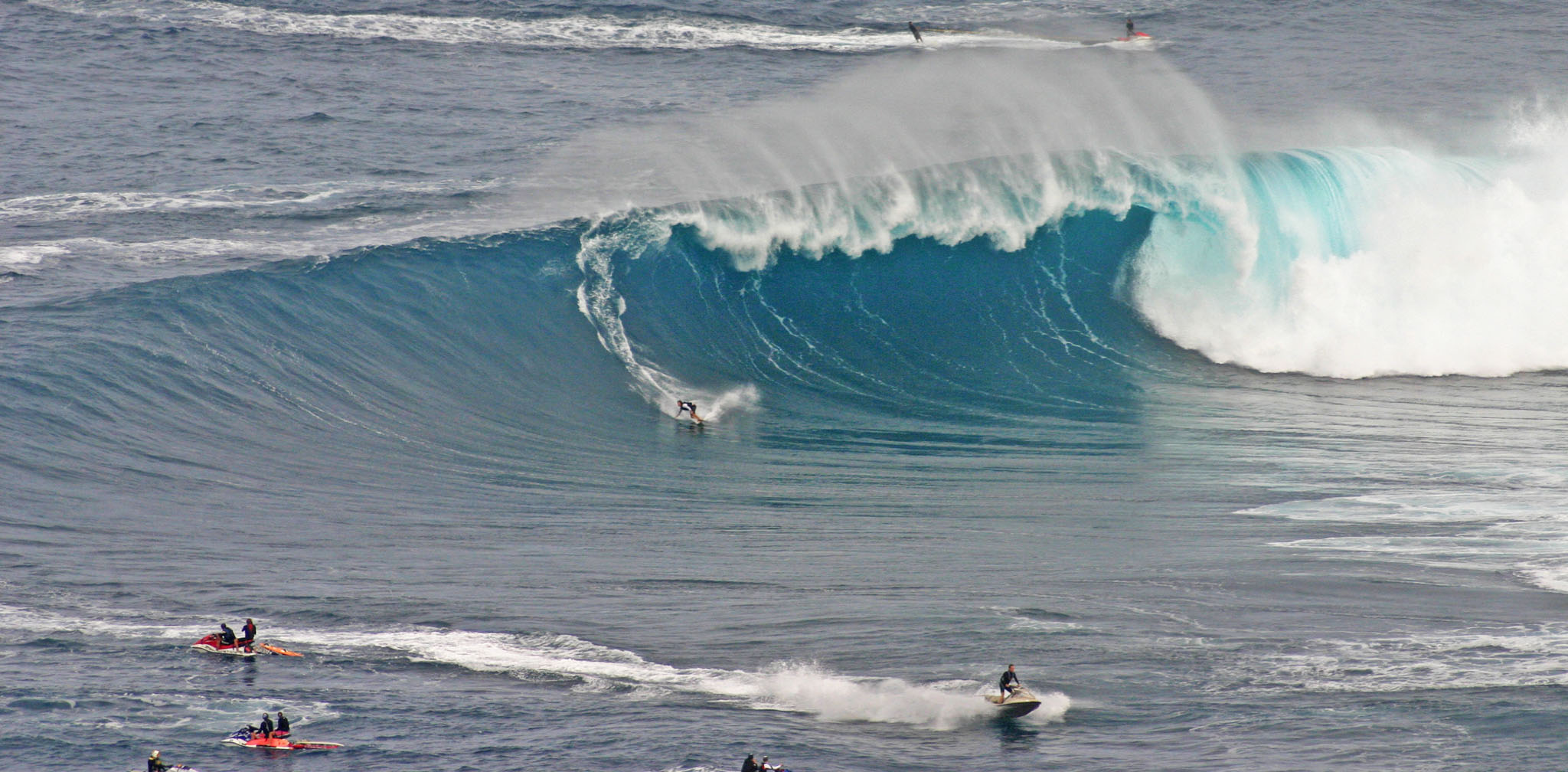
The arrival of a “Jaws Swell” is a major event in Hawaii. It draws spectators and photographers from across the globe, transforming the quiet cliffs of Haiku into a temporary epicenter of international attention. The timing must be perfect; the wind must be light or offshore, and the swell direction must be precisely from the northwest for the waves to reach their maximum potential.
Jaws as a Cultural Landmark of Surfing
Beyond its physical location, Jaws is a landmark of human achievement and the evolution of water sports. It is the birthplace of modern tow-in surfing, a technique that forever changed how humans interact with the ocean. Before Jaws was “conquered,” waves of this size were considered unrideable because they moved too fast for a human to catch by paddling with their hands.
The Evolution of Tow-In Surfing
In the early 1990s, a group of legendary watermen, often referred to as the “Strapped Crew,” began using jet skis to tow surfers into the massive walls of water at Peahi. This innovation allowed surfers to match the speed of the wave before dropping in. This historical shift occurred right here on the North Shore of Maui, making Jaws a site of immense historical value in the world of extreme sports. The landmark represents the bridge between traditional Hawaiian surfing and the high-tech, high-risk world of contemporary big-wave riding.
Modern Competitions and Global Recognition
Today, Jaws is the site of the Peahi Challenge, a prestigious event on the Big Wave Tour. When the conditions are right, the world’s best surfers fly into Kahului and head straight for the Haiku coastline. The landmark has been featured in countless films, documentaries, and even the opening sequence of a James Bond movie, further cementing its status as a global icon. Unlike other famous breaks like Pipeline on Oahu or Honolua Bay, Jaws remains a more raw and inaccessible frontier, maintaining an aura of mystery and danger.
Visiting Jaws: Spectator Tips and Safety
For those traveling to Maui with the hope of witnessing Jaws in action, it is essential to approach the landmark with a blend of preparation and humility. This is not a managed tourist attraction with amenities; it is a wild, natural site that requires self-sufficiency.
Best Viewing Points and Logistics
The primary viewing area is the cliffside overlooking the bay. Because the waves break several hundred yards offshore, binoculars are highly recommended to truly appreciate the scale of the surfers against the water. Most visitors fly into Kahului Airport and rent a vehicle. However, it is important to note that most rental car agreements strictly prohibit driving on the unpaved roads leading to Peahi.
Many people choose to park their vehicles near the beginning of the dirt road and hike the remaining two miles to the lookout. This trek allows visitors to experience the lush, tropical beauty of the Maui countryside, passing through former pineapple fields and dense vegetation before the forest opens up to the dramatic ocean view. For a more accessible experience, some choose to view the surf from a boat or a helicopter tour departing from Kahului or Wailuku, providing a unique perspective of the waves from the water’s level or the air.
Safety and Respect for the Land
Visitors must remember that Peahi is a sensitive environment. The cliffs are steep and prone to erosion; staying well back from the edge is vital for safety. Furthermore, the land surrounding the access routes is often private property or culturally significant to the local Hawaiian community. Respecting “No Trespassing” signs and practicing “Leave No Trace” principles is mandatory.
If you are not an expert big-wave surfer with a professional safety team, do not attempt to enter the water. Even the shoreline at the base of the cliffs is incredibly dangerous due to the “shorebreak” and the lack of easy exit points. The best way to enjoy this Hawaii landmark is from a safe distance on the heights of the Haiku cliffs, where the roar of the ocean provides a soundtrack to one of nature’s most impressive displays.
In conclusion, “Where is Jaws in Hawaii?” is a question that leads to the rugged, breathtaking northern coast of Maui. It is a place where geography, science, and human courage intersect. Whether you are a surf enthusiast or a lover of grand natural landmarks, the sight of Jaws—Peahi—is a humbling reminder of the power of the natural world and a must-see for anyone looking to experience the true spirit of the Pacific Ocean.
LifeOutOfTheBox is a participant in the Amazon Services LLC Associates Program, an affiliate advertising program designed to provide a means for sites to earn advertising fees by advertising and linking to Amazon.com. Amazon, the Amazon logo, AmazonSupply, and the AmazonSupply logo are trademarks of Amazon.com, Inc. or its affiliates. As an Amazon Associate we earn affiliate commissions from qualifying purchases.