
The archipelago of Hawaii represents one of the most unique geographic and cultural landscapes in the United States. Known for its emerald volcanic peaks, crystal-clear waters, and rich indigenous heritage, the question of “who owns Hawaii” is far more complex than a simple list of taxpayers. It is a story woven through centuries of royal decrees, colonial shifts, and massive private estates that remain intact to this day. To understand the modern ownership of Hawaii, one must look at the transition from communal stewardship to a Western system of private property, and how that legacy shapes the landmarks we visit today.

The Historical Foundations of Land Ownership
Before the arrival of Western explorers, the concept of “owning” land was foreign to the Native Hawaiians. The land, or “aina,” was seen as a provider to be cared for, not a commodity to be traded. However, as global political pressures mounted in the 19th century, the Kingdom of Hawaii underwent a radical transformation in how its territory was managed.
The Great Mahele of 1848
The most pivotal moment in the history of Hawaiian land tenure was the Great Mahele. Orchestrated by King Kamehameha III, this land redistribution was intended to protect Hawaii from foreign seizure by establishing a Western-style legal framework. The land was divided into three categories: Crown Lands (for the monarch), Government Lands, and Konohiki Lands (for the chiefs). While intended to secure the rights of the common people, the process was complex, and many locals ended up landless, paving the way for large-scale foreign acquisition.
The Crown Lands and the Overthrow
The Crown Lands were specifically designated for the reigning monarch to support the dignity and expenses of the crown. Following the controversial overthrow of the Kingdom of Hawaii in 1893 and the subsequent annexation by the United States in 1898, these lands became “Ceded Lands.” Today, they form the core of the state’s public land trust, and their ownership remains a central point of discussion regarding indigenous rights and sovereignty.
The Role of the Ali’i Trusts
In an effort to protect the Hawaiian people and culture, several members of the Hawaiian royalty established trusts. The most significant of these is the Bishop Estate, created by Princess Bernice Pauahi Bishop. These trusts were designed to ensure that even as the political landscape shifted, the wealth generated by the land would benefit the education and welfare of Native Hawaiians in perpetuity.
Major Institutional and Corporate Landowners
In the modern era, land in Hawaii is concentrated in the hands of a few large entities. While many visitors see Honolulu as a bustling metropolis of high-rises and condos, much of the islands’ rural and mountainous interior is held by massive private estates and corporations.
Kamehameha Schools (The Bishop Estate)
Kamehameha Schools is the largest private landowner in Hawaii. Owning over 360,000 acres, this trust manages land across all the major islands, including Oahu, Maui, Kauai, and the Big Island. The revenue from these vast holdings—ranging from commercial real estate in Waikiki to agricultural tracts—funds the education of thousands of students of Hawaiian descent.
The Robinson Family and the Forbidden Island
One of the most unique ownership stories in the world is that of Niihau. This island was purchased from the Kingdom of Hawaii in 1864 by Elizabeth Sinclair. Today, it remains privately owned by her descendants, the Robinson Family. Known as the “Forbidden Island,” Niihau is largely off-limits to outsiders, serving as a sanctuary for Native Hawaiian culture and the Hawaiian language.
Parker Ranch and Large-Scale Agriculture
On the Big Island, the Parker Ranch stands as a testament to the islands’ ranching history. Founded in 1847 by John Palmer Parker, it was once one of the largest cattle ranches in the United States. Today, while some portions have been sold or developed, the ranch remains a massive private entity, influencing the landmarks and geography of the Waimea region.
Modern Tech Moguls and Land Lanai
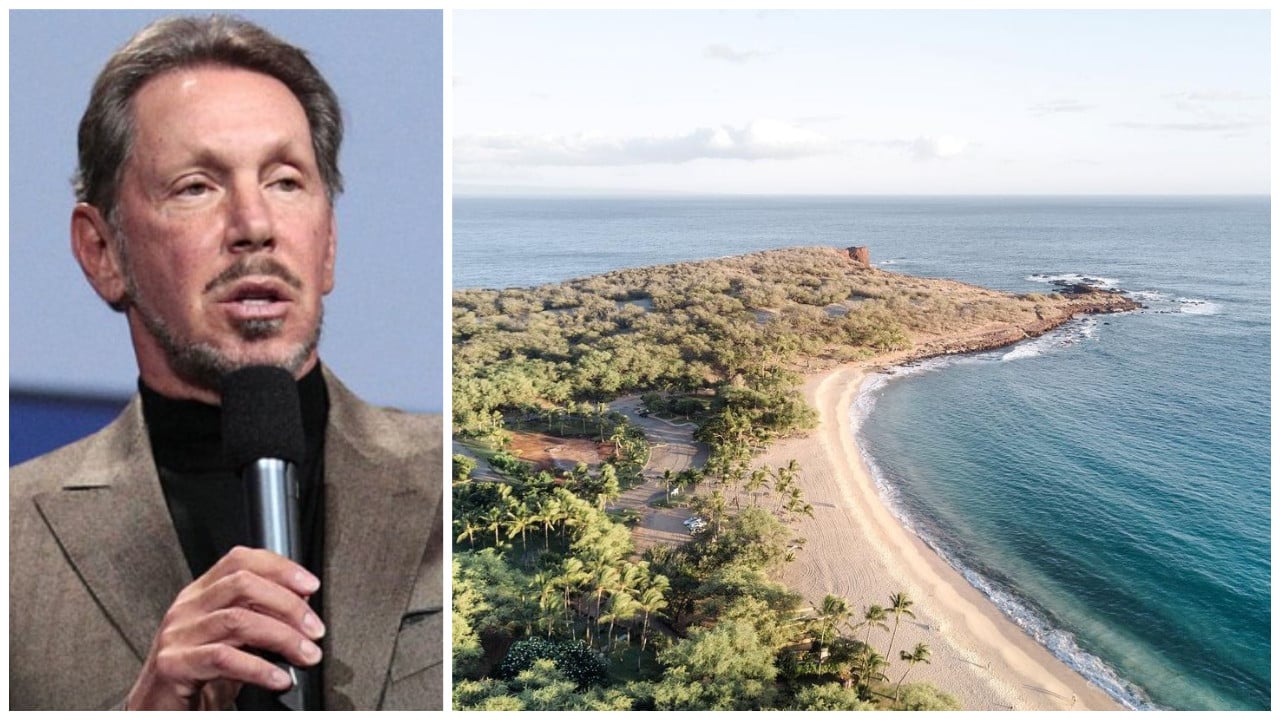
Ownership is also shifting toward high-net-worth individuals from the mainland. Most notably, Larry Ellison, the co-founder of Oracle, purchased nearly 98% of the island of Lanai in 2012. This acquisition includes major resorts like the Four Seasons Resort Lanai, as well as the island’s infrastructure, making him the primary steward of an entire island community.
Government Ownership: State and Federal Domains

While private estates account for a significant portion of the land, the largest collective “owner” is the government. Between the State of Hawaii and the federal government, millions of acres are managed for public use, conservation, and national defense.
The State of Hawaii and Public Lands
The State of Hawaii is the single largest landowner overall, managing approximately 1.1 million acres. This includes state parks, forest reserves, and the “Ceded Lands” mentioned earlier. The Department of Land and Natural Resources (DLNR) oversees these areas, ensuring that landmarks like Diamond Head and Hanauma Bay are preserved for both locals and tourists.
Federal Land and Military Presence
The federal government owns roughly 500,000 acres in Hawaii. A significant portion of this land is dedicated to national parks and wildlife refuges. However, a substantial amount is also used for military purposes. Sites such as Pearl Harbor, Schofield Barracks, and the Pohakuloa Training Area are critical strategic hubs for the United States Navy and United States Army.
The Department of Hawaiian Home Lands
A unique subset of government land is managed by the Department of Hawaiian Home Lands (DHHL). Established by the Hawaiian Homes Commission Act of 1920, this department manages about 200,000 acres set aside specifically for Native Hawaiians to return to the land through long-term residential, agricultural, and pastoral leases.
Iconic Landmarks and Preserved Estates
The ownership patterns in Hawaii have directly influenced which landmarks have been preserved and which have been developed. Many of the most famous sites in the islands exist because they were either held by the crown or protected by state and federal mandates.
Hawaii Volcanoes National Park
Located on the Big Island, Hawaii Volcanoes National Park is perhaps the most awe-inspiring federal landmark. Managed by the National Park Service, this land is “owned” by the American public but is spiritually and culturally significant to the Native Hawaiian people as the home of the deity Pele. It encompasses the summits of Kilauea and Mauna Loa.
Iolani Palace and Historical Sites
In the heart of Honolulu stands Iolani Palace, the only royal palace on American soil. While the land is owned by the State of Hawaii, the palace serves as a powerful symbol of Hawaiian sovereignty. Nearby, the State Capitol and the King Kamehameha Statue occupy land that was once the seat of the Hawaiian monarchy.
Haleakala National Park
On the island of Maui, Haleakala National Park protects the massive dormant volcano that forms more than 75% of the island. This federally managed landmark is home to rare species like the Nene goose and the Silversword plant. The preservation of this land ensures that its unique ecosystem remains untouched by the commercial development seen in Kaanapali.
Waimea Canyon State Park
Known as the “Grand Canyon of the Pacific,” Waimea Canyon State Park on Kauai is a prime example of state-owned land. Its dramatic red cliffs and deep gorges are protected from private development, allowing it to remain one of the premier natural landmarks in the Pacific Ocean.
The Evolution of Land and Community
The question of who owns Hawaii is not just about deeds and titles; it is about the ongoing relationship between the people and the land. As tourism continues to be a major economic driver, the tension between commercial interests and land preservation remains a vital topic.
Commercial Development and Luxury Resorts
While large tracts of the interior are held by the government or trusts, the coastal perimeters are often dominated by high-end resorts. Areas like Ko Olina on Oahu host massive properties like Aulani, A Disney Resort & Spa and the Four Seasons Resort Oahu at Ko Olina. Similarly, Waikiki is home to the iconic Hilton Hawaiian Village. These properties often sit on land leased from large estates or are owned by multinational hospitality corporations.
Conservation and the Future of the Islands
In recent years, there has been a growing movement toward conservation and returning land to community stewardship. Organizations like the Hawaiian Islands Land Trust work to acquire and protect ecologically and culturally sensitive areas from development. This shift reflects a desire to move back toward the ancient Hawaiian concept of Malama Aina, or caring for the land.
In conclusion, “Who owns Hawaii?” is a question with many answers. It is owned by the State of Hawaii and the United States government. It is owned by the Bishop Estate and the descendants of 19th-century ranchers. It is owned by billionaires like Larry Ellison. Yet, in a spiritual and historical sense, many argue that the land belongs to the Native Hawaiian people who have navigated its shores for over a millennium. As a visitor, understanding these layers of ownership provides a deeper appreciation for the landmarks and landscapes of this extraordinary island chain.
LifeOutOfTheBox is a participant in the Amazon Services LLC Associates Program, an affiliate advertising program designed to provide a means for sites to earn advertising fees by advertising and linking to Amazon.com. Amazon, the Amazon logo, AmazonSupply, and the AmazonSupply logo are trademarks of Amazon.com, Inc. or its affiliates. As an Amazon Associate we earn affiliate commissions from qualifying purchases.