
Navigating the landscape of travel expenses often begins with a fundamental question: how much should one budget for a two-bed hotel room? Whether you are a family of four heading to Disney World or business colleagues sharing a space in London, the cost of accommodation is rarely a fixed figure. The price of a room with two beds—typically referred to in the industry as a “Double-Double” or a “Queen-Queen”—is subject to a complex web of dynamic pricing models, geographic demand, and property classifications.
Understanding these variables is essential for any traveler looking to maximize their budget while maintaining a high standard of comfort. In the modern Accommodation market, the price you see today for a room in New York City could vanish by tomorrow. This guide delves into the specifics of what dictates these costs and how you can navigate the booking process to find the best value.

Primary Factors Influencing Two-Bed Room Pricing
The cost of a two-bed hotel room is not merely a reflection of the physical space but a result of real-time supply and demand. Unlike retail products with a suggested manufacturer’s price, hotel rooms are “perishable” inventory; if a room isn’t sold for the night, its value for that date drops to zero.
Location and Urban Proximity
In the world of real estate and hospitality, location remains the supreme arbiter of price. A two-bed room at the Marriott International near Times Square will naturally command a significantly higher price than a similar room in a suburban area of New Jersey. Proximity to major landmarks, financial districts, or transport hubs like Heathrow Airport adds a premium to the nightly rate.
In dense urban environments like Tokyo or Hong Kong, space is at a premium. Consequently, a room with two distinct beds is often considered a luxury or a specialized “family room,” driving the price up compared to a standard king-bed room. In contrast, in the United States, the two-queen configuration is a standard staple of mid-scale brands like Holiday Inn and Hampton Inn, making them relatively more affordable due to their abundance.
Seasonal Demand and Local Events
Seasonality plays a massive role in price fluctuations. If you are booking a stay in New Orleans during Mardi Gras, expect to pay three to four times the standard rate. Similarly, a two-bed suite in Paris overlooking the Eiffel Tower will see its price skyrocket during the summer months or during events like Paris Fashion Week.
Hotels use sophisticated Revenue Management Systems (RMS) to track local events, weather patterns, and historical data. When a city hosts a major convention or a concert at a venue like Madison Square Garden, the “base” price for a two-bed room is immediately adjusted upward.
Hotel Star Rating and Brand Tier
The classification of the hotel is perhaps the most obvious price driver. A two-bed room at a budget-friendly Motel 6 might cost $70 per night, whereas the same bed count at a Four Seasons or a Ritz-Carlton could easily exceed $1,000.
Luxury brands do not just charge for the beds; they charge for the “soft” amenities—high-thread-count linens, 24-hour room service, and concierge expertise. If you are staying at the Burj Al Arab in Dubai, the cost reflects the architectural prestige and the service-to-guest ratio, regardless of whether you use one bed or two.
Regional Variations in Two-Bed Room Costs
The definition of a “two-bed room” varies significantly as you cross borders, which directly impacts the price and the value-for-money proposition.
North American Market Trends
In North America, the “Double Queen” room is the gold standard for families and group travelers. Most mid-range hotels in cities like Orlando or Las Vegas are built with this configuration in mind. Prices in these markets are highly competitive.
In Las Vegas, specifically at mega-resorts like Caesars Palace or The Venetian, the price of a two-bed room can fluctuate wildly. On a Tuesday, you might find a room for $150, but by Friday night, as the The Strip fills up, that same room could jump to $450. Furthermore, United States hotels often charge a “Resort Fee” on top of the nightly rate, which covers amenities like Wi-Fi and pool access.
European Boutique and Historic Pricing
In Europe, particularly in historic cities like Rome or Amsterdam, hotel buildings are often converted from older structures. This means room sizes are smaller. A “two-bed” room in France often consists of two twin beds pushed close together, known as a “Twin Room.”
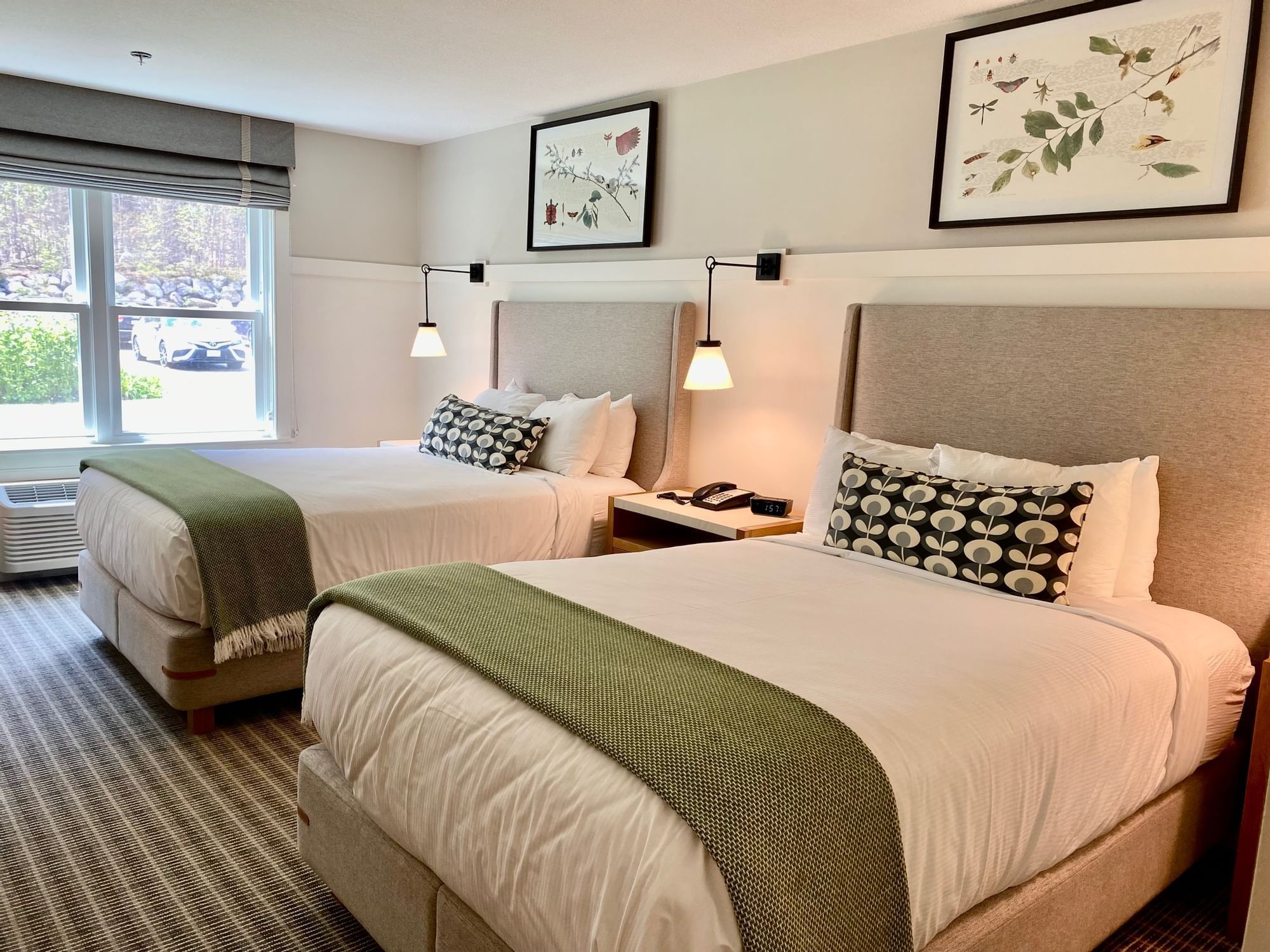
Because true double-queen rooms are rare in Europe, they are often categorized as “Superior” or “Executive” rooms, carrying a higher price tag. If you are looking for a budget-friendly two-bed option in Germany, brands like Ibis offer functional, compact twin rooms that are priced lower than the luxury boutiques found in Florence.
The Competitive Landscape in Asia
In Asia, particularly in tourism hubs like Bangkok, Singapore, and Bali, travelers often find the best “bang for their buck.” A two-bed room at a five-star hotel in Thailand might cost the same as a three-star hotel in London.
In Singapore, hotels like the Marina Bay Sands offer luxury two-bed configurations that cater to the high-end tourist market, with prices reflecting the world-class status of the destination. However, the rise of “Apart-hotels” in cities like Seoul has introduced more affordable two-bed options for long-term stays, often including a small kitchenette.
Understanding Room Configurations and Surcharges
When booking a two-bed room, the terminology used by the hotel can significantly impact the final bill. It is important to distinguish between bed types and occupancy rules.
Double Queen vs. Two Twin Beds
There is a distinct difference between a room with two “Double” beds and two “Queen” beds. A queen bed is 60 inches wide, providing more comfort for two adults sharing a bed. Hotels like Hilton or Hyatt generally price their “Two Queen” rooms slightly higher than “Two Double” rooms because of the added square footage required to house the larger mattresses.
In some luxury properties, such as those in Canada or Switzerland, you may encounter “Connecting Rooms.” While not a single two-bed room, this configuration offers two separate bedrooms joined by an internal door. This is the most expensive way to secure two beds but offers the highest level of privacy and two bathrooms.
Extra Occupancy Fees and Hidden Costs
A common misconception in the Accommodation industry is that the price of the room is the same regardless of how many people sleep in the two beds. While a room might be listed at $200 for “Double Occupancy,” adding a third or fourth adult often triggers an “Extra Person Fee.” This fee can range from $20 to $100 per night.
Furthermore, if the room only has one bed and you request a “Rollaway Bed” or a cot to make it a “two-bed” experience, hotels almost always charge a daily rental fee for the extra mattress. It is usually more cost-effective to book a dedicated two-bed room from the start rather than trying to modify a single-bed room upon arrival at the front desk.
Strategic Booking Tips for Multi-Bed Rooms
Securing a fair price for a two-bed room requires a blend of timing and platform selection. The Accommodation sector is highly transparent, but deals are often hidden behind loyalty walls or specific booking windows.
Direct Booking vs. Third-Party Platforms
Websites like Booking.com or Expedia are excellent for comparing the price of two-bed rooms across different brands in a city like Chicago or Sydney. However, the “Best Price Guarantee” is often found by booking directly with the hotel chain.
When you book directly with Marriott International or InterContinental Hotels Group, you are more likely to have your room preferences honored. If a hotel has a limited number of two-bed rooms and they are overbooked, the guests who booked through third-party sites are often the first to be moved to a single-king room with a rollaway bed.

Loyalty Programs and Corporate Rates
For frequent travelers, loyalty programs are the most effective way to manage the cost of two-bed rooms. Points earned from stays in San Francisco can be redeemed for a high-value stay in Dubai or London. Members often receive “Member Only” rates that are 5% to 10% lower than the public price.
Corporate travelers should always check if their company has a negotiated rate. Large corporations often have fixed-price contracts with brands like Westin or Sheraton, ensuring that even during high-demand periods in Washington DC, the price of a two-bed room remains stable.
In conclusion, the cost of a two-bed hotel room is a variable figure influenced by geography, brand, and timing. By understanding the market dynamics in North America, Europe, and Asia, and by being mindful of extra occupancy fees, travelers can find Accommodation that fits both their physical needs and their financial boundaries. Whether you are staying at a Holiday Inn in Ohio or a luxury suite near the Burj Khalifa, the key to a successful stay is research and early booking.
LifeOutOfTheBox is a participant in the Amazon Services LLC Associates Program, an affiliate advertising program designed to provide a means for sites to earn advertising fees by advertising and linking to Amazon.com. Amazon, the Amazon logo, AmazonSupply, and the AmazonSupply logo are trademarks of Amazon.com, Inc. or its affiliates. As an Amazon Associate we earn affiliate commissions from qualifying purchases.