
The arrival at a luxury hotel in Paris or a high-rise suite in New York City should be met with relaxation and the anticipation of comfort. However, for many seasoned travelers, there is a lingering anxiety that can dampen even the most opulent stay: the threat of bed bugs. These resilient, nocturnal insects do not discriminate based on a hotel’s star rating or the price of its nightly rate. Whether you are staying at a boutique villa in Italy or a flagship Marriott property in London, understanding how to identify these pests is a vital skill for any guest.
Bed bugs (Cimex lectularius) are hitchhikers that travel via luggage, clothing, and used furniture. In the hospitality industry, where guest turnover is high, even the most rigorous cleaning schedules at a Four Seasons can occasionally be bypassed by a single infested suitcase. This guide provides a professional framework for inspecting your hotel room, identifying biological markers, and understanding the steps necessary to ensure your travel experience remains pest-free.
The First Five Minutes: Strategic Room Inspection Protocols
When you first enter your room at a resort in Las Vegas or a business hotel in Tokyo, your instinct may be to drop your bags on the bed and test the mattress. For bed bug prevention, this is the most critical mistake a guest can make. The first five minutes of your stay should be dedicated to a systematic inspection before you unpack a single item.
Safe Zones and Initial Placement
The safest place for your luggage during an inspection is not on the floor or the bed, but rather in the bathroom or on a metal luggage rack that has been pulled away from the wall. Bed bugs struggle to navigate the smooth, tiled surfaces often found in bathrooms in France or the United Kingdom. By placing your bags in the bathtub or on a tiled floor, you create a “moat” that prevents any potential insects in the living area from reaching your belongings. If you use a luggage rack, ensure it is made of metal, as bed bugs prefer the porous surfaces of wood or fabric.
The Anatomy of a Bed Check
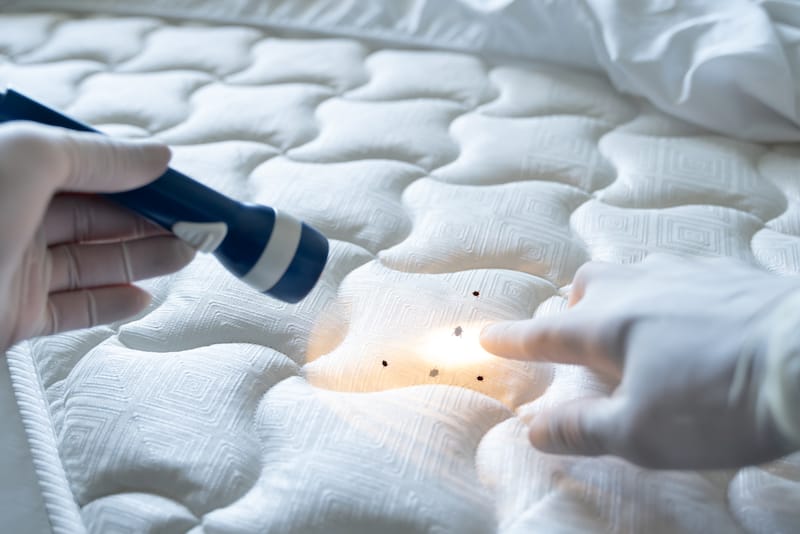
Once your luggage is secure, focus your attention on the bed. Begin by stripping back the linens. Bed bugs are most likely to be found within six to eight feet of where a person sleeps. Start at the corners of the mattress. Pull back the fitted sheet and the mattress protector. You are looking for more than just live bugs; you are looking for evidence of their presence.
Pay close attention to the seams, tufts, and piping of the mattress. These are the primary harborage sites. Use a flashlight—the one on your smartphone is usually sufficient—to peer into the dark crevices. If you are staying at a Hilton or a Hyatt, the housekeeping standards are generally high, but even the cleanest sheets can hide what lies beneath the surface of the mattress padding.
Beyond the Mattress: Hidden Harborages in High-End Suites
While the bed is the most common location for these pests, they are highly mobile and can hide in various areas throughout a hotel suite. If a room at a Ritz-Carlton or a St Regis has a significant infestation, the insects may migrate to other pieces of furniture to find more “hiding spots.”
Upholstered Furniture and Curtains
In luxury accommodations, upholstered chairs, sofas, and heavy blackout curtains are standard amenities. These items provide ample texture for bed bugs to cling to. Inspect the cushions of any armchairs, particularly the seams and the undersides. If the room features decorative pillows, check the zippers and interior folds. In destinations like Dubai or Singapore, where humidity and temperature are controlled, these soft goods provide a stable environment for pests to thrive if they have been introduced by a previous guest.
Electrical Outlets and Headboards
One of the most overlooked areas in a hotel room inspection is the headboard. In many modern hotels, such as those found in Los Angeles or Chicago, headboards are mounted directly to the wall. This creates a dark, protected gap that is a favorite hiding spot for bed bugs. If possible, use your flashlight to look behind the headboard.

Additionally, check around electrical outlets and light switches near the bed. Bed bugs are thin enough to crawl behind the faceplates of outlets. Small dark spots around the edges of a power socket can be a telltale sign of an infestation. This level of detail is necessary because, in high-end properties like the Waldorf Astoria, the rooms are often so well-maintained that obvious signs are easily missed if you only look at the surface.
Identifying the Signs: Biological Evidence and Physical Markers
To effectively tell if your hotel has bed bugs, you must know exactly what to look for. These insects leave behind specific biological markers that serve as a “signature” of their presence, even if the insects themselves are currently hiding.
Spotting Live Insects vs. Shed Skins
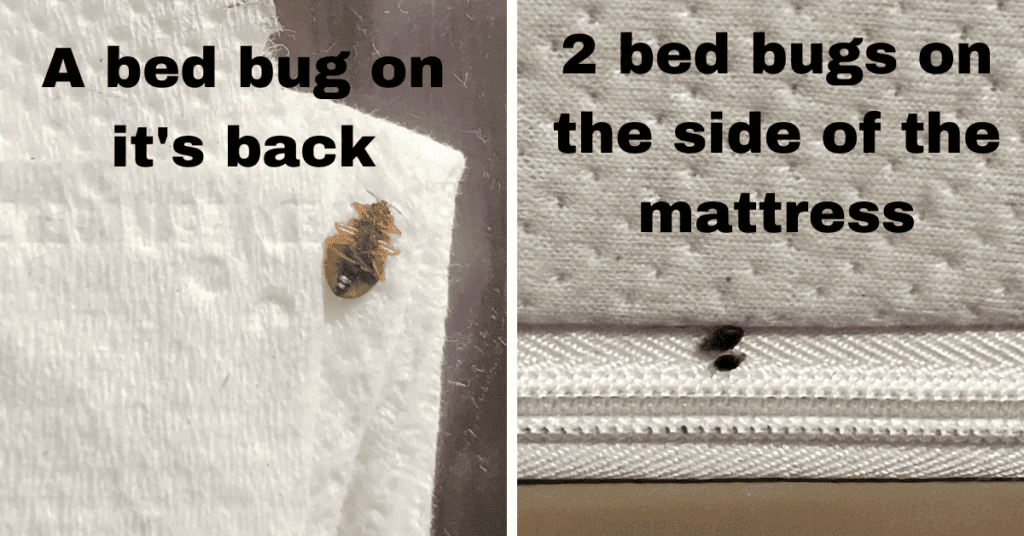
A live bed bug is roughly the size and shape of an apple seed. They are flat, oval-shaped, and reddish-brown. If they have recently fed, they appear more elongated and take on a brighter red hue. However, because they are nocturnal, you are more likely to find their “cast skins.” As bed bugs grow, they molt, leaving behind translucent, golden-brown exoskeletons that retain the shape of the insect. Finding these in the corners of a drawer or under a mattress at a hotel in Germany or Australia is a definitive sign of an active or recent infestation.
Blood Stains and Fecal Matter Analysis
Perhaps the most common sign of bed bugs is the presence of small, dark spots on linens or mattresses. These spots are bed bug excrement, which is essentially digested blood. They look like tiny black dots, similar to a mark made by a fine-tip permanent marker. If you apply a damp cloth to these spots, they will often smear or “bleed” a reddish-brown color, confirming they are organic in nature.
Furthermore, look for small, rusty-colored blood stains on the sheets or pillowcases. These occur when a guest inadvertently crushes a bed bug in their sleep. While a single spot might be a fluke, a pattern of these markings is a major red flag that should be reported to the management of any InterContinental or Sheraton property immediately.
Professional Response: What to Do If Evidence is Found
Discovering bed bugs in your room at a Fairmont or a Westin can be a distressing experience. However, handling the situation professionally is the best way to protect your belongings and ensure the hotel takes the necessary steps to rectify the issue.
Reporting to Management and Room Changes
If you find evidence of bed bugs, do not attempt to handle the situation yourself. Immediately contact the front desk and ask for a manager. A reputable hotel group, such as Accor or Wyndham, will have a specific protocol for pest sightings. They should offer to move you to a different room immediately.
When moving, ensure that your new room is not adjacent to, directly above, or directly below the infested room. Bed bugs can easily travel through wall voids and electrical wiring between adjacent suites. If you are staying in a major city like Sydney or Toronto, the hotel may even offer to have your clothing professionally laundered or heat-treated as a precautionary measure.
Protecting Your Belongings Post-Stay
Even if you do not find bed bugs during your stay at a Holiday Inn or a Radisson, it is wise to maintain a “pest-conscious” mindset when you return home. Never unpack your suitcase on your bed. Instead, take your clothes directly to the laundry room. Washing clothes in hot water and drying them on high heat for at least 30 minutes is the most effective way to kill any potential hitchhikers.
For items that cannot be washed, such as the suitcase itself or delicate shoes, consider using a portable heating unit designed for pest control. By following these professional protocols, you can enjoy the wonders of destinations like Japan or Spain without the fear of bringing unwanted guests back to your own home. Understanding the nuances of hotel room inspections transforms you from a vulnerable guest into an informed traveler, capable of ensuring your stay is as safe as it is luxurious.
LifeOutOfTheBox is a participant in the Amazon Services LLC Associates Program, an affiliate advertising program designed to provide a means for sites to earn advertising fees by advertising and linking to Amazon.com. Amazon, the Amazon logo, AmazonSupply, and the AmazonSupply logo are trademarks of Amazon.com, Inc. or its affiliates. As an Amazon Associate we earn affiliate commissions from qualifying purchases.