
For any traveler, business professional, or curious individual, knowing the local time in a destination is the crucial first step in planning, connecting, and experiencing. When the destination is Detroit, a city brimming with history, innovation, and a vibrant resurgence, understanding its time zone is more than just a logistical detail – it’s the gateway to unlocking an unforgettable journey. As of the current moment, Detroit observes Eastern Time (ET), placing it five hours behind Coordinated Universal Time (UTC-5) during Eastern Standard Time (EST) and four hours behind (UTC-4) during Eastern Daylight Time (EDT). This simple fact underpins every aspect of your visit, from catching a flight and checking into your hotel to scheduling museum tours, dining reservations, or meeting local contacts.
The rhythm of Detroit is tied to this time zone, influencing daily life, business operations, and the timing of its diverse cultural and recreational offerings. Whether you’re flying in from the West Coast of the USA, across the Atlantic from Europe, or even further afield from Asia, adjusting to Detroit’s clock is paramount for a smooth and enjoyable experience. This article delves into the specifics of Detroit’s time, explores the nuances of time zone coordination for travelers, and expands into a comprehensive guide on how to maximize every moment in this dynamic American city, covering everything from accommodation and local culture to iconic landmarks and unique lifestyle experiences.
Navigating Time Zones for Your Detroit Travel Plans
A seamless travel experience begins long before you arrive, with careful consideration of time zones. For those venturing to Detroit, understanding the city’s adherence to Eastern Time is fundamental. This time zone governs not just the ticking hands of the clock but the entire operational framework of the city, impacting everything from public transport schedules to the opening hours of major attractions and the timing of business meetings.
Understanding Eastern Time (ET) and Daylight Saving
Eastern Time (ET) is one of the primary time zones in the USA and Canada. It comprises two distinct phases: Eastern Standard Time (EST) and Eastern Daylight Time (EDT). During EST, which typically runs from early November to mid-March, Detroit operates on UTC-5. This means it is five hours behind Coordinated Universal Time. When Daylight Saving Time commences, usually on the second Sunday in March, clocks in Detroit spring forward by one hour, switching to Eastern Daylight Time (EDT), which is UTC-4. This shift lasts until the first Sunday in November, when clocks fall back to EST.
For travelers, this seasonal adjustment is critical. Flights, hotel check-in and check-out times, pre-booked tours, dinner reservations, and even concert start times will all adhere to the prevailing local time. Arriving during the switchover period without adjusting your personal clock can lead to missed connections, late arrivals, or simply confusion. It’s always advisable to double-check the exact date of the Daylight Saving Time change before your trip and ensure all your devices are set to automatically update to the local time. Modern smartphones and smartwatches usually handle this seamlessly, but a manual check is never a bad idea, especially for analog clocks.
Beyond logistics, adapting to the time change can impact your well-being. Travelers arriving from time zones significantly different from ET may experience jet lag. Strategies to mitigate this include adjusting your sleep schedule gradually before departure, staying hydrated during your flight, and exposing yourself to natural light upon arrival to help reset your body’s internal clock. Planning a lighter schedule for your first day in Detroit can also help you ease into the local rhythm.

Coordinating International and Domestic Travel to Detroit
The significance of Detroit’s time zone becomes even more pronounced when coordinating travel from diverse origins.
- From the West Coast (e.g., California): Travelers from the Pacific Time Zone (PT) will be three hours behind Detroit. A 9 AM flight from Los Angeles might mean a late afternoon arrival in Detroit, making an early evening dinner reservation feasible only if you’ve planned for the time change. Similarly, morning calls back home would need to be scheduled much later in the day.
- From Europe (e.g., London): London operates on Greenwich Mean Time (GMT) or British Summer Time (BST), which is typically five hours ahead of EST and six hours ahead of EDT. This substantial difference often means an overnight flight and an arrival in Detroit that feels like late evening to your body, even if it’s only midday locally. Planning your initial activities to be relaxed and potentially incorporating a nap can be beneficial.
- From Asia (e.g., Tokyo): The time difference here is even more significant, with Tokyo (JST) being 14 hours ahead of EDT and 13 hours ahead of EST. This practically means that when it’s morning in Detroit, it’s already the following day in Tokyo. Such a substantial leap requires careful planning for communication with home and a strong strategy to combat jet lag.
Regardless of your origin, all confirmations for flights, car rentals, hotel bookings, and attraction tickets will be in Detroit’s local time. It’s a fundamental rule of travel to always confirm the time zone for any scheduled activity to avoid disappointment and ensure a smooth, stress-free trip.
Beyond the Clock: Maximizing Your Detroit Experience
While knowing the time in Detroit is a practical necessity, it’s merely the starting point for a deeper exploration of this captivating city. Once you’ve synchronized your watch and adjusted your internal clock, a world of travel, tourism, and lifestyle opportunities opens up. Detroit is a city of resilience and reinvention, boasting a rich heritage, an innovative spirit, and a growing array of attractions that cater to every interest. Efficient time management is key to experiencing its diverse offerings.
Iconic Landmarks and Attractions to Explore
Detroit is a treasure trove of landmarks that tell the story of American industry, music, and art. Allocating your time wisely will allow you to delve into these fascinating sites.
One of the most essential stops is The Henry Ford Museum of American Innovation, alongside Greenfield Village. Located in nearby Dearborn, this vast complex requires a full day, if not more, to fully appreciate its incredible collection of artifacts, from the bus Rosa Parks rode to the chair Abraham Lincoln was assassinated in. It’s a journey through American ingenuity and history. Another cornerstone of Detroit’s legacy is the Motown Museum, known as “Hitsville USA.” Here, you can stand in Studio A where legends like Diana Ross and The Supremes, Stevie Wonder, and the Jackson 5 recorded their iconic tracks. Given its popularity, booking tickets in advance and arriving promptly is highly recommended to secure your spot on a guided tour.
For art enthusiasts, the Detroit Institute of Arts (DIA) is a must-visit. Housing an impressive collection that spans ancient to contemporary works, its most famous feature is the Detroit Industry Murals by Diego Rivera. Allow at least 2-3 hours to explore its galleries. Architectural marvels like the Fox Theatre and the Fisher Building, both stunning examples of Art Deco design, offer guided tours that transport you back to their opulent heydays. Don’t forget the equally impressive Guardian Building with its striking Mayan Revival influences.

Beyond indoor attractions, Detroit offers beautiful green spaces. Belle Isle Park, a 982-acre island park designed by Frederick Law Olmsted, features a conservatory, an aquarium, a golf course, and stunning views of the Detroit River and the Windsor, Ontario, skyline in Canada. The Detroit Riverwalk provides miles of scenic pathways perfect for walking, biking, or simply enjoying the waterfront. In the heart of Downtown, Campus Martius Park serves as a vibrant public square, hosting events in summer and a popular ice-skating rink in winter.
Culinary Journeys and Local Culture
Detroit’s culinary scene is as diverse and dynamic as its history, offering everything from classic comfort food to innovative fine dining. Time management is crucial for experiencing the city’s gastronomic delights and immersing yourself in its unique cultural tapestry.
No trip to Detroit is complete without trying a Coney Island hot dog, a local specialty. Rival establishments like Lafayette Coney Island and American Coney Island are staples, open late for a true Detroit experience. Another iconic dish is Detroit-style pizza, a rectangular pie with a thick, chewy crust, often characterized by its caramelized cheese edge. Buddy’s Pizza is credited with originating this style. For a broader culinary adventure, explore neighborhoods like Greektown for authentic Greek cuisine or Mexicantown for vibrant Mexican flavors.
The city’s culture extends far beyond its food. Detroit is the birthplace of Motown music and an epicenter of electronic dance music (Techno). Depending on the time of your visit, you might catch a live performance at a historic venue like Cliff Bell’s or a cutting-edge show at a local club. The Eastern Market, one of the oldest and largest historic public markets in the USA, is a feast for the senses, especially on Saturdays. It’s an ideal place to sample local produce, artisan goods, and soak in the community atmosphere. Factor in a few hours to wander through the stalls and grab a bite.
Festivals, Events, and Sporting Spectacles
Detroit’s calendar is packed with events that showcase its spirit and passions. Timing your visit to coincide with one of these spectacles can elevate your trip from great to extraordinary. However, it also means meticulous planning for accommodation and tickets.
Summer in Detroit is synonymous with music, highlighted by the annual Detroit Jazz Festival over Labor Day weekend, drawing world-class musicians and hundreds of thousands of fans to Hart Plaza. Another major event is the Movement Electronic Music Festival, a celebration of Techno music held annually in May. The North American International Auto Show (NAIAS), typically held in winter, attracts automotive enthusiasts and industry professionals from around the globe, making hotel bookings a premium.
Sports are a cornerstone of Detroit lifestyle. The city boasts professional teams in all four major American sports, each with dedicated fan bases. Catching a game at one of their state-of-the-art venues is an electrifying experience. The Detroit Red Wings (NHL) play at Little Caesars Arena, which also hosts the Detroit Pistons (NBA). The Detroit Tigers (MLB) play at Comerica Park in the spring and summer, while the Detroit Lions (NFL) take to the field at Ford Field during the autumn and winter months. Checking game schedules and purchasing tickets in advance is essential, especially for rivalry games or playoff contention. Being aware of Detroit’s time zone ensures you don’t miss kickoff or puck drop.
Accommodation and Planning Your Stay in Detroit
A successful trip to Detroit hinges on more than just managing your time; it also requires careful planning of your accommodation and overall itinerary. The city offers a wide spectrum of lodging options, from luxurious hotels to charming boutique stays and budget-friendly choices, catering to various travel styles and needs.
Choosing Your Perfect Detroit Hotel
Detroit’s revitalized downtown and surrounding neighborhoods offer an exciting array of hotels. For those seeking luxury and iconic views, the Detroit Marriott at the Renaissance Center stands out. Located within the impressive Renaissance Center complex, it’s the tallest hotel in Michigan and offers unparalleled vistas of the city skyline and the Detroit River. Another top-tier option is the Shinola Hotel, a meticulously designed boutique hotel that blends historic architecture with contemporary style, offering a truly unique and luxurious experience in the heart of Downtown.
Travelers looking for a blend of history and modern design might prefer the Foundation Hotel, housed in the former Detroit Fire Department Headquarters. Its industrial-chic aesthetic and excellent dining options make it a popular choice. For those preferring a vibrant nightlife scene, hotels in Greektown offer direct access to casinos and entertainment. Meanwhile, the Midtown area, near cultural institutions like the DIA and Wayne State University, features a mix of upscale and mid-range hotels, perfect for those focused on arts and education.
Budget-conscious travelers can find comfortable and convenient options across the city, including well-known chains a short drive from Downtown. When booking, always consider the check-in and check-out times relative to your flight schedule and Detroit’s time zone to avoid any surprises. Popular events and festivals can significantly increase demand and prices, so booking well in advance, especially for peak seasons, is highly recommended.
Practical Tips for a Seamless Detroit Trip
To ensure your Detroit adventure is as smooth as possible, keep these practical tips in mind:
- Transportation: Detroit offers several ways to get around. The QLine streetcar runs along Woodward Avenue, connecting Downtown, Midtown, and New Center. The People Mover is an elevated rail system that loops around Downtown, providing quick access to many attractions. Ride-sharing services like Uber and Lyft are readily available. For exploring beyond the city center, or if you plan to visit attractions like The Henry Ford Museum in Dearborn or cross the Ambassador Bridge to Windsor, Ontario, a rental car might be beneficial.
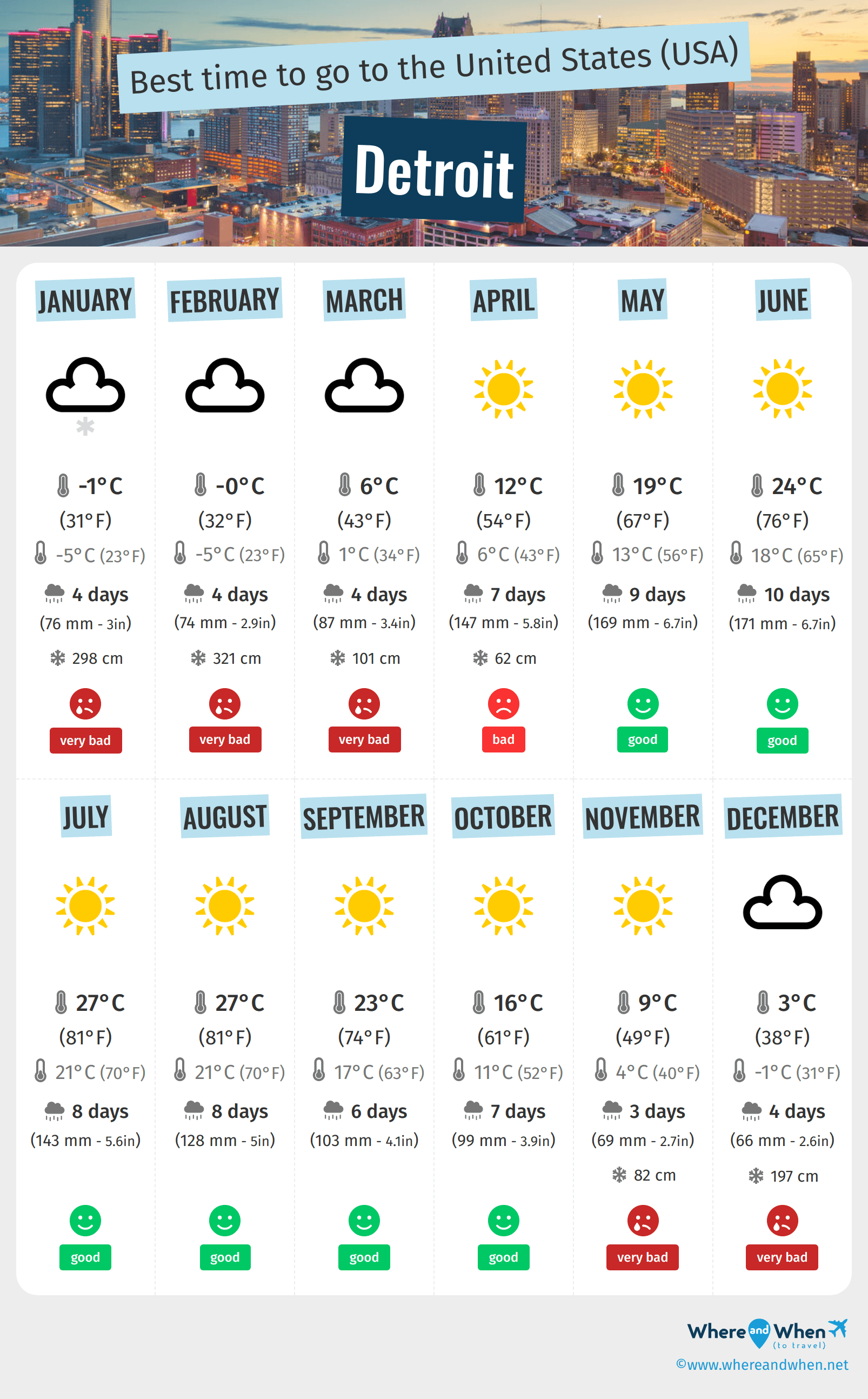
- Best Time to Visit: Each season offers a different charm. Summer (June-August) brings warm weather, outdoor festivals, and baseball games, making it a lively time to visit. Fall (September-November) showcases beautiful foliage and football season. Spring (April-May) is pleasant, with mild temperatures and blooming flowers. Winter (December-March) can be cold and snowy but offers opportunities for ice skating at Campus Martius Park and indoor attractions. Factor in event schedules, as these can drastically affect hotel availability and pricing.
- Budgeting: Detroit generally offers a more affordable travel experience compared to other major USA cities, but costs can add up. Prioritize your must-see attractions and experiences, and look for free activities like walking the Riverwalk or exploring Campus Martius. Many museums offer free admission days or reduced rates.
- Safety: Like any large city, it’s wise to be aware of your surroundings, especially at night. Stick to well-lit and populated areas. Use reputable transportation services. Detroit’s Downtown and Midtown areas are generally very safe and patrolled.
In conclusion, knowing the time in Detroit is much more than a simple fact; it’s the foundational element for orchestrating a memorable and enriching travel experience. From adjusting to Eastern Time upon arrival to meticulously planning your days to encompass the city’s iconic landmarks, vibrant culture, and diverse lifestyle offerings, every detail contributes to a seamless journey. Detroit awaits with open arms, ready to share its stories, innovations, and unique charm, provided you arrive with your clock—and your spirit—in sync with its beating heart.
LifeOutOfTheBox is a participant in the Amazon Services LLC Associates Program, an affiliate advertising program designed to provide a means for sites to earn advertising fees by advertising and linking to Amazon.com. Amazon, the Amazon logo, AmazonSupply, and the AmazonSupply logo are trademarks of Amazon.com, Inc. or its affiliates. As an Amazon Associate we earn affiliate commissions from qualifying purchases.