
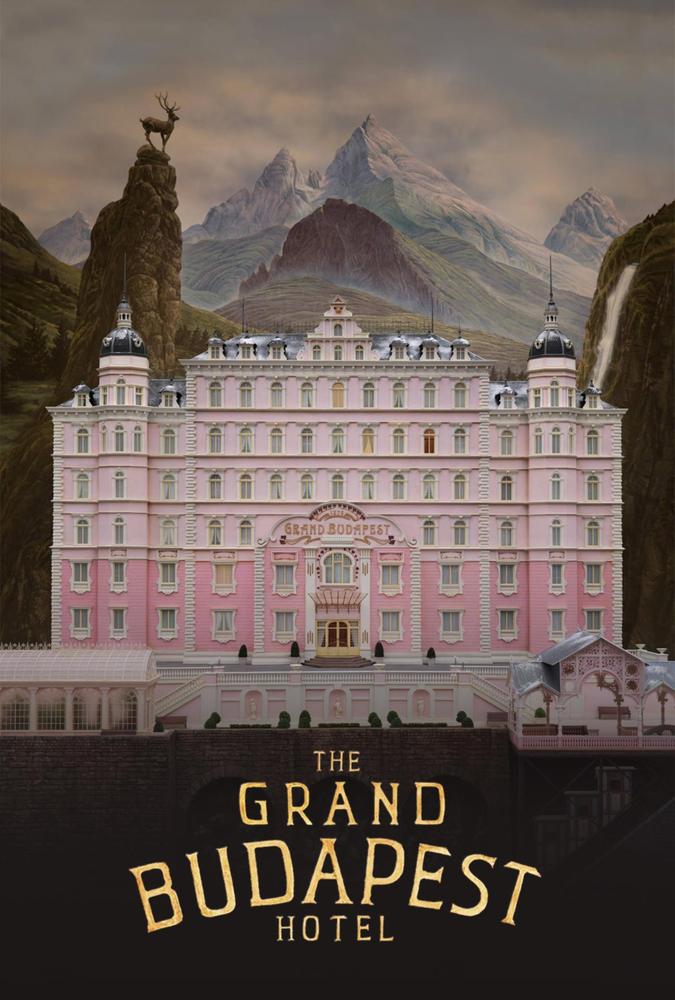
The cinematic world of Wes Anderson is defined by its meticulous symmetry, pastel color palettes, and a sense of nostalgic whimsy that feels both grounded in history and completely otherworldly. Perhaps no structure captures this aesthetic more perfectly than the pink-hued masterpiece featured in his 2014 film. However, for those seeking to book a room or walk through its legendary revolving doors, the question remains: Where is the Grand Budapest Hotel?
While the hotel itself is a fictional establishment located in the imaginary Republic of Zubrowka, its physical reality is a patchwork of European Landmarks, architectural treasures, and historical sites. To find the “real” hotel, one must journey to the border of Germany, Poland, and the Czech Republic, where the essence of the film’s grandeur is preserved in stone, glass, and Art Nouveau ironwork.

The Heart of the Hotel: Görlitzer Warenhaus
The most significant physical location used to bring the hotel to life is not a hotel at all, but a department store. The Gorlitzer Warenhaus, located in the town of Görlitz, served as the primary interior setting for the film’s lobby, mezzanine, and sprawling staircases.
A Masterpiece of Art Nouveau
Constructed in 1913, the Gorlitzer Warenhaus is one of the few department stores in Germany to have survived World War II without sustaining significant damage. Its architecture is a stunning example of the Jugendstil style, featuring a massive stained-glass ceiling, ornate chandeliers, and a grand central atrium. When the production team discovered the building, it was vacant, allowing them to transform the space into the bustling, pink-tinged lobby of the Grand Budapest Hotel.
The Transformation of Space
While the store provided the skeletal structure, the filmmakers built a “hotel within a store.” The pink marble columns and the intricate concierge desk were sets constructed within the atrium. Interestingly, the same space was used to film two different eras: the vibrant Belle Époque period of the 1930s and the drab, orange-and-brown Soviet aesthetic of the 1960s. This landmark’s versatility is a testament to the enduring quality of early 20th-century European architecture.
Architectural Inspiration: Karlovy Vary and Beyond
While the interiors were filmed in Görlitz, the exterior of the Grand Budapest Hotel was largely a handmade miniature model. However, that model was heavily inspired by existing Landmarks in the Czech Republic, specifically in the spa town of Karlovy Vary.
The Grandhotel Pupp
The Grandhotel Pupp is perhaps the most direct inspiration for the hotel’s exterior silhouette and its reputation as a premiere destination for the European elite. Situated in the picturesque valley of Karlovy Vary, this hotel has hosted royalty, composers, and movie stars for centuries. Its sprawling white facade and neoclassical details provided the blueprint for the fictional hotel’s elegance.
Hotel Imperial and Bristol Palace
Other architectural cues were taken from the Hotel Imperial and the Bristol Palace, also located in Karlovy Vary. The Hotel Imperial, perched on a hill overlooking the town, mirrors the film’s depiction of the hotel as a secluded sanctuary accessible by a funicular. The Bristol Palace, with its distinct turrets and reddish roof, contributed to the whimsical “wedding cake” look that characterizes the Grand Budapest Hotel in its prime.
Exploring the Historical Landmarks of Görliwood
The town of Görlitz itself is often referred to as “Görliwood” due to its popularity as a filming location for historical epics. Because it escaped the bombings of the 1940s, the town boasts an incredible density of historical Landmarks ranging from Renaissance to Baroque and Gothic styles.
The Stadthalle Görlitz
Another key location is the Stadthalle Görlitz, an old city hall and concert space. Its grand interiors were used for the hotel’s dining room scenes. The Stadthalle Görlitz captures the fading glory of the Austro-Hungarian Empire, with high ceilings and intricate woodwork that evoke a sense of bygone luxury. Though currently undergoing renovation, it remains a pillar of the town’s cultural heritage.
The Streets of the Old Town
Walking through the Altstadt (Old Town) of Görlitz, visitors can see the cobblestone streets where the film’s chase sequences were staged. The town serves as a living museum of European history. The Untermarkt square, with its historic Town Hall and astronomical clock, provides a backdrop that feels frozen in time, perfectly matching the film’s themes of memory and the preservation of culture.
Saxony’s Artistic Treasures: Dresden and Beyond
The search for the Grand Budapest Hotel also leads to the city of Dresden, the capital of Saxony. Several iconic landmarks in this “Florence on the Elbe” were used to represent the high-society culture of the Republic of Zubrowka.
The Zwinger Museum
The Zwinger Museum in Dresden is one of the most significant Landmarks of the Baroque period. In the film, its palatial courtyards and galleries stood in for the “Kunstmuseum,” where a pivotal chase scene occurs. The Zwinger Museum is home to world-class art collections, including the Old Masters Picture Gallery, and its architectural symmetry is a natural fit for Wes Anderson’s visual style.
Pfunds Molkerei: The World’s Most Beautiful Dairy
No fan of the film can forget Mendl’s, the bakery famous for its “Courtesan au Chocolat.” The interior of this fictional shop was filmed at Pfunds Molkerei in Dresden. Recognized by the Guinness World Records as the “most beautiful dairy shop in the world,” Pfunds Molkerei is decorated from floor to ceiling with hand-painted neo-Renaissance tiles from Villeroy and Boch. It is a landmark that embodies the intricate, decorative spirit of the film.
The Cultural Legacy of Fictional Landmarks
The fascination with the Grand Budapest Hotel highlights a unique intersection between cinema and architectural history. While the hotel is a digital and physical composite, the Landmarks that inspired it are very real and carry the weight of Central Europe’s complex history.
The Influence of Vienna and the Austro-Hungarian Empire
The spirit of the hotel is deeply rooted in the coffee-house culture of Vienna. The writers and intellectuals of Austria in the early 20th century, such as Stefan Zweig (to whom the film is dedicated), frequented grand hotels that served as hubs of civilization. Sites like Hotel Sacher or Cafe Central in Vienna provided the tonal inspiration for the film’s dialogue and social etiquette.
Preserving History Through Film
The use of the Gorlitzer Warenhaus and other Saxony landmarks has brought renewed international attention to these sites. Many of these Landmarks were neglected during the Cold War era but have since been restored to their former glory. The Grand Budapest Hotel serves as a cinematic preservation of a style of life and architecture that once defined Europe.
In conclusion, if you are looking for the Grand Budapest Hotel, you will not find it at a single address. Instead, you will find it in the stained glass of Görlitz, the thermal springs of Karlovy Vary, the tiled walls of Dresden, and the storied halls of Vienna. These real-world Landmarks continue to tell the story of a lost world, inviting travelers to step into a reality that is every bit as enchanting as the movies.
LifeOutOfTheBox is a participant in the Amazon Services LLC Associates Program, an affiliate advertising program designed to provide a means for sites to earn advertising fees by advertising and linking to Amazon.com. Amazon, the Amazon logo, AmazonSupply, and the AmazonSupply logo are trademarks of Amazon.com, Inc. or its affiliates. As an Amazon Associate we earn affiliate commissions from qualifying purchases.