
The skyline of the Midwest is punctuated by massive steel and concrete structures that serve as cathedrals for the modern era. In the heart of North America, two specific landmarks have recently dominated the headlines of architectural and cultural discourse. The decision for the University of Kansas football team to vacate their historic home in Lawrence and play their home games at GEHA Field at Arrowhead Stadium in Kansas City, Missouri, is more than a logistical shift; it is a convergence of two iconic landmarks. This transition highlights the evolving landscape of sports infrastructure and the historical significance of the venues that define the region.

The Transformation of David Booth Kansas Memorial Stadium
To understand why a team would move its operations to a different state, one must first look at the landmark they are leaving behind. David Booth Kansas Memorial Stadium is not merely a sports venue; it is one of the most storied landmarks in the United States. Built in 1921, it stands as the first stadium built in the Missouri River Valley and remains one of the oldest stadiums in college football.
The Architectural Legacy of the Gateway District
The primary reason for the temporary relocation is the ambitious “Gateway District” project. This multi-phase renovation is set to transform the northern entrance of the University of Kansas campus. As a landmark, David Booth Kansas Memorial Stadium has long been admired for its “horseshoe” design and its picturesque location at the foot of Mount Oread. However, modern requirements for hospitality, player facilities, and fan engagement necessitated a complete overhaul.
The renovation aims to preserve the historic character of the landmark while integrating 21st-century architectural standards. By the time the project is completed, the site will feature a new conference center, upgraded seating, and a reimagined concourse that connects the athletic facilities with the academic heart of Lawrence. This construction is so extensive that it renders the stadium unusable for the 2024 season, forcing the Kansas Jayhawks to seek temporary shelter in professional landmarks.
Historical Significance of the Site
The stadium was originally dedicated as a memorial to the students of the University of Kansas who gave their lives in World War I. This commemorative purpose makes it a solemn landmark within the state of Kansas. Over the decades, the field has hosted legends and witnessed the evolution of the Big 12 Conference. The move to GEHA Field at Arrowhead Stadium is a bridge between this collegiate history and the grand stage of professional football.
Arrowhead Stadium: A Professional Landmark in Missouri
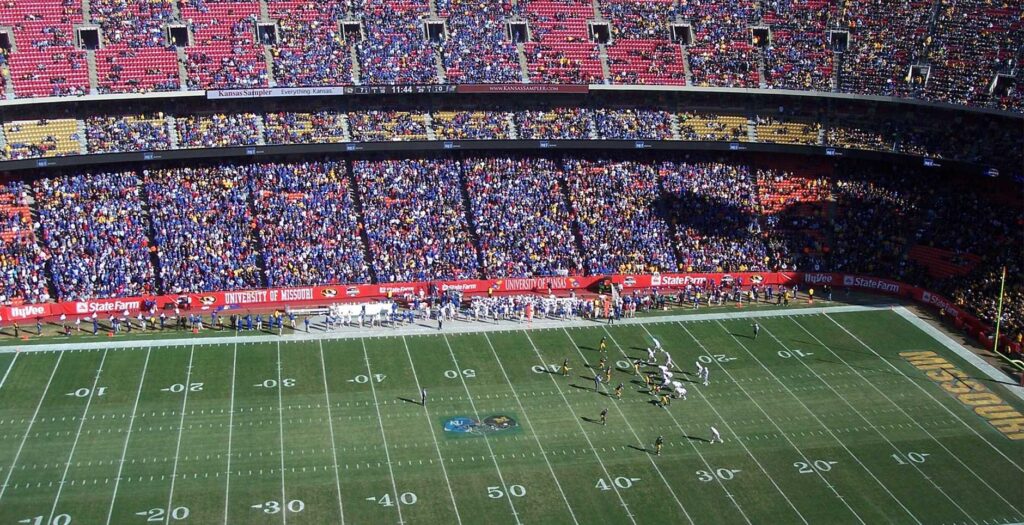
When the search for a temporary home began, the university looked toward the most prominent landmark in the Kansas City metropolitan area. GEHA Field at Arrowhead Stadium is a titan of the National Football League. Located within the Truman Sports Complex, it sits alongside Kauffman Stadium, the home of the Kansas City Royals. Together, these structures form a landmark destination for sports fans across the globe.
Design and Acoustical Engineering
Opened in 1972, Arrowhead Stadium is renowned for its unique seating bowl design, which provides some of the best sightlines in professional sports. For a landmark of its size, it offers a surprisingly intimate viewing experience. However, its most famous architectural feat is its ability to trap and amplify sound. It has been recognized by the Guinness World Records as the loudest outdoor stadium in the world.
For the Kansas Jayhawks, playing in this landmark offers a home-field advantage that few other venues could replicate. The architectural scale of Arrowhead Stadium, with its capacity exceeding 76,000, provides a massive stage for high-profile matchups against teams like the TCU Horned Frogs and the Houston Cougars.
A Shared History Across State Lines
While Arrowhead Stadium is the home of the Kansas City Chiefs, it has a long history of hosting collegiate events. The landmark was a frequent site for the “Border War” rivalry between Kansas and Missouri, one of the most intense rivalries in the history of college athletics. By returning to this venue, the university is tapping into a landmark that already resonates with its fan base. The geography of the Kansas City area allows this Missouri-based landmark to serve as a beacon for residents on both sides of the state line.
Children’s Mercy Park: The Kansas City, Kansas Landmark
While the larger games are slated for the massive Arrowhead Stadium, the team’s non-conference schedule found a home at another significant landmark: Children’s Mercy Park. Located in Kansas City, Kansas, this stadium is primarily known as the home of Sporting Kansas City.
A Landmark for Modern Soccer
Children’s Mercy Park represents a different architectural philosophy. It is a state-of-the-art soccer-specific landmark that emphasizes proximity to the field and luxury amenities. Its canopy roof covers every seating section, providing shelter from the elements while keeping the sound of the crowd focused on the pitch. For the Kansas Jayhawks, this landmark provides a boutique experience that contrasts sharply with the cavernous nature of Arrowhead.
The Landmark Synergy of Legends Field and Village West
The park is situated in the Village West area, a hub of landmarks including the Kansas Speedway and Legends Outlets Kansas City. By playing here, the university anchors itself in a major commercial and entertainment landmark district. This provides fans with a different cultural experience compared to the traditional campus atmosphere in Lawrence, highlighting the diversity of landmarks within the Wyandotte County region.
The Cultural and Regional Impact of the Move
The decision to play at these landmarks is not just about finding a field; it is about the intersection of civic pride and regional infrastructure. The Midwest is a region where landmarks are often defined by their utility and their role in bringing communities together.
Strengthening the Kansas City Connection
The move strengthens the tie between the University of Kansas and the Kansas City metropolitan area. Kansas City is home to a vast population of alumni, and by bringing the games to landmarks like Arrowhead Stadium, the university is effectively bringing the landmark to the people. This logistical pivot showcases how major landmarks can be repurposed to support different facets of the community, from professional sports to higher education.
The Role of Infrastructure in Modern Landmarks
The move also highlights the sheer scale of the Truman Sports Complex as a regional asset. Very few cities in the United States possess a landmark with the capacity and history of Arrowhead Stadium that is also available to host a major collegiate season on short notice. The presence of such a landmark allows for the continued growth of the university’s athletic program without a gap in home-game revenue or fan participation.
Looking Toward the Future: The New Memorial Stadium
As the Kansas Jayhawks take the field at GEHA Field at Arrowhead Stadium, the eyes of the architectural world remain on Lawrence. The goal is to return to a landmark that is completely transformed.
The Vision for the Gateway District
The future David Booth Kansas Memorial Stadium is designed to be a landmark that serves the community 365 days a year. Unlike the original 1921 structure, which was primarily used on game days, the new vision includes a hotel and medical facilities integrated into the stadium landmark. This “live-work-play” model is becoming a trend in the development of modern landmarks, where the stadium serves as an anchor for a larger district.

Preserving the View of the Campanile
One of the most critical aspects of the renovation is preserving the visual connection to another campus landmark: the World War II Memorial Campanile. The walk from the hill down to the stadium is a rite of passage for students, particularly during graduation. The architectural plans ensure that even as the stadium becomes more modern and imposing, it remains respectful of the historical landmarks that surround it.
In conclusion, the reason Kansas is playing at Arrowhead Stadium is a story of progress and preservation. It is a unique moment in time where one landmark is being reborn while another, the legendary GEHA Field at Arrowhead Stadium, steps in to provide the grandeur and capacity necessary to sustain a major athletic program. For fans and lovers of architecture alike, this season provides a rare opportunity to witness the synergy between these great American landmarks.
LifeOutOfTheBox is a participant in the Amazon Services LLC Associates Program, an affiliate advertising program designed to provide a means for sites to earn advertising fees by advertising and linking to Amazon.com. Amazon, the Amazon logo, AmazonSupply, and the AmazonSupply logo are trademarks of Amazon.com, Inc. or its affiliates. As an Amazon Associate we earn affiliate commissions from qualifying purchases.