
The story of Las Vegas is one of the most improbable chronicles in American history. Rising from the parched earth of the Mojave Desert, it transformed from a hidden oasis used by indigenous peoples and weary travelers into a global icon of entertainment and architecture. To understand how this Nevada powerhouse began, one must look beyond the neon lights and delve into a history defined by water, railroads, and massive federal engineering projects.
The Oasis in the Desert: Geographic Origins
Long before the first card was dealt or the first resort was built, the area now known as Las Vegas was a vital stop for those traversing the harsh landscape of the United States West. The name itself, “Las Vegas,” translates from Spanish to “The Meadows,” a name that seems incongruous with the modern image of a desert metropolis but was once an accurate description of the valley.
The Discovery of the Springs
In 1829, a young Mexican scout named Rafael Rivera became the first person of European descent to enter the valley. He was part of a trading party led by Antonio Armijo that was attempting to establish a trade route from New Mexico to California. While scouting for water, Rafael Rivera discovered artesian springs that created lush, green grasslands.
These meadows became a critical waypoint on the Old Spanish Trail. For decades, travelers used the valley as a place to rest and water their livestock before continuing the arduous journey across the desert. The presence of water in such an arid region made this specific geographic point a strategic landmark for the expansion of the western frontier.
The Early Settlements and the Mormon Fort
The first permanent settlement attempt occurred in the mid-19th century. In 1855, members of the Church of Jesus Christ of Latter-day Saints arrived from Utah to establish a mission. They built what is now known as the Las Vegas Mormon Fort. Their goal was twofold: to provide a protective stop for travelers and to mine lead in the nearby mountains.
However, the settlement was short-lived. Challenges with the climate and internal conflicts led the missionaries to abandon the fort by 1858. Despite its brief occupation, the Old Las Vegas Mormon Fort State Historic Park remains today as the oldest standing structure in the city, marking the definitive transition from a nomadic stop to a permanent human habitation.
The Iron Horse: The Birth of a Railroad Town
While the springs provided the reason to stop, it was the arrival of the railroad that provided the reason to stay. At the turn of the 20th century, the United States was rapidly connecting its coasts, and the Mojave Desert was a major obstacle that required a reliable watering station for steam locomotives.
The 1905 Auction and the Founding of the City
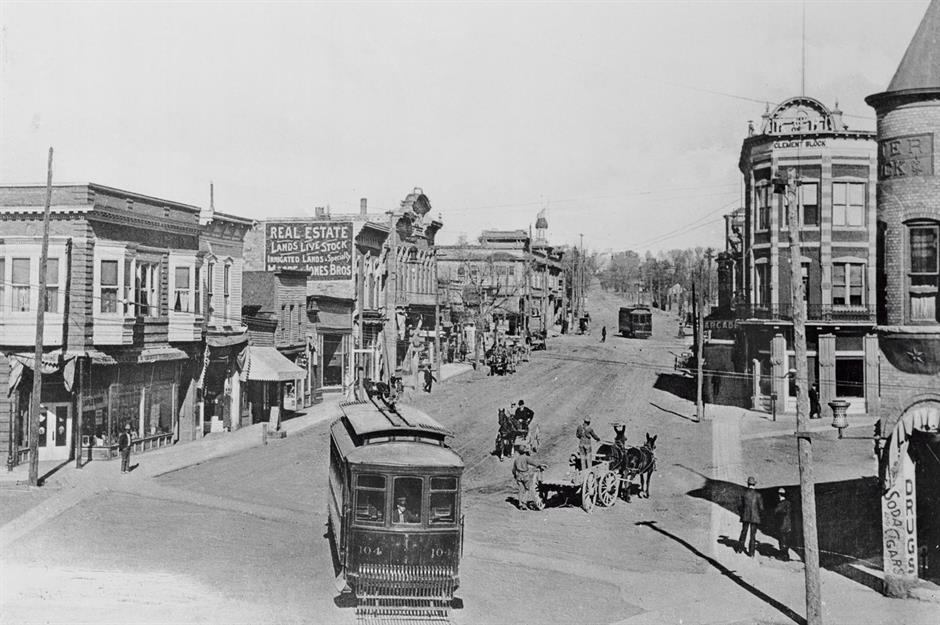
The modern history of Las Vegas officially began on May 15, 1905. On this day, the San Pedro, Los Angeles and Salt Lake Railroad auctioned off 110 acres of land. This land would become the downtown area of the city. Prospective residents and speculators gathered under the scorching sun to bid on lots, hoping to capitalize on the new rail connection between Salt Lake City and Los Angeles.
This auction established the grid system for the city and solidified Fremont Street as the town’s primary artery. Because of the railroad’s influence, the city was born as a utilitarian hub, supporting the mechanics of travel and logistics rather than the luxury it would later embrace.
The Frontier Spirit and Prohibition
In its early years, Las Vegas was a typical frontier town. It was rough, dusty, and filled with workers from the railroad. However, the 1920s brought a significant challenge: Prohibition. While the rest of the nation struggled with the ban on alcohol, Las Vegas developed a reputation for being somewhat more lenient. Speakeasies flourished, and the seeds of an “entertainment-first” culture were sown. The local government recognized early on that providing a space for leisure and vice could be a significant economic driver in a land where agriculture was nearly impossible.
Engineering a Metropolis: The Impact of the Hoover Dam
The most transformative event in the history of southern Nevada occurred during the Great Depression. In 1930, President Herbert Hoover authorized the construction of a massive dam on the Colorado River, located just 30 miles southeast of the city.

The Influx of Workers
The construction of the Hoover Dam brought thousands of workers to the region during a time when the rest of the country was suffering from record unemployment. While many lived in the government-planned Boulder City, they frequently traveled to Las Vegas for recreation.
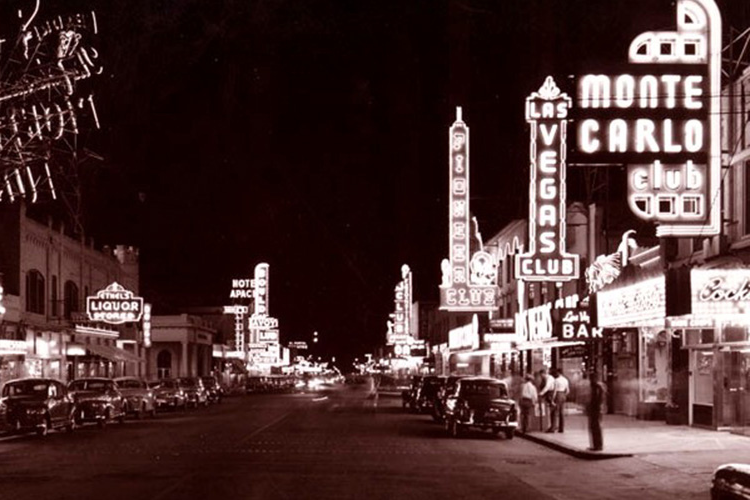
To accommodate this sudden population surge and to generate tax revenue, Nevada legalized gambling in 1931. This was a pivotal moment. The city began to pivot its entire identity toward catering to the dam workers. Small clubs and casinos began to pop up along Fremont Street, creating the first iteration of what we now recognize as a gambling destination.
The Legacy of Power and Water
Beyond the temporary boost in population, the Hoover Dam provided the two most essential components for a modern city: cheap electricity and a reliable water source. The creation of Lake Mead ensured that the small desert town could grow into a massive metropolis. Without this feat of civil engineering, the high-energy, neon-lit skyline of the modern city would have been physically impossible. The dam remains one of the most important Landmarks in the United States, serving as the literal foundation for the city’s future growth.
The Rise of the Strip and the Post-War Boom
As the dam project concluded, the city entered a new phase of development. The focus shifted from the downtown core to a stretch of Highway 91, which would eventually become the world-famous Las Vegas Strip. This move was driven by a desire to avoid the city’s taxes and regulations, but it ended up creating a new architectural playground.
El Rancho Vegas and the First Resorts
The first resort on what is now the Strip was El Rancho Vegas, which opened in 1941. Unlike the cramped clubs of downtown, El Rancho Vegas offered a sprawling “ranch-style” experience with a swimming pool and luxury accommodations. It set the precedent for the resort-style hospitality that would define the city.
Shortly after, the Flamingo Hotel was opened in 1946. Backed by organized crime figure Bugsy Siegel, the Flamingo Hotel brought a level of Hollywood glamour and sophistication that the city had never seen. This marked the beginning of the “Mob Era,” where organized crime invested heavily in the city’s infrastructure, building legendary properties like the Sands Hotel and the Sahara Hotel.
Transitioning to the Mega-Resort Era
The mid-to-late 20th century saw the city evolve from a mob-run gambling den into a corporate-owned family destination. This transition was pioneered by visionaries like Jay Sarno, who built Caesars Palace and Circus Circus, and later Steve Wynn, who opened The Mirage in 1989.
The Mirage was particularly significant because it was the first “mega-resort.” It proved that a hotel could succeed by offering high-end attractions—like a volcano and a secret garden—alongside gambling. This shift ushered in the modern era of Las Vegas architecture, characterized by massive themed environments like The Venetian, Paris Las Vegas, and Luxor Hotel.
Cultural and Architectural Landmarks
While the casinos are the primary draw, the history of Las Vegas is also written in its natural and cultural landmarks. The city is a study in contrasts, where man-made marvels sit adjacent to stunning natural formations.
Natural Wonders Near the City
The beginning of the city was rooted in the land, and that connection remains today. Just a short drive from the neon lights is Red Rock Canyon, a National Conservation Area that showcases the raw beauty of the Mojave Desert. These towering red sandstone peaks provide a stark reminder of the environment the early pioneers had to navigate. Similarly, Valley of Fire State Park offers insights into the ancient history of the region, containing petroglyphs left by the Ancestral Puebloans thousands of years ago.
The Preservation of History
Today, the city works hard to preserve its unique history. The Neon Museum serves as a “boneyard” for the iconic signs that once defined the skyline, offering a visual timeline of the city’s aesthetic evolution. Meanwhile, the Mob Museum, located in the former federal courthouse, provides a comprehensive look at the law enforcement and criminal history that shaped the town’s early decades.
The story of how Las Vegas began is a testament to human ingenuity and the refusal to be limited by geography. From a small meadow in the desert to a global landmark of light and architecture, the city remains a unique chapter in the history of the United States and Arizona borderlands. It is a place that was built on water, fueled by the railroad, powered by the dam, and ultimately defined by the dreams of those who saw potential in the empty desert.
LifeOutOfTheBox is a participant in the Amazon Services LLC Associates Program, an affiliate advertising program designed to provide a means for sites to earn advertising fees by advertising and linking to Amazon.com. Amazon, the Amazon logo, AmazonSupply, and the AmazonSupply logo are trademarks of Amazon.com, Inc. or its affiliates. As an Amazon Associate we earn affiliate commissions from qualifying purchases.