
Determining how far away Las Vegas is depends significantly on your starting point, your mode of transportation, and the type of experience you seek. Known globally as the “Entertainment Capital of the World,” this shimmering oasis in the Mojave Desert is a beacon for travelers seeking luxury, adventure, and culinary excellence. Located in the southern tip of Nevada, Las Vegas is strategically positioned within the United States to be accessible from nearly any corner of the globe.
Geographic Perspective: Mapping the Distance to the Neon Oasis
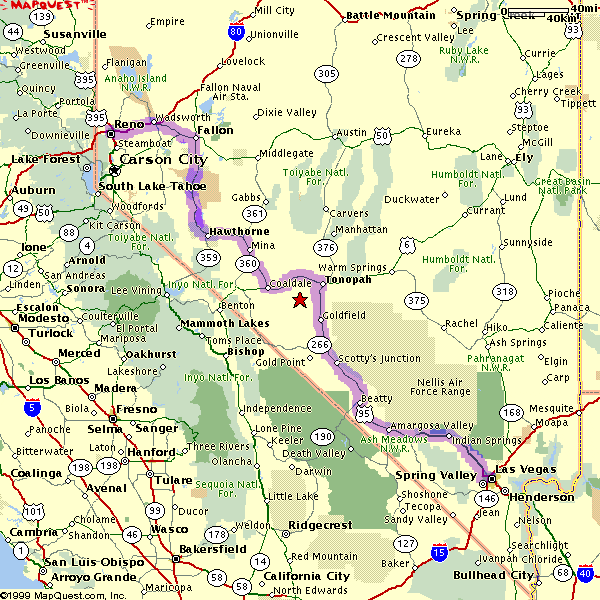
When conceptualizing the distance to Las Vegas, one must first look at its regional neighbors. The city is the anchor of the Las Vegas Valley, a metropolitan area that includes surrounding cities like Henderson and North Las Vegas. Its proximity to major West Coast hubs makes it a primary destination for regional travelers.
Regional Proximity: Southern California and the Southwest
For many, the question of “how far” is answered by a manageable drive. Las Vegas is approximately 270 miles northeast of Los Angeles, California. This proximity has forged a deep cultural and economic link between the two regions. Similarly, the city is about 300 miles northwest of Phoenix, Arizona, making it a central point within the Sun Belt. Travelers from Salt Lake City, Utah, face a journey of roughly 420 miles, a distance that showcases the transition from the mountainous Great Basin to the arid desert landscape.
National Reach: Distance from Major US Hubs
On a national scale, Las Vegas is quite far from the East Coast, but modern aviation has made it a common weekend getaway. From New York City, the flight spans approximately 2,500 miles, crossing the breadth of the Great Plains and the Rocky Mountains. For those in the Midwest, specifically Chicago, the distance is roughly 1,750 miles. Despite these numbers, the city remains one of the most visited destinations in North America.
International Accessibility: Global Flight Times
From an international perspective, Las Vegas is a significant point of interest for travelers from Europe and Asia. A direct flight from London, United Kingdom, takes roughly 10 to 11 hours, covering over 5,000 miles. Travelers from Tokyo, Japan, or Sydney, Australia, often connect through major Pacific gateways like San Francisco or Seattle, extending the travel time but highlighting the city’s status as a global tourism magnet.
Navigating the Journey: Road Trips and Rail Options
The journey to Las Vegas is often as much a part of the experience as the destination itself. Whether you are traversing the desert floor or planning for future infrastructure, the logistical path to the city is a study in modern travel.
The Classic Drive from Los Angeles
The most famous route into the city is via Interstate 15. This drive usually takes between four and five hours, depending on traffic in the Inland Empire. Travelers pass through iconic stops such as San Bernardino, Barstow, and the Mojave National Preserve. Crossing the state line at Primm offers the first glimpse of Nevada gaming, signaling that the bright lights of the Las Vegas Strip are only about 45 minutes away.
Scenic Routes from Phoenix and Salt Lake City
Driving from Phoenix involves taking US Route 93, a route that has been significantly improved by the Mike O’Callaghan–Pat Tillman Memorial Bridge. This path bypasses the winding roads of the Hoover Dam, shortening the trip to approximately four and a half hours. From Salt Lake City, the drive south on Interstate 15 offers a stunning transition through the red rocks of Southern Utah and the Virgin River Gorge in Arizona before arriving in the valley.
The Future of High-Speed Rail
For those wondering how far away Las Vegas will be in terms of time in the near future, the Brightline West project is a significant development. This high-speed rail line aims to connect Rancho Cucamonga (and by extension the Greater Los Angeles Area) to Las Vegas in approximately two hours. This initiative is designed to revolutionize regional travel, making the city feel closer than ever for millions of Southern California residents.

Air Travel: Efficiency and Arrival at Harry Reid International Airport
For the majority of visitors, the “distance” to Las Vegas is measured in flight hours. The city’s main terminal, Harry Reid International Airport, is uniquely positioned just blocks away from the major resorts, providing one of the most seamless “arrival-to-vacation” transitions in the world.
Flight Durations from Major Hubs
Travelers from Dallas or Houston, Texas, can expect a flight time of around three hours. Those departing from Atlanta, Georgia, or Miami, Florida, are looking at roughly four to five hours in the air. The efficiency of Harry Reid International Airport is a point of pride for the city; its proximity to the Las Vegas Boulevard means that once you land, you are only minutes away from world-class hotels like the Bellagio Hotel and Casino or the Caesars Palace.
Trans-Atlantic and Pacific Connections
The distance for international travelers remains a commitment, but the availability of direct routes is increasing. Carriers such as British Airways and Virgin Atlantic operate regular flights from London Heathrow Airport. From Canada, cities like Toronto and Vancouver offer frequent short-haul and medium-haul flights. The ease of customs and border protection at the dedicated international terminals helps mitigate the feeling of being “far away” once you touch down in Nevada.
Proximity to Iconic Landmarks and Natural Wonders
When people ask “how far away is Las Vegas,” they are often also asking about its proximity to other famous American landmarks. The city serves as the perfect base camp for exploring the American Southwest.
The Grand Canyon Experience
One of the most common questions is the distance from Las Vegas to the Grand Canyon. The Grand Canyon West Rim, home to the Skywalk, is approximately 130 miles away, or a two-and-a-half-hour drive. The more famous Grand Canyon South Rim, located within Grand Canyon National Park, is about 280 miles away, requiring roughly four and a half hours of travel. This proximity makes both day trips and overnight excursions highly feasible for visitors.
Red Rock Canyon and Valley of Fire
If you don’t want to travel far at all, the Red Rock Canyon National Conservation Area is just 15 miles west of the Las Vegas Strip. It offers a dramatic contrast to the neon lights with its towering red sandstone peaks. About 50 miles to the northeast lies Valley of Fire State Park, Nevada’s oldest state park, known for its ancient petroglyphs and stunning vistas. These locations prove that while Las Vegas may feel like a secluded island of light, it is surrounded by some of the most spectacular nature in the United States.
Planning Your Arrival: Tips for Every Traveler
To truly understand how far Las Vegas is, one must plan for the specifics of the trip. The distance is manageable, but the desert climate and the city’s unique layout require some foresight.
Best Times to Visit Based on Travel Duration
If you are traveling a long distance from Europe or Asia, you may want to stay for at least a week to offset the travel time. For those in California or Arizona, a three-day weekend is the standard. Seasonal considerations are also vital; the distance feels much longer when driving through the extreme heat of the Mojave Desert in July. Spring and Fall are the ideal seasons, offering pleasant temperatures for both driving and exploring the city on foot.

Navigating the City Upon Arrival
Once you have closed the distance to Las Vegas, moving within the city is relatively straightforward. The Las Vegas Monorail connects several major resorts on the east side of the Strip, while ride-sharing services are extremely prevalent. For those looking to venture to Downtown Las Vegas to see the Fremont Street Experience, the distance from the southern end of the Strip is only about 5 or 6 miles.
In conclusion, “how far” Las Vegas is remains a subjective question. It is close enough for a quick getaway for millions of people in the Southwest, yet it retains a “destination” feel for those flying in from New York or London. Its unique geographic placement allows it to be both a convenient stopover and a primary target for global travelers. Whether you are driving across the Mojave Desert or flying over the Atlantic Ocean, the moment the city’s skyline appears on the horizon, the distance traveled feels like a small price to pay for the experiences that await.
LifeOutOfTheBox is a participant in the Amazon Services LLC Associates Program, an affiliate advertising program designed to provide a means for sites to earn advertising fees by advertising and linking to Amazon.com. Amazon, the Amazon logo, AmazonSupply, and the AmazonSupply logo are trademarks of Amazon.com, Inc. or its affiliates. As an Amazon Associate we earn affiliate commissions from qualifying purchases.