
The skyline of Las Vegas is one of the most recognizable in the world, characterized by a dazzling array of neon lights, sprawling resorts, and architectural wonders. However, one structure consistently pierces the desert clouds, standing as a sentinel over the North Strip. That structure is the Stratosphere, now officially known as The STRAT Hotel, Casino & SkyPod. For decades, travelers and architecture enthusiasts have asked the same question: exactly how tall is this towering achievement?
At a height of 1,149 feet (350.2 meters), the Stratosphere is not just a point of interest; it is a record-breaking landmark. As the tallest freestanding observation tower in the United States and the second-tallest in the Western Hemisphere, it serves as a navigational North Star for both locals and visitors in Nevada. This article explores the architectural significance, the history, and the engineering marvels that define this giant of the Mojave Desert.

The Engineering Marvel: Measuring the Heights of Success
To understand the magnitude of the Stratosphere, one must look beyond the simple numerical value of its height. The tower is a feat of modern engineering, designed to withstand the unique environmental pressures of the high desert while providing a safe, stable platform for the hundreds of thousands of guests who visit its summit every year.
Technical Specifications and Records
The official height of 1,149 feet places the Stratosphere above many of the world’s most famous skyscrapers. To put this in perspective, the tower is nearly twice the height of the Space Needle in Seattle and significantly taller than the Eiffel Tower replica located at Paris Las Vegas. Its elevation provides a 360-degree view of the Las Vegas Valley, offering a perspective that is unmatched by any other landmark in the city.
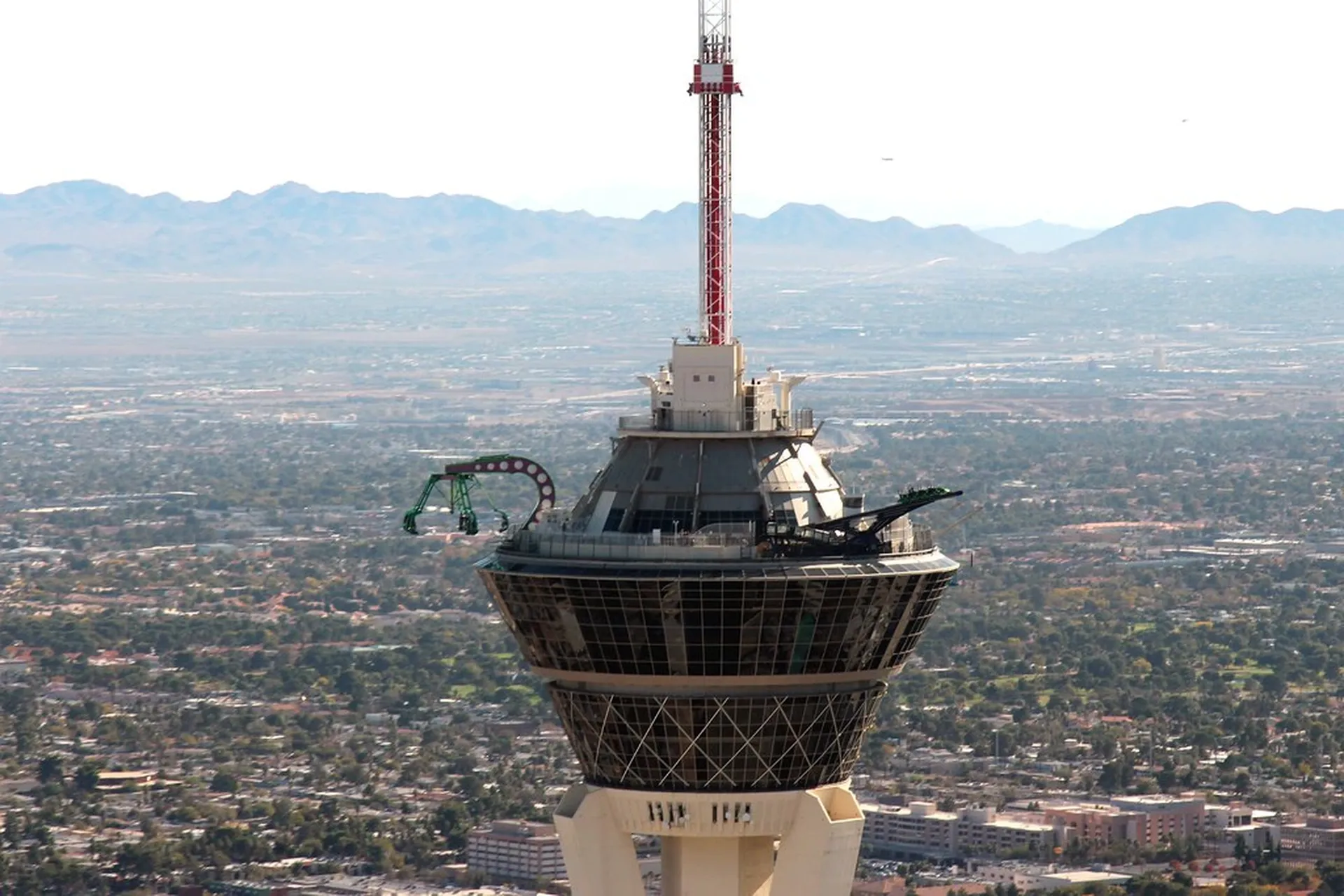
The structure itself consists of a concrete shaft topped by a “pod” that houses the observation decks, a revolving restaurant, and several lounges. Above this pod, a steel mast rises further into the air, supporting the tower’s famous thrill rides and communication equipment. The weight of the concrete alone is staggering, and the foundation is anchored deep into the Nevada caliche to ensure stability against high-velocity winds.
The FAA and the Original Height Vision
Interestingly, the Stratosphere we see today is actually shorter than what its creator, Bob Stupak, originally intended. The initial vision for the tower was an ambitious 1,800 feet, which would have made it one of the tallest structures on the planet at the time. However, the Federal Aviation Administration (FAA) intervened.
Due to the tower’s proximity to the McCarran International Airport (now known as Harry Reid International Airport), the Federal Aviation Administration voiced concerns regarding the flight paths of arriving and departing aircraft. After a series of negotiations and safety assessments, the height was capped at the current 1,149 feet. Despite this reduction, the landmark remained a record-setter, fundamentally changing the architectural profile of Las Vegas Strip development.
A Comparative Analysis: The Stratosphere vs. Global Giants
When discussing the height of the Stratosphere, it is helpful to compare it to other iconic landmarks. This context highlights why the tower remains a primary focus of Landmarks enthusiasts and urban historians.
Domestic and International Standings
Within the United States, the Stratosphere remains the undisputed champion of freestanding observation towers. It is taller than the Empire State Building in New York City if one measures up to the latter’s roof, though the Empire State Building takes the lead when its antenna is included. In terms of observation towers specifically, the only structure in the Western Hemisphere that surpasses it is the CN Tower in Toronto.
This ranking places Las Vegas on a global stage for civil engineering. While the Burj Khalifa in Dubai and the Tokyo Skytree have since reached much greater heights, the Stratosphere was a pioneer in the 1990s, proving that massive vertical structures could be built in seismic zones and extreme heat environments.
The Impact on the Las Vegas Skyline
Before the Stratosphere, the Las Vegas skyline was relatively flat, dominated by mid-rise hotel towers. The completion of this landmark in 1996 signaled a “race to the top.” Since then, other resorts like the Encore at Wynn Las Vegas and Resorts World Las Vegas have pushed the boundaries of hotel height, but none have attempted to replicate the pure verticality of the Stratosphere tower. It remains the anchor of the Sahara Avenue intersection, marking the gateway between the downtown area and the main tourism corridor.
The SkyPod: Architecture with a Purpose
The height of the Stratosphere is not merely for show; it serves a functional purpose through the SkyPod. This multi-level area at the top of the tower is where the landmark’s height is most viscerally felt by the public.
Observation Decks and Thrill Rides
The tower features both indoor and outdoor observation decks. The outdoor deck, located on level 109, allows visitors to feel the wind and hear the city’s distant hum from over 1,000 feet up. However, for those seeking more than a view, the tower utilizes its height to host some of the world’s most terrifying thrill rides.
The Big Shot catapults riders even higher, launching them up the tower’s mast to a peak height of 1,081 feet before dropping them. Insanity involves a mechanical arm that spins passengers out over the edge of the tower, suspended in mid-air with nothing but 900 feet of gravity beneath them. X-Scream acts as a giant see-saw, tilting riders over the edge as if they are about to plunge into the Las Vegas Strip below. Finally, the SkyJump Las Vegas holds a Guinness World Record for the highest commercial decelerator descent, allowing guests to leap from the tower in a controlled freefall.
Top of the World: A Revolving Architectural Experience
One of the most sophisticated uses of the tower’s height is the Top of the World restaurant. This award-winning dining room rotates 360 degrees every 80 minutes. The engineering required to rotate a massive dining floor while maintaining structural integrity at 800 feet in the air is a testament to the landmark’s design. It provides a shifting panorama of the Spring Mountains, the Red Rock Canyon National Conservation Area, and the glittering lights of the Fremont Street Experience.
History and Cultural Significance of the Landmark
The story of how the Stratosphere became so tall is intertwined with the history of its founder and the evolution of the city itself. It represents a transition period in Las Vegas history—from the classic era of “Vegas World” to the modern era of mega-resorts.
The Legacy of Bob Stupak
The tower was the brainchild of Bob Stupak, a legendary casino owner known for his eccentric marketing and bold bets. He originally owned Vegas World, a space-themed casino that occupied the site. Stupak wanted a landmark that would draw people to the northern end of the Las Vegas Strip, away from the established hubs. The Stratosphere was his “legacy project,” a structure meant to be seen from every corner of the city.
The construction was not without drama. In 1993, while the tower was still being built, a massive fire broke out at the top of the concrete shaft. Despite the flames being visible for miles, the structural integrity of the concrete and steel was largely unaffected, and construction resumed. This resilience has become part of the tower’s lore.
Rebranding and Modern Identity
In recent years, the landmark underwent a massive renovation and rebranding effort. Now known as The STRAT Hotel, Casino & SkyPod, the property has modernized its interiors while keeping the focus on its greatest asset: its height. The rebranding was intended to appeal to a new generation of travelers who value both the history of iconic Landmarks and the luxury of modern amenities.
The tower has also become a cultural touchstone, appearing in numerous films, television shows, and video games. Whether it is a backdrop for an action sequence or a symbol of the city’s “reach for the stars” mentality, the Stratosphere continues to inspire awe.
Conclusion: The Sky is the Limit
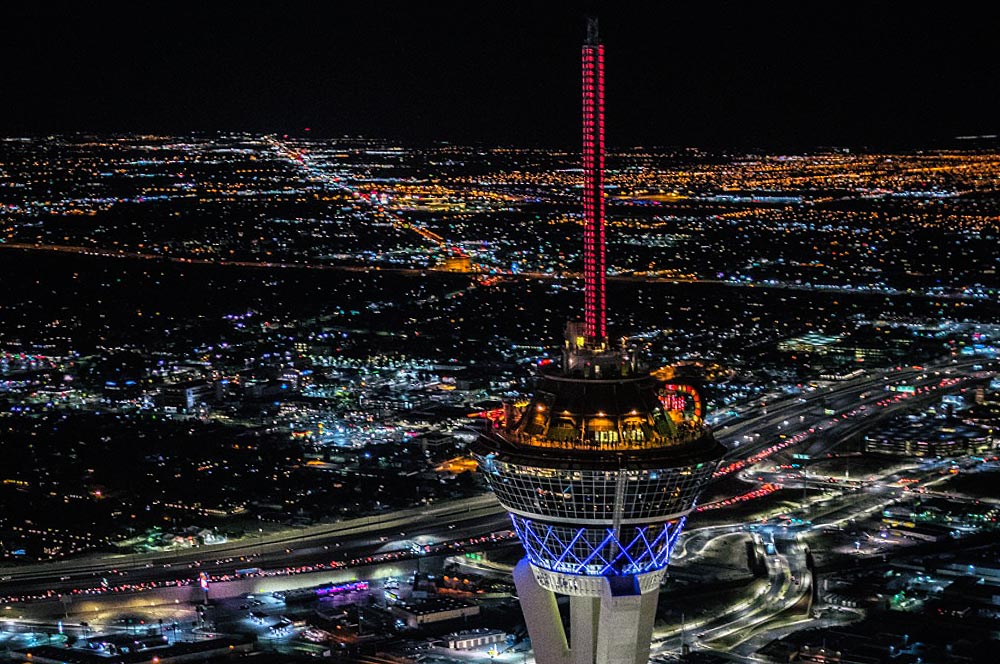
At 1,149 feet, the Stratosphere remains a towering achievement in the world of architecture and tourism. It is more than just a measurement of height; it is a symbol of Las Vegas ambition. From its record-breaking status in the United States to its role as a premier destination for thrill-seekers and diners, the tower has secured its place in the history of the world’s most famous landmarks.
Whether you are standing at the base on Las Vegas Boulevard looking up, or peering down from the SkyPod at the sprawling lights of Clark County, the height of the Stratosphere provides a perspective that is truly one of a kind. It stands as a reminder that in Las Vegas, the sky is never truly the limit—it is simply the starting point for the next great architectural adventure.
LifeOutOfTheBox is a participant in the Amazon Services LLC Associates Program, an affiliate advertising program designed to provide a means for sites to earn advertising fees by advertising and linking to Amazon.com. Amazon, the Amazon logo, AmazonSupply, and the AmazonSupply logo are trademarks of Amazon.com, Inc. or its affiliates. As an Amazon Associate we earn affiliate commissions from qualifying purchases.