
When travelers think of Las Vegas, the mind immediately drifts toward the neon-soaked skyline of The Strip, the rhythmic clatter of slot machines, and the world-class entertainment that defines the city. However, for those seeking a different kind of adventure—one centered on nature and wildlife—the question often arises: “Is there a zoo in Las Vegas?” The answer is more nuanced than a simple yes or no. While Nevada does not currently host a singular, massive municipal zoo like those found in San Diego or New York City, the Las Vegas Valley is home to a fascinating collection of specialized animal habitats, sanctuaries, and interactive aquariums.

For the modern traveler, this decentralized approach to wildlife offers a unique opportunity to curate specific experiences, from walking through underwater tunnels filled with sharks to meeting retired circus lions in the desert. This guide explores the diverse wildlife attractions available within and around Las Vegas, providing an essential roadmap for families, nature enthusiasts, and curious explorers.
Wildlife Attractions on the Las Vegas Strip
For many visitors, the convenience of staying on The Strip means that any excursion must be within walking distance or a short ride. Fortunately, some of the most impressive animal displays in the United States are housed right inside the city’s famous resorts.
Shark Reef Aquarium at Mandalay Bay
Perhaps the most famous animal attraction in the city is the Shark Reef Aquarium, located at the southern end of the corridor within Mandalay Bay. This is not just a small hotel aquarium; it is an accredited member of the Association of Zoos and Aquariums. The facility holds more than 1.6 million gallons of water and houses over 2,000 animals, including 15 different species of sharks.
The experience is designed to be immersive, leading visitors through an ancient temple-themed path that eventually opens up into a massive shipwreck. The highlight for most is the walk-through tunnel, where sharks, giant rays, and endangered sea turtles swim directly overhead. Beyond the spectacle, the Shark Reef Aquarium offers educational programs about ocean conservation and the delicate ecosystems of the deep sea, making it a premier destination for those looking for a “zoo” experience under the waves.
Flamingo Wildlife Habitat at Flamingo Las Vegas
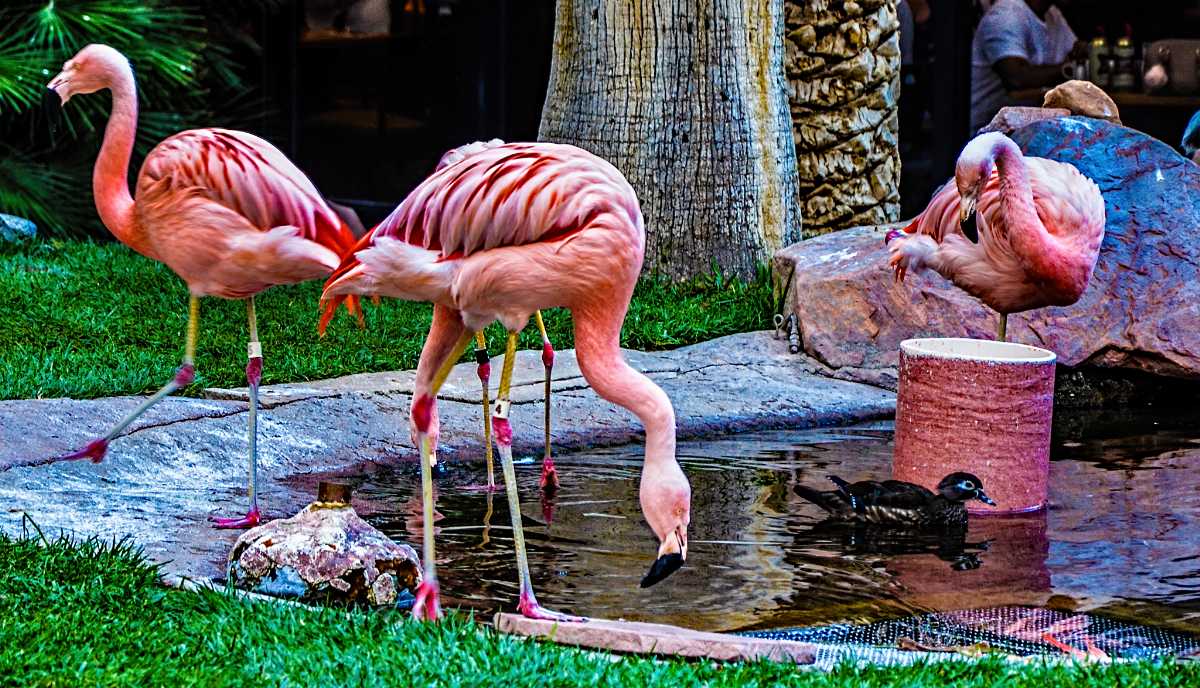
If you are looking for a more serene and cost-effective wildlife encounter, the Flamingo Wildlife Habitat at the Flamingo Las Vegas is a hidden gem. Spanning 15 acres, this lush, tropical sanctuary is a stark contrast to the surrounding desert heat. The habitat is home to a beautiful flock of Chilean flamingos, as well as exotic waterfowl, brown pelicans, and large koi fish.
This attraction is free to the public, offering a peaceful retreat where visitors can watch the birds groom themselves and interact in a carefully maintained environment. The presence of these vibrant pink birds in the heart of Paradise is a tribute to the city’s history and remains one of the most photographed spots for travelers seeking a natural escape within the urban landscape.
The Legacy of Animal Entertainment
Historically, Las Vegas was known for the Siegfried & Roy’s Secret Garden and Dolphin Habitat at The Mirage. This facility was home to the legendary white tigers and a pod of Atlantic bottlenose dolphins. While this attraction has permanently closed as part of the resort’s transition, its legacy has shifted the focus of wildlife tourism in the city toward more educational and sanctuary-based models.
Specialized Animal Sanctuaries and Educational Parks
Venturing slightly away from the main resort corridor reveals specialized facilities that function more like traditional zoos, focusing on specific species and conservation efforts.
Lion Habitat Ranch
Located just a short drive south in Henderson, the Lion Habitat Ranch is perhaps the closest experience to a traditional zoo in the area. This ranch originally served as the home for the lions that appeared at the MGM Grand. Today, it is an independent sanctuary where dozens of lions live in spacious enclosures.
The Lion Habitat Ranch provides a much more intimate experience than a large-scale zoo. Visitors can book private tours, watch trainers interact with the animals, and even meet Ozzie, the famous painting giraffe. The ranch emphasizes the importance of protecting African lions in the wild and provides a dignified retirement for these majestic predators.
SeaQuest Las Vegas
For an interactive family experience, SeaQuest Las Vegas, situated inside the Boulevard Mall, offers a global safari through various ecosystems. Unlike many traditional aquariums, SeaQuest Las Vegas focuses on “hands-on” encounters. Visitors can feed caimans, pet stingrays, and interact with exotic birds and reptiles.

The facility is divided into zones representing different parts of the world, from the Amazon Rainforest to the Caribbean. It is a popular choice for families with young children because of its accessibility and the ability to get up close with animals that are usually behind glass in larger institutions.
Gilcrease Nature Sanctuary
For those who prefer a quieter, non-profit approach to wildlife care, the Gilcrease Nature Sanctuary in the northwest part of the city is a haven for displaced exotic birds and farm animals. Founded decades ago, this sanctuary focuses on the rescue and rehabilitation of animals that were often pets. From large macaws and cockatoos to ostriches and goats, the Gilcrease Nature Sanctuary provides a rustic and heartwarming look at animal welfare in Clark County.
Educational and Natural Habitats
While Las Vegas lacks a central zoo, it excels in providing educational spaces that integrate wildlife with the natural history of the Mojave Desert.
Springs Preserve
The Springs Preserve is often called the “Central Park of Las Vegas.” It is a massive 180-acre cultural and historical site built around the original springs that once bubbled to the surface in the valley. While much of the park is dedicated to museums and botanical gardens, it also features a significant “Desert Living” center and a series of wildlife exhibits.
At Springs Preserve, visitors can observe desert tortoises—the official state reptile of Nevada—as well as Gila monsters, lizards, and various desert-dwelling mammals. The focus here is on the ecology of the Southwest, teaching visitors how animals survive in extreme heat and the importance of preserving the local desert landscape.
Red Rock Canyon National Conservation Area
For travelers who want to see animals in their true, wild state, no trip to Las Vegas is complete without visiting Red Rock Canyon National Conservation Area. Located only 15 miles west of the city, this stunning landscape of red sandstone peaks is home to a variety of wild species.
While hiking the trails, it is common to spot wild burros, bighorn sheep, and black-tailed jackrabbits. The visitor center also houses a desert tortoise habitat where you can learn about the conservation of this threatened species. Seeing these animals against the backdrop of the Spring Mountains provides a profound sense of scale that no indoor exhibit can match.
Historical Context: The Southern Nevada Zoological-Botanical Park
The reason many people still ask about a “Las Vegas Zoo” is that the city did once have one. The Southern Nevada Zoological-Botanical Park, colloquially known as the Las Vegas Zoo, was a three-acre facility that operated for over 30 years. It housed a variety of primates, cats, and birds until its closure in 2013.
Since its closing, the city has not built a replacement municipal zoo. Instead, the trend has shifted toward high-quality, specialized habitats and the integration of wildlife into existing entertainment venues. This evolution reflects a broader global shift in travel where tourists seek more specialized and ethically conscious animal interactions rather than general collections.
Planning Your Wildlife-Focused Trip to Las Vegas
If you are planning a visit to Las Vegas with an interest in wildlife, it is important to consider the climate and the layout of the city. Nevada is known for its extreme summer temperatures, which can influence animal behavior and your ability to enjoy outdoor attractions.
Best Times to Visit
To make the most of outdoor sites like Red Rock Canyon National Conservation Area or the Lion Habitat Ranch, the shoulder seasons—spring (March to May) and fall (September to November)—are ideal. During these months, the temperatures are mild, and the animals are generally more active. If you visit during the summer, plan your wildlife excursions for the early morning hours or focus on indoor attractions like the Shark Reef Aquarium or SeaQuest Las Vegas.
Logistics and Transport
Most of the wildlife attractions are spread out across the Las Vegas Valley. While the Flamingo Wildlife Habitat and the aquarium at Mandalay Bay are easily accessible via the Las Vegas Monorail or rideshare services, you will likely need a rental car to reach Henderson or the Springs Preserve comfortably.
By understanding that Las Vegas offers a “distributed zoo” model, travelers can enjoy a diverse range of experiences that go far beyond the neon lights. Whether you are feeding a ray at SeaQuest Las Vegas, watching flamingos dance on The Strip, or spotting a desert tortoise at Springs Preserve, the city provides a surprising and rich tapestry of wildlife encounters for every type of visitor.
LifeOutOfTheBox is a participant in the Amazon Services LLC Associates Program, an affiliate advertising program designed to provide a means for sites to earn advertising fees by advertising and linking to Amazon.com. Amazon, the Amazon logo, AmazonSupply, and the AmazonSupply logo are trademarks of Amazon.com, Inc. or its affiliates. As an Amazon Associate we earn affiliate commissions from qualifying purchases.