
For decades, the global perception of Los Angeles has been defined by a sprawling web of freeways, slow-moving traffic on the Interstate 405, and a cultural obsession with the automobile. To many travelers, the idea of an underground transit system in the “City of Angels” seems like a myth. However, contrary to popular belief, California does indeed host one of the most rapidly expanding transit networks in the United States.
The Los Angeles Metro Rail system is the answer to the age-old question: “Does Los Angeles have subways?” While it may not yet rival the density of the New York City Subway or the London Underground, it offers a sophisticated, clean, and increasingly efficient way to navigate the diverse neighborhoods of Southern California. For the modern traveler, understanding this system is the key to unlocking the city without the stress of a rental car.
The Underground Backbone: Understanding LA’s Heavy Rail
To answer the question definitively, yes—Los Angeles has two primary “heavy rail” lines that function exactly like traditional subways, operating entirely underground. These lines form the transit spine of the city, connecting the historic core with the entertainment hubs of the north.
The B Line: Connecting Downtown to Hollywood
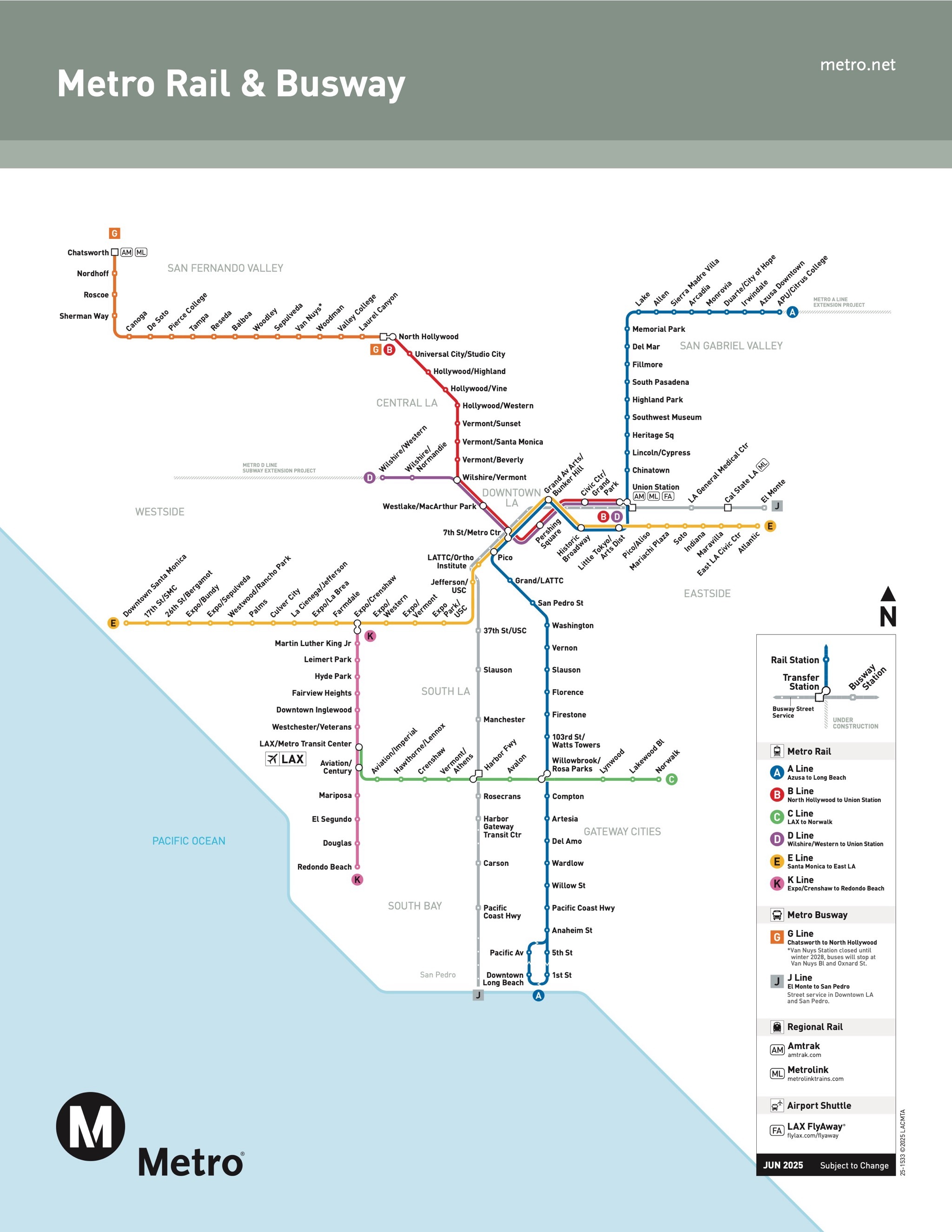
The B Line, formerly known as the Red Line, is perhaps the most famous stretch of the subway system. It begins its journey at Union Station, the stunning Art Deco transit hub in Downtown Los Angeles. From there, it snakes beneath the city, stopping at Civic Center and Pershing Square before heading northwest.
For tourists, the B Line is an essential tool. It provides direct access to the Hollywood Walk of Fame via the Hollywood/Highland station and the Hollywood/Vine station. Continuing further, it reaches Universal City, where a free shuttle awaits to take visitors to Universal Studios Hollywood. The line terminates in North Hollywood, a thriving arts district in the San Fernando Valley.
The D Line: The Purple Extension to the Westside
The D Line, or the Purple Line, currently shares tracks with the B Line between Union Station and Wilshire/Vermont. At this junction, the D Line branches off, serving the vibrant neighborhood of Koreatown.
While currently the shortest line in the system, it is currently undergoing a massive expansion known as the Purple Line Extension. This project will eventually bring the subway under Wilshire Boulevard all the way to Beverly Hills, Century City, and Westwood, providing a vital link to UCLA.
Beyond the Subway: The Light Rail Network
While the B Line and D Line are the only true “subways,” the Los Angeles County Metropolitan Transportation Authority, or Metro, operates an extensive light rail network. These lines often run at street level or on elevated tracks but frequently dip underground in congested areas, leading many locals to refer to the entire system collectively as “the subway.”
The E Line: From DTLA to the Pacific Ocean
The E Line, formerly the Expo Line, is a favorite among travelers. Starting in East Los Angeles and passing through the Historic Core, it travels west through Culver City and eventually reaches the shores of Santa Monica.
This line revolutionized travel in Los Angeles by providing a reliable, 50-minute journey from the city center to the Santa Monica Pier, bypassing the notorious traffic of the Santa Monica Freeway.
The A Line: The World’s Longest Light Rail
Following the completion of the Regional Connector project, the A Line (formerly the Blue Line) now stands as one of the longest light rail lines in the world. It stretches from Azusa in the San Gabriel Valley, through Pasadena, down through Downtown Los Angeles, and all the way to the coastal city of Long Beach.
This line is perfect for visitors wishing to see the Norton Simon Museum in Pasadena or the Aquarium of the Pacific in Long Beach without having to navigate multiple transfers.

Iconic Landmarks and Destinations via Transit
Using the subway and light rail in Los Angeles isn’t just about getting from point A to point B; it’s about experiencing the city’s architectural and cultural landmarks. Many of the most famous sites in the world are located just steps from a Metro Rail station.
Cultural Hubs in Downtown
The 7th Street/Metro Center station serves as the primary transfer point for the B Line, D Line, A Line, and E Line. From here, travelers can walk to the Crypto.com Arena (formerly the Staples Center) or the L.A. Live entertainment complex.
A short ride to the Grand Avenue Arts/Bunker Hill station places you in the heart of the city’s high culture. Here, you can admire the stainless-steel curves of the Walt Disney Concert Hall, designed by Frank Gehry, or explore contemporary masterpieces at The Broad and the Museum of Contemporary Art.
Historic Sites and Public Markets
No trip on the Los Angeles subway is complete without a stop at Grand Central Market. Accessible via the Pershing Square station, this bustling food hall has been operating since 1917 and offers everything from traditional Mexican tacos to modern artisanal coffee.
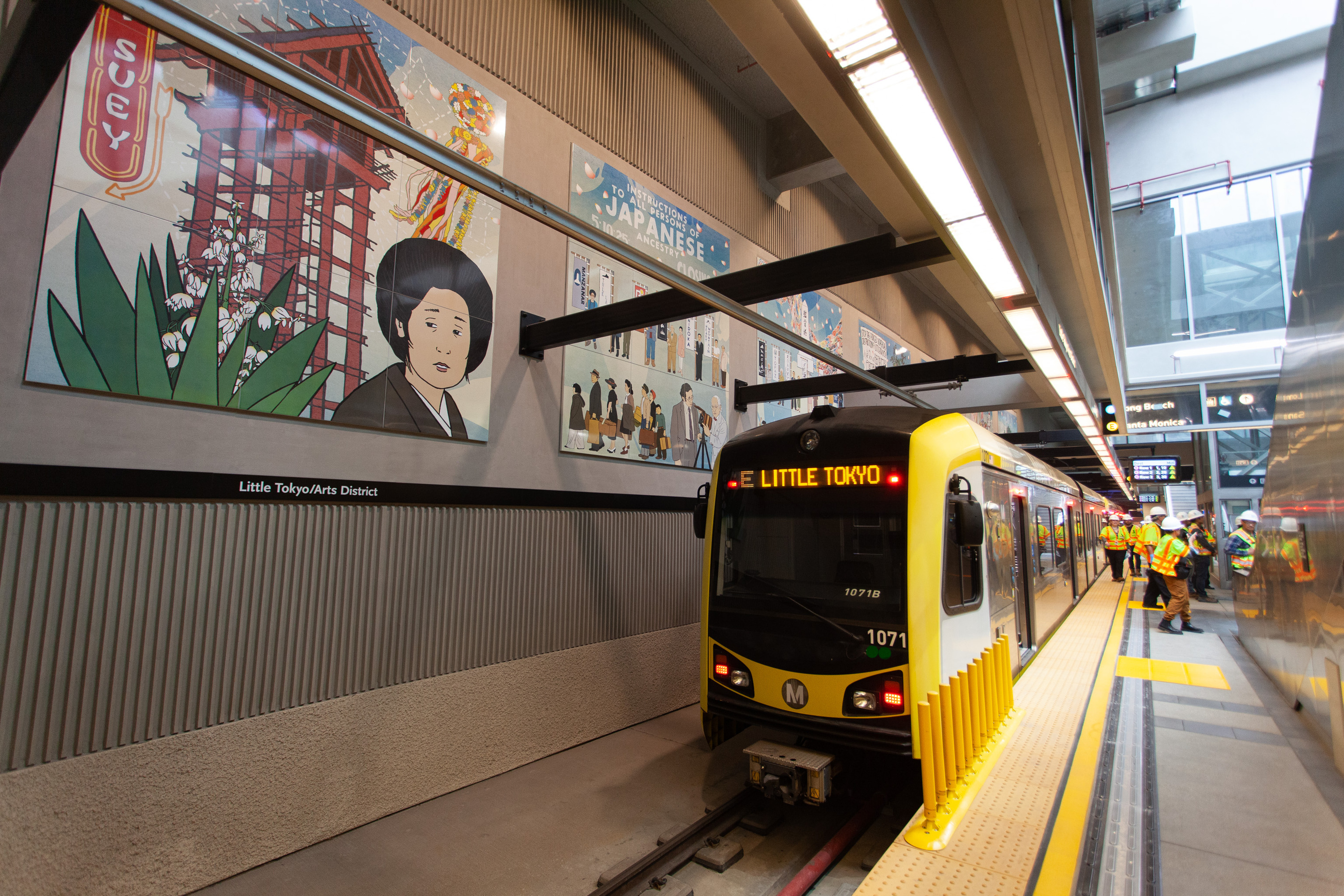
Across the street from the market is the Angels Flight Railway, a historic funicular that provides a charming, 30-second ride up Bunker Hill. For a deeper dive into the city’s history, the Little Tokyo/Arts District station offers access to Little Tokyo, one of only three official Japantowns in the United States, and the Japanese American National Museum.
Practical Tips for Navigating the System
While the Los Angeles transit system is vast, it can be intimidating for first-time visitors. However, with a few professional tips, you can navigate the subways like a seasoned Angeleno.
The TAP Card and Fare System
Los Angeles Metro uses a reusable fare card called the TAP Card. You can purchase these at vending machines located in every station. The system is “gate-enforced” on the subways and “honor-system” with tap-validators on the light rail.
One of the best features for travelers is the fare-capping policy. Once you spend a certain amount in a day or week using your TAP Card, the rest of your rides are free. This makes the Metro Rail an incredibly budget-friendly option compared to the rising costs of ride-sharing apps like Uber or Lyft.
Staying Safe and Informed
Like any major urban transit system, it is important to stay aware of your surroundings. The Metro Rail is generally safe, especially during peak commuting hours and weekends when tourists frequent the lines.
To plan your trip effectively, download the Transit App or use Google Maps, both of which provide real-time arrival data and step-by-step directions. If you find yourself needing to reach a destination not served by the rail, the Metro Bus system, particularly the Metro Rapid buses, provides excellent supplementary coverage.
The Future of Transit in Los Angeles
The story of the Los Angeles subway is one of constant evolution. With the 2028 Summer Olympics on the horizon, the city is pouring billions of dollars into infrastructure. Projects like the K Line are connecting the Crenshaw District and will eventually provide a long-awaited rail connection to Los Angeles International Airport, also known as LAX.
Whether you are heading to Exposition Park to visit the Natural History Museum of Los Angeles County or taking the B Line to catch a concert at the Hollywood Bowl, the subway system offers a unique perspective on the city. It allows you to see the architectural grandeur of Union Station and the coastal beauty of Santa Monica all in one day, without ever having to touch a steering wheel.
So, does Los Angeles have subways? It certainly does—and they are waiting to take you on your next great adventure through the heart of California.
LifeOutOfTheBox is a participant in the Amazon Services LLC Associates Program, an affiliate advertising program designed to provide a means for sites to earn advertising fees by advertising and linking to Amazon.com. Amazon, the Amazon logo, AmazonSupply, and the AmazonSupply logo are trademarks of Amazon.com, Inc. or its affiliates. As an Amazon Associate we earn affiliate commissions from qualifying purchases.