
The history of the United States is defined by its vast landscapes, soaring mountain ranges, and the sprawling river systems that connect the heartland to the sea. At the center of this geographic identity is the Louisiana Purchase, a monumental land acquisition that doubled the size of the young republic in 1803. However, for Thomas Jefferson, the third President of the United States, this acquisition was not merely a matter of mapping new territory; it was a profound constitutional and philosophical crisis. Today, as we visit the various landmarks and historic sites that trace the borders of this massive territory, we see the physical manifestations of a decision that changed the world. Understanding how Thomas Jefferson justified this purchase requires an exploration of the landmarks of the mind as much as the landmarks of the land.

The Constitutional Dilemma at Monticello
To understand the justification of the Louisiana Purchase, one must look toward Monticello, the architectural masterpiece and primary residence of Thomas Jefferson in Charlottesville, Virginia. It was within the walls of this iconic estate that Thomas Jefferson grappled with his own political identity. As a leader of the Democratic-Republican Party, he was a staunch advocate for “strict constructionism”—the belief that the federal government only possessed powers specifically enumerated in the Constitution of the United States.
Strict Constructionism vs. National Interest
The Constitution of the United States made no mention of the federal government’s right to purchase new land from foreign powers. This created a significant hurdle for Thomas Jefferson. When the opportunity arose to buy the territory from France, he initially worried that he would be overstepping his bounds. At Monticello, he drafted several constitutional amendments that would retroactively grant him the power to make such a deal. However, the speed of international diplomacy meant there was no time for the lengthy amendment process.
His justification eventually shifted from strict legalism to a broader vision of the national interest. He argued that the preservation of the republic depended on an “empire of liberty,” where independent farmers could thrive on their own land. He believed that if the United States did not seize this moment, the territory might fall back into the hands of a more aggressive European power, threatening the security of the nation.
The Role of James Madison and the Cabinet
While Thomas Jefferson was the visionary, he relied heavily on James Madison, his Secretary of State. James Madison, who lived at the nearby estate of Montpelier, provided the legal framework that Thomas Jefferson eventually used. They concluded that the President’s power to negotiate treaties, as granted by the Constitution of the United States, inherently included the power to acquire territory. This “treaty-making” justification allowed Thomas Jefferson to move forward without a formal amendment, essentially setting a precedent for executive power that continues to shape Washington DC today.
Securing the Gateway: The Importance of New Orleans
The primary motivation for the purchase was not the vast wilderness of the Great Plains, but rather a single, vital landmark: the city of New Orleans. Located at the mouth of the Mississippi River, New Orleans was the key to the economic survival of the American West.
The Mississippi River Trade
Farmers in the Ohio River Valley and Kentucky depended on the Mississippi River to transport their goods to global markets. Without access to the port at New Orleans, their produce would rot in the fields. When Spain revoked the “right of deposit” for American merchants, and then transferred the territory to France under Napoleon Bonaparte, Thomas Jefferson knew that the situation had reached a breaking point.
The justification for the purchase was thus framed as a matter of economic and national security. Thomas Jefferson famously stated that whoever held New Orleans was a “natural enemy” of the United States. By securing the city, he wasn’t just buying land; he was buying the future of American commerce.
Negotiating with Napoleon Bonaparte in Paris
In Paris, American envoys Robert Livingston and James Monroe were authorized only to buy New Orleans and parts of the Floridas. However, Napoleon Bonaparte, facing a slave revolt in Saint-Domingue (modern-day Haiti) and an impending war with Great Britain, offered the entire territory for $15 million.

Robert Livingston and James Monroe recognized the historic nature of the offer and accepted it, even though it far exceeded their instructions. Back in the United States, Thomas Jefferson justified this deviation by arguing that the opportunity was too good to pass up and that the people of the United States would surely approve of an action that secured their prosperity for generations.
Exploring the Unknown: The Legacy of the Lewis and Clark Expedition
Once the Louisiana Purchase was finalized, Thomas Jefferson had to justify the massive expense to a skeptical public and a Congress that was wary of the unknown. His solution was scientific discovery and the promise of future landmarks. He commissioned the Lewis and Clark Expedition to explore the new territory and find a water route to the Pacific Ocean.
St. Louis and the Gateway to the West
The expedition began in St. Louis, Missouri, a city that would eventually become known as the “Gateway to the West.” By documenting the flora, fauna, and geography of the region, Meriwether Lewis and William Clark provided the “justification” through knowledge. Their journals described landmarks that would become legendary, from the banks of the Missouri River to the peaks of the Rocky Mountains.
Thomas Jefferson used the findings of the expedition to prove that the land was not a “worthless desert,” as some critics claimed, but a rich landscape capable of supporting a growing nation. This scientific justification helped shift the public perception of the purchase from a risky political gamble to a visionary act of nation-building.
Preservation of the Great Plains and the Rockies
The exploration of these landmarks also served a diplomatic purpose. By mapping the territory, the United States strengthened its claim to the land against competing interests from Canada and Mexico. The Great Plains and the Rocky Mountains were no longer just lines on a map; they were integral parts of the American identity, justified by the sweat and discovery of those who first traversed them.
Commemorating the Purchase: Landmarks You Can Visit Today
The justification of the Louisiana Purchase is not just a chapter in a history book; it is something you can experience by visiting the landmarks that commemorate this era. These sites offer a physical connection to the past and the complex legacy of Thomas Jefferson.
The Cabildo in New Orleans
One of the most significant landmarks related to the purchase is The Cabildo in New Orleans. Located in Jackson Square, this historic building was the site where the official transfer of the territory took place. Today, it serves as part of the Louisiana State Museum, where visitors can see the Sala Capitular, the room where the documents were signed. Walking through these halls, one can almost feel the weight of the decision that Thomas Jefferson made—a decision he justified as necessary for the survival of American democracy.
The Gateway Arch and the Jefferson National Expansion Memorial
In St. Louis, the Gateway Arch stands as a towering tribute to the westward expansion made possible by the Louisiana Purchase. Part of the Jefferson National Expansion Memorial, the arch is a modern architectural landmark that honors the spirit of the explorers and the president who looked west. Below the arch, the Museum at the Gateway Arch details the story of the purchase, including the controversial justifications and the impact it had on the Indigenous populations who already called the land home.
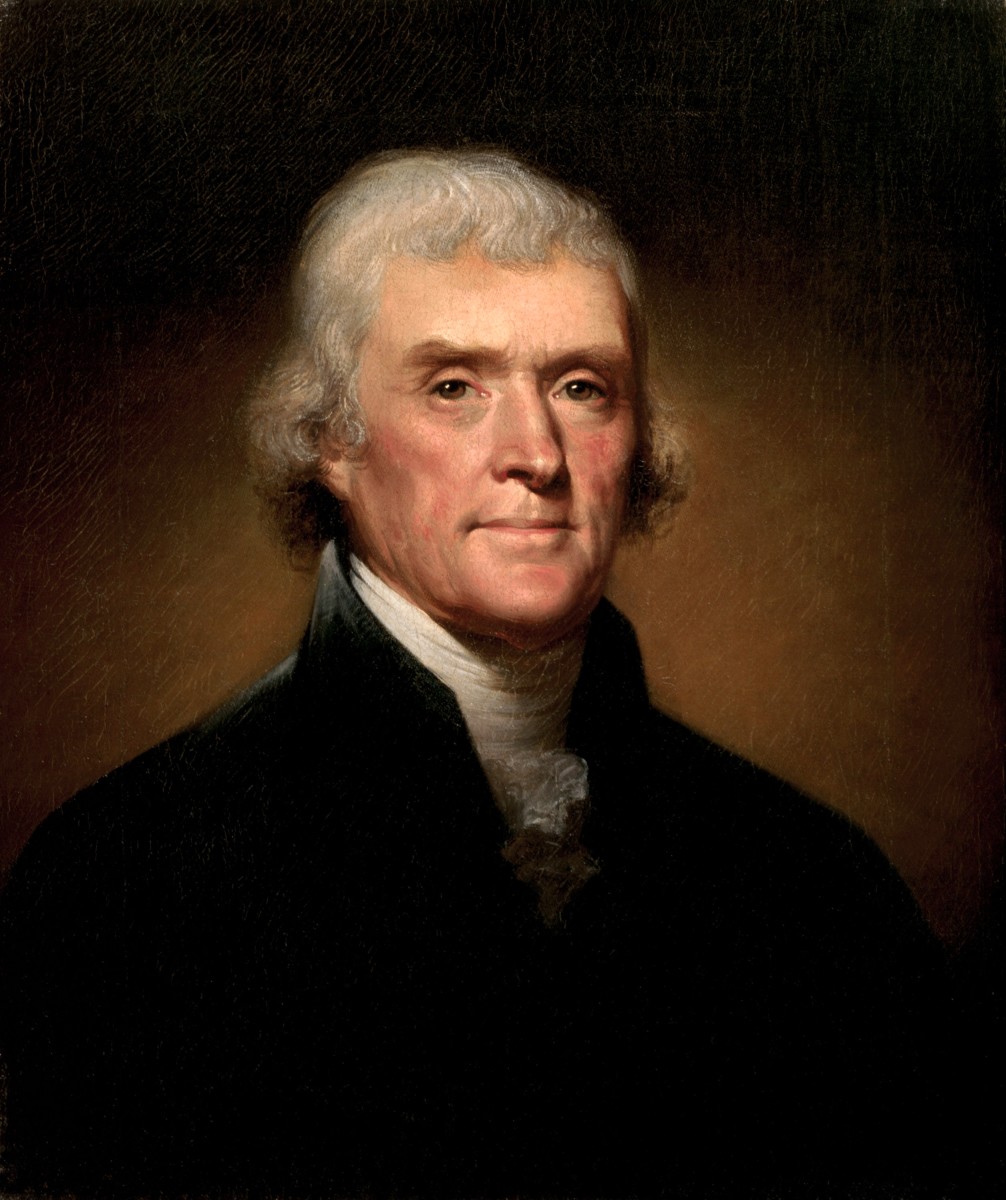
Monticello: The Intellectual Landmark
Finally, a visit to Monticello remains the best way to understand the man behind the purchase. As you walk through the gardens and the library where Thomas Jefferson spent his days, you see the contradictions of his character. He was a man who loved the law but broke it for a greater cause; a man who valued small government but expanded the presidency more than any of his predecessors. Monticello stands as a landmark to the intellectual struggle of a leader trying to balance his ideals with the practical needs of a growing nation.
In the end, Thomas Jefferson justified the Louisiana Purchase by arguing that the health of the republic was the supreme law. He believed that the vast resources of the American West would provide the space necessary for a free people to flourish. Whether standing beneath the Gateway Arch or looking out over the Blue Ridge Mountains from the porch of Monticello, it is clear that his justification, however legally fraught at the time, laid the foundation for the United States as we know it today.
LifeOutOfTheBox is a participant in the Amazon Services LLC Associates Program, an affiliate advertising program designed to provide a means for sites to earn advertising fees by advertising and linking to Amazon.com. Amazon, the Amazon logo, AmazonSupply, and the AmazonSupply logo are trademarks of Amazon.com, Inc. or its affiliates. As an Amazon Associate we earn affiliate commissions from qualifying purchases.