
Embarking on a journey across the Atlantic from the sun-drenched shores of Miami to the historic streets of London is an exciting prospect for many travelers. While the idea of a seamless, speedy transition is appealing, the actual flight duration can vary significantly based on a multitude of factors. Understanding these elements is key to planning your trip efficiently and setting realistic expectations for your travel time. From direct routes capitalizing on jet streams to multi-leg journeys offering cost savings, the path between these two vibrant global hubs is far from one-size-fits-all. This guide delves into the specifics, helping you decipher what to expect when you next plan your transatlantic adventure.
Understanding Flight Duration: Factors at Play
Pinpointing an exact flight time from Miami to London isn’t as simple as checking a single number. Several dynamic variables contribute to the overall duration of your journey, making each flight a unique experience. Being aware of these factors can help you better anticipate your arrival and plan your schedule accordingly.
Aircraft Type and Speed
The model of aircraft you’re flying on plays a significant role in determining how quickly you reach your destination. Modern wide-body jets, such as the Boeing 787 Dreamliner, Airbus A350, Boeing 777, and Airbus A330, are designed for long-haul efficiency and speed. These aircraft typically cruise at speeds of around 550 to 600 miles per hour (885 to 965 km/h). Newer generations often feature improved aerodynamics and fuel efficiency, allowing for slightly faster journey times or longer ranges without the need for refueling stops, which indirectly impacts total travel duration on a direct route. Older aircraft models, while still highly capable, might have slightly lower cruising speeds, adding a few minutes to an hour to the overall flight time.
Route and Air Traffic Control
The flight path taken by an aircraft is not always a straight line. Air Traffic Control (ATC) plays a crucial role in directing planes, ensuring safety and managing congestion in the skies. Factors like political airspace restrictions, military zones, or simply optimizing routes to avoid bad weather can lead to detours. Additionally, the specific departure and arrival gates, taxiing times at busy airports like Heathrow Airport or Gatwick Airport, and holding patterns for landing can add considerable time to the journey. These elements are largely outside the control of the passenger but are a standard part of air travel that airlines account for in their estimated flight durations.
Weather Conditions and Jet Streams
Weather is perhaps one of the most unpredictable factors affecting flight duration. Strong headwinds can significantly slow down an aircraft, forcing it to consume more fuel and extend its travel time. Conversely, tailwinds, particularly the powerful jet streams that flow from west to east across the North Atlantic, can provide a substantial boost, often reducing flight times by an hour or more. This is why eastbound flights from Miami to London are generally shorter than westbound flights. Turbulence, though not directly affecting flight speed, can sometimes necessitate a change in altitude or route, indirectly influencing the duration. Airlines factor in typical weather patterns and jet stream effects when publishing schedules, but unexpected meteorological events can always lead to adjustments.
Direct Flights: Your Fastest Route
For travelers prioritizing speed and convenience, direct flights offer the most straightforward and quickest way to traverse the Atlantic from Miami to London. These non-stop services eliminate the need for layovers, significantly reducing total travel time and potential stress associated with connecting flights.
Key Airlines Offering Non-Stop Routes
Several major international carriers provide direct services between Miami International Airport (MIA) and London’s primary airports. Among the most prominent are British Airways, which frequently operates flights to Heathrow Airport (LHR), and Virgin Atlantic, also typically serving LHR. American Airlines is another key player, often operating direct routes as part of joint ventures with British Airways. These airlines are known for their long-haul fleets and extensive route networks, making them reliable choices for this transatlantic crossing. Availability of direct flights can vary by season, with increased frequency often seen during peak travel periods.
Typical Flight Times
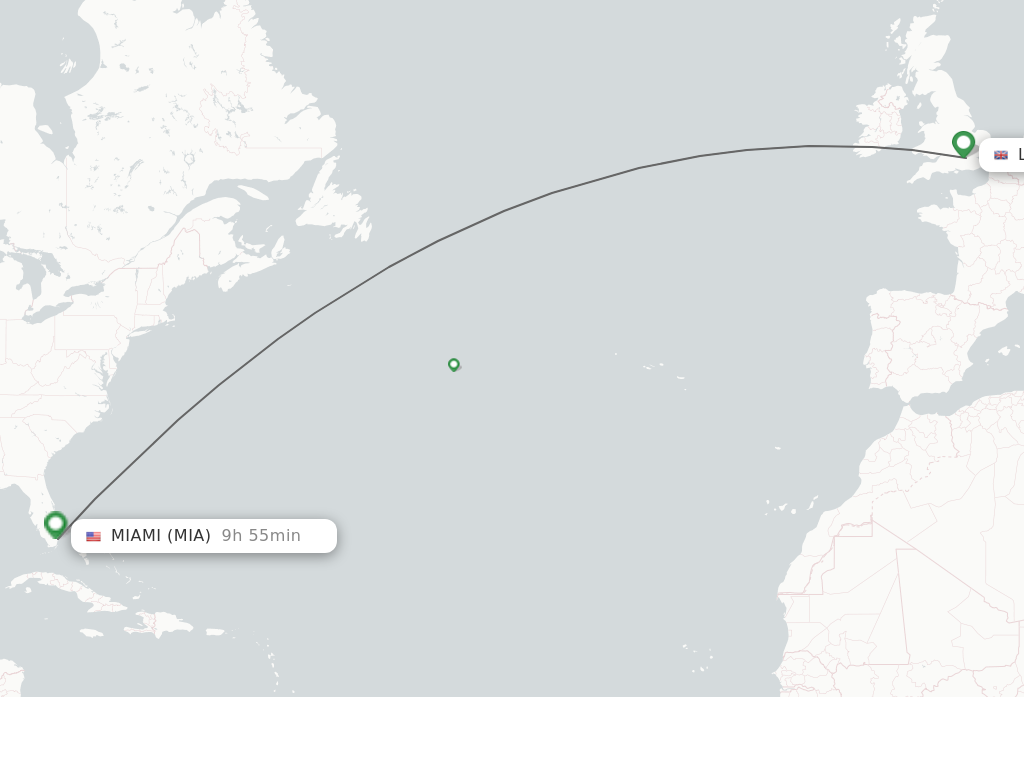
For a direct flight from Miami to London, you can generally expect the journey to take between 8 hours and 5 minutes to 8 hours and 50 minutes. This duration primarily reflects the eastbound advantage of the North Atlantic jet stream, which provides a beneficial tailwind. It’s important to note that this figure represents the “block time” or “gate-to-gate” time, which includes taxiing, take-off, and landing, not just the time spent in the air. While variations within this range are common due to the factors mentioned earlier (aircraft type, specific flight path, and real-time weather conditions), a non-stop flight will invariably be the quickest way to reach your destination.
Indirect Flights: Weighing Time Against Cost
While direct flights offer unmatched speed, they often come at a premium. Indirect flights, involving one or more layovers, present a more budget-friendly alternative for many travelers. However, this cost saving comes with an increased total travel time and additional logistical considerations.
Common Layover Hubs
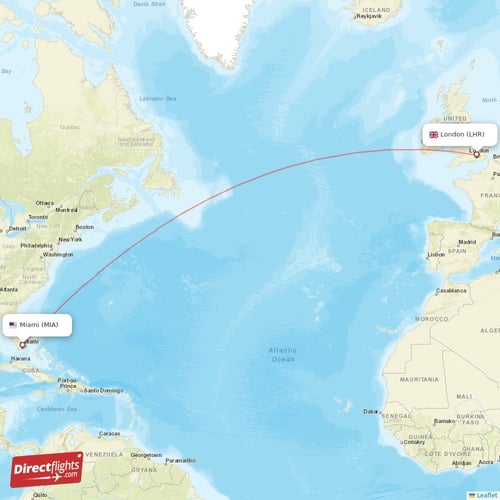
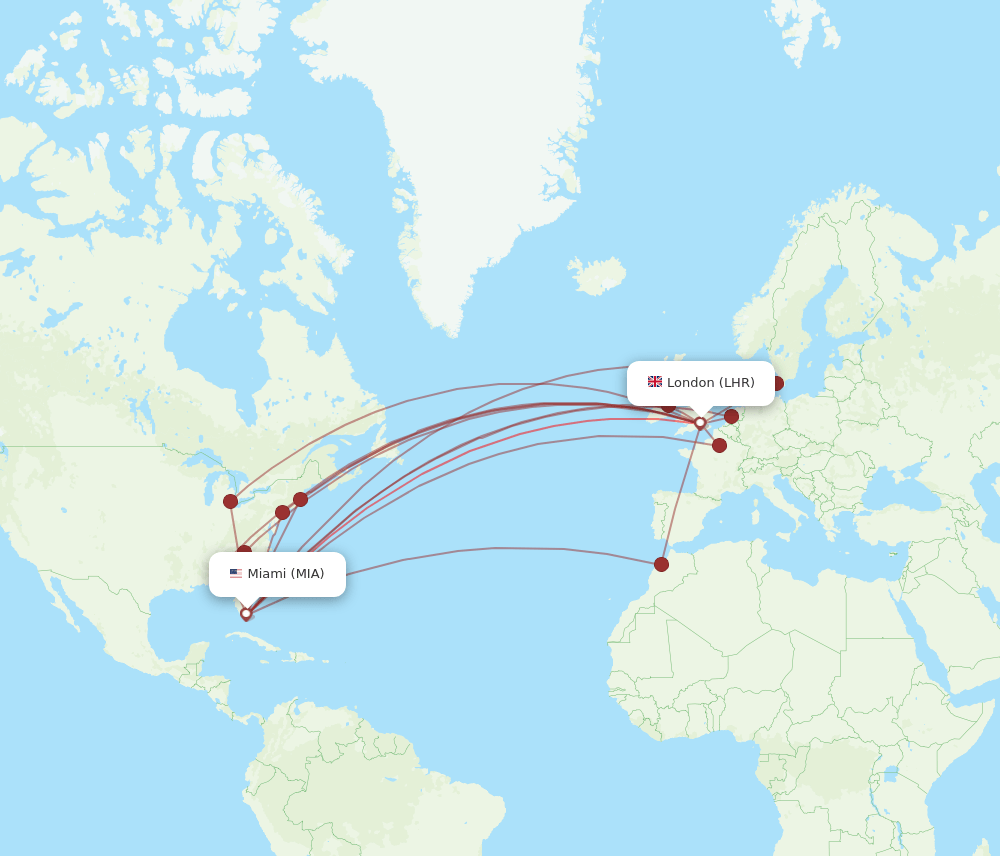
When opting for an indirect flight from Miami to London, you’ll likely connect through a major airline hub. In the United States, popular connection points include New York (specifically JFK or Newark Liberty International), Atlanta (Hartsfield-Jackson), Charlotte (Douglas International), and Philadelphia (International Airport). These airports serve as major gateways for transatlantic flights, offering numerous options for onward travel to London. Alternatively, some routes may involve layovers in European cities such as Dublin, Madrid, Lisbon, or Amsterdam. Connecting through these European hubs can sometimes offer unique itinerary variations or airline choices.
Calculating Total Travel Time
The total travel time for an indirect flight is the sum of all flight segments plus the duration of your layover(s). A typical indirect flight from Miami to London with a single layover can range anywhere from 12 to 20+ hours. For example, a flight from Miami to New York might take around 3 hours, followed by a 3-4 hour layover, and then a 6-7 hour flight from New York to London. This would result in a total travel time of 12-14 hours. Flights with longer layovers or multiple stops will, naturally, extend this duration further. When booking, always pay close attention to the layover duration; while a short layover (e.g., 1-2 hours) might seem appealing for speed, it can be risky if your first flight is delayed. Conversely, overly long layovers (e.g., 6+ hours) can be tiring, though some travelers intentionally choose them to explore the layover city.
Optimizing Your Journey: Tips for a Smoother Flight
Long-haul travel, especially across multiple time zones, can be taxing. However, with thoughtful planning and preparation, you can significantly enhance your comfort and minimize the common challenges associated with flying from Miami to London.
Booking Smart: Timing and Flexibility
The timing of your booking can greatly influence both the cost and the convenience of your flight. Generally, booking 2-3 months in advance often yields the best fares, especially for popular transatlantic routes. Consider flying during the shoulder seasons (spring and fall) or outside of major holidays for potentially lower prices and fewer crowds. Mid-week flights (Tuesday, Wednesday, Thursday) are also often cheaper than weekend travel. If your schedule allows, having flexibility with your travel dates can open up more economical options. Utilizing flight comparison websites and setting fare alerts can help you snatch up deals as soon as they become available. Also, review the airline’s cancellation and change policies, particularly in today’s dynamic travel environment.
In-Flight Comfort Essentials
A comfortable flight experience can make a significant difference on an 8-9 hour journey. Pack a small carry-on with essentials designed to enhance your well-being. This might include a quality neck pillow for support, an eye mask to block out light, and noise-canceling headphones to reduce cabin noise. Staying hydrated is crucial; drink plenty of water and limit caffeine and alcohol. Wear loose-fitting, comfortable clothing and layers, as cabin temperatures can fluctuate. Don’t forget entertainment: load your devices with movies, TV shows, podcasts, or e-books. Lastly, remember to get up and move around the cabin periodically to promote circulation and prevent stiffness, especially on such a long flight.
Battling Jet Lag: Pre-emptive Measures and Post-Arrival Strategies
Crossing five time zones from Miami to London almost guarantees some degree of jet lag. However, you can mitigate its effects. Before your flight, try to gradually shift your sleep schedule closer to London time (GMT). Onboard, immediately adjust your watch to the destination time and try to sleep during what would be nighttime in London. Upon arrival, the most effective strategy is to expose yourself to natural light as much as possible, especially in the morning, to help reset your circadian rhythm. Avoid heavy meals and excessive napping. Stay active during the day, even if it’s just a walk, and try to go to bed at a reasonable local time. While a full adjustment might take a few days, these steps can significantly ease the transition.
Beyond the Flight: Arriving in London
Your journey doesn’t end when the plane touches down. Navigating London’s airports and understanding your onward travel options are crucial for a smooth arrival and transition into the city.
Arrival Airports in London
The vast majority of transatlantic flights from Miami will arrive at either Heathrow Airport (LHR) or Gatwick Airport (LGW). Heathrow is the UK’s largest and busiest airport, located approximately 14 miles (23 km) west of Central London. It has four active terminals (2, 3, 4, and 5). Gatwick, the second-busiest, is situated about 28 miles (45 km) south of Central London and operates from two terminals (North and South). While smaller airports like London City Airport (LCY), Luton Airport (LTN), and Stansted Airport (STN) also serve London, they are less commonly used for direct long-haul flights from the United States. Always confirm your arrival airport and terminal before your journey.
Navigating from Airport to City
Both Heathrow and Gatwick offer excellent transport links to Central London. From Heathrow, the quickest option is the Heathrow Express, a non-stop train service to Paddington Station, taking about 15-20 minutes. Alternatively, the Piccadilly Line of the London Underground (the “Tube”) provides a more economical, though slower (around 45-60 minutes), direct connection to many parts of the city. For Gatwick, the Gatwick Express train runs directly to Victoria Station in approximately 30 minutes. Other rail services and coach companies (like National Express) also offer connections from both airports. Taxis and ride-sharing services are available but are generally the most expensive options. Consider purchasing an Oyster card or using contactless payment for seamless travel on public transport.
In conclusion, a direct flight from Miami to London typically spans around 8 to 9 hours, influenced by factors like aircraft type, route, and prevailing winds. Indirect flights, while often more budget-friendly, can extend total travel time to 12-20+ hours depending on layovers. By understanding these nuances and employing smart travel strategies, you can ensure your transatlantic journey is as comfortable and efficient as possible, setting the stage for an unforgettable experience in the British capital.
LifeOutOfTheBox is a participant in the Amazon Services LLC Associates Program, an affiliate advertising program designed to provide a means for sites to earn advertising fees by advertising and linking to Amazon.com. Amazon, the Amazon logo, AmazonSupply, and the AmazonSupply logo are trademarks of Amazon.com, Inc. or its affiliates. As an Amazon Associate we earn affiliate commissions from qualifying purchases.