
The history of Mississippi is inextricably linked to the institution of slavery, a practice that profoundly shaped its economic, social, and political landscape for generations. To understand when slavery truly ended in Mississippi, one must navigate a complex timeline marked by national legislation, a devastating civil war, and the arduous process of reconstruction. It was not a singular event but a series of legislative acts, military actions, and the eventual, albeit delayed, recognition of human rights that brought an end to this deeply entrenched system. This historical journey is essential for appreciating the state’s past, its present, and the resilience of its people.

The Foundations of the “Peculiar Institution” in Mississippi
Before delving into the end of slavery, it’s crucial to understand its profound roots in Mississippi. From its earliest days as a territory and then as a state, Mississippi rapidly became a fervent proponent of the slave system, largely driven by the insatiable demand for cotton.
The Cotton Kingdom and Enslaved Labor
The fertile lands along the Mississippi River and across the state proved ideal for cotton cultivation. The invention of the cotton gin in the late 18th century transformed cotton into the dominant cash crop of the American South, and Mississippi quickly rose to prominence as a central pillar of the “Cotton Kingdom.” This agricultural boom, however, was predicated entirely on the forced labor of enslaved Africans and their descendants.
By the mid-19th century, Mississippi had one of the highest percentages of enslaved people in the United States. In 1860, on the eve of the Civil War, enslaved individuals constituted approximately 55% of the state’s total population. Their labor built the state’s wealth, cleared vast tracts of land, and fueled its economy, particularly in the fertile Delta region. Plantations, often sprawling estates, became self-sufficient entities, with enslaved men, women, and children performing every conceivable task, from planting and harvesting cotton to building infrastructure and providing domestic services. This economic reliance meant that any threat to slavery was perceived as an existential threat to Mississippi’s prosperity and way of life.
Legal Framework of Slavery
The institution of slavery was deeply embedded in Mississippi’s legal codes. A series of “slave codes” governed every aspect of an enslaved person’s life, stripping them of fundamental human rights. Enslaved individuals were considered chattel, property to be bought, sold, mortgaged, and inherited. They had no legal standing, could not testify against white individuals, could not marry legally, and were denied education. Laws strictly controlled their movement, assembly, and any attempt at resistance. Furthermore, the state’s constitution and legal system were designed to protect and perpetuate the property rights of slaveholders, making it clear that the state’s identity was intertwined with the maintenance of slavery. This comprehensive legal framework reinforced the brutal realities of the system, underscoring the formidable challenge faced by those who sought its abolition.
The Eruption of Conflict: Mississippi and the Civil War
The escalating national debate over slavery, particularly its expansion into new territories, ultimately pushed the United States to the brink of disunion. Mississippi, deeply invested in the institution, played a pivotal role in the secession movement and the subsequent Civil War.
Secession and the Confederacy
Following the election of Abraham Lincoln to the presidency in November 1860, Mississippi became the second state to secede from the Union on January 9, 1861, just weeks after South Carolina. The state’s Declaration of Secession explicitly stated that its reason for leaving was to protect the institution of slavery. It articulated the belief that the federal government, under the new Republican administration, posed a direct threat to their “peculiar institution” and the economic system it sustained.
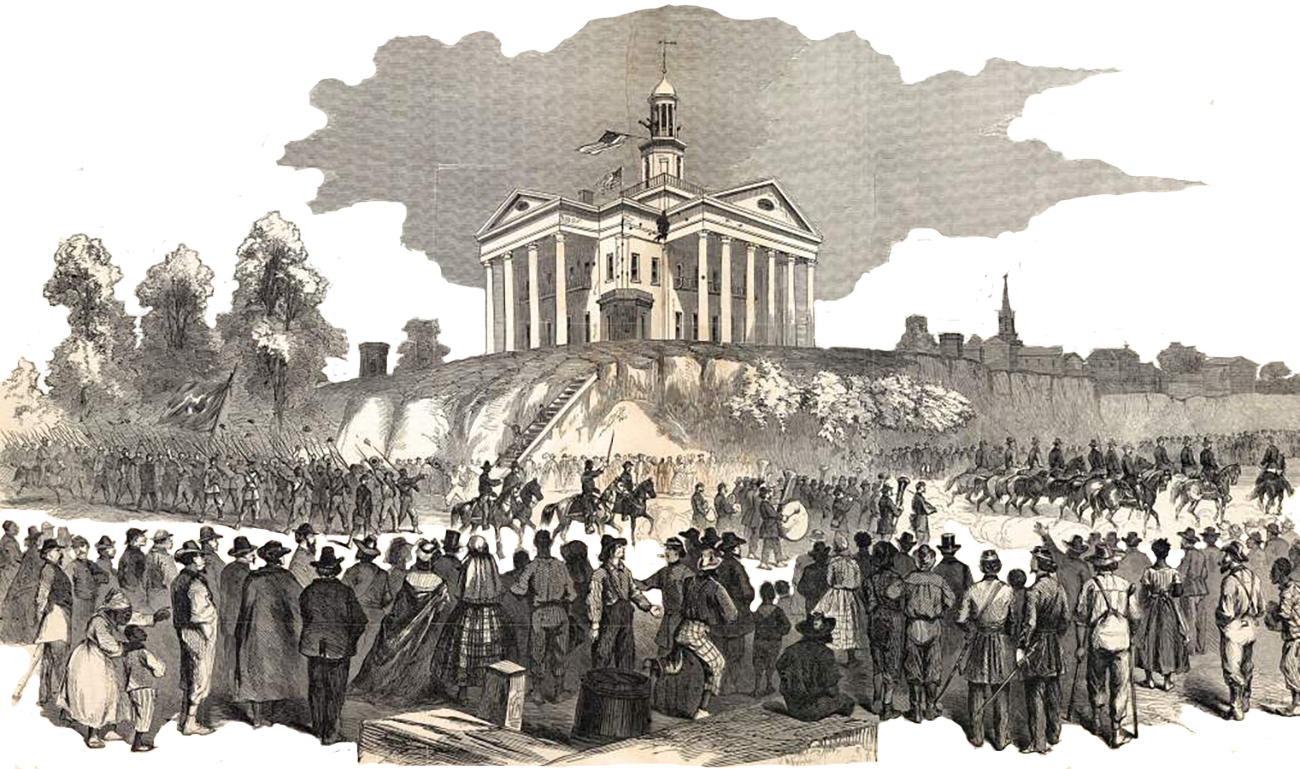
Mississippi joined other seceding states to form the Confederate States of America, with its own constitution that firmly protected slavery. Throughout the war, Mississippi was a crucial battleground, strategically important due to its control over the Mississippi River and its role as a supply hub. Major campaigns and battles, such as the Siege of Vicksburg (which concluded on July 4, 1863), had devastating impacts on the state, destroying infrastructure, disrupting agricultural production, and bringing the realities of war directly to its enslaved population. As Union armies advanced, they brought with them the promise of freedom, creating a dynamic where enslaved people often self-emancipated by fleeing to Union lines.
The Emancipation Proclamation’s Reach
While the Civil War initially began with the stated goal of preserving the Union, the issue of slavery quickly became central to the conflict. On January 1, 1863, President Lincoln issued the Emancipation Proclamation, a landmark executive order that declared all enslaved people in Confederate-held territory to be free.
For Mississippi, as a Confederate state, the Emancipation Proclamation theoretically applied to its enslaved population. However, its immediate practical effect was limited, as Union forces did not control much of the state at that time. Slaveholders in areas still under Confederate control largely ignored the proclamation, and it was only as Union troops advanced and liberated territories that the proclamation’s power became a reality for thousands. The defeat of Confederate forces at Vicksburg later that year, for instance, opened the Mississippi River and led to the liberation of many enslaved individuals in the surrounding areas. The proclamation also fundamentally shifted the moral aims of the war, transforming it into a fight for freedom and setting the stage for the complete abolition of slavery across the entire nation.
The Official End: Ratification and Reconstruction
Despite the Emancipation Proclamation and the ongoing war, the legal end of slavery nationwide and specifically in Mississippi required further action. This came in the form of a constitutional amendment and the subsequent period of Reconstruction.
The Thirteenth Amendment and its Delayed Impact in Mississippi

The definitive legal end of slavery in the United States came with the ratification of the Thirteenth Amendment to the Constitution, which abolished slavery and involuntary servitude, except as punishment for a crime. It passed Congress in January 1865 and was ratified by the necessary three-quarters of the states on December 6, 1865.
For Mississippi, however, the path to ratification was protracted and symbolic of its resistance to the changes brought by the war. Following the Confederate defeat, Mississippi’s provisional government, established during Presidential Reconstruction, initially resisted ratifying the Thirteenth Amendment. While the state ultimately did ratify the amendment on December 5, 1865, it did so under duress and with significant political maneuvering. Even after ratification, the state immediately implemented “Black Codes,” restrictive laws designed to control the labor and lives of newly freed African Americans, effectively attempting to re-establish a system of racial hierarchy and forced labor akin to slavery.
Remarkably, Mississippi did not officially certify its ratification of the Thirteenth Amendment with the federal government until 1995 – 130 years after it was ratified by the nation. While this late certification had no legal bearing on the fact that slavery ended in 1865, it serves as a powerful historical footnote illustrating the state’s complex and often contentious relationship with its past.
Juneteenth and the Arrival of Freedom
While the Thirteenth Amendment legally abolished slavery, the actual experience of freedom arrived unevenly across the former Confederacy. The most celebrated date marking the end of slavery for many is Juneteenth, June 19, 1865. This date commemorates the day when Union General Gordon Granger arrived in Galveston, Texas, and issued General Order No. 3, formally announcing the freedom of enslaved people in Texas, the last Confederate state with significant numbers of enslaved people largely unaware of the Emancipation Proclamation.
For enslaved people in Mississippi, freedom arrived progressively as Union armies advanced through the state, particularly after the fall of Vicksburg in July 1863 and the subsequent campaigns that brought much of the state under federal control. By the time of General Robert E. Lee’s surrender at Appomattox in April 1865, and certainly by the nationwide ratification of the Thirteenth Amendment in December 1865, slavery had effectively ceased to exist as a legal or practical institution within Mississippi’s borders. The arrival of Union soldiers, coupled with the collapse of the Confederate government, meant that the system of forced labor could no longer be enforced.
The Aftermath and Lasting Legacy
The end of slavery in Mississippi did not, however, usher in an era of immediate equality or prosperity for formerly enslaved people. The subsequent period of Reconstruction and its ultimate failure left a profound and enduring legacy.
The Promise and Peril of Reconstruction
Reconstruction (1865-1877) was a transformative period aimed at rebuilding the South, integrating formerly enslaved people into society, and redefining the relationship between the federal government and the states. In Mississippi, African Americans, now free citizens, actively participated in the political process, voting, holding office, and striving to establish schools, churches, and self-sufficient communities. The passage of the Fourteenth Amendment (granting citizenship and equal protection) and the Fifteenth Amendment (guaranteeing voting rights regardless of race) were monumental steps.
However, this progress was met with fierce and often violent white supremacist resistance. Organizations like the Ku Klux Klan emerged, employing terror and intimidation to suppress Black political power and reassert white dominance. The “Redemption” movement, led by white Democrats, systematically dismantled Reconstruction governments and rolled back the rights gained by African Americans. By the late 1870s, Reconstruction had effectively ended, leaving African Americans in Mississippi in a precarious position.
The Long Road to True Equality
Following the end of Reconstruction, Mississippi, like other Southern states, enacted a brutal system of Jim Crow laws. These laws enforced racial segregation in all public spaces, from schools and hospitals to transportation and restrooms. Disenfranchisement was achieved through poll taxes, literacy tests, and grandfather clauses, effectively stripping African Americans of their voting rights. Economic exploitation continued through sharecropping and debt peonage, trapping many Black families in cycles of poverty and dependence, which in many ways mirrored the conditions of slavery.
The struggle for full equality continued for another century, culminating in the Civil Rights Movement of the mid-20th century. Mississippi was a focal point of this movement, witnessing some of its most intense conflicts and pivotal victories, such as the passage of the Civil Rights Act of 1964 and the Voting Rights Act of 1965. These landmark pieces of legislation finally began to dismantle the legal structures of racial oppression that had replaced slavery.
Remembering the Past, Shaping the Future
Understanding when slavery ended in Mississippi is not merely a matter of pinpointing a date, but comprehending a protracted historical process that continues to resonate today. The legacy of slavery and its aftermath profoundly shaped the state’s demographics, economy, politics, and social fabric.
Preserving the Narrative
Today, efforts are being made across Mississippi to confront and interpret this difficult past. Museums, historical markers, and educational initiatives aim to tell the full story, acknowledging both the horrors of slavery and the resilience and contributions of African Americans. Sites such as the Mississippi Civil Rights Museum in Jackson and preserved plantation homes offer crucial insights into the lives of both enslavers and the enslaved. By preserving these narratives, the state seeks to educate current and future generations about the systemic injustices of slavery and the long fight for freedom and equality.
Lessons from History
The official end of slavery in Mississippi arrived with the ratification of the Thirteenth Amendment in December 1865, effectively enforced by the conclusion of the Civil War in the spring of that year. However, the journey from legal enslavement to true freedom and equality has been a centuries-long struggle. The history of slavery’s end in Mississippi serves as a potent reminder of the enduring fight for human dignity and justice, emphasizing that while laws can change quickly, societal prejudices and systemic inequalities often require generations of dedicated effort to overcome. It underscores the importance of historical memory in shaping a more just and equitable future.
LifeOutOfTheBox is a participant in the Amazon Services LLC Associates Program, an affiliate advertising program designed to provide a means for sites to earn advertising fees by advertising and linking to Amazon.com. Amazon, the Amazon logo, AmazonSupply, and the AmazonSupply logo are trademarks of Amazon.com, Inc. or its affiliates. As an Amazon Associate we earn affiliate commissions from qualifying purchases.