
Establishing a Limited Liability Company (LLC) in New Mexico can be a strategic move for entrepreneurs looking to protect their personal assets while operating their businesses. The “Land of Enchantment” offers a business-friendly environment, and understanding the straightforward process of forming an LLC is key to unlocking its benefits. This guide will walk you through each step, ensuring you can confidently launch your venture in this vibrant state.
Understanding the LLC Structure and Its Benefits in New Mexico
An LLC is a hybrid business structure that combines the pass-through taxation of a partnership or sole proprietorship with the limited liability of a corporation. This means that the business’s profits and losses are passed through directly to the owners’ personal income without being subject to corporate tax rates, while the owners are generally not personally liable for the company’s debts or liabilities.
Why Choose an LLC for Your New Mexico Business?
New Mexico presents a unique appeal for business owners, from its burgeoning tech scene in Albuquerque to its rich cultural heritage in Santa Fe. An LLC offers several compelling advantages for those looking to capitalize on these opportunities:
- Limited Liability Protection: This is perhaps the most significant benefit. If your LLC incurs debt or faces a lawsuit, your personal assets, such as your home, car, or personal bank accounts, are typically protected. This separation shields your personal wealth from business risks.
- Pass-Through Taxation: Unlike C-corporations, LLCs are not taxed as separate entities. Profits and losses are reported on the owners’ individual tax returns. This avoids the “double taxation” that corporations can face, where profits are taxed at the corporate level and again when distributed to shareholders.
- Flexibility in Management: LLCs offer considerable flexibility in how they are managed. They can be member-managed (where all owners participate in daily operations) or manager-managed (where designated managers, who may or may not be members, handle operations). This adaptability allows the structure to suit a wide range of business models.
- Credibility and Professionalism: Operating as an LLC can enhance your business’s credibility in the eyes of customers, suppliers, and lenders. It signifies a more established and serious business operation.
- Simpler Compliance: Compared to corporations, LLCs generally have fewer corporate formalities and administrative burdens, such as mandatory annual meetings or extensive record-keeping requirements.
The Essential Steps to Forming Your New Mexico LLC
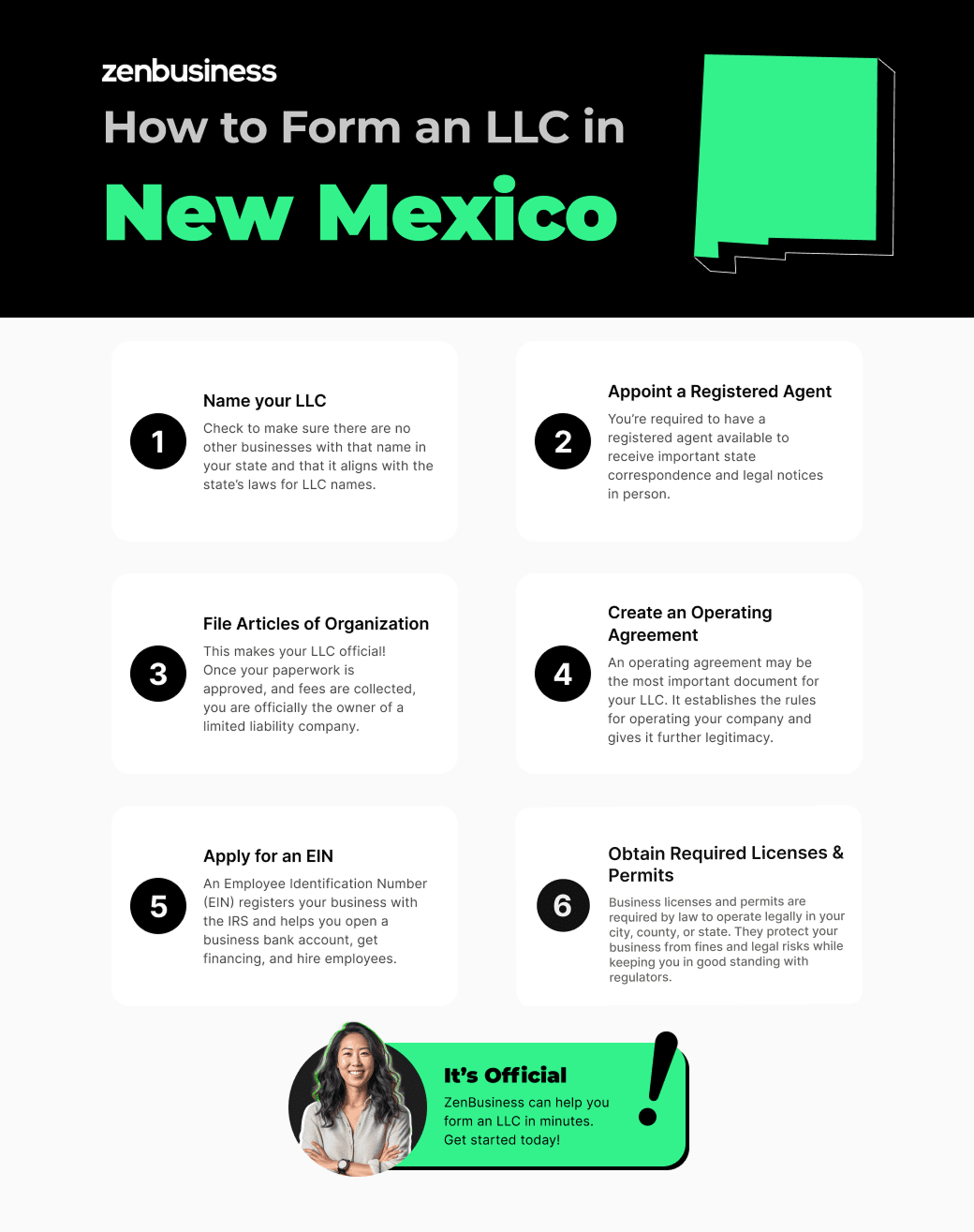
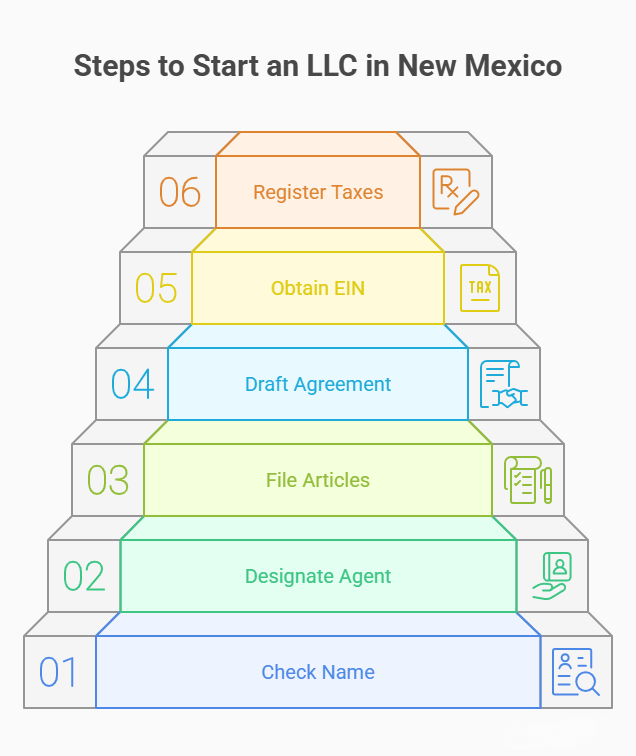
Forming an LLC in New Mexico involves a series of clear, actionable steps. By carefully following these, you can ensure your business is legally established and compliant with state regulations.
Step 1: Choose a Unique Business Name
Your LLC’s name is its first formal identity. It must be distinctive and comply with New Mexico’s naming rules.
- Name Availability Search: Before you commit to a name, you must ensure it’s not already in use by another business entity registered in New Mexico. You can conduct a free business name search on the New Mexico Secretary of State’s website. This proactive step can save you time and potential frustration later in the process.
- Mandatory Designators: Your LLC’s name must include a designator indicating its legal structure. Acceptable designators in New Mexico include:
- “Limited Liability Company”
- “LLC”
- “L.L.C.”
- Prohibited Words: Certain words, such as “bank,” “trust,” “insurance,” or words that imply affiliation with government agencies, are generally prohibited without specific authorization.
Step 2: Appoint a Registered Agent
A registered agent is a designated individual or entity responsible for receiving official legal and tax documents on behalf of your LLC. This agent must have a physical street address in New Mexico (not a P.O. Box) and be available during normal business hours.
- Who Can Be a Registered Agent?
- An Individual Resident of New Mexico: This can be you, another member of your LLC, or a trusted associate.
- A Business Entity: Another company that is authorized to do business in New Mexico and has a physical address there.
- A Commercial Registered Agent Service: Many companies offer this service for a fee, providing a professional and reliable point of contact. This is often a preferred option for businesses whose owners do not reside in New Mexico or wish to maintain a clear separation of business and personal addresses.
- Importance of the Registered Agent: The registered agent serves as the official point of contact for critical communications, including service of process (lawsuit notices), tax documents, and annual report reminders. Failure to maintain a registered agent can lead to administrative dissolution of your LLC.
Step 3: File the Articles of Organization

This is the foundational document that officially creates your LLC in New Mexico. You will file this with the New Mexico Secretary of State.
- Content of the Articles of Organization: While specific requirements can vary, typically the Articles of Organization will include:
- The name of your LLC.
- The name and physical address of your registered agent in New Mexico.
- The principal office address of your LLC.
- The name and address of the organizer (the person filing the document).
- The effective date of the LLC, if different from the filing date.
- Filing Method: You can usually file your Articles of Organization online through the New Mexico Secretary of State’s website, by mail, or in person. Online filing is often the quickest and most convenient method. There is a filing fee associated with this submission.
Step 4: Create an Operating Agreement
While not legally required by the state of New Mexico, an Operating Agreement is a crucial internal document that outlines the ownership structure, operating procedures, and member responsibilities of your LLC. It’s highly recommended for all LLCs, regardless of size or complexity.
- Key Provisions of an Operating Agreement:
- Ownership Percentages: Details each member’s ownership stake in the LLC.
- Member Roles and Responsibilities: Defines the duties and authority of each member and/or manager.
- Profit and Loss Distribution: Specifies how profits and losses will be allocated among members.
- Voting Rights: Outlines how decisions will be made and the voting power of each member.
- Management Structure: Clarifies whether the LLC is member-managed or manager-managed.
- Procedures for Adding or Removing Members: Establishes a process for changes in ownership.
- Dissolution Clause: Details the procedures for winding down the business.
- Benefits of an Operating Agreement: This document can prevent disputes among members, clarify expectations, and provide a framework for managing the business effectively. It also helps reinforce the separation between the business and its owners, which is essential for maintaining limited liability.
Step 5: Obtain an Employer Identification Number (EIN)
An EIN, also known as a Federal Tax Identification Number, is like a Social Security number for your business. It is issued by the Internal Revenue Service (IRS) and is required for most businesses.
- When is an EIN Required?
- If your LLC has more than one member.
- If your LLC plans to hire employees.
- If your LLC operates as a corporation or partnership for tax purposes.
- If your LLC is required to file excise tax returns or certain other tax returns.
- How to Get an EIN: You can apply for an EIN online directly from the IRS website. This process is free, and you will typically receive your EIN immediately after completing the application.
Ongoing Compliance and Best Practices for Your New Mexico LLC
Once your LLC is formed, maintaining its good standing requires adherence to ongoing compliance obligations and the implementation of sound business practices.
Maintaining Good Standing with the State of New Mexico
New Mexico requires LLCs to file an annual report to remain in active status.
- Annual Report Filing: The New Mexico Secretary of State requires all LLCs to file an annual report each year. This report updates basic information about your LLC, such as its registered agent and principal office address.
- Filing Deadline: The annual report is typically due on the anniversary month of your LLC’s formation. Missing this deadline can result in late fees and, eventually, administrative dissolution.
- Filing Method and Fees: Annual reports can usually be filed online through the Secretary of State’s portal. There is a nominal fee associated with this filing. Staying organized and remembering the due date is crucial.
Financial and Operational Best Practices
Beyond state requirements, sound financial and operational management is vital for the long-term success and protection offered by your LLC.
- Separate Business and Personal Finances: This is paramount for maintaining limited liability. Open a dedicated business bank account for your LLC. All business transactions should be conducted through this account, and personal expenses should be paid from your personal accounts. Co-mingling funds can jeopardize your liability protection.
- Keep Meticulous Records: Maintain accurate and organized financial records, including income statements, balance sheets, receipts, and invoices. This is essential for tax purposes, for tracking your business’s performance, and for demonstrating the separation between your business and personal affairs if legal challenges arise.
- Comply with Federal, State, and Local Taxes: Understand your tax obligations. As an LLC, you’ll likely be responsible for self-employment taxes (Social Security and Medicare) on your business profits, in addition to income taxes. Depending on your business activities, you may also need to collect and remit sales tax or pay other state and local taxes. Consulting with a tax professional is highly recommended.
- Understand Your Industry Regulations: Depending on your business type, you may need to obtain specific licenses or permits at the federal, state, or local level. Research your industry thoroughly to ensure full compliance.
By diligently following these steps and maintaining ongoing compliance, you can establish and operate your LLC in New Mexico with confidence, leveraging the “Land of Enchantment” as a solid foundation for your entrepreneurial endeavors. Whether you are setting up shop in the artsy galleries of Santa Fe or tapping into the growing opportunities in Albuquerque, a well-formed LLC provides the essential framework for growth and protection.
LifeOutOfTheBox is a participant in the Amazon Services LLC Associates Program, an affiliate advertising program designed to provide a means for sites to earn advertising fees by advertising and linking to Amazon.com. Amazon, the Amazon logo, AmazonSupply, and the AmazonSupply logo are trademarks of Amazon.com, Inc. or its affiliates. As an Amazon Associate we earn affiliate commissions from qualifying purchases.