
Florida, the Sunshine State, beckons millions of travelers each year with its pristine beaches, vibrant cities, world-class theme parks, and rich cultural tapestry. From the magical enchantment of Orlando to the pulsating rhythms of Miami, the historic charm of St. Augustine to the laid-back allure of the Florida Keys, there’s an endless array of experiences awaiting every visitor. However, for all its undeniable appeal, a common source of confusion for first-time visitors and even seasoned travelers alike often revolves around a seemingly simple question: “What time is it in Florida right now?” The answer, surprisingly, isn’t always singular, as this diverse state spans two distinct time zones. Understanding these nuances is not merely a trivial detail; it’s a fundamental aspect of planning a seamless and stress-free trip, impacting everything from flight schedules and hotel check-ins to theme park visits and dinner reservations.
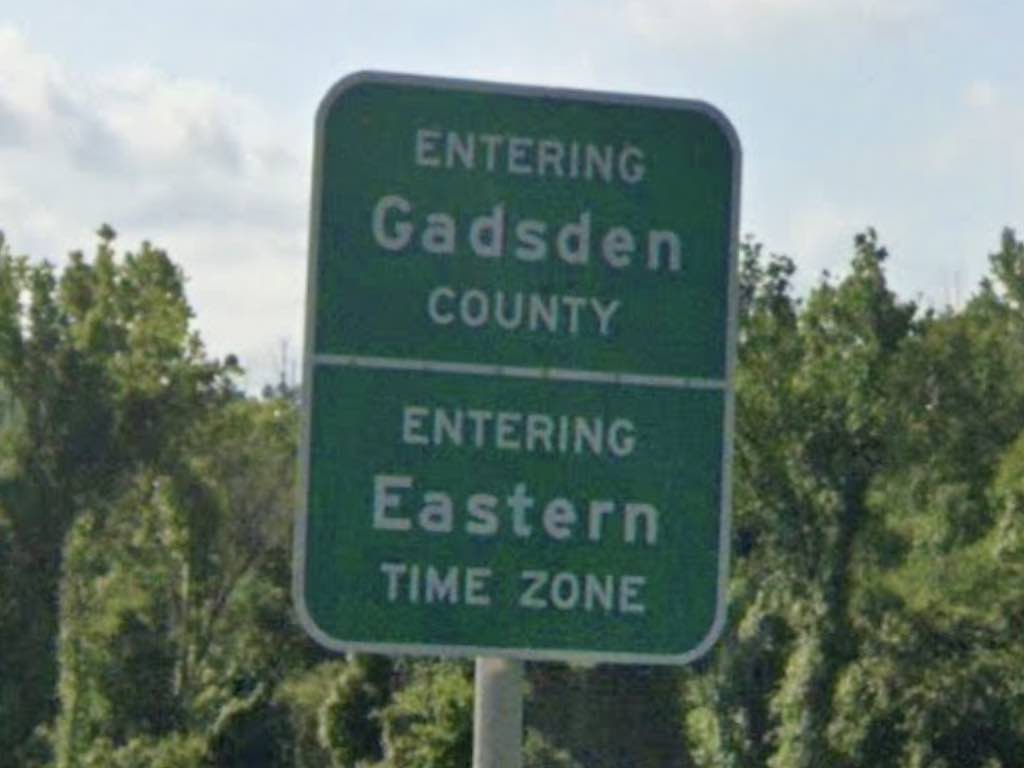
This comprehensive guide will unravel the intricacies of Florida‘s time zones, illuminating which regions adhere to which standard, and more importantly, how this knowledge empowers you to optimize every moment of your adventure. Whether you’re coordinating with family back home, ensuring you don’t miss a flight connection, or simply wanting to catch a sunrise on the Atlantic coast or a sunset over the Gulf, a clear grasp of Florida‘s temporal landscape is your essential first step.
Navigating Florida’s Dual Time Zones: Eastern and Central
The vast majority of Florida operates on Eastern Time (ET), which is also known as Eastern Standard Time (EST) during the winter months and Eastern Daylight Time (EDT) when Daylight Saving Time (DST) is in effect. This encompasses the state’s most populous areas and iconic tourist destinations, including Orlando, Miami, Tampa, Jacksonville, Fort Lauderdale, and the entire Florida Keys. When you plan a trip to any of these vibrant locales, you’ll be setting your watch to ET, which is typically five hours behind Coordinated Universal Time (UTC-5) during standard time and four hours behind (UTC-4) during Daylight Saving Time.
However, a significant portion of the Florida Panhandle observes Central Time (CT). This western segment of Florida, bordering Alabama, switches between Central Standard Time (CST) (UTC-6) and Central Daylight Time (CDT) (UTC-5). This distinction is crucial, as it means there’s an hour’s difference between the majority of the state and these western counties. The changeover point generally occurs west of the Apalahicola River, though there are specific county lines that delineate the exact boundary.
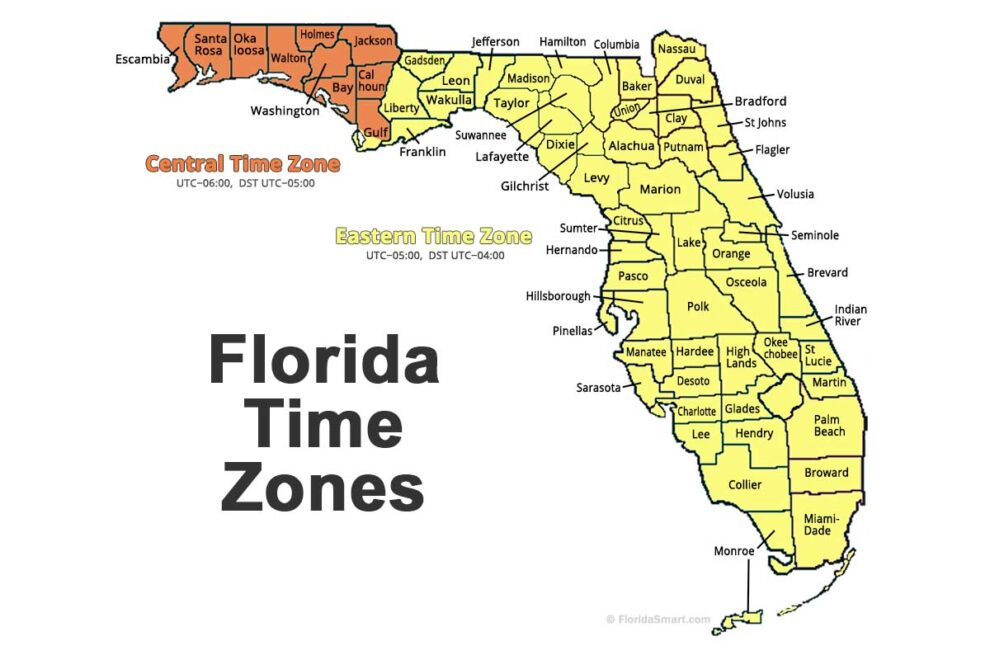
The Central Time Zone Counties of the Florida Panhandle
The counties that primarily observe Central Time in the Florida Panhandle include:
- Escambia County: Home to Pensacola, a city renowned for its historic downtown and beautiful beaches.
- Santa Rosa County: Featuring charming towns like Milton and Navarre, known for their natural beauty.
- Okaloosa County: Encompassing popular destinations such as Destin and Fort Walton Beach, famous for their sugar-white sands and emerald waters.
- Walton County: Where you’ll find the scenic communities of Seaside and Rosemary Beach.
- Bay County: Home to the bustling tourist hub of Panama City Beach.
- Holmes County: A rural county offering a glimpse into old Florida.
- Washington County: Known for its serene lakes and outdoor recreational opportunities.
- Jackson County: Featuring historic sites and natural springs near Marianna.
- Calhoun County: A more rural setting west of the Apalachicola River.
- Liberty County: Though often considered part of the “Big Bend” region, parts of it technically fall into the Central Time Zone.
It’s important to note that Gulf County and Franklin County are unique in their time zone allocation. While the majority of these counties observe Eastern Time, the western portions, particularly west of the Apalahicola River in Gulf County (including towns like Port St. Joe and Mexico Beach), switch to Central Time. This geographical quirk makes understanding the precise demarcation lines even more critical when traveling through or staying in these specific areas. For instance, parts of Eglin Air Force Base and Tyndall Air Force Base also span across these time zones, which can impact internal operations and communication for military personnel and their families. Similarly, Hurlburt Field is firmly within the Central Time Zone.
Understanding Daylight Saving Time in Florida
Like most of the United States, Florida observes Daylight Saving Time, which typically begins on the second Sunday in March and ends on the first Sunday in November. During this period, clocks are moved forward by one hour. This means that Eastern Standard Time (EST) becomes Eastern Daylight Time (EDT), and Central Standard Time (CST) becomes Central Daylight Time (CDT). This annual shift maintains the one-hour difference between the two Florida time zones but adjusts their offset from UTC. While Florida has previously debated proposals to make Daylight Saving Time permanent, these have yet to be enacted, meaning the biannual clock change remains a reality for now. Travelers should always verify the current time status, especially around the spring and fall transitions, to avoid any scheduling mishaps.

Travel Planning & Logistics: Synchronizing Your Florida Journey
For visitors arriving by air, sea, or land, understanding Florida‘s time zones is paramount for seamless travel. Flight arrival and departure times, connecting flights, and even ground transportation schedules are all dictated by local time. A common pitfall for travelers is miscalculating the time difference, leading to missed connections or late arrivals.
Seamless Travel Across Florida’s Time Zones
When booking flights into airports like Pensacola International Airport (https://lifeoutofthebox.com/pensacola-international-airport) or Northwest Florida Beaches International Airport (https://lifeoutofthebox.com/northwest-florida-beaches-international-airport) in the Panhandle, remember that these operate on Central Time. If you’re flying in from an Eastern Time city like Atlanta or Miami, you will effectively “gain” an hour upon arrival. Conversely, if your itinerary involves a flight from Pensacola to Orlando International Airport (https://lifeoutofthebox.com/orlando-international-airport), you’ll “lose” an hour, requiring careful planning to ensure you arrive on time for check-in or subsequent activities.
Road trips across the state are also affected. Driving from, say, Tallahassee (which is in Eastern Time) westward towards Panama City will involve crossing into the Central Time Zone. While this might seem minor, it can impact meal stops, hotel check-ins, or scheduled attractions. Always adjust your GPS or mobile device settings to automatically update time zones, but also be aware of the physical markers or local signs that might indicate a time zone change. For those planning to utilize public transport or shuttle services, confirming their operating hours in relation to the local time is equally vital.
Maximizing Your Vacation Time
Beyond mere punctuality, an awareness of time zones allows you to strategically plan your activities to maximize daylight and operational hours. In Orlando, for instance, knowing the opening and closing times of Walt Disney World Resort (https://lifeoutofthebox.com/walt-disney-world-resort) or Universal Orlando Resort (https://lifeoutofthebox.com/universal-orlando-resort) is crucial. Arriving early means less queueing and more ride time. Similarly, if you’re exploring the beaches of South Beach (https://lifeoutofthebox.com/south-beach) in Miami, understanding sunset times specific to Eastern Time will help you catch those breathtaking views. For those venturing into Everglades National Park (https://lifeoutofthebox.com/everglades-national-park), planning airboat tours or guided hikes according to the park’s local time ensures you don’t miss out on unique wildlife encounters.
Accommodation & Check-in/Check-out: Staying in Sync with Your Stay
For anyone reserving a hotel, resort, apartment, or villa in Florida, time zones are more than just a passing thought; they directly influence your arrival, departure, and overall experience. Misunderstanding the local time can lead to various inconveniences, from an unexpected late check-in fee to missing your complimentary breakfast.
Booking and Staying in Sync: Hotels and Resorts
When booking accommodation, whether it’s a luxurious suite at the Ritz-Carlton, Orlando Grande Lakes or a family-friendly resort near Busch Gardens Tampa Bay (https://lifeoutofthebox.com/busch-gardens-tampa-bay), all listed check-in and check-out times will correspond to the property’s local time zone. If you’re traveling from a Central Time location to an Eastern Time hotel, remember that your 3 PM check-in will feel like 2 PM to your body clock. This subtle difference can be important for travelers with tight schedules or those planning immediate activities upon arrival.
Furthermore, many hotels offer amenities and services with specific operating hours, such as spa appointments, fitness center access, or complimentary breakfast. Ensuring your internal clock aligns with the hotel’s schedule is key to making the most of these offerings. Dinner reservations at fine dining establishments in Miami Beach or Orlando also strictly adhere to local Eastern Time, so confirming your booking against your correct time perception is crucial to avoid missing out on a culinary delight.
Vacation Rentals and Property Access
The growth of vacation rentals through platforms like Airbnb or directly from property managers adds another layer of time zone consideration. Many vacation rentals have strict check-in windows, especially if a key exchange or a personalized welcome is involved. If your rental is in Panama City Beach and you’re driving in from Jacksonville, remember the one-hour time difference. Arriving an hour “late” by Central Time could mean the property manager has left for the day, or you face a delay in getting access to your temporary home. Clear communication with your host or property manager about your estimated arrival time, adjusted for local time zones, can prevent any unnecessary stress. Similarly, coordinating departure times for cleaning services or key drop-offs should always be done with local time in mind.
Tourism & Experiences: Maximizing Fun Across Time Zones
Florida’s tourism sector thrives on precision, especially when it comes to scheduling attractions, shows, and dining experiences. A well-planned itinerary, factoring in the time zones, ensures you don’t miss out on any of the state’s incredible offerings.
Navigating Attractions and Entertainment
From the thrilling rides at Universal Studios Florida (https://lifeoutofthebox.com/universal-studios-florida) and Islands of Adventure (https://lifeoutofthebox.com/islands-of-adventure) in Orlando to the educational exhibits at the Kennedy Space Center Visitor Complex (https://lifeoutofthebox.com/kennedy-space-center-visitor-complex) on the Space Coast, all attraction operating hours are posted in their respective local time zones. For instance, if you’re planning to experience the magic of Magic Kingdom (https://lifeoutofthebox.com/magic-kingdom) or explore global cultures at Epcot (https://lifeoutofthebox.com/epcot), their daily schedules are firmly set to Eastern Time. Similarly, shows and events at Hollywood Studios (https://lifeoutofthebox.com/hollywood-studios) or encounters at Animal Kingdom (https://lifeoutofthebox.com/animal-kingdom) all operate on Eastern Time.
For those visiting the Panhandle, attractions like the National Naval Aviation Museum (https://lifeoutofthebox.com/national-naval-aviation-museum) in Pensacola or the various marine parks in Panama City Beach will operate on Central Time. Double-checking these times against your personal schedule is crucial, especially for timed entry tickets, guided tours, or specific showtimes. Missing a pre-booked slot due to a time zone miscalculation can be a costly and disappointing oversight.
Culinary Adventures and Dining Reservations
Florida boasts an incredible culinary scene, from fresh seafood in Key West (https://lifeoutofthebox.com/key-west) to gourmet dining in Sarasota. Making reservations at popular restaurants is often a necessity, and these reservations are always confirmed in the local time zone of the restaurant. Imagine booking a prime dinner slot at 7 PM in a celebrated Miami restaurant, only to realize you’ve miscalculated the time and arrive an hour early or late. This could lead to losing your table or a lengthy wait. For food tours or cooking classes, which often have strict start times, punctuality dictated by the local time zone is equally important to fully enjoy the experience.
Local Events and Community Gatherings
Throughout the year, Florida hosts countless festivals, concerts, sporting events, and local markets. Whether it’s a music festival in St. Petersburg, a food fair in Tallahassee, or a fishing tournament in Destin, all event schedules are published according to their respective local time zones. If you’re attending an event that spans the time zone boundary, such as a multi-day festival or a road race, be especially vigilant about the timing of different segments. Coordinating with local friends or event organizers can help clarify any ambiguities.
Lifestyle & Communication: Staying Connected Across the Clock
Beyond immediate travel logistics, understanding Florida’s time zones also impacts broader lifestyle aspects, particularly for business travelers, those working remotely, and individuals keen on staying connected with family and friends outside the state.
Business Travel and Remote Work Considerations
For business travelers, every minute counts. Scheduled meetings, conference calls, and project deadlines are all time-sensitive. If you’re traveling from New York (also Eastern Time) to Miami, the time difference isn’t an issue. However, if your business takes you to Pensacola (Central Time) while your colleagues are in New York, you’ll need to remember that there’s a one-hour difference. A 9 AM meeting in New York will be an 8 AM start for you in Pensacola. For those working remotely from Florida, coordinating with teams in different time zones, whether within the US or internationally, requires careful management of your schedule to avoid missed opportunities or late submissions. Utilizing online meeting schedulers that automatically adjust for time zones can be incredibly helpful.
Staying Connected: Family and Friends
One of the simplest yet most overlooked aspects is communicating with family and friends who might be in different time zones. Calling relatives on the West Coast of the United States, for example, requires factoring in a three-hour time difference from Florida‘s Eastern Time (six hours if they are in Central Time and you are in Pacific Time). A seemingly innocent call could inadvertently wake someone up or interrupt their day if not timed correctly. Similarly, coordinating shared activities with travel companions who might be arriving from different parts of the country requires precise communication about local times. Ensuring everyone is on the same page regarding “meet-up” times, especially at airports or large theme parks, can prevent confusion and ensure a smooth start to your collective adventure.
In conclusion, while the question “What says the time now in Florida?” might seem straightforward, the answer reveals a fascinating temporal landscape that is crucial for any traveler. From the bustling metropolitan areas of Eastern Time to the serene beaches of the Central Time Panhandle, recognizing and respecting these time zone differences is an essential step towards unlocking a truly magnificent Florida experience. By paying close attention to this detail, you can navigate your journey with confidence, ensuring punctuality, maximizing your leisure, and fostering seamless connections throughout your unforgettable adventure in the Sunshine State.
LifeOutOfTheBox is a participant in the Amazon Services LLC Associates Program, an affiliate advertising program designed to provide a means for sites to earn advertising fees by advertising and linking to Amazon.com. Amazon, the Amazon logo, AmazonSupply, and the AmazonSupply logo are trademarks of Amazon.com, Inc. or its affiliates. As an Amazon Associate we earn affiliate commissions from qualifying purchases.