
The iconic New York City Subway is more than just a mode of transportation; it’s the pulsating circulatory system of one of the world’s most dynamic metropolises. For millions of New Yorkers and countless tourists, the subway is an indispensable daily companion, a portal to diverse neighborhoods, and a constant presence in the city’s narrative. While its ubiquity is undeniable, a persistent and fascinating question often arises for those who ride its rails: just how fast does a New York City Subway train actually go? This inquiry delves into the operational realities, technological capabilities, and the very rhythm of urban transit that defines the experience of navigating New York.
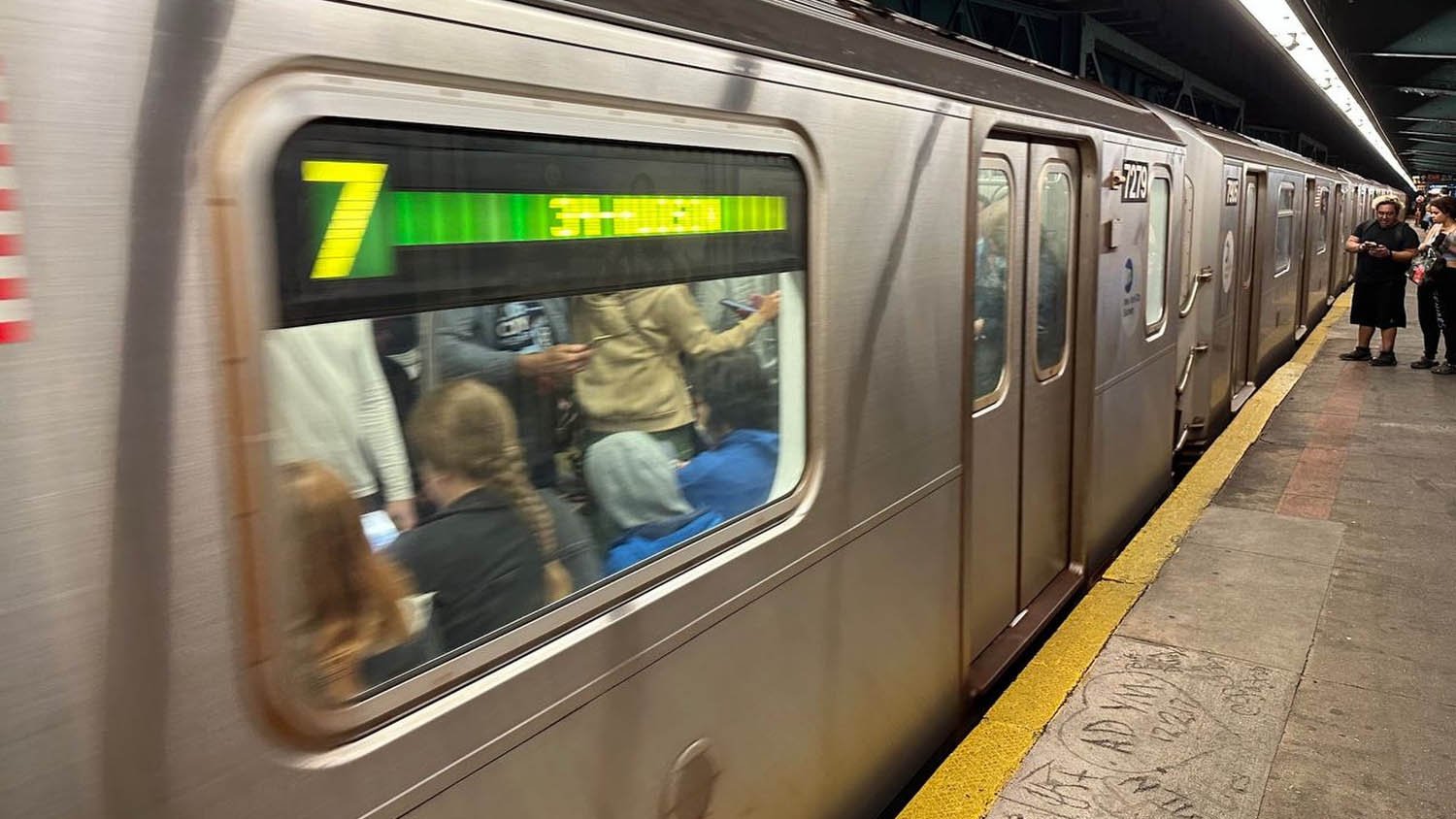
Understanding the speed of a New York City Subway train is not a simple matter of stating a single, definitive number. It’s a complex interplay of factors, including track conditions, train car models, signal systems, speed limits, passenger loads, and even the operator’s discretion. The answer, therefore, lies not in a singular velocity, but in a range of speeds that fluctuate throughout a journey, from the hesitant crawl out of a station to the exhilarating rush between stops.
The Spectrum of Subway Speeds: From Crawl to Cruise
The speed of a New York City Subway train is a variable that is constantly being managed and adjusted to ensure safety, efficiency, and punctuality. It’s a delicate balancing act performed by the Metropolitan Transportation Authority (MTA), the agency responsible for operating the vast subway system.
Station Departures and Acceleration
The journey of a New York City Subway train typically begins with a cautious acceleration. After the doors close and the conductor receives the signal to proceed, the train will begin to move slowly, often at speeds no greater than 5 to 10 miles per hour. This initial crawl is crucial for several reasons. First and foremost, it allows passengers to find their balance and for the train to detect any immediate obstructions or track issues. Second, it allows the train to gradually gain momentum without causing undue stress on its mechanical components or discomfort to passengers. As the train pulls away from the station platform and enters the open track, its acceleration rate will increase. Within a short distance, it can typically reach speeds of 20 to 25 miles per hour before needing to prepare for the next stop.
Cruising Speeds and Operational Limits
Once a New York City Subway train is between stations, it can achieve its highest operating speeds. The design of the subway cars and the infrastructure allows for considerable velocity. While the maximum theoretical speed of many New York City Subway train models, such as the R62A or R142, can reach upwards of 50 miles per hour, this is rarely achieved consistently in real-world operation.
The actual cruising speed is dictated by a combination of factors. The most significant is the signal system. The New York City Subway operates on a complex network of signals that govern train movements, spacing, and speed. These signals are designed to maintain a safe distance between trains, preventing collisions. If a train is traveling too fast, it may outpace the signals, leading to emergency braking or reduced speeds. Typical cruising speeds between stations often range from 30 to 40 miles per hour. However, on straighter, longer stretches of track, particularly on elevated lines or in less densely populated areas, trains can and do exceed this, sometimes reaching speeds closer to 45 to 50 miles per hour for brief periods.
The type of track and the age of the infrastructure also play a role. Older lines or sections with frequent curves or track imperfections may necessitate lower speed limits to ensure passenger comfort and safety. Moreover, the weight of the train, which varies with passenger load, can slightly affect acceleration and deceleration, indirectly influencing average speeds.
Deceleration and Braking
The process of slowing down is as critical as accelerating. When approaching a station, the train operator must begin to decelerate well in advance. Similar to acceleration, braking is a gradual process to ensure passenger safety and comfort. The typical deceleration rate is carefully calibrated to bring the train to a smooth stop at the designated platform. This involves using both dynamic braking (where the motors act as generators) and friction brakes. The speed at which a train begins to brake is a direct function of the distance to the station and the required stopping time, which is influenced by the train’s current speed and the braking capabilities of the specific car models.
Factors Influencing Subway Train Speed
Several key elements contribute to the variation in speed experienced on the New York City Subway. Understanding these components provides a more nuanced picture of how and why subway trains travel at the speeds they do.

The Role of the Signal System
The New York City Subway‘s signal system is the brain behind its movement. Historically, the system relied on human operators to maintain safe headways (the distance between trains). However, over decades, it has evolved into a complex, semi-automated system. The current system, a mix of older technologies and more modern implementations, governs speed limits and train spacing.
Automatic Train Control (ATC) systems, in various forms across the network, are designed to enforce speed restrictions and ensure that trains do not pass red signals. These systems communicate with the train’s onboard equipment to either warn the operator or automatically apply the brakes if a speed limit is exceeded or a signal is disregarded. The effective implementation of ATC directly limits how fast a train can travel on any given section of track. Sections with older signal technology may have more lenient speed restrictions or rely more heavily on the operator’s judgment, while areas with newer ATC systems can more precisely control speeds. The MTA is currently in the process of implementing a modern Communications-Based Train Control (CBTC) system across the network, which is designed to allow for faster and more frequent service by enabling trains to run closer together safely, thereby potentially increasing average speeds and reducing delays.
Train Car Models and Technology
The specific models of the New York City Subway cars in operation have a significant impact on their potential and actual speeds. Different generations of subway cars are equipped with varying motor power, braking systems, and control technologies. For instance, older models might have lower top speeds due to less powerful engines or less efficient braking. Newer fleets, such as the R179 or the upcoming R211, are designed with more advanced propulsion and braking systems that allow for quicker acceleration and deceleration, and potentially higher operating speeds where track conditions and signals permit. The overall condition and maintenance of the rolling stock also play a crucial role; a well-maintained train will perform optimally, adhering more closely to its designed speed capabilities.
Track Conditions and Route Design
The physical layout of the subway tracks is a primary determinant of speed limits. Subway lines in New York City traverse varied terrains. Some sections run through deep tunnels, while others are on elevated tracks, and some even run at street level. Tunnels often have tighter curves and more complex infrastructure, necessitating lower speed limits. Elevated sections, especially those on straighter, more open stretches, may allow for higher speeds. The presence of switches, junctions, and the overall curvature of the track are all meticulously mapped and factored into the speed restrictions enforced by the signal system. Straight, level tracks are ideal for higher speeds, allowing trains to accelerate and maintain momentum for longer periods. Conversely, sharp turns, steep inclines or declines, and areas with frequent track maintenance will naturally lead to reduced speeds.
Beyond the Numbers: The Subway Experience and Average Speeds
While pinpointing an exact maximum speed is an exercise in understanding technical specifications, the true experience of the New York City Subway is often defined by its average speed and the stops and starts that characterize its journey.
Average Speed vs. Maximum Speed
It is crucial to distinguish between a train’s maximum possible speed and its average speed. A train might be capable of reaching 50 miles per hour, but its average speed for a given line might be significantly lower, perhaps in the range of 15 to 20 miles per hour. This is because the journey includes frequent stops at stations, periods of acceleration and deceleration, and potential delays caused by traffic, signal issues, or passenger loading. The average speed is a more realistic measure of how quickly a passenger can travel across the city using the subway. For many commuters, the effectiveness of the subway is measured not by its top speed, but by its ability to navigate the dense urban environment efficiently and reliably.
The Impact of Delays and Service Disruptions
The New York City Subway system, with its immense scale and complexity, is susceptible to various disruptions. These can include signal malfunctions, track work, equipment failures, medical emergencies on board, or even weather-related issues. Any of these events can lead to significant slowdowns, temporary speed restrictions, or even complete service suspensions. Therefore, the speed at which a New York City Subway train travels on any given day can vary dramatically from its typical performance. The MTA employs strategies to mitigate delays and restore service as quickly as possible, but these disruptions are an inherent part of operating such a massive transit network. Understanding these potential impacts is essential for any traveler relying on the subway to navigate New York City.
The Subway as a Rhythmic Pulse
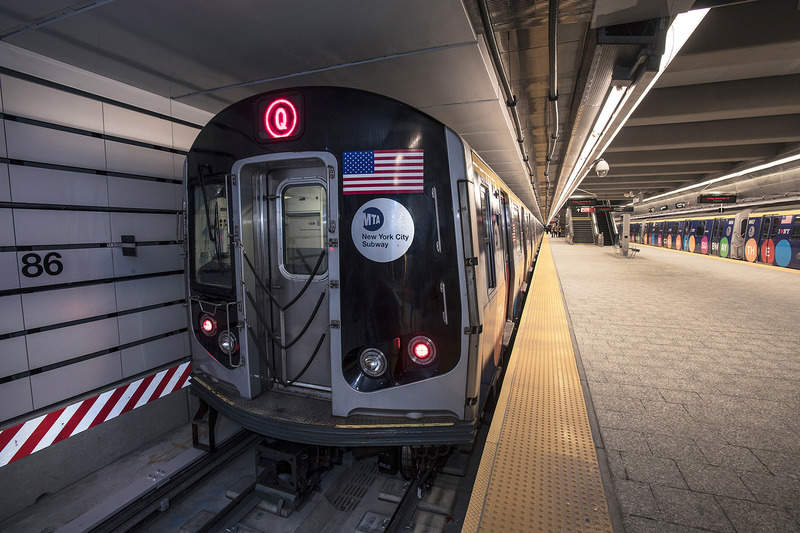
Ultimately, the speed of a New York City Subway train is a dynamic element that contributes to the unique rhythm of New York City. From the hurried rush of commuters to the leisurely pace of a sightseeing trip, the subway’s speed shapes the urban experience. While the technical specifications of its velocity are fascinating, the true magic lies in how this intricate network of trains, tracks, and signals seamlessly integrates into the daily life of millions, connecting them to their destinations and to the vibrant pulse of New York City. The question of “how fast” is less about a single number and more about the continuous interplay of movement, control, and the essential service the subway provides.
LifeOutOfTheBox is a participant in the Amazon Services LLC Associates Program, an affiliate advertising program designed to provide a means for sites to earn advertising fees by advertising and linking to Amazon.com. Amazon, the Amazon logo, AmazonSupply, and the AmazonSupply logo are trademarks of Amazon.com, Inc. or its affiliates. As an Amazon Associate we earn affiliate commissions from qualifying purchases.