
The allure of a perfectly cooked New York strip steak roast is undeniable. Often associated with upscale dining and special occasions, this prime cut of beef can be transformed into a magnificent centerpiece for any meal. While the term “roast” might suggest a slow-cooking method, preparing a New York strip steak in a roast-like fashion emphasizes achieving a beautifully seared exterior with a tender, juicy interior, typically through a combination of searing and oven roasting. This technique is a testament to the versatility of this popular cut and offers a rewarding culinary experience for home cooks.

This guide will delve into the art of preparing a New York strip steak roast, offering insights and practical steps to ensure a restaurant-quality result. We will explore the essential elements from selecting the right cut to mastering the cooking process, culminating in a presentation that will impress even the most discerning palates. Whether you are a seasoned chef or an aspiring home cook, understanding the nuances of this preparation will elevate your steak-cooking game.
I. Selecting the Perfect New York Strip Steak Roast
The foundation of any successful dish lies in the quality of its primary ingredient. For a New York strip steak roast, choosing the right cut is paramount. This section will guide you through the essential considerations, from understanding the anatomy of the strip steak to recognizing indicators of superior quality.
A. Understanding the New York Strip Steak
Also known as the Kansas City strip, strip loin, or top loin, the New York strip steak is a prized cut derived from the short loin primal of the cow. It’s characterized by its relatively lean composition, dense texture, and a distinct strip of fat along one edge, which renders during cooking, adding flavor and moisture. Unlike the ribeye, it lacks the marbling throughout the meat, offering a more robust beefy flavor with a firmer bite. When prepared as a roast, the aim is to leverage this inherent quality to create a dish that is both elegant and deeply satisfying. A good New York strip will have a firm, elastic texture and a rich, red color. The fat cap, if present, should be creamy white, indicating good quality.
B. Key Indicators of Quality
When selecting your New York strip steak roast, several factors will help you identify a high-quality specimen.
- Marbling: While the New York strip is leaner than a ribeye, some degree of intramuscular fat, known as marbling, is still desirable. Look for fine, evenly distributed flecks of fat throughout the meat. This marbling will melt during cooking, basting the steak from within and contributing to its juiciness and flavor. Avoid steaks with large, irregular patches of fat or none at all.
- Color: The meat should have a bright, cherry-red color. A dull, brownish hue can indicate that the steak has been exposed to air for too long or is not as fresh. However, some slight browning on the surface is normal due to oxidation.
- Thickness: For a roast, it’s ideal to select a thicker cut, ideally at least 1.5 to 2 inches thick. This thickness allows for a good sear on the outside while ensuring the inside cooks to your desired temperature without overcooking. Thinner steaks are more prone to drying out when cooked to a roast-like internal temperature.
- “Choice” and “Prime” Grades: In the United States, the USDA grades beef based on its quality. “Choice” is a high-quality grade, while “Prime” represents the highest level of quality, characterized by abundant marbling and tenderness. Opting for a “Choice” or, ideally, a “Prime” grade New York strip steak will significantly enhance the outcome of your roast. If these grades are unavailable, look for well-marbled cuts from reputable butchers.
- Origin: While not always readily apparent, the origin of the beef can sometimes indicate quality. Well-known regions or ranches may have a reputation for producing superior beef.
II. Preparing the New York Strip Steak Roast for Cooking
Once you’ve selected your prime cut, proper preparation is crucial to ensure even cooking and optimal flavor. This involves bringing the steak to room temperature, seasoning it generously, and preparing it for the searing process.
A. Bringing the Steak to Room Temperature
This is a critical, often overlooked, step. A cold steak placed directly into a hot pan or oven will cook unevenly. The exterior will likely overcook before the interior reaches the desired temperature. Removing the New York strip steak roast from the refrigerator at least 45 minutes to an hour before cooking allows the internal temperature to rise. This ensures that the heat penetrates the steak more gradually and evenly, leading to a more consistent and tender result. For a thicker roast, you might even allow it up to two hours.
B. The Art of Seasoning
Generous seasoning is key to developing a flavorful crust and enhancing the natural taste of the New York strip.
- Salt: Coarse kosher salt or sea salt is ideal. It not only adds flavor but also helps to draw out moisture, which aids in creating a beautiful sear. Don’t be shy with the salt; a good portion will adhere to the crust and the excess will fall off during cooking. Season liberally on all sides, including the edges.
- Black Pepper: Freshly cracked black pepper adds a pungent kick that complements the richness of the beef. Grind it freshly for the most vibrant flavor. Like salt, season generously.
- Optional Enhancements: While salt and pepper are the foundation, you can also consider other aromatics. Garlic powder, onion powder, or even a touch of paprika can add subtle layers of flavor. For a more herb-forward roast, you might incorporate dried rosemary or thyme into your salt and pepper mix. However, for a classic New York strip, sticking to salt and pepper allows the inherent quality of the beef to shine.
C. Patting Dry for the Perfect Sear
Before any cooking begins, thoroughly pat the New York strip steak roast dry with paper towels. Moisture on the surface of the steak will steam rather than sear, preventing the development of a desirable, caramelized crust. A dry surface is essential for achieving that deep brown, flavorful exterior that is characteristic of a well-cooked steak roast. Pay attention to all surfaces, ensuring they are as dry as possible.

III. The Cooking Process: Searing and Roasting
The signature of a New York strip steak roast lies in the combination of a high-heat sear to create a flavorful crust and a subsequent oven roast to bring the interior to the perfect temperature. This two-step approach ensures both textural contrast and even cooking.
A. Achieving the Perfect Sear
Searing is the initial, high-temperature cooking phase that develops the Maillard reaction, responsible for the browning and rich flavor of the steak’s exterior.
- Choose Your Pan: A heavy-bottomed skillet, such as cast iron or stainless steel, is ideal. These materials distribute heat evenly and retain it well, crucial for an effective sear.
- Heat the Pan: Place the skillet over medium-high to high heat. Allow it to get very hot before adding any oil.
- Add Fat: Add a high-smoke-point oil, such as canola, grapeseed, or avocado oil, to the hot pan. You want enough oil to coat the bottom lightly, but not so much that it pools. The oil should shimmer, indicating it’s ready.
- Sear the Steak: Carefully place the seasoned and dried New York strip steak roast into the hot skillet. Do not overcrowd the pan; if you are cooking multiple steaks, sear them in batches. Sear each side for 2-4 minutes, or until a deep, golden-brown crust forms. You can also sear the edges of the roast for about 30-60 seconds each to ensure even browning. Use tongs to carefully turn the steak, avoiding piercing it with a fork, which can release valuable juices.
B. Oven Roasting for Even Cooking
Once the steak is beautifully seared, it’s time to transfer it to the oven to finish cooking to your desired internal temperature.
- Preheat the Oven: Preheat your oven to a moderate temperature, typically between 375°F (190°C) and 425°F (220°C). A slightly lower temperature might be preferred for very thick roasts to ensure more even cooking.
- Transfer to an Oven-Safe Dish: If you seared your steak in an oven-safe skillet, you can simply transfer the entire skillet to the preheated oven. Otherwise, place the seared steak roast in a roasting pan or a cast-iron skillet that can go in the oven.
- Roasting Time: The roasting time will vary significantly depending on the thickness of the steak, your oven’s calibration, and your preferred level of doneness. A general guideline for a 1.5-2 inch thick New York strip roast is 10-20 minutes. The best way to determine doneness is by using an instant-read meat thermometer.
- Target Internal Temperatures:
- Rare: 120-125°F (49-52°C)
- Medium-Rare: 130-135°F (54-57°C) – This is often considered ideal for New York strip.
- Medium: 135-140°F (57-60°C)
- Medium-Well: 140-145°F (60-63°C)
- Well-Done: 150°F (65°C) and above (not recommended for this cut).
Insert the thermometer into the thickest part of the steak, avoiding any bone or fat pockets. Remember that the internal temperature will rise by a few degrees as the steak rests.
C. The Crucial Resting Period
This is arguably as important as the cooking itself. Once the New York strip steak roast reaches its target internal temperature, remove it from the oven and transfer it to a cutting board. Tent it loosely with aluminum foil and let it rest for at least 10-15 minutes. During cooking, the muscle fibers tighten, pushing the juices towards the center. Resting allows these juices to redistribute throughout the steak, resulting in a significantly more tender and moist final product. Skipping this step will lead to juices running out onto the cutting board, leaving your steak drier.
IV. Carving and Serving Your New York Strip Steak Roast
The culmination of your efforts is the final presentation and enjoyment of your perfectly cooked New York strip steak roast. Proper carving and thoughtful serving will elevate the entire dining experience.
A. The Art of Carving
Carving a roast steak requires a sharp knife and a steady hand.
- Use a Sharp Knife: A good carving knife or a sharp chef’s knife is essential for clean cuts that preserve the steak’s juices.
- Identify the Grain: Observe the direction of the muscle fibers in the steak. This is known as the “grain.”
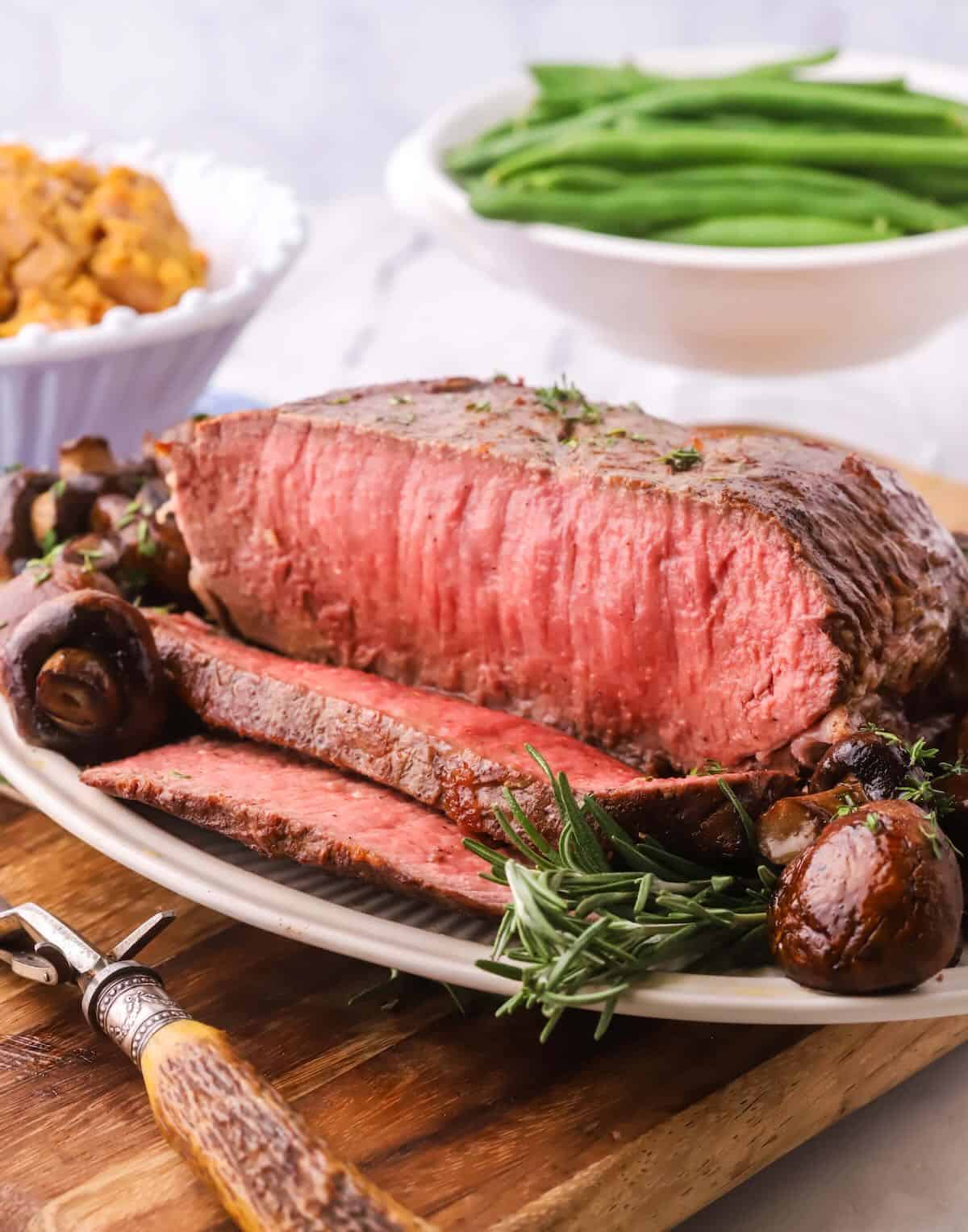
- Slice Against the Grain: For maximum tenderness, always slice the New York strip roast against the grain. This means cutting perpendicularly across the muscle fibers. Cutting with the grain will result in chewier slices.
- Slice to Desired Thickness: Aim for slices that are about 1/4 to 1/2 inch thick, depending on your preference. Thinner slices are generally easier to chew and allow the flavors to be savored.
B. Presentation and Accompaniments
A beautifully cooked New York strip steak roast deserves a presentation that matches its quality.
- Plating: Arrange the carved slices fanned out on a warm serving platter. You can drizzle any accumulated resting juices over the slices for added moisture and flavor.
- Garnishes: A simple sprinkle of fresh herbs like parsley or chives can add a touch of color and freshness. A small dollop of horseradish cream or a classic Béarnaise sauce can also be excellent additions, though the quality of the steak itself should be the star.
- Suggested Pairings: Traditional accompaniments that pair wonderfully with New York strip steak roast include creamy mashed potatoes, roasted asparagus, sautéed mushrooms, or a crisp Caesar salad. A robust red wine, such as a Cabernet Sauvignon or a Merlot, is a classic beverage pairing that complements the rich flavors of the beef.
By following these steps, you can confidently prepare a New York strip steak roast that is not only delicious but also a testament to your culinary prowess. Enjoy the fruits of your labor!
LifeOutOfTheBox is a participant in the Amazon Services LLC Associates Program, an affiliate advertising program designed to provide a means for sites to earn advertising fees by advertising and linking to Amazon.com. Amazon, the Amazon logo, AmazonSupply, and the AmazonSupply logo are trademarks of Amazon.com, Inc. or its affiliates. As an Amazon Associate we earn affiliate commissions from qualifying purchases.