
Forming a Limited Liability Company (LLC) in New York State is a strategic move for entrepreneurs and business owners seeking to protect their personal assets while enjoying the flexibility of a pass-through tax structure. This business entity combines the liability protection of a corporation with the operational simplicity of a sole proprietorship or partnership. New York, with its dynamic business environment and robust economy, offers a fertile ground for LLCs. Understanding the procedural steps and legal requirements is crucial for a smooth and successful formation process. This guide will walk you through the essential stages, from initial planning to post-formation compliance, ensuring your New York State LLC is established on solid ground.
Understanding the Fundamentals of an LLC
Before embarking on the formation process, it’s essential to grasp the core concepts and advantages of establishing an LLC. This foundational knowledge will inform your decisions and ensure you’re setting up a structure that best suits your business objectives.
The Benefits of an LLC Structure
The primary allure of an LLC lies in its dual nature, offering distinct advantages over other business structures.
Limited Liability Protection
Perhaps the most significant benefit of an LLC is its ability to shield the personal assets of its owners, known as members, from business debts and liabilities. This means that if the LLC incurs significant debt or faces a lawsuit, the members’ personal savings, homes, and other assets are generally protected. This separation is a critical distinction from sole proprietorships and general partnerships, where personal assets are directly exposed. For example, if a retail business operating as a sole proprietorship in New York City were to face a large claim, the owner’s personal assets could be seized to satisfy that debt. An LLC operating in the same city would prevent such a direct asset seizure from the owner’s personal accounts.
Pass-Through Taxation
LLCs typically benefit from pass-through taxation, meaning the company’s profits and losses are “passed through” directly to the members’ personal income tax returns. The LLC itself does not pay separate corporate income taxes. This avoids the “double taxation” that can occur with C-corporations, where profits are taxed at the corporate level and then again when distributed to shareholders as dividends. Members report their share of the LLC’s profits or losses on their individual tax returns, simplifying tax compliance and often resulting in a lower overall tax burden.
Operational Flexibility
Compared to corporations, LLCs offer greater flexibility in management and operational structure. There are no mandatory board of directors meetings, complex bylaws, or stringent corporate formalities required. Members can decide how they want to manage the company, whether through a member-managed structure (where all members participate in management) or a manager-managed structure (where designated managers, who may or may not be members, handle day-to-day operations). This flexibility allows the LLC to adapt more easily to changing business needs and member preferences.
Key Distinctions from Other Business Structures
Understanding how an LLC differs from other common business entities is crucial for making an informed choice.
LLC vs. Sole Proprietorship/Partnership
The most significant difference is liability protection. Sole proprietorships and general partnerships offer no such shield, making the owners personally responsible for all business obligations. LLCs provide this vital separation, offering a layer of security that is invaluable for most businesses.
LLC vs. Corporation (S-Corp & C-Corp)
While corporations also offer limited liability, they are subject to more complex regulations, including mandatory board meetings, shareholder requirements, and stricter record-keeping. Corporations can also face double taxation (C-corps) or have limitations on the number and type of shareholders (S-corps). LLCs offer a simpler, more flexible alternative while still providing liability protection and the tax advantages of pass-through taxation.
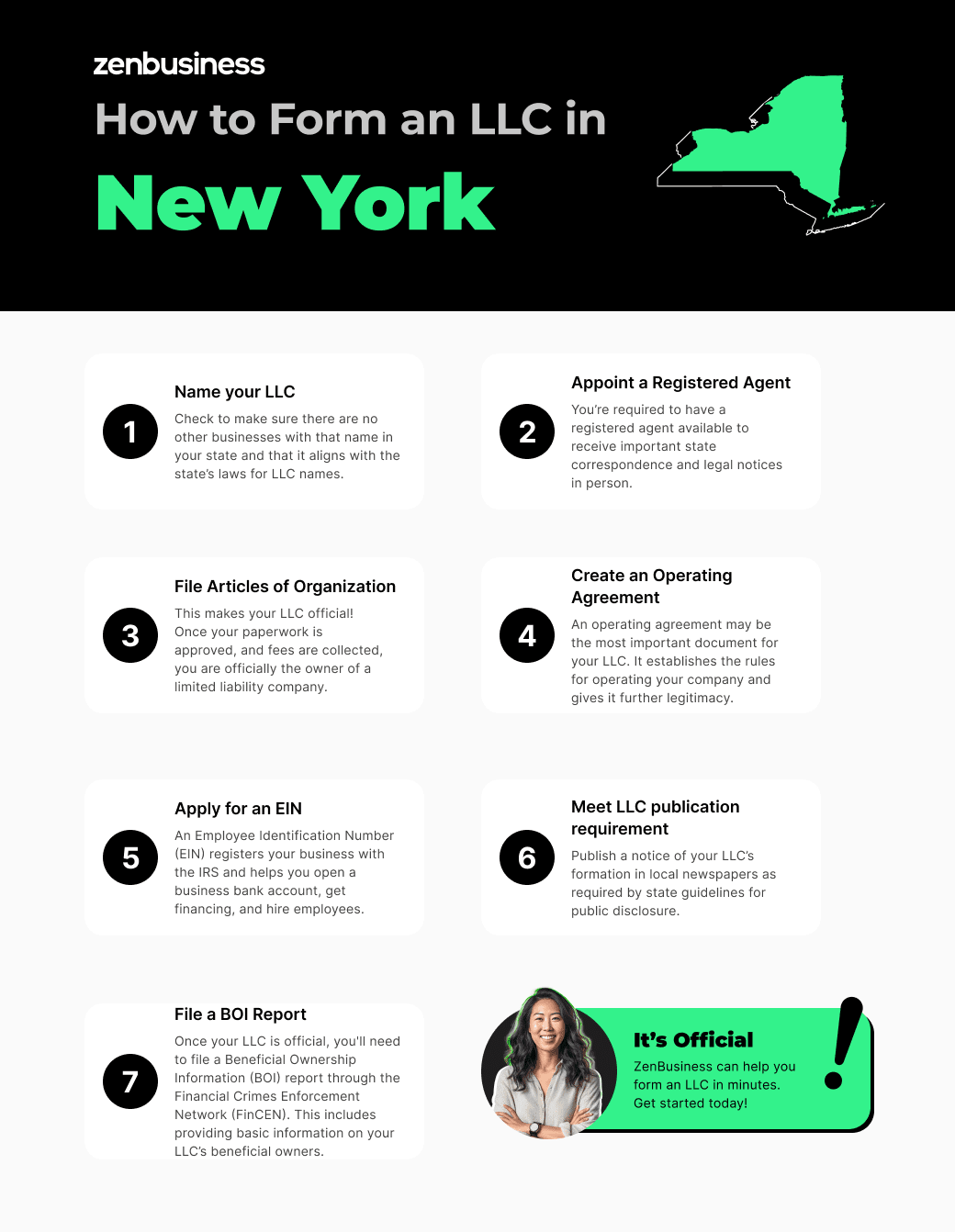
The Step-by-Step Formation Process in New York State
Forming an LLC in New York State involves several distinct steps, each requiring careful attention to detail to ensure compliance with state regulations.
Step 1: Choose a Name for Your LLC
Selecting a unique and appropriate name is the first official step in forming your LLC. The name must comply with New York State naming conventions and be distinguishable from existing business names.
Naming Requirements and Availability Check
Your LLC’s name must contain the words “Limited Liability Company” or the abbreviation “LLC” or “L.L.C.” It cannot contain restricted words or phrases that might imply affiliation with government agencies or suggest a different type of entity. To ensure your chosen name is available, you can conduct a name search through the New York State Department of State’s online database. This preliminary check is vital to avoid potential rejection of your filing.
Optional: Name Reservation
While not mandatory, you can reserve your chosen LLC name for up to 60 days by filing an application with the New York State Department of State. This is a good option if you’ve chosen a name but are not yet ready to file the formation documents.
Step 2: Appoint a Registered Agent
A registered agent is an individual or entity designated to receive official legal and tax documents on behalf of your LLC. This is a mandatory requirement for all businesses operating in New York State.
Role and Requirements of a Registered Agent
The registered agent must have a physical street address within New York State (not a P.O. Box) and be available during normal business hours to accept service of process. This ensures that your LLC can be reliably contacted by government agencies and served with legal notices. You can appoint yourself as the registered agent, a trusted employee, or hire a professional registered agent service.
Choosing the Right Registered Agent
Consider the following when selecting a registered agent:
- Availability: Ensure they are consistently available during business hours.
- Confidentiality: If you’re using a commercial service, understand their privacy policies.
- Geographic Location: While any New York State address suffices, some prefer an agent located in the same city or county as their business for convenience.
Step 3: File the Articles of Organization
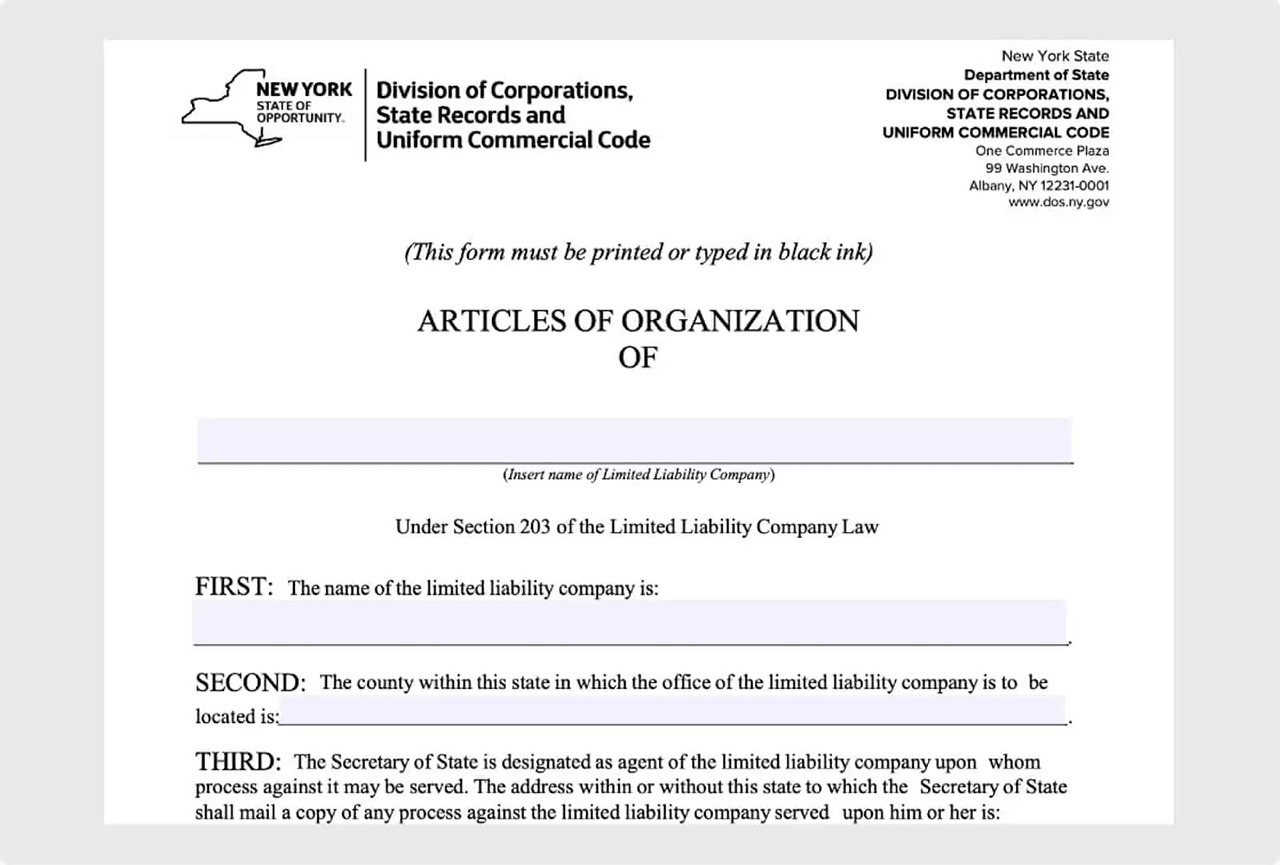
The Articles of Organization (also known as a Certificate of Formation in some states) is the official document that legally creates your LLC in New York State.
Information Required in the Articles of Organization
This document, filed with the New York State Department of State, typically includes:

- The name of the LLC.
- The county within New York State where the LLC’s principal office will be located.
- The designation of the Secretary of State as the agent for service of process.
- The name and address of the registered agent.
Filing Fees and Submission
There is a filing fee associated with submitting the Articles of Organization to the New York State Department of State. You can typically file online, by mail, or in person. It’s crucial to ensure all information is accurate and complete to avoid delays or rejections.
Step 4: Create an Operating Agreement
While not a mandatory filing with the state, an Operating Agreement is a critical internal document that governs the operations and management of your LLC.
The Importance of an Operating Agreement
This agreement outlines the rights and responsibilities of the members, how profits and losses will be distributed, rules for admitting new members, and procedures for dissolving the LLC. A well-drafted Operating Agreement can prevent future disputes among members and provide clarity on decision-making processes. It also reinforces the separation between the LLC and its members, which is vital for maintaining limited liability protection.
Key Components of an Operating Agreement
A typical Operating Agreement includes provisions for:
- Member contributions and ownership percentages.
- Management structure (member-managed or manager-managed).
- Voting rights and procedures.
- Distribution of profits and losses.
- Procedures for member withdrawal or death.
- Dissolution of the LLC.
Step 5: Obtain an Employer Identification Number (EIN)
If your LLC plans to hire employees or operate as a corporation for tax purposes, you will need to obtain an Employer Identification Number (EIN) from the Internal Revenue Service (IRS).
When an EIN is Necessary
Even if your LLC has no employees, an EIN is often required to open a business bank account, apply for business licenses, or if you elect to be taxed as a corporation. It’s essentially a Social Security number for your business.
Applying for an EIN
Applying for an EIN is a free process that can be completed online through the IRS website. You will need to provide information about your LLC, including its name, address, and the names of its responsible parties.
Ongoing Compliance and Operational Considerations
Once your LLC is formed, there are ongoing responsibilities to ensure it remains in good standing and operates smoothly.
Annual Filings and Fees
New York State requires LLCs to file an annual statement of information and pay associated fees.
The Biennial Statement of Information
LLCs registered in New York State must file a biennial statement of information with the Department of State every two years. This filing updates the state on your LLC’s current information, such as its registered agent and principal office address. Failure to file these statements can result in penalties or even the administrative dissolution of your LLC.
Other Potential State and Local Taxes
Depending on your business activities and location within New York State, you may be subject to various state and local taxes, including sales tax, franchise tax, and any applicable city-specific taxes. It’s essential to research and comply with all relevant tax obligations.
Maintaining Limited Liability
Adhering to certain practices is crucial for preserving the limited liability protection your LLC provides.
Keeping Business and Personal Finances Separate
One of the most critical aspects of maintaining limited liability is to keep your business and personal finances strictly separate. This includes:
- Opening a dedicated business bank account: Deposit all business income into this account and pay all business expenses from it.
- Avoiding commingling funds: Never use business funds for personal expenses or vice versa.
- Keeping accurate records: Maintain detailed financial records for your LLC.
This separation helps to demonstrate that the LLC is a distinct legal entity, reinforcing the veil of limited liability. For instance, a restaurant owner in Schenectady running their business as an LLC should not pay for personal groceries using their business credit card.
Adhering to Formalities (Even if Minimal)
While LLCs are more flexible than corporations, it’s still wise to maintain some level of operational formality. This can include holding regular member meetings (even if informal) and documenting significant business decisions. This reinforces the concept of the LLC as a separate entity and can be crucial in legal disputes.
Business Licenses and Permits
Depending on your industry and location, your LLC may need to obtain specific business licenses and permits to operate legally.
Federal, State, and Local Requirements
These requirements can vary significantly. You may need federal licenses for certain regulated industries, state licenses from agencies like the New York State Department of Health or Department of Consumer Affairs, and local permits from your city or county. Researching these requirements thoroughly is essential to avoid operating without proper authorization. For example, a catering business operating in Buffalo would likely need health permits and potentially business licenses from the city.
Conclusion: Empowering Your Business Venture in New York State
Forming an LLC in New York State is a well-defined process that, when followed diligently, provides a strong foundation for your business. By understanding the benefits of the LLC structure, meticulously following the formation steps, and committing to ongoing compliance, you can effectively protect your personal assets and navigate the complexities of business ownership. This strategic business decision empowers your venture in one of the nation’s most vibrant economic hubs, offering both security and the flexibility needed for growth and success. Remember that consulting with legal and financial professionals throughout this process can provide invaluable guidance and ensure all your specific business needs are met.
LifeOutOfTheBox is a participant in the Amazon Services LLC Associates Program, an affiliate advertising program designed to provide a means for sites to earn advertising fees by advertising and linking to Amazon.com. Amazon, the Amazon logo, AmazonSupply, and the AmazonSupply logo are trademarks of Amazon.com, Inc. or its affiliates. As an Amazon Associate we earn affiliate commissions from qualifying purchases.