
Embarking on the journey of establishing a business in the bustling metropolis of New York demands a structured approach, and for many entrepreneurs, a Limited Liability Company, or LLC, presents an attractive and versatile business structure. The allure of an LLC lies in its ability to provide personal liability protection while offering the operational flexibility of a partnership or sole proprietorship. New York, a state renowned for its dynamic economy and diverse entrepreneurial landscape, offers a well-defined process for forming an LLC. This guide will meticulously walk you through the essential steps, from initial conceptualization to the official establishment of your Limited Liability Company within the Empire State, ensuring you navigate the legal and administrative requirements with confidence.
Understanding the LLC Structure and Its Advantages in New York
Before diving into the procedural aspects, it’s crucial to grasp what an LLC is and why it’s a favored choice for businesses operating in New York. An LLC is a hybrid business entity that combines the pass-through taxation of a partnership or sole proprietorship with the limited liability of a corporation. This means that the personal assets of the LLC owners (known as members) are generally protected from business debts and lawsuits. This distinction is paramount, particularly in a litigious environment like New York, where protecting personal wealth from business entanglements is a significant consideration.
Key Benefits of Forming an LLC in New York
The decision to form an LLC in New York is often driven by several compelling advantages:
- Limited Liability Protection: This is the cornerstone of the LLC structure. It shields your personal assets – such as your home, car, and savings – from business-related debts and legal actions. If the LLC incurs debt or is sued, creditors and claimants can typically only pursue the assets owned by the LLC itself, not the personal assets of its members.
- Pass-Through Taxation: Unlike traditional corporations, LLCs are generally not taxed as a separate entity. Instead, profits and losses are “passed through” to the members and reported on their individual income tax returns. This avoids the “double taxation” that can occur with C-corporations, where profits are taxed at the corporate level and then again when distributed to shareholders as dividends.
- Operational Flexibility: LLCs offer a high degree of flexibility in management and operational structure. Members can choose to manage the company themselves (member-managed) or appoint managers (manager-managed). The operating agreement, a crucial internal document, can be tailored to define roles, responsibilities, profit and loss distribution, and other operational aspects according to the members’ preferences.
- Simpler Compliance: Compared to corporations, LLCs typically have fewer formal administrative requirements, such as mandatory annual meetings or extensive record-keeping. This can simplify ongoing compliance and reduce administrative burdens.
- Credibility and Professionalism: Establishing a formal business entity like an LLC can enhance the credibility and professional image of your business in the eyes of customers, suppliers, and potential investors, especially within the competitive New York market.
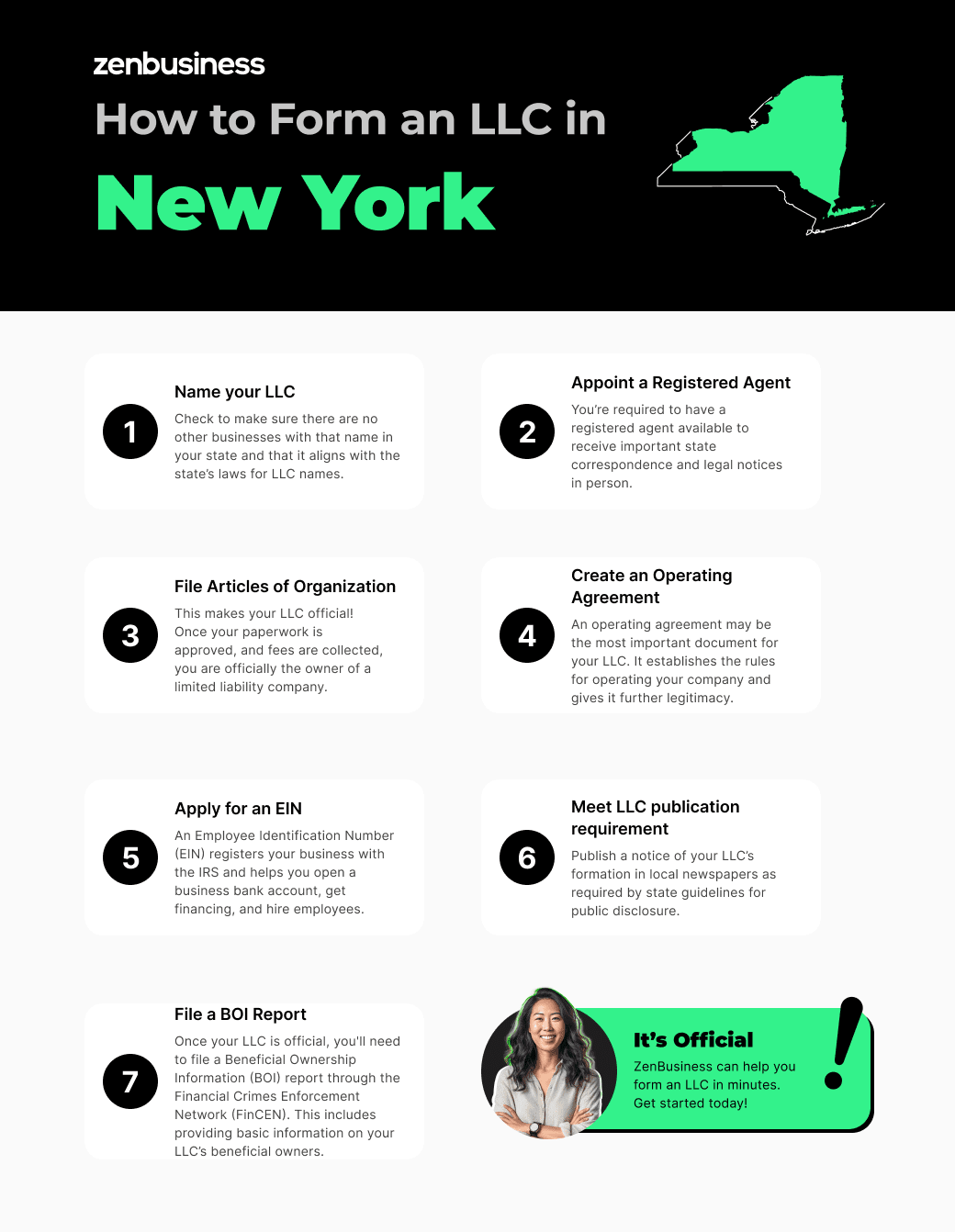
The Foundational Steps: Naming Your LLC and Appointing a Registered Agent
The formation process begins with two critical foundational steps: selecting a unique and compliant business name and designating a registered agent. These elements are not merely formalities; they are legal requirements that must be addressed accurately to proceed with your LLC formation in New York.
Choosing a Distinctive and Compliant Business Name
Your LLC’s name is its identity. In New York, there are specific rules and requirements for business names to ensure uniqueness and clarity.
- Uniqueness Check: The most important rule is that your chosen name must be distinguishable from the names of other business entities already registered with the New York Department of State. You can conduct a name availability search on the Department of State’s website to check if your desired name is already in use. It’s advisable to have a few alternative names in mind in case your first choice is unavailable.
- Mandatory Designations: Your LLC name must include specific words or abbreviations that indicate it is a Limited Liability Company. These typically include “Limited Liability Company,” “LLC,” or “L.L.C.”
- Prohibited Words: Certain words are restricted or prohibited in business names without special permission or for specific industries. For example, words like “bank,” “insurance,” or “architect” might require licensing or approval.
- Consideration for Domain Names and Trademarks: While not a legal requirement for formation, it’s prudent to consider the availability of corresponding domain names for your website and check for potential trademark conflicts to avoid future branding issues.
Appointing a Registered Agent in New York
A registered agent is a person or entity designated to receive legal documents, such as service of process (summons and complaints), on behalf of your LLC. This individual or company must have a physical street address in New York and be available during normal business hours to accept these important documents.
- Who Can Be a Registered Agent? The registered agent can be:
- An individual resident of New York.
- A domestic business corporation, LLC, or limited partnership.
- A foreign business corporation, LLC, or limited partnership authorized to do business in New York.
- Professional Registered Agent Services: Many businesses opt to use a professional registered agent service. These services specialize in fulfilling this role, ensuring that legal documents are received promptly and forwarded to you, thereby preventing potential default judgments due to missed legal notices. This is particularly beneficial if you don’t have a consistent physical address in New York or if you prefer to maintain privacy regarding your home address.
The Core Formation Document: Filing the Articles of Organization
The most critical step in formally establishing your LLC in New York is filing the Articles of Organization with the New York Department of State. This document is the legal birth certificate of your LLC.
What to Include in Your Articles of Organization

The Articles of Organization are a relatively straightforward document, but accuracy is paramount. Key information typically required includes:
- Name of the LLC: The exact name you have chosen and verified for availability.
- County of the LLC’s Office: This refers to the county within New York where your LLC’s principal office will be located.
- Designation of Secretary of State as Agent: You must designate the New York Secretary of State as an agent for service of process. The Department of State will then forward any legal documents served upon them to your designated registered agent.
- Address for Forwarding Process: You will need to provide an address to which the Secretary of State should forward any legal documents they receive on behalf of your LLC. This is typically the address of your registered agent.
Filing the Articles of Organization
Once completed, the Articles of Organization can be filed with the New York Department of State.
- Filing Methods: You can typically file by mail or in person. Some states offer online filing options, though New York’s primary method is through mail or in-person submission.
- Filing Fee: There is a filing fee associated with submitting the Articles of Organization. The current fee can be found on the New York Department of State’s website.
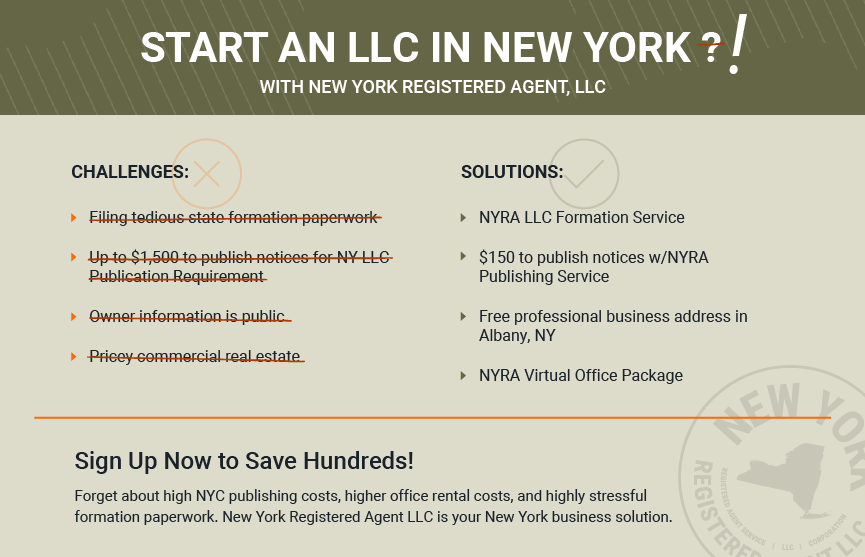
- Publication Requirement: A unique and crucial requirement in New York for LLCs is the publication requirement. Within 120 days of your Articles of Organization becoming effective, you must publish a notice of your LLC’s formation in two newspapers designated by the county clerk in the county where your LLC’s principal office is located. One newspaper must be a weekly, and the other must be a daily. After publication, you must file an affidavit of publication with the Department of State. Failure to comply with this publication requirement can lead to the suspension of your LLC’s authority to conduct business in New York. This step is often overlooked and is a critical distinction for New York LLCs.
Essential Post-Formation Steps for a Robust LLC
Formally establishing your LLC is a significant milestone, but it’s not the end of the process. Several post-formation steps are crucial for maintaining compliance, ensuring smooth operations, and solidifying the legal and financial separation between you and your business.
Drafting a Comprehensive Operating Agreement
While not a mandatory filing requirement with the state for LLCs in New York, an Operating Agreement is an essential internal document. It functions as the rulebook for your LLC, outlining how the business will be managed, how profits and losses will be distributed, and the rights and responsibilities of its members.
- Key provisions to include:
- Ownership Structure: Clearly define the percentage of ownership each member holds.
- Management Structure: Specify whether the LLC is member-managed or manager-managed.
- Profit and Loss Distribution: Detail how profits and losses will be allocated among members.
- Member Duties and Responsibilities: Outline the roles and expectations for each member.
- Voting Rights: Define how decisions will be made and the voting power of each member.
- Procedures for Adding or Removing Members: Establish clear guidelines for membership changes.
- Dissolution and Buy-Sell Provisions: Outline the process for dissolving the LLC and provisions for buying out a departing member’s interest.
A well-drafted Operating Agreement can prevent disputes among members and provide clarity on operational matters, reinforcing the limited liability protection by demonstrating the distinct nature of the business.
Obtaining an Employer Identification Number (EIN)
If your LLC will have employees, or if it is a multi-member LLC, you will need to obtain an Employer Identification Number (EIN) from the Internal Revenue Service (IRS). An EIN is like a Social Security number for your business and is used for tax filing purposes.
- When an EIN is Required:
- If your LLC has more than one member.
- If your LLC plans to hire employees.
- If your LLC operates as a corporation or partnership for tax purposes.
- If your LLC files excise tax returns or certain other tax forms.
- How to Obtain an EIN: You can apply for an EIN online through the IRS website. The process is free and typically instantaneous.
Opening a Dedicated Business Bank Account
Maintaining a clear separation between your personal finances and your business finances is paramount for preserving the limited liability protection offered by your LLC.
- Why it’s Crucial: Commingling funds can undermine the legal distinction between you and your LLC, potentially exposing your personal assets to business liabilities in the event of a lawsuit.
- What You’ll Need: To open a business bank account, you will generally need your LLC’s formation documents (Articles of Organization), your EIN, and potentially your Operating Agreement.
- Benefits: A dedicated business account simplifies accounting, makes it easier to track business income and expenses, and contributes to a more professional financial image.
By diligently completing these post-formation steps, you ensure your New York LLC operates smoothly, remains compliant with legal requirements, and effectively safeguards your personal assets. This structured approach lays a strong foundation for the success and longevity of your new venture in the vibrant New York business environment.
LifeOutOfTheBox is a participant in the Amazon Services LLC Associates Program, an affiliate advertising program designed to provide a means for sites to earn advertising fees by advertising and linking to Amazon.com. Amazon, the Amazon logo, AmazonSupply, and the AmazonSupply logo are trademarks of Amazon.com, Inc. or its affiliates. As an Amazon Associate we earn affiliate commissions from qualifying purchases.