
Nestled in the vast expanse of the western Pacific Ocean, the island of Guam is much more than just a tropical paradise with pristine beaches and crystal-clear waters. This often-overlooked gem in Micronesia holds a unique position on the global stage, boasting a rich, complex history and an extraordinary natural environment that sets it apart from other island destinations. For the discerning traveler seeking depth beyond the sun and sand, Guam offers a compelling narrative rooted in geopolitical significance and a breathtaking connection to one of Earth’s most profound natural wonders.
This article delves into two fascinating facts about Guam, revealing why this strategic crossroads and biodiversity hotspot should be at the top of any explorer’s list. From its pivotal role in global conflicts to its dramatic underwater landscapes, Guam presents a captivating blend of cultural heritage, natural beauty, and modern-day allure that promises an unforgettable experience for visitors. Whether you’re interested in uncovering layers of history, exploring vibrant marine ecosystems, or simply seeking a tranquil escape, understanding these two core aspects of Guam will undoubtedly enhance your appreciation for this remarkable island.
Fact 1: A Strategic Crossroads of History and Culture
One of the most compelling aspects of Guam is its profound historical and geopolitical significance. This small island, roughly 30 miles long and 9 miles wide, has been a coveted prize for global powers for centuries, a silent witness to epic tales of exploration, conquest, and resilience. Its strategic location in the Western Pacific, bridging Asia and the Americas, has shaped its destiny, infusing it with a diverse cultural identity that is both unique and deeply layered.
Guam’s Deep Historical and Geopolitical Roots
The story of Guam begins over 4,000 years ago with the indigenous Chamorro people, master navigators and sophisticated seafarers who established a thriving society. Their peaceful existence, however, was dramatically altered in 1521 when Ferdinand Magellan, on his circumnavigation voyage, became the first European to sight the island. This encounter marked the beginning of Guam’s colonial era, as it quickly became a vital stopover for Spanish galleons traversing the Pacific Ocean on their trade routes between Mexico and the Philippines. For over three centuries, Guam was under the control of the Spanish Empire, a period that left an indelible mark on its culture, religion, and language. The capital city, Hagåtña, still bears the architectural and spiritual legacy of this era.
The island’s geopolitical importance became even more pronounced at the turn of the 20th century. Following the Spanish-American War, Guam was ceded to the United States in 1898 under the Treaty of Paris. This transition transformed Guam into a critical coaling and communications station for the United States Navy in the Pacific Ocean, further cementing its strategic value. However, it was World War II that truly underscored Guam’s military significance. The island suffered a brutal occupation by Japan following the attack on Pearl Harbor in 1941, enduring 31 months of hardship before its liberation by American forces in 1944. The battles fought on Guam were among the fiercest of the Pacific Theater, leaving behind a landscape dotted with relics and memorials that serve as poignant reminders of its past.

Today, Guam remains an unincorporated territory of the United States and continues to play a vital strategic role, hosting major military installations such as Andersen Air Force Base and Naval Base Guam. Its position makes it a crucial hub for defense, communication, and humanitarian efforts in the Western Pacific, attracting visitors not only for its natural beauty but also for its profound historical narratives and opportunities for military and cultural tourism.
A Rich Tapestry of Indigenous and Colonial Heritage
The intricate dance of history on Guam has created a vibrant cultural tapestry, one of the island’s most fascinating features. The indigenous Chamorro culture, though significantly influenced by Spanish and American colonization, has resiliently preserved its identity, language, and traditions. Visitors to Guam have the unique opportunity to immerse themselves in this rich heritage, which is evident in everything from the local cuisine to its architectural landmarks and spirited community festivals.
The Spanish legacy is particularly palpable in Hagåtña, where structures like the Plaza de España stand as testaments to centuries of colonial rule. This historic complex, once the seat of the Spanish colonial government, offers a glimpse into a bygone era with its elegant arches and manicured grounds. Nearby, the majestic Dulce Nombre de Maria Cathedral-Basilica, built on the site of the first church in Guam, is a spiritual and architectural centerpiece reflecting the island’s strong Catholic faith, a direct inheritance from its Spanish past. Beyond these grand structures, the ancient practice of erecting latte stones, distinctive mushroom-shaped pillars used as foundations for Chamorro houses, can be explored at sites like Latte Stone Park. These megalithic pillars are powerful symbols of Chamorro ingenuity and cultural endurance.

The fusion of cultures is perhaps best savored through Guam’s distinctive culinary scene. Local dishes combine indigenous ingredients with Spanish, Filipino, and American influences, creating flavors that are truly unique. Signature dishes like finadene, a savory dipping sauce; kelaguen, a tangy marinated meat or seafood dish; and the ubiquitous red rice are must-tries for any food enthusiast. These culinary delights are often central to local fiestas and celebrations, providing a taste of the island’s vibrant community spirit. Engaging with the local culture, whether through trying traditional foods, learning a few Chamorro phrases, or participating in a village festival, offers a deeply enriching travel experience, making Guam far more than just a beach destination but a journey into a living, evolving heritage.
Fact 2: A Biodiversity Hotspot and Gateway to the Deep Sea
Beyond its profound historical narrative, the second captivating fact about Guam lies in its extraordinary natural environment. The island is not only a tropical paradise on the surface but also a crucial component of a global biodiversity hotspot, boasting unique ecosystems both above and below the waterline. Perhaps most remarkably, Guam is positioned on the edge of the deepest known point on Earth, giving it a direct, albeit distant, connection to one of the planet’s most mysterious frontiers.
The Allure of Pristine Waters and Unique Marine Life
Guam’s location in the Western Pacific grants it access to some of the world’s most vibrant and biodiverse marine environments. The island is fringed by extensive coral reef systems, teeming with an astonishing array of fish, invertebrates, and other marine creatures. These reefs are not only breathtakingly beautiful but also play a critical role in supporting the island’s ecosystem and local economy, attracting snorkelers, divers, and marine enthusiasts from across the globe. The clarity and warmth of the waters provide ideal conditions for exploring these underwater marvels, offering visibility often exceeding 100 feet.
Popular dive sites around Guam include a fascinating collection of shipwrecks from both World War I and World War II, creating unique artificial reefs that serve as historical memorials and vibrant marine habitats simultaneously. This blend of history and nature underwater is a rare find, providing divers with an unparalleled experience. Above the waves, Guam is famed for its stunning white-sand beaches, each offering its own charm. Tumon Bay, with its crescent shape and calm, shallow waters, is perfect for families and casual swimmers, while Ritidian Beach in the north offers a more secluded, rugged beauty, ideal for nature lovers seeking untouched scenery. Gun Beach, known for its dramatic sunsets and vibrant reef life, provides excellent snorkeling right off the shore.
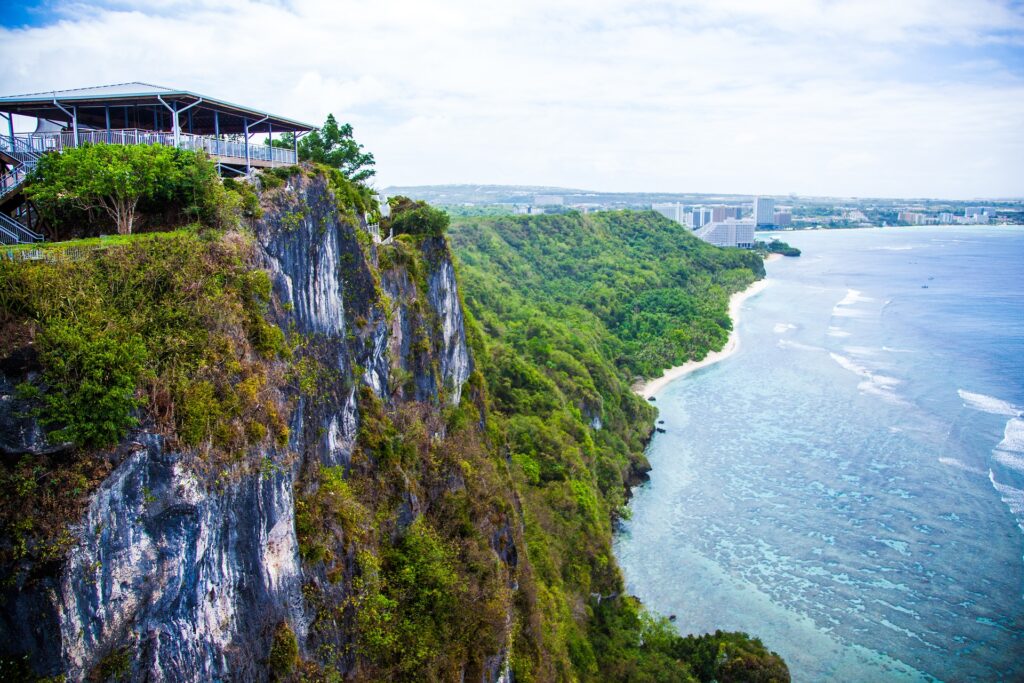
Beyond the beaches, natural landmarks like Two Lovers Point offer panoramic views of the coastline and the vast Pacific Ocean. This iconic cliff, steeped in local legend, provides not just spectacular vistas but also a romantic narrative that captivates visitors. For those seeking active exploration, eco-tourism opportunities abound, from kayaking through mangrove forests to visiting smaller, idyllic islands like Cocos Island, a perfect day trip for snorkeling, jet-skiing, and simply relaxing in a pristine environment. Guam’s natural attractions underscore its identity as a true island paradise, offering a diverse range of experiences for every type of traveler.
Proximity to the Mariana Trench and Terrestrial Uniqueness
What truly elevates Guam’s natural significance is its remarkable proximity to the Mariana Trench, the deepest oceanic trench on Earth. While not directly on the island itself, Guam sits on the leading edge of the Mariana Plate, just a relatively short distance from where the Pacific Plate plunges beneath it, creating this geological marvel. The deepest part of the trench, known as Challenger Deep, descends to an astonishing depth of approximately 36,070 feet (10,994 meters) in the western Pacific Ocean, southeast of Guam and near the Mariana Islands. This geological feature makes Guam a unique vantage point, a gateway to understanding the profound mysteries of deep-sea life and plate tectonics.
The trench, a zone of extreme pressure and perpetual darkness, harbors bizarre and resilient forms of life adapted to these conditions, challenging our understanding of biodiversity and survival. While direct access to the Mariana Trench requires specialized submersibles, its presence significantly influences the surrounding marine environment, including the waters around Guam. It contributes to the rich oceanic currents and nutrient cycles that support the vibrant coral reefs and diverse fish populations the island is famous for. For scientists and researchers, Guam serves as a convenient base for expeditions to this extraordinary natural laboratory.
On land, Guam’s terrestrial ecosystems also hold unique value, albeit with their own challenges. The island’s lush jungle interiors are home to various endemic plant species and previously, numerous unique bird species. However, the introduction of the invasive brown tree snake after World War II led to the tragic extinction of most of Guam’s native forest birds. This ecological disaster serves as a stark reminder of the fragility of island ecosystems and the importance of conservation efforts. Despite this, conservation programs are actively working to protect remaining species and restore habitats. Areas like the War in the Pacific National Historical Park, while preserving historical battlefields, also encompass significant natural areas, offering hiking trails through lush landscapes and opportunities to appreciate Guam’s resilient flora and fauna. This dual nature, linking the deepest parts of the ocean with unique island biodiversity, firmly establishes Guam as a fascinating subject for both environmental study and eco-conscious travel.
Discovering Guam: A Premier Pacific Destination
Armed with knowledge of Guam’s strategic historical importance and its incredible natural wonders, prospective travelers can truly appreciate the depth and breadth of experiences this Pacific Ocean gem has to offer. Guam is not just a destination for relaxation; it’s an immersive journey into history, culture, and nature, catering to a diverse range of interests and lifestyles, from luxury seekers to budget adventurers.
Unforgettable Experiences and Diverse Accommodation
When planning a trip to Guam, visitors will find an abundance of activities and attractions designed to showcase its unique appeal. Water sports are undoubtedly a highlight. The calm, clear waters are perfect for snorkeling, scuba diving, parasailing, jet skiing, and paddleboarding. Diving enthusiasts can explore vibrant coral gardens, encounter diverse marine life including reef sharks and sea turtles, or delve into the historical wrecks that lie beneath the Philippine Sea and Pacific Ocean. For those who prefer land-based adventures, hiking through the island’s lush jungles reveals hidden waterfalls and ancient Chamorro sites. Golfers can enjoy world-class courses with stunning ocean views, while shoppers can indulge in duty-free retail therapy at major centers like Micronesia Mall and Guam Premier Outlets, making Guam a popular destination for visitors from Japan, Korea, and China.
Accommodation options in Guam are as diverse as its attractions, catering to every preference and budget. Along Tumon Bay, a strip often referred to as Guam’s “hotel row,” you’ll find a range of luxurious resorts offering unparalleled amenities and breathtaking oceanfront views. Five-star properties like the Dusit Thani Guam Resort, known for its elegant suites and world-class dining, and the Hyatt Regency Guam, celebrated for its extensive pools and family-friendly atmosphere, provide a lavish experience. Other reputable options include the Hilton Guam Resort & Spa and the Outrigger Guam Beach Resort, all offering direct beach access and a plethora of services.
For travelers seeking a more budget-friendly stay, numerous mid-range hotels and charming boutique accommodations are available, often providing excellent value without compromising on comfort or convenience. For longer stays, family trips, or those desiring more independence, serviced apartments and villas offer home-like comforts with the flexibility of self-catering. Booking in advance, especially during peak seasons, is advisable, and utilizing online reviews and comparison sites can help in finding the perfect place to suit individual needs. From exquisite dining experiences featuring international and local cuisine to vibrant nightlife and cultural shows, Guam truly offers a complete lifestyle experience, blending relaxation with adventure and cultural immersion.
In conclusion, Guam stands out not merely as a beautiful tropical island but as a destination of remarkable depth and character. The two interesting facts — its enduring geopolitical significance as a crossroads of history and culture, and its exceptional status as a biodiversity hotspot on the doorstep of the Mariana Trench — paint a picture of an island far more complex and captivating than meets the eye. From exploring ancient Chamorro sites and World War II memorials to diving into pristine coral reefs and appreciating unique island ecosystems, Guam offers a rich tapestry of experiences. It is a place where history resonates through generations and nature thrives in spectacular fashion, inviting travelers to discover its many layers and forge unforgettable memories. Whether drawn by its strategic allure or its natural splendor, Guam promises a journey that is as enlightening as it is enchanting.
LifeOutOfTheBox is a participant in the Amazon Services LLC Associates Program, an affiliate advertising program designed to provide a means for sites to earn advertising fees by advertising and linking to Amazon.com. Amazon, the Amazon logo, AmazonSupply, and the AmazonSupply logo are trademarks of Amazon.com, Inc. or its affiliates. As an Amazon Associate we earn affiliate commissions from qualifying purchases.