
The enchanting islands of Hawaii, a name synonymous with paradise, aloha spirit, and breathtaking natural beauty, officially joined the United States as its 50th state on August 21, 1959. This momentous occasion marked the culmination of a complex and fascinating journey, transitioning from an independent kingdom to a U.S. territory and finally achieving full statehood. For travelers worldwide, Hawaii represents an ultimate escape, a destination where vibrant local culture blends seamlessly with stunning landscapes and luxurious accommodations. Understanding its path to statehood not only enriches one’s appreciation for the islands’ unique heritage but also deepens the experience of exploring its historic landmarks, vibrant cities, and serene natural wonders that draw millions of visitors each year.
The story of Hawaii’s statehood is not merely a historical footnote; it’s a narrative woven into the very fabric of the islands’ identity, influencing everything from its political landscape to its thriving tourism industry. From ancient Polynesian voyagers navigating the vast Pacific Ocean to the bustling resorts of Waikiki Beach today, Hawaii’s journey is one of resilience, cultural fusion, and transformation. As we delve into the historical milestones that shaped modern Hawaii, we’ll discover how its past continues to define its present as a premier global travel destination, offering everything from adventure and relaxation to profound cultural insights and unforgettable experiences.
The Road to Statehood: A Rich History of the Islands
The path to Hawaii’s statehood is long and intricate, beginning centuries before its formal integration into the United States. It’s a story rooted in ancient traditions, foreign exploration, and political maneuvering that ultimately redefined the destiny of these remote yet strategically important islands. Understanding this historical foundation is key to appreciating the unique cultural tapestry and the many historical landmarks that travelers encounter across the Hawaiian archipelago today.
From Polynesian Settlement to Kingdom
The initial chapter of Hawaii’s history is an epic tale of human ingenuity and exploration. Around 300 to 800 AD, skilled Polynesian navigators, originating from the Marquesas Islands and later the Society Islands, embarked on courageous voyages across the Pacific Ocean in double-hulled canoes. They brought with them not only essential plants and animals but also a rich oral tradition, intricate social structures, and a profound respect for the land and sea. These early settlers established a thriving society based on a complex kapu (taboo) system, sophisticated agriculture, and expert fishing techniques, laying the groundwork for a distinct Hawaiian culture.
The arrival of Captain James Cook in 1778, a British explorer, marked a pivotal moment, introducing Hawaii to the Western world. While his visit brought new goods and ideas, it also inadvertently introduced diseases that decimated the native population. In the wake of this cultural collision, a formidable leader emerged: King Kamehameha I. Through a series of strategic battles and alliances, he unified the warring islands into the Kingdom of Hawaii by 1810, establishing a stable monarchy that would endure for nearly a century. This period saw the flourishing of a unique Hawaiian identity, fostering traditions, language, and art forms that continue to be celebrated and preserved by cultural initiatives and local attractions across the islands. Visitors can delve into this rich heritage at museums like the Bishop Museum in Honolulu or by participating in authentic luaus that showcase traditional music, dance, and food.

The Overthrow and Annexation
The 19th century brought increasing foreign influence, primarily from American missionaries and businessmen attracted to Hawaii’s fertile lands and strategic location for whaling and sugar plantations. This growing foreign presence gradually eroded the monarchy’s power, leading to political instability. The final blow came in 1893 with the controversial overthrow of Queen Liliʻuokalani, Hawaii’s last monarch. A group of American and European businessmen, supported by the United States Minister to Hawaii and a contingent of U.S. Marines, conspired to depose the Queen, establishing a provisional government.
Following the overthrow, the Republic of Hawaii was declared in 1894, led by Sanford B. Dole. Despite significant opposition from Native Hawaiians and a formal investigation by the U.S. government that found the overthrow illegal, the momentum towards integration with the United States was unstoppable. In 1898, driven by strategic interests during the Spanish-American War and the desire for a naval base in the Pacific, the United States formally enacted the Annexation by the United States of Hawaii, transforming it into a U.S. territory. This event profoundly altered the islands’ trajectory, integrating them into the American political and economic system and setting the stage for the eventual pursuit of statehood. Today, sites like Iolani Palace in Honolulu, the only official residence of royalty in the United States, stand as poignant reminders of this complex period, offering visitors a glimpse into the grandeur and eventual decline of the Hawaiian monarchy.
The Path to the 50th Star: Post-Territorial Era to Statehood
Becoming a state was not an automatic process for Hawaii. After its annexation in 1898, the islands spent over six decades as a U.S. territory, during which the desire for full representation and equal rights grew stronger among its diverse population. This era was characterized by significant social and political changes, culminating in a powerful movement for statehood that captured national attention.
Wartime Contributions and Civilian Advocacy
The attack on Pearl Harbor on December 7, 1941, catapulted Hawaii onto the global stage and into the heart of World War II. This devastating event, which brought the United States into the war, underscored Hawaii’s immense strategic importance as a military outpost in the Pacific. The resilience and loyalty demonstrated by Hawaii’s residents, particularly the heroism of the Nisei (second-generation Japanese-Americans) soldiers who fought bravely in Europe, played a crucial role in countering racial prejudices and strengthening the argument for statehood. These wartime contributions solidified Hawaii’s place in the national consciousness and showcased its people’s unwavering commitment to the United States. The Pearl Harbor National Memorial, including the USS Arizona Memorial, remains one of Hawaii’s most visited and poignant landmarks, offering a profound historical experience to all who visit.
Following the war, the statehood movement gained unprecedented momentum. For years, residents of the territory had campaigned for the right to elect their own governor, vote in presidential elections, and have full representation in Congress. Leading figures like Delegate Joseph Farrington tirelessly lobbied in Washington D.C., presenting evidence of Hawaii’s economic prosperity, diverse population, and adherence to American democratic ideals. The argument was simple: Hawaii’s citizens paid federal taxes, fought in America’s wars, and deserved the same rights and responsibilities as their fellow Americans on the mainland. This advocacy was not just political; it was a grassroots movement, reflecting the deep desire of the local population for self-determination and equality under the American flag.
The Statehood Act of 1959
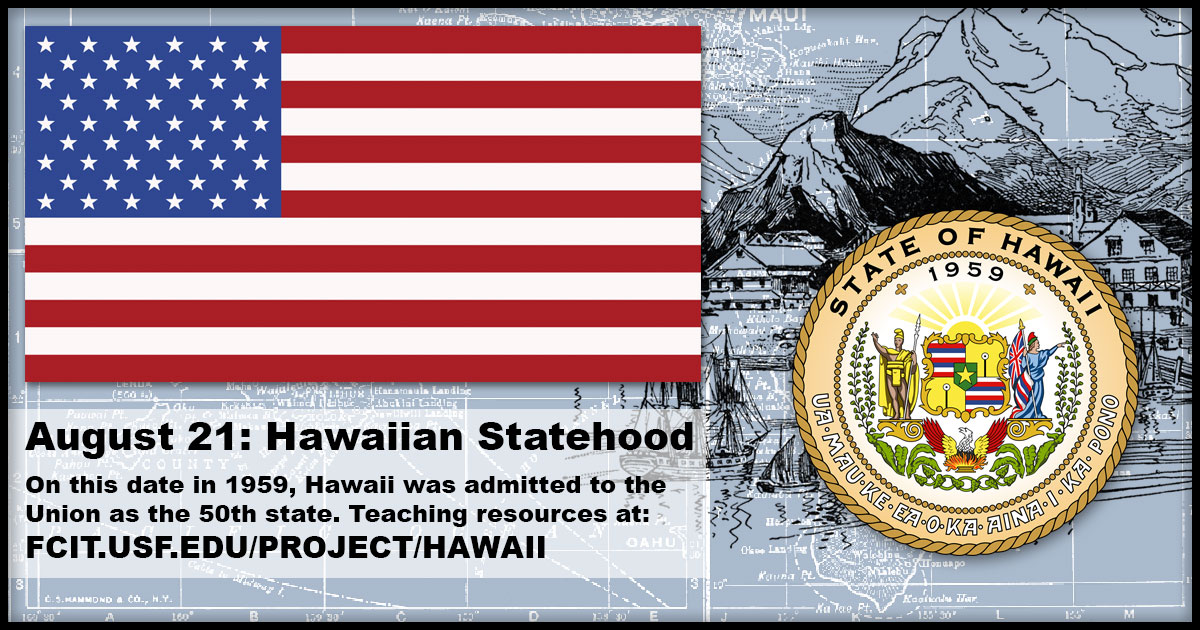
The culmination of decades of advocacy and the unwavering commitment of Hawaii’s people finally came to fruition in 1959. After passing through both houses of Congress, the Hawaii Admission Act was signed into law by President Dwight D. Eisenhower on March 18, 1959. This act officially offered Hawaii statehood, contingent upon a plebiscite – a vote by the people of Hawaii themselves. The vote, held on June 27, 1959, saw an overwhelming 94% of voters casting their ballots in favor of statehood, signaling a clear mandate from the people.
With the plebiscite results confirmed, President Eisenhower issued Proclamation 3309 on August 21, 1959, officially declaring Hawaii the 50th state of the United States. Across the islands, spontaneous celebrations erupted, marking an end to the territorial era and the dawn of a new chapter. Flags were hoisted, parades filled the streets, and the “Aloha State” embraced its new identity with pride. This momentous occasion not only granted full political rights and representation to the people of Hawaii but also ushered in a new era of development and increased visibility for the islands, solidifying their status as a unique and cherished part of the American mosaic. For tourism, statehood provided stability and ease of access, paving the way for the robust industry that thrives there today.
Hawaii Today: A Paradise Transformed and Travel Mecca
Since achieving statehood in 1959, Hawaii has flourished, transforming into a world-renowned travel destination that seamlessly blends its rich historical legacy with modern amenities and unparalleled natural beauty. The transition to statehood significantly boosted its infrastructure, connectivity, and international profile, making it more accessible and appealing to a global audience. Today, Hawaii continues to captivate millions, offering diverse experiences that cater to every type of traveler, from history buffs and adventure seekers to those simply looking for a luxurious escape.
Iconic Destinations and Natural Wonders
Each of Hawaii’s major islands offers its own distinct charm and a wealth of attractions, making it a dream destination for exploration and relaxation.
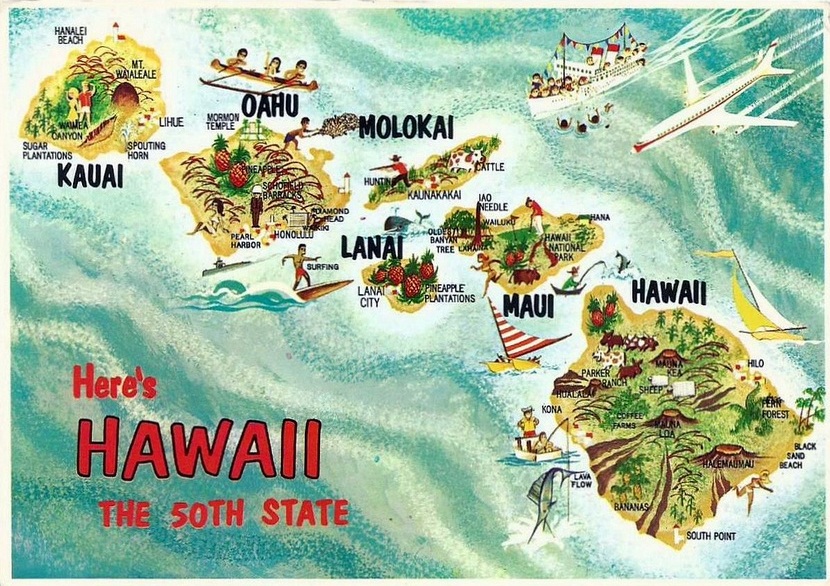
- Oahu, home to the capital city of Honolulu, is a vibrant hub where urban sophistication meets stunning beaches. Waikiki Beach, with its iconic crescent of sand and world-class surfing waves, is lined with magnificent resorts and hotels, such as The Royal Hawaiian, offering everything from bustling nightlife to tranquil spa experiences. A short drive away, the majestic peak of Diamond Head crater provides panoramic views of the coastline, while the solemn Pearl Harbor National Memorial serves as a powerful reminder of Hawaii’s pivotal role in global history.
- Maui, often called the “Valley Isle,” is celebrated for its romantic landscapes and adventurous spirit. Visitors flock to Haleakala National Park to witness spectacular sunrises from its volcanic summit, an experience that transcends mere sightseeing. The legendary Road to Hana winds through lush rainforests, unveiling hidden waterfalls, black sand beaches, and breathtaking coastal vistas. Resorts like the Four Seasons Resort Maui at Wailea epitomize luxury, offering exquisite dining and unparalleled oceanfront access.
- Kauai, the “Garden Isle,” is a haven for nature lovers and adventurers. Its dramatic landscapes include the awe-inspiring Na Pali Coast, characterized by emerald cliffs plunging into the Pacific and accessible primarily by boat or helicopter, offering some of the most spectacular scenery on Earth. The colossal Waimea Canyon, often referred to as the “Grand Canyon of the Pacific,” provides incredible hiking opportunities and sweeping views.
- The Big Island (officially Hawaii Island) lives up to its name, offering unparalleled diversity, from active volcanoes to snow-capped mountains. Hawaii Volcanoes National Park is a must-visit, allowing travelers to witness the raw power of creation as Kilauea volcano continually reshapes the landscape. The island also boasts charming towns like Kona on the sunny west coast, famous for its coffee plantations and snorkeling, and Hilo on the lush east, known for its botanical gardens and waterfalls.
Unforgettable Experiences and Luxurious Stays
Beyond its natural beauty, Hawaii offers a myriad of experiences that celebrate its unique lifestyle and vibrant culture. Travelers can dive into the warm Pacific Ocean for world-class snorkeling and scuba diving, surf legendary waves, or embark on thrilling whale-watching tours during the winter months. For those seeking cultural immersion, attending a traditional luau offers a taste of authentic Hawaiian cuisine, hula dancing, and storytelling. Exploring local markets, art galleries, and historical sites provides deeper insights into the islands’ artistic heritage and the enduring “aloha spirit” that defines its people.
Accommodation options in Hawaii are as diverse as its landscapes. From opulent five-star resorts and boutique hotels that cater to luxury travelers, to charming vacation rentals and budget-friendly apartments, there’s something for every preference and budget. Many resorts offer an extensive range of amenities, including championship golf courses, infinity pools, gourmet dining, and direct beach access. For families, many properties provide kids’ clubs and family-oriented activities, while couples can find secluded villas for a romantic escape. The seamless blend of indoor-outdoor living, coupled with exceptional service, ensures that every stay in Hawaii is not just a trip but a truly unforgettable experience. The islands’ robust tourism infrastructure, bolstered by statehood, provides guides and services to enhance every aspect of a visitor’s journey, making it easier than ever to explore this incredible destination.
In conclusion, Hawaii’s statehood in August 1959 was a landmark event that solidified its place in the United States and opened the door for its emergence as a global travel powerhouse. Its journey from an ancient kingdom to a modern state is a testament to its enduring spirit and the resilience of its people. Today, Hawaii stands as a beacon of natural beauty, rich cultural heritage, and unparalleled hospitality, inviting travelers from all corners of the world to discover its magic. Whether you are seeking adventure, relaxation, or a deep dive into history and culture, the Hawaiian Islands promise a vacation of a lifetime, reminding us that some paradises are indeed found on Earth. Plan your visit to this unique state and experience the “aloha” that makes Hawaii truly special.
LifeOutOfTheBox is a participant in the Amazon Services LLC Associates Program, an affiliate advertising program designed to provide a means for sites to earn advertising fees by advertising and linking to Amazon.com. Amazon, the Amazon logo, AmazonSupply, and the AmazonSupply logo are trademarks of Amazon.com, Inc. or its affiliates. As an Amazon Associate we earn affiliate commissions from qualifying purchases.