
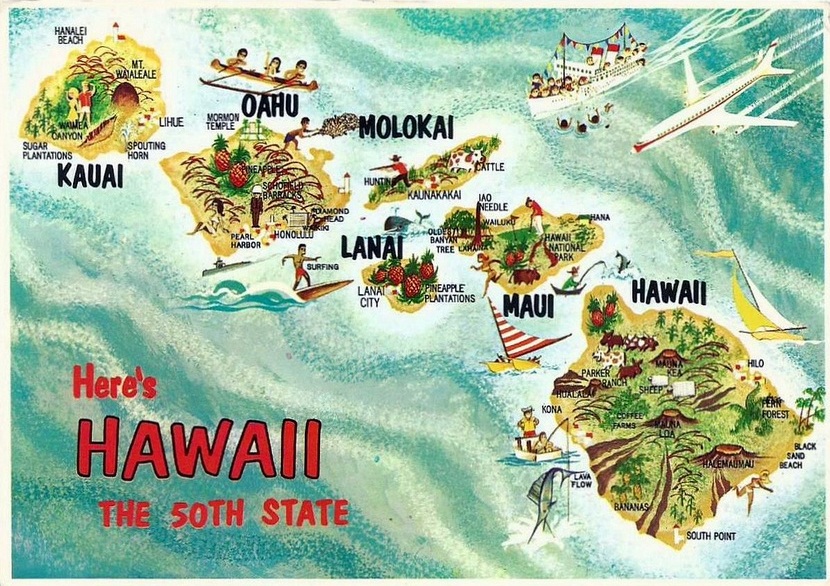
The question “When did [Hawaii] become a part of the [United States]?” might seem simple, with a straightforward answer: [Hawaii] officially became the 50th state on August 21, 1959. However, the journey to statehood is a complex, rich tapestry woven with tales of ancient kingdoms, intrepid explorers, economic ambitions, political intrigue, and the enduring spirit of the [Hawaiian] people. For anyone planning a visit to these enchanting islands, understanding this history is crucial to appreciating the unique culture, stunning [landmarks], and vibrant lifestyle that define [Hawaii] today. It’s a story that transforms a tropical paradise into a destination imbued with profound historical significance, offering far more than just beautiful [beaches] and luxurious [resorts].
The Island Kingdom: A History Before Union
Long before the Stars and Stripes flew over [Hawaii], these volcanic islands were home to a sophisticated [Polynesian] society, renowned for its navigation, oral traditions, and intricate social structures. The history of [Hawaii] stretches back over a thousand years, a testament to human resilience and adaptation in one of the world’s most isolated archipelagos.
From Polynesian Roots to Royal Rule
The first settlers, intrepid [Polynesians], voyaged across vast stretches of the [Pacific Ocean] in double-hulled canoes, arriving in [Hawaii] between 300 and 800 AD. They brought with them plants, animals, and a rich cultural heritage that formed the bedrock of [Hawaiian] society. For centuries, the islands existed as independent chiefdoms, often engaging in warfare but also developing unique cultural practices, agricultural techniques, and a profound reverence for the land and sea, known as Aloha ʻĀina.
This fragmented political landscape changed dramatically in the late 18th and early 19th centuries with the rise of [King Kamehameha I]. Through a combination of strategic alliances, diplomacy, and decisive military campaigns—often utilizing Western weaponry acquired through trade—[Kamehameha] succeeded in uniting all the major [Hawaiian] Islands under a single rule by 1810. This pivotal achievement established the [Kingdom of Hawaii], a sovereign nation that would navigate the turbulent waters of global politics for nearly a century. His reign laid the foundation for a unified identity and a structured government, which allowed [Hawaii] to engage with foreign powers on its own terms for a significant period. Visitors today can still feel the legacy of this powerful monarch when exploring historical sites across the islands, understanding that the cultural fabric of [Hawaii] is deeply rooted in its royal past.
Western Contact and Shifting Tides
The arrival of [Captain James Cook] in 1778 marked a profound turning point in [Hawaiian] history. His initial encounters, though respectful, opened the floodgates to Western influence. Traders, whalers, and missionaries soon followed, drawn by the islands’ strategic location and burgeoning resources. The introduction of new diseases tragically decimated the native [Hawaiian] population, while Western goods, ideas, and agricultural practices began to reshape the traditional way of life.
By the mid-19th century, [Hawaii]’s fertile lands, particularly on islands like [Maui] and [Oahu], became prime territory for sugar plantations. American businessmen, missionaries’ descendants, and European entrepreneurs invested heavily in the sugar industry, which rapidly became the kingdom’s economic backbone. This shift led to a massive influx of immigrant laborers from [China], [Japan], the [Philippines], and [Portugal], creating the multi-ethnic mosaic that defines modern [Hawaii]. As economic ties to the [United States] deepened, so did American political influence, setting the stage for the dramatic events that would follow. The allure of [Hawaii]’s natural beauty and strategic position was irresistible, but this attraction came with complex consequences for the indigenous population and their sovereign rule.
The Path to Annexation: A Tumultuous Transition
The late 19th century was a period of intense pressure and upheaval for the [Kingdom of Hawaii], as internal political struggles combined with external ambitions, primarily from the [United States]. The growing American presence, both economic and cultural, ultimately created an irresistible force that challenged the very sovereignty of the island nation.
The Overthrow of a Monarchy
The desire for political power among American and European businessmen, who were largely non-citizens but held significant economic sway, grew increasingly vocal. They sought to protect their financial interests, particularly the lucrative sugar trade with the [United States], which was threatened by changes in American tariff laws. These businessmen, forming groups such as the “[Committee of Safety],” actively worked to undermine the [Hawaiian] monarchy.
The final act of the [Hawaiian] monarchy came to a head in January 1893. [Queen Liliʻuokalani], a strong and visionary ruler who sought to restore power to the [Hawaiian] people through a new constitution, became the target of this powerful, foreign-backed faction. On January 17, 1893, with the tacit support and presence of armed U.S. Marines (who ostensibly landed to protect American lives and property but effectively intimidated royalist forces), the [Committee of Safety] orchestrated a coup. They declared the monarchy overthrown and established a provisional government. [Queen Liliʻuokalani] surrendered under protest to avoid bloodshed, hoping that the [United States] would recognize the injustice and restore her to power. Her resistance and the events surrounding her dethronement are a poignant reminder of the cultural and political struggles that define [Hawaii]’s path to its current status. Today, sites like [Iolani Palace] in [Honolulu] serve as powerful reminders of this period, allowing visitors to walk the halls where [Hawaiian] royalty once resided and where their sovereignty was ultimately lost.

The Republic of Hawaii and US Ambitions
Following the overthrow, the provisional government, led by [Sanford B. Dole] (a prominent American lawyer and businessman in [Hawaii]), immediately pursued annexation by the [United States]. However, [President Grover Cleveland], recognizing the illegality and unethical nature of the coup, refused to support annexation. He even attempted to restore [Queen Liliʻuokalani] to her throne, but the provisional government refused to relinquish power.
Undeterred, the annexationists declared the [Republic of Hawaii] in 1894, with [Sanford B. Dole] as its president. This republic, largely controlled by American interests, governed the islands for four years, persistently lobbying [Washington D.C.] for annexation. The tide turned with the election of [President William McKinley], who was a strong proponent of American expansionism. The outbreak of the [Spanish-American War] in 1898 provided the opportune moment. The strategic importance of [Hawaii] as a naval base and coaling station for U.S. forces operating in the [Pacific] became undeniably clear. Leveraging this wartime necessity and the overwhelming support for expansionism in Congress, [President McKinley] pushed through the [Newlands Resolution], which officially annexed [Hawaii] to the [United States] on July 7, 1898. [Hawaii] was no longer an independent nation but a territory of the [United States], a significant historical pivot that reshaped its destiny forever.
A Territory and the Road to Statehood
For over six decades, [Hawaii] existed as an organized territory of the [United States]. This period was marked by continued economic development, the growth of a unique multi-ethnic identity, and a persistent, often challenging, campaign for full political equality and statehood.
Pearl Harbor and World War II
The territorial period was largely characterized by economic prosperity driven by the sugar and pineapple industries, as well as the increasing importance of the military presence. The most dramatic and tragic event during this era, and one that irrevocably linked [Hawaii]’s fate to that of the [United States], was the attack on [Pearl Harbor] on [Oahu] on December 7, 1941. This surprise attack by the [Empire of Japan] plunged the [United States] into [World War II].
The attack transformed [Hawaii] into a critical forward base for the [Pacific] theater of war. Thousands of American servicemen passed through or were stationed on the islands, and the local population played an integral role in supporting the war effort. The bravery and loyalty of [Hawaiian] citizens, many of whom were of [Japanese] ancestry, were particularly highlighted, challenging racial prejudices and demonstrating their unwavering allegiance to the [United States]. The shared experience of war further solidified the bonds between [Hawaii] and the mainland, making the argument for statehood even more compelling. Today, the [USS Arizona Memorial] at [Pearl Harbor] stands as a solemn reminder of this pivotal moment, a powerful landmark that draws visitors from around the globe to reflect on history and heroism. Experiencing [Pearl Harbor] is an essential part of understanding [Hawaii]’s intricate connection to the [United States].
The Long-Awaited Statehood
The fight for statehood began almost immediately after annexation, intensifying significantly after [World War II]. Advocates for statehood argued that [Hawaii], with its democratic institutions, diverse population, and strategic importance, was more than ready for full political representation. However, opposition existed, primarily fueled by racial prejudices concerning [Hawaii]’s large non-white population and concerns from Southern states about the potential shift in political power.
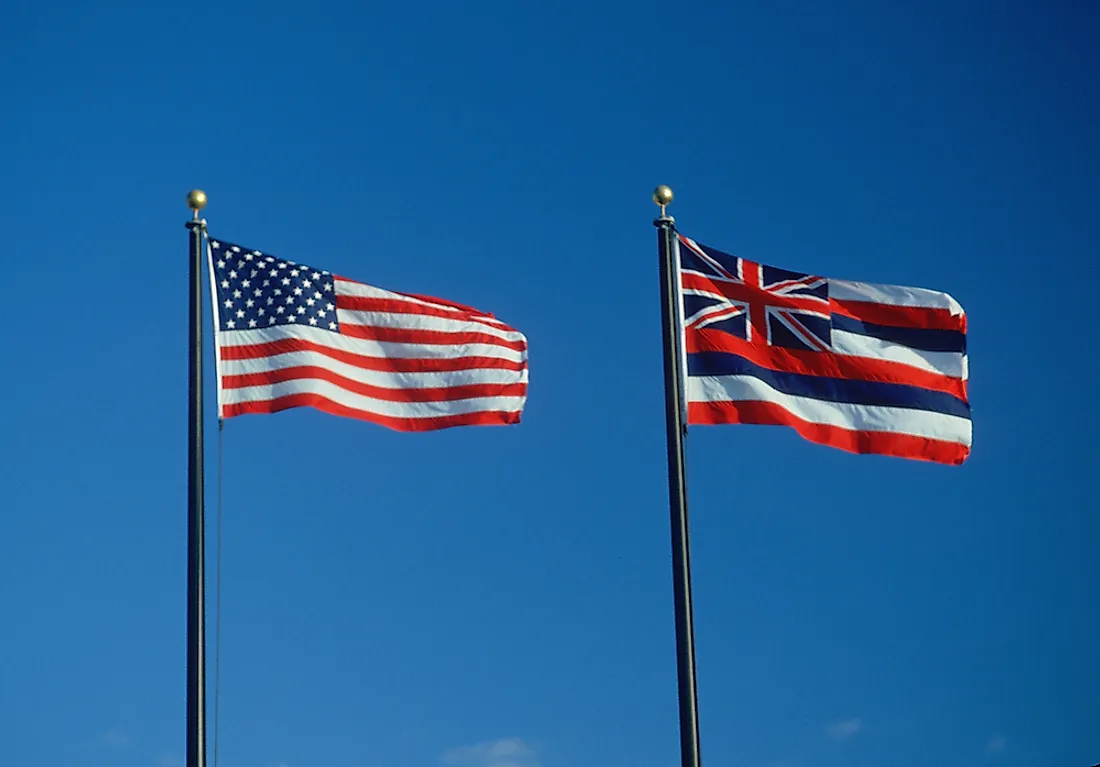
Despite these obstacles, the campaign gained momentum. [Hawaiian] delegates and activists tirelessly lobbied Congress, highlighting the territory’s contributions to the nation and emphasizing the principle of self-determination. The efforts culminated in 1959. On March 12, 1959, the [United States] Congress passed the [Hawaii] Admission Act, which was subsequently signed into law by [President Dwight D. Eisenhower]. A plebiscite was then held in [Hawaii], and the residents voted overwhelmingly in favor of statehood (over 94% in favor). Finally, on August 21, 1959, [President Eisenhower] issued Proclamation 3309, officially admitting [Hawaii] to the [Union] as the 50th state. This act solidified [Hawaii]’s place within the [United States], ending its territorial status and granting its citizens full political rights and representation. The celebration was widespread, marking a new chapter for the islands.
Hawaii Today: A Beloved American Paradise
Today, [Hawaii] stands as a testament to its vibrant history and diverse cultural heritage. It’s not just a state; it’s a global icon for natural beauty, unique culture, and a lifestyle that blends ancient traditions with modern conveniences. For travelers, [Hawaii] offers an unparalleled array of experiences, reflecting its journey from an independent kingdom to a beloved American paradise.
Experiencing Hawaii’s Unique Culture and Landmarks
The historical journey of [Hawaii] has profoundly shaped its current identity, making it a truly unique destination. Visitors can explore world-renowned landmarks that echo this rich past. Ascend [Diamond Head] on [Oahu] for panoramic views of [Waikiki Beach] and [Honolulu], a city that itself is a mosaic of history and modernity. Wander through the majestic [Iolani Palace], the only official residence of royalty in the [United States], where the story of [Queen Liliʻuokalani] and the overthrow of the monarchy comes vividly to life. Beyond [Oahu], the volcanic landscapes of [Hawaii Island] (often called the [Big Island]), home to active volcanoes like [Kilauea] and the towering peak of [Mauna Kea], offer a glimpse into the raw power of nature that formed these islands.
Cultural immersion is key to any [Hawaiian] trip. Engage with the spirit of aloha through hula performances, learn about traditional [Polynesian] navigation, or participate in a luau, which is a celebration of [Hawaiian] food and culture. The diverse culinary scene, influenced by [Japanese], [Filipino], [Chinese], [Portuguese], and indigenous [Hawaiian] traditions, is a [lifestyle] experience in itself, offering everything from fresh poke to kalua pig. Local markets, historic towns like [Lahaina] on [Maui], and cultural centers provide authentic insights into the island’s soul. These experiences transform a simple vacation into an enriching exploration of history, tradition, and the enduring resilience of the [Hawaiian] spirit.
Planning Your Hawaiian Escape: Accommodation and Lifestyle
As a premier travel destination, [Hawaii] offers an extensive range of [accommodation] options to suit every [travel] style and [budget]. From luxurious five-star [resorts] like the [Grand Hyatt Kauai Resort & Spa] or the [Four Seasons Resort Maui at Wailea], offering unparalleled amenities and breathtaking oceanfront views, to charming boutique [hotels] in historic districts, and family-friendly [apartments] perfect for longer stays, the choices are vast. Iconic establishments such as the [Moana Surfrider] or the [Royal Hawaiian Hotel] on [Waikiki Beach] not only provide exceptional comfort but also stand as historical landmarks in their own right, offering a blend of classic elegance and island charm. For those seeking adventure, camping or staying in eco-lodges provides a more rugged, nature-focused experience.
Whether your [lifestyle] dictates a luxury escape, a [budget-friendly] adventure, a romantic honeymoon, or a [family trip] filled with activities, [Hawaii] caters to all. The islands are famous for [water sports], [hiking], [golf], and simply relaxing on sun-drenched [beaches]. Beyond the tourist attractions, [Hawaii] embodies a unique blend of cultures, making it a fascinating place to explore. Understanding the historical context of “When did [Hawaii] become a part of the [United States]?” enriches the travel experience, allowing visitors to appreciate the layers of history beneath the stunning landscapes and vibrant tourist activities. It transforms a vacation into a journey through time, connecting the modern paradise with its regal past and complex path to its present status as America’s exotic 50th state.
LifeOutOfTheBox is a participant in the Amazon Services LLC Associates Program, an affiliate advertising program designed to provide a means for sites to earn advertising fees by advertising and linking to Amazon.com. Amazon, the Amazon logo, AmazonSupply, and the AmazonSupply logo are trademarks of Amazon.com, Inc. or its affiliates. As an Amazon Associate we earn affiliate commissions from qualifying purchases.