
The question “Who discovered Hawaii?” might seem straightforward, but its answer is a rich tapestry woven with the incredible navigational feats of ancient Polynesians and the later arrival of European explorers. To truly understand Hawaii’s origins, one must acknowledge two distinct, yet equally significant, chapters of discovery, each shaping the vibrant culture and unique appeal of these Pacific Ocean islands. Long before European sails dotted the horizon, intrepid Polynesian voyagers, driven by exploration and a profound connection to the sea, found and settled these remote lands. Centuries later, Captain James Cook inadvertently stumbled upon them, initiating a period of profound change and ultimately connecting Hawaii to the wider world.

This duality of discovery is not just a historical footnote; it is fundamental to the essence of Hawaii today. It influences everything from its cultural traditions and language to its modern identity as a premier travel destination, where ancient practices coexist with contemporary luxury and adventure. Understanding both narratives enriches any visit, transforming a simple vacation into an immersive journey through time and culture.
The Ancient Mariners: Polynesian Voyagers
The true first discoverers of the Hawaiian Islands were the Polynesians, a remarkable people whose navigational prowess remains one of humanity’s greatest achievements. Their epic journeys across the vast Pacific Ocean were not accidental drifts but deliberate, sophisticated expeditions fueled by courage, advanced knowledge, and an unwavering spirit of exploration.
Origins and Master Navigation
The story of Polynesian discovery begins thousands of years ago in Southeast Asia, with migrations spreading across the Pacific Ocean into what is now known as the Polynesian Triangle. This vast region connects New Zealand (Aotearoa) to the southwest, Easter Island (Rapa Nui) to the southeast, and Hawaii to the north. Within this triangle, Polynesians developed unparalleled skills in wayfinding, a complex system of navigation that relied not on instruments, but on an intimate understanding of the natural world.
These ancient mariners were master astronomers, reading the stars as a celestial compass. They observed subtle changes in wave patterns, understanding how swells refracted around distant islands. They tracked bird flights, noting when certain species headed out to sea or returned to land. The direction of winds, the color of the sky, the presence of specific marine life – all served as clues in their incredible mental maps. Their knowledge was passed down through generations, making them the most accomplished ocean navigators the world has ever known.
Their vessels were equally impressive: large, double-hulled canoes, some capable of carrying dozens of people, plants, animals, and supplies for long voyages. These canoes, like the modern replica Hōkūleʻa, were designed for speed, stability, and cargo capacity, making them ideal for long-distance exploration and settlement.

The Journey to Hawaiʻi
The generally accepted theory is that the first Polynesian settlers arrived in Hawaii sometime between 300 and 800 AD. They likely embarked from the Marquesas Islands, and later, waves of settlers arrived from Tahiti. These arduous journeys covered thousands of miles of open ocean, demanding extraordinary resilience and navigational precision. Imagine sailing into the unknown, trusting only the stars, the waves, and generations of accumulated wisdom, with the fate of your entire community resting on your shoulders.
Upon discovering the fertile volcanic lands of Hawaii, these voyagers established a thriving civilization. They brought with them “canoe plants” – essential crops like taro, breadfruit, sweet potato, and bananas – along with pigs, chickens, and dogs, transforming the islands’ ecosystems and ensuring their survival. This intentional transplantation of life highlights their sophisticated planning and long-term vision.
Life and Culture in Ancient Hawaiʻi
For centuries, the Hawaiian Islands flourished in isolation. The Polynesians developed a highly structured society based on the kapu (taboo) system, a complex set of laws and social regulations that governed every aspect of life, from resource management to daily interactions. Society was hierarchical, led by aliʻi (chiefs) who claimed lineage from the gods. Spiritual beliefs were deeply intertwined with nature, revering deities associated with the elements, the sea, and the land.
They built elaborate irrigation systems for kalo (taro) cultivation, constructed fishponds that are still marveled at today, and developed sophisticated arts and crafts, including intricate feather work, carving, and instrument making. The ancient Hawaiians lived in harmony with their environment, practicing sustainable agriculture and resource management that allowed their culture to thrive for over a thousand years. This era of self-sufficiency and cultural development laid the foundation for the unique Hawaiian identity that persists to this day.
The European Arrival: Captain James Cook’s Expedition
While Polynesians were the first to find and settle Hawaii, the “discovery” from a European perspective, which significantly altered the islands’ trajectory and introduced them to the Western world, occurred much later.
First Contact and Initial Encounters
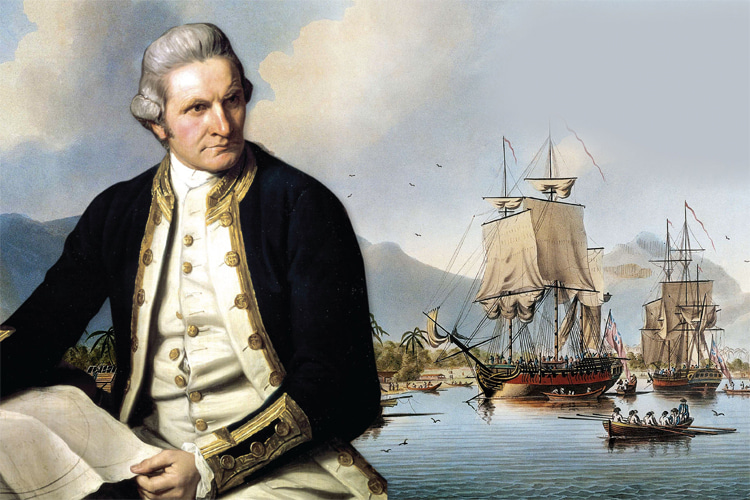
In January 1778, the British explorer Captain James Cook, on his third voyage of exploration across the Pacific Ocean, stumbled upon the Hawaiian Islands. Commanding the ships HMS Resolution and HMS Discovery, Cook was searching for the Northwest Passage, a sea route connecting the Atlantic and Pacific Oceans. He first sighted Oʻahu, then landed at Waimea Bay on the island of Kauaʻi on January 20, 1778.
Cook initially named the archipelago the “Sandwich Islands” in honor of his patron, John Montagu, the Fourth Earl of Sandwich. His arrival was met with a mixture of awe and curiosity by the native Hawaiians. It was by chance that Cook arrived during the Makahiki season, a period dedicated to Lono, the Hawaiian god of fertility, peace, and agriculture. Cook’s large sails and imposing ships, combined with his arrival during this sacred time, led some Hawaiians to initially believe he was the manifestation of Lono returning. This belief contributed to the initial reverence and hospitality shown to the European visitors.
Initial interactions involved the exchange of goods – iron tools from the Europeans, highly prized by the Hawaiians, for food and water. Cook and his crew spent several weeks exploring the islands, meticulously charting their coastlines and documenting their observations of the people, culture, and natural environment.
The Impact of European Arrival
Cook returned to Hawaii in November 1778, after his expedition to the Arctic. He spent a significant period at Kealakekua Bay on the Big Island (Hawaiʻi Island), where tensions gradually escalated. Cultural misunderstandings, resource depletion, and growing resentment from the Hawaiians over the prolonged stay and some aggressive actions by the crew led to conflict. In a tragic turn of events on February 14, 1779, Captain Cook was killed by Hawaiians during an attempt to take a local chief hostage in retaliation for a stolen boat.
Cook’s “discovery” had profound and irreversible consequences for Hawaii. While it marked the islands’ introduction to the rest of the world and opened doors for trade and cultural exchange, it also ushered in an era of immense challenge.
The most devastating impact was the introduction of foreign diseases to which the native Hawaiian population had no immunity. Illnesses like measles, influenza, and venereal diseases decimated the population, leading to a catastrophic decline from an estimated 300,000-800,000 people at the time of Cook’s arrival to around 50,000 by the mid-19th century.
The arrival of Europeans also brought new technologies, goods, and ideas, leading to the eventual breakdown of the traditional kapu system and the rise of a unified Hawaiian kingdom under King Kamehameha I. While Kamehameha skillfully used Western weaponry and advisors to consolidate power, the seeds of Western influence had been sown, culminating in the eventual annexation of Hawaii by the United States in 1898.
A Legacy of Discovery and Cultural Exchange
The dual narratives of Hawaiian discovery offer a compelling lens through which to view history, culture, and the enduring human spirit of exploration. Recognizing both the ancient Polynesian migration and the European encounter is crucial for a complete understanding of Hawaii’s past and present.
Understanding Different Perspectives
The concept of “discovery” itself is complex. For the Polynesians, it was an intentional act of finding and settling new lands, expanding their known world. For Cook and Europe, it was an encounter with a previously unknown (to them) civilization. Both perspectives are valid in their own contexts, but it is the Polynesian narrative that truly represents the primary, sustained human connection to these islands for over a millennium. Modern interpretations often emphasize the term “first contact” for Cook’s arrival to better reflect the existing, thriving society he encountered.
Today, there’s a powerful resurgence of Hawaiian culture, language, and traditional practices. Efforts to preserve and perpetuate the ancient wayfinding knowledge, exemplified by the voyages of the Hōkūleʻa, stand as a testament to the enduring legacy of the original Polynesian discoverers. These efforts not only honor the past but also provide valuable insights into sustainable living and a deeper connection to nature.
Exploring Hawaiʻi Today: A Blend of Histories
Visiting Hawaii today means immersing oneself in this rich, layered history. From the ancient heiau (temples) scattered across the islands to the historic buildings of Honolulu that reflect missionary and plantation eras, the past is ever-present. Travelers have the unique opportunity to explore sites that speak to both Polynesian ingenuity and the transformations brought by European contact.
For instance, one can visit the ancient fishponds on Molokai or Oʻahu to marvel at Polynesian engineering, or stand at Kealakekua Bay where Captain Cook met his fate. In Honolulu, the Bishop Museum offers unparalleled insights into Polynesian culture and history, while Pearl Harbor tells a more recent story of Hawaii’s involvement in global events.
Planning Your Hawaiian Journey: A Tribute to Its Discoverers
A trip to Hawaii is more than just a tropical getaway; it’s an opportunity to connect with an extraordinary history of human endeavor and cultural resilience. Integrating an understanding of who discovered Hawaii into your travel plans will undoubtedly enhance your experience, allowing you to appreciate the depth and spirit of these islands.
Top Destinations and Attractions
Each of the main Hawaiian Islands offers a unique flavor and array of attractions, reflecting different facets of its history and natural beauty:
- Oʻahu: Home to the bustling capital of Honolulu, Oʻahu blends urban sophistication with stunning natural landscapes. Beyond the iconic Waikīkī Beach and the solemn history of Pearl Harbor, visitors can explore ancient surfing grounds on the North Shore, hike to Diamond Head for panoramic views, or delve into Polynesian traditions at the Polynesian Cultural Center.
- Maui: Known as the “Valley Isle,” Maui offers diverse landscapes, from the volcanic crater of Haleakalā National Park to the lush, winding Road to Hana. It’s perfect for those seeking adventure, luxury, and breathtaking natural beauty. Snorkeling at Molokini Crater or whale watching during winter months provides unforgettable experiences.
- Kauaʻi: The “Garden Isle” captivates with its dramatic cliffs of the Na Pali Coast, verdant valleys, and cascading waterfalls. This is where Captain Cook first made landfall, and its rugged beauty still evokes a sense of wild, untamed Hawaii. Kayaking, hiking, and exploring the Waimea Canyon offer a profound connection to nature.
- Big Island: The largest and youngest island, the Big Island of Hawaiʻi boasts active volcanoes at Hawaii Volcanoes National Park, snow-capped peaks of Mauna Kea, black sand beaches, and vibrant coral reefs in Kona. It’s a microcosm of the entire archipelago, offering a raw, powerful experience of Earth’s creative forces. The historic town of Hīlo provides a glimpse into the island’s rich past.
- Lānaʻi and Molokaʻi: For a more secluded experience, these islands offer untouched landscapes, traditional Hawaiian culture, and a slower pace of life, perfect for those seeking tranquility and authentic connection.
Accommodation and Lifestyle Choices
Whether you’re traveling for luxury, on a budget, or with family, Hawaii offers a vast array of accommodation options and lifestyle experiences:
- Luxury Travel: Indulge in world-class resorts and villas, such as the Four Seasons Resort Maui at Wailea or the Grand Hyatt Kauai Resort & Spa. These establishments offer exquisite amenities, gourmet dining, and unparalleled service, often with stunning oceanfront views.
- Budget Travel: More affordable hotels, vacation rentals, and guesthouses can be found, especially outside major tourist hubs. Exploring local eateries and farmers’ markets offers a taste of authentic Hawaii without breaking the bank.
- Family Trips: Resorts with kids’ clubs, spacious apartment rentals, and numerous family-friendly activities like snorkeling, surfing lessons, and luaus make Hawaii an ideal destination for all ages.
- Business Stays: Modern hotels in Honolulu and other urban centers provide excellent facilities for business travelers, combining work with opportunities for relaxation and exploration.
Immersive Cultural Experiences
To truly honor the discoverers of Hawaii, seek out experiences that connect you with its vibrant culture:
- Local Culture: Attend a traditional luau, visit a heiau, or participate in hula lessons. Engage with local communities and learn about their efforts to preserve Hawaiian language and customs.
- Food: Sample authentic Hawaiian cuisine – poke bowls, fresh seafood, kalua pig, poi, and tropical fruits. Explore local markets and small, family-run restaurants for the most genuine flavors.
- Activities: Go surfing at Waikīkī, snorkel in pristine waters, hike through ancient lava fields, or kayak along the Na Pali Coast. Many activities offer guided tours that incorporate historical and cultural insights.
- Tips for Responsible Tourism: Embrace mālama ʻāina (to care for the land) and pono (righteousness/goodness). Support local businesses, respect sacred sites, minimize your environmental footprint, and learn a few basic Hawaiian phrases.
By understanding the incredible journeys of both the ancient Polynesians and later European explorers, visitors to Hawaii gain a deeper appreciation for this paradise. It’s a place where every sunset, every wave, and every lei embodies a history of discovery, resilience, and an enduring aloha spirit.
LifeOutOfTheBox is a participant in the Amazon Services LLC Associates Program, an affiliate advertising program designed to provide a means for sites to earn advertising fees by advertising and linking to Amazon.com. Amazon, the Amazon logo, AmazonSupply, and the AmazonSupply logo are trademarks of Amazon.com, Inc. or its affiliates. As an Amazon Associate we earn affiliate commissions from qualifying purchases.