
When planning an adventure to the vast and diverse state of Texas, one might assume a simple answer to the question “What time are they in Texas now?”. However, the reality is a little more nuanced, particularly for travelers aiming to maximize their experiences, from seamless check-ins at luxurious resorts to catching the last tour at an iconic landmark. Understanding the intricacies of Texas’s time zones is not just about setting your watch; it’s a fundamental aspect of planning a stress-free and enriching journey through the Lone Star State.
Texas is a colossal state, spanning over 268,000 square miles, making it the second-largest in the United States. Its sheer size means that while the majority of the state operates on one time zone, a significant portion in its westernmost reaches observes another. This seemingly small detail can have substantial implications for everything from flight connections and hotel bookings to dining reservations and coordinating family activities. For those exploring the diverse landscapes, vibrant cities, and rich cultural heritage Texas has to offer, a clear understanding of time zones is as crucial as packing your sunscreen for South Padre Island or your hiking boots for Big Bend National Park.
This guide delves into the specifics of Texas’s time zones, highlighting why this knowledge is indispensable for travelers, and offering practical tips to ensure your visit is smooth, enjoyable, and perfectly timed. Whether you’re embarking on a business trip to Dallas, a family vacation to San Antonio, or an adventurous road trip across the Chihuahuan Desert, mastering the clock will undoubtedly enhance your overall Texas experience.

Understanding Texas Time Zones: More Than Just a Clock
The vast geographical expanse of Texas necessitates a division in timekeeping, a factor that often surprises first-time visitors who might assume the entire state adheres to a single standard. This division, while logical for geographical reasons, demands attention from anyone planning an itinerary that crosses these invisible lines.
Central Standard Time (CST) Dominance
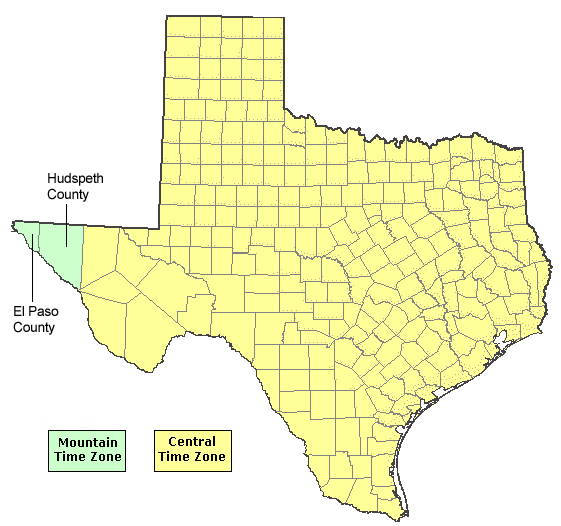
The overwhelming majority of Texas, encompassing its major metropolitan areas and popular tourist destinations, operates under Central Standard Time (CST). This includes powerhouse cities like Houston, Dallas, Austin, and San Antonio, along with the Gulf Coast beaches of Galveston and Corpus Christi, and the historical heart of Fort Worth. CST is UTC-6 during standard time and UTC-5 during Daylight Saving Time (CDT).
For most travelers, especially those sticking to the well-trodden paths of urban exploration or coastal relaxation, CST will be their primary time zone. This simplifies planning considerably, as flights, hotel check-ins, restaurant reservations, and attraction opening hours will all align with CST/CDT. From exploring the Museum District in Houston to enjoying the vibrant live music scene in Austin, your clock will remain consistent throughout these experiences. However, it’s the state’s far western reaches that introduce a crucial variation.
The El Paso Exception: Mountain Time Zone (MDT)
The city of El Paso and its surrounding county, Hudspeth County, stand as the notable exception to Texas’s CST rule. These westernmost parts of the state observe Mountain Standard Time (MST), which is UTC-7, and Mountain Daylight Time (MDT), which is UTC-6. This means that El Paso is consistently one hour behind the rest of Texas.
For travelers heading to El Paso for its rich Mexican-American culture, stunning desert landscapes, or as a gateway to New Mexico and Arizona, this time difference is paramount. A flight from Dallas Fort Worth International Airport to El Paso International Airport might take approximately two hours in the air, but factor in the one-hour time change, and your arrival time might appear shorter on paper than the actual duration. Similarly, coordinating a video call for a business stay between teams in Houston and El Paso requires careful adjustment.
Daylight Saving Time: Spring Forward, Fall Back
Like most of the United States, Texas observes Daylight Saving Time (DST). This means that on the second Sunday in March, clocks “spring forward” by one hour, shifting from CST to CDT (Central Daylight Time) and from MST to MDT (Mountain Daylight Time). On the first Sunday in November, clocks “fall back” by one hour, returning to standard time.
This annual adjustment impacts all travel plans. A flight scheduled for March might land an hour later by the clock if it crosses the DST transition date. Hotel check-out times, restaurant opening hours, and tour schedules will all adjust accordingly. It’s essential for travelers to be aware of these changes, especially if their trip dates fall around the DST transitions, to avoid missed appointments or unexpected delays. Always double-check confirmation emails and local schedules, as modern technology generally handles the automatic clock changes, but human error in planning can still occur.
Why Time Zone Awareness is Crucial for Travelers
Beyond simply knowing what time it is, understanding Texas’s time zones empowers travelers to create more efficient itineraries, avoid common pitfalls, and ultimately have a more enjoyable and seamless experience. From flight schedules to local attractions, time plays a pivotal role in every aspect of a trip.
Seamless Travel Logistics: Flights, Trains, and Road Trips
For any journey across Texas, precise timing is non-negotiable. Air travel, for instance, requires careful attention to departure and arrival times. Imagine flying from Houston’s George Bush Intercontinental Airport to El Paso International Airport. If you land at 3:00 PM local El Paso time, it’s already 4:00 PM in Houston. This difference impacts connecting flights, rental car pickups, and coordinating with ground transportation services, which operate on local time.
Similarly, extensive road trips across the Lone Star State demand foresight. Driving from Austin to Big Bend National Park involves a significant drive that culminates in the El Paso time zone. Crossing into Hudspeth County means your internal clock will suddenly be an hour ahead of the local time. This can affect everything from estimating arrival times at your accommodation to finding a restaurant still open for dinner. Even public transport, such as Amtrak services connecting cities like San Antonio and El Paso, will adhere to local schedules, making time zone awareness crucial for timely boarding and disembarkation.
Hotel Stays and Accommodation Coordination
Whether you’ve booked a luxurious suite at The Post Oak Hotel at Uptown Houston, a charming boutique hotel in Austin, or a vacation rental near Big Bend, check-in and check-out times are dictated by local time. Arriving an hour early or late due to a miscalculation can lead to unnecessary waiting or even an extra night’s charge. Many hotels and resorts strictly adhere to their schedules, and coordinating with front desk staff or hosts (for apartments and villas) becomes much smoother when everyone is on the same clock.
Furthermore, access to hotel amenities like swimming pools, fitness centers, and spa services often has specific operating hours. Missing a breakfast buffet or a scheduled spa treatment because of a time zone mix-up can be disappointing. For business travelers, coordinating meetings, particularly across the state, requires meticulous planning. A conference call scheduled for 9:00 AM CST will be 8:00 AM MDT in El Paso, a detail that could impact attendance or preparation. Knowing the exact local time ensures your accommodation experience is seamless from arrival to departure.

Maximizing Your Tourism and Attraction Visits
Texas is brimming with incredible landmarks, attractions, and experiences. From the historic Alamo in San Antonio to the Space Center Houston, and from the vibrant Dallas Arts District to the natural wonders of Guadalupe Mountains National Park, each destination has specific opening and closing times. These schedules are always based on the local time zone.
Imagine planning a visit to the Sixth Floor Museum at Dealey Plaza in Dallas or a thrilling tour of the Fort Worth Stockyards National Historic District. If you are arriving from the El Paso area and haven’t adjusted your internal clock, you might mistakenly arrive an hour early or, worse, an hour late, potentially missing the last entry or a specific show. Similarly, dining reservations at popular Texas restaurants, attending a concert in Austin, or even catching a rodeo performance in Fort Worth are all time-sensitive. Understanding the local time ensures you’re where you need to be, when you need to be there, maximizing every precious moment of your tourism adventure.
Planning Your Texas Adventure: Practical Time-Saving Tips
To fully embrace the vibrant culture, breathtaking landscapes, and unforgettable experiences that await in Texas, smart planning around its time zones is essential. Here are some practical tips to keep you perfectly synchronized, ensuring a smooth and stress-free journey.
Technology to Your Aid: Apps and Gadgets
In our increasingly connected world, technology offers indispensable tools for navigating time zones. Modern smartphones automatically adjust to local time based on your location, but it’s always wise to double-check. Consider using a dedicated world clock app on your phone or smartwatch, which allows you to easily display multiple time zones simultaneously. This is particularly useful if you’re traveling across the state or communicating with contacts in different time zones.
Before your trip, add El Paso time to your world clock settings, alongside your home time zone and the primary Texas CST/CDT zone. This simple step provides an instant reference, preventing confusion when checking flight schedules, confirming hotel bookings, or scheduling calls. Many travel apps for flights and hotels also display times in both local and original time zones, which can be a lifesaver for complex itineraries. Don’t forget to enable location services for time zone updates on your device!
Mastering Your Itinerary: From Houston to El Paso
A well-planned itinerary is your best defense against time zone woes. When drafting your daily schedule, explicitly note the time zone for each activity, especially if your plans involve crossing between CST/CDT and MST/MDT. For example, if you plan to visit Big Bend National Park (which is in the CST zone) and then drive to El Paso (MDT zone), factor in that hour difference. Your arrival in El Paso will “feel” an hour earlier than your departure point, giving you more evening time or requiring an earlier check-in.
When booking flights or making reservations for accommodation or tours in El Paso, remember to calculate the time difference from your origin point. For those embarking on a Texas road trip, a physical map marked with the time zone boundary (roughly along the eastern border of Hudspeth County) can be a fun and practical aid. Print out all confirmations and highlight the local times for your reference. This attention to detail ensures you never miss a beat, whether it’s an early morning flight from Dallas Love Field or a sunset dinner reservation along the San Antonio River Walk.
Battling Jet Lag and Time Zone Fatigue
While Texas’s time zone variations are typically only one hour, for those traveling from further afield, especially from the East or West Coasts of the United States or international destinations, jet lag can be a real concern. Even a single hour shift can disrupt your internal clock, affecting sleep, energy levels, and overall enjoyment of your trip.
To mitigate time zone fatigue, try to adjust your sleep schedule gradually in the days leading up to your departure. Hydrate frequently during your flight and avoid excessive caffeine and alcohol. Upon arrival, immediately adopt the local time, exposing yourself to natural light during the day and minimizing screen time before bed. If traveling with family, especially young children, sticking to a consistent routine based on the new local time is crucial for everyone’s well-being and helps in adapting faster. For business travelers, planning important meetings for later in the day after arrival can allow for better adjustment and peak performance. Prioritizing rest and mindful adaptation will ensure you have the energy to explore every corner of Texas without feeling drained.
Texas: A Destination Where Every Moment Counts
From the bustling urban centers like Houston and Dallas, with their world-class hotels, luxury travel experiences, and vibrant cultural lifestyle, to the historic charm of San Antonio and the musical heart of Austin, Texas offers an unparalleled variety of experiences. Its vastness is matched only by its diversity, from the pristine beaches of South Padre Island to the rugged wilderness of Big Bend National Park and the awe-inspiring peaks of Guadalupe Mountains National Park.
Understanding the subtle yet significant differences in Texas’s time zones is more than just a logistical detail; it’s a fundamental aspect of planning a truly successful and enjoyable travel experience. By being aware of Central Standard Time, the El Paso exception with Mountain Time, and the annual shift of Daylight Saving Time, you equip yourself with the knowledge to make informed decisions for every part of your journey.
Whether you’re booking accommodation, coordinating family activities, planning a business stay, or embarking on a solo adventure, mastering the clock will prevent missed connections, unexpected delays, and ensure you can fully immerse yourself in the rich local culture and unforgettable attractions. So, set your watch, plan wisely, and get ready to experience all the incredible moments that await you in the great state of Texas – where every second is an opportunity for discovery.
LifeOutOfTheBox is a participant in the Amazon Services LLC Associates Program, an affiliate advertising program designed to provide a means for sites to earn advertising fees by advertising and linking to Amazon.com. Amazon, the Amazon logo, AmazonSupply, and the AmazonSupply logo are trademarks of Amazon.com, Inc. or its affiliates. As an Amazon Associate we earn affiliate commissions from qualifying purchases.