
The vibrant pulse of New York City and the rich historical tapestry of Philadelphia are two of the most iconic destinations on the East Coast of the United States. Often considered essential stops for both domestic and international travelers, these cities offer a compelling blend of culture, history, entertainment, and culinary delights. A common question for anyone planning a trip to this region is precisely how far apart they are and what the best ways to travel between them might be. Understanding the distance and various transportation options is crucial for optimizing your itinerary, whether you’re embarking on a swift business trip, a leisurely family vacation, or a solo adventure exploring the Mid-Atlantic corridor.
This comprehensive guide will delve into the specifics of the journey from the Big Apple to the City of Brotherly Love, covering not just the geographical distance but also the practicalities of travel, the time it takes, and what to expect along the way. We’ll explore diverse transportation modes, offer insights into local attractions in both cities, and provide recommendations for accommodation, ensuring your entire travel experience is as seamless and enjoyable as possible.
The Geographical Link: Understanding the Distance Between Two Great Cities
At first glance, New York City and Philadelphia appear to be close neighbors on the map, connected by a network of highways and rail lines. This proximity makes them an ideal pairing for a multi-city itinerary, allowing travelers to experience the distinct charms of both metropolitan areas within a single trip.
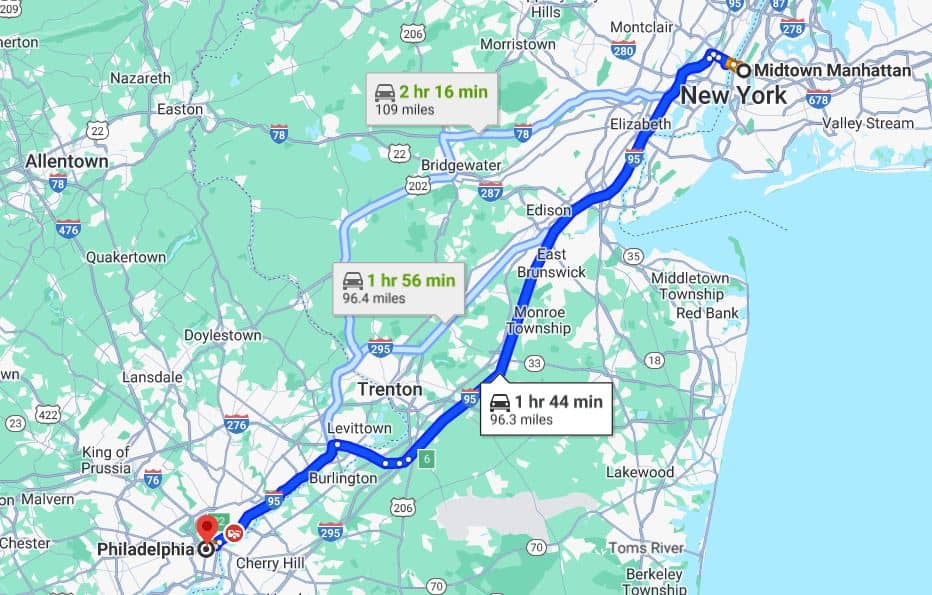
The approximate driving distance between downtown Manhattan in New York City and Center City Philadelphia is around 95 to 100 miles (153 to 161 kilometers). This figure can vary slightly depending on the exact starting and ending points within each sprawling urban landscape, as well as the specific route taken. In terms of air travel, the direct “as the crow flies” distance is even shorter, typically around 80 miles (129 kilometers), though flying is rarely the most practical option for such a short inter-city journey.
The journey time by road typically ranges from 1 hour and 45 minutes to 2 hours and 30 minutes under ideal traffic conditions. However, it’s vital to account for the notoriously heavy traffic in and around both urban centers, particularly during peak commuting hours or holidays. Factors like road construction, accidents, or adverse weather can significantly extend travel times, sometimes pushing the journey to three hours or even more. When planning, it’s always wise to buffer in extra time to avoid stress and ensure you reach your destination punctually.
A Traveler’s Guide: Exploring Transportation Modes
Traveling between New York City and Philadelphia is remarkably convenient, thanks to a robust infrastructure of roads, railways, and bus services. Each mode of transport offers a unique balance of speed, cost, comfort, and flexibility, allowing travelers to choose the option that best suits their preferences and budget.
By Train: The Efficient and Comfortable Corridor
For many, train travel is the preferred method for traversing the Northeast Corridor. Amtrak operates frequent services, including the high-speed Acela Express and the more economical Northeast Regional trains.
- Acela Express: This premium service offers a faster journey, often completing the trip in approximately 1 hour and 10 minutes to 1 hour and 20 minutes. Acela trains are known for their comfortable seating, ample workspace, and on-board amenities, making them popular with business travelers. They depart from Moynihan Train Hall (and Penn Station) in New York City and arrive at William H. Gray III 30th Street Station in Philadelphia.
- Northeast Regional: A more budget-friendly option, the Northeast Regional takes slightly longer, typically around 1 hour and 30 minutes to 1 hour and 45 minutes. While not as luxurious as Acela, these trains still offer a comfortable and efficient ride with Wi-Fi and power outlets.
Both services provide the advantage of dropping you off directly in the heart of each city, minimizing the need for additional transfers within the urban areas, which is a significant plus given New York City’s extensive subway system and Philadelphia’s walkability. Booking tickets in advance, especially for Acela or during peak travel times, is highly recommended to secure better fares.
By Bus: The Economical and Accessible Choice
Bus services offer the most budget-friendly way to travel between New York and Philadelphia. Multiple operators compete on this popular route, providing frequent departures throughout the day.
- Major Carriers: Companies like Greyhound, Megabus, and FlixBus are prominent providers. They typically depart from the Port Authority Bus Terminal in New York City and arrive at various locations in Philadelphia, including the Philadelphia Bus Terminal near Chinatown or curbside stops in Center City.
- Travel Time and Cost: Bus journeys generally take around 2 to 2.5 hours, though this can extend to 3 hours or more depending on traffic. Prices are significantly lower than train tickets, often starting from as little as $5-$15 if booked well in advance, making it an excellent option for budget-conscious travelers, students, or those who don’t mind a slightly longer journey. Many modern buses offer amenities like Wi-Fi, power outlets, and reclining seats, enhancing the travel experience.
By Car: Flexibility and Scenic Drives
Driving offers unparalleled flexibility, allowing travelers to set their own pace, make spontaneous stops, and carry more luggage. The primary route connecting the two cities is Interstate 95 (I-95), often involving a stretch of the New Jersey Turnpike.
- Routes and Tolls: The most common route is to take the Holland Tunnel or Lincoln Tunnel out of Manhattan into New Jersey, then connect to the New Jersey Turnpike (I-95 South). This route involves tolls, which can add a significant cost to your journey. Using an E-ZPass transponder is highly recommended for convenience and often provides a discount on tolls.
- Parking Challenges: While driving offers freedom, finding and paying for parking in both New York City and Philadelphia can be expensive and challenging. Factor in parking costs, which can range from $20 to $60+ per day, particularly in prime urban areas. For visitors staying a few days, consider parking your car just outside the city center and using public transport, or choosing accommodations with included parking.
By Air: A Less Practical Option for Short Distances
While both cities have major airports—John F. Kennedy International Airport (JFK), Newark Liberty International Airport (EWR), and LaGuardia Airport (LGA) serving New York City, and Philadelphia International Airport (PHL) for Philadelphia—flying is generally not a practical or efficient option for this short distance.
The total travel time, including getting to and from airports, security checks, and flight duration, often far exceeds the time it takes by train or bus. Factoring in costs for airport transfers, baggage fees, and the flight itself, it’s almost always more expensive and time-consuming than ground transportation. Flying is typically reserved for those connecting to longer international or transcontinental flights, rather than for direct inter-city travel between New York and Philadelphia.
Beyond the Journey: Exploring New York and Philadelphia
Once you’ve successfully navigated the journey, a world of unforgettable experiences awaits in both New York City and Philadelphia. These cities are not just travel hubs but destinations rich in culture, history, and modern attractions.
Iconic Landmarks and Dynamic Culture in New York City
New York City, the quintessential concrete jungle, offers an endless array of activities. Visitors can marvel at the grandeur of the Statue of Liberty and Ellis Island, immerse themselves in the dazzling lights of Times Square, or find tranquility in the sprawling Central Park. Art enthusiasts can explore world-class museums like The Metropolitan Museum of Art and the Museum of Modern Art (MoMA). No trip is complete without catching a Broadway show, experiencing the diverse culinary scene from street food to Michelin-starred restaurants, or wandering through vibrant neighborhoods like Greenwich Village and SoHo.
Historic Gems and Culinary Delights in Philadelphia
In stark contrast to New York’s modern hustle, Philadelphia is steeped in American history, offering a more intimate and walkable urban experience. Independence National Historical Park is a must-visit, housing the iconic Liberty Bell and Independence Hall, where the Declaration of Independence and the U.S. Constitution were signed. Beyond its historical significance, Philadelphia boasts a thriving arts scene, with institutions like the Philadelphia Museum of Art (famous for the “Rocky Steps”) and the Barnes Foundation. Foodies will delight in the city’s famous cheesesteaks, hoagies, and the vibrant atmosphere of Reading Terminal Market, one of America’s oldest and largest public markets.
Accommodating Your Stay: Hotels and Resorts
Choosing the right accommodation is paramount to a comfortable and enjoyable trip. Both New York City and Philadelphia offer a vast spectrum of options, catering to every budget and travel style, from luxurious five-star resorts to cozy boutique hotels and budget-friendly apartments.
New York City Accommodation Guide
New York City is home to some of the world’s most renowned hotels. For a luxurious stay, consider iconic establishments like The Plaza Hotel overlooking Central Park, or The St. Regis New York for unparalleled service. Mid-range options like the Hyatt Centric Times Square or Arlo SoHo offer excellent value with modern amenities and prime locations. Budget travelers can find comfortable stays in boroughs like Queens or Brooklyn, often with easy subway access to Manhattan. Consider boutique hotels in areas like the West Village for a unique local experience, or extended-stay apartments for longer trips or family vacations. Booking well in advance is crucial in New York City, especially during peak tourist seasons.
Philadelphia’s Diverse Stays
Philadelphia also offers a wide array of accommodation choices, often at more competitive prices than New York City. For a taste of luxury, The Rittenhouse Hotel and The Ritz-Carlton, Philadelphia provide opulent experiences near Rittenhouse Square. Historic hotels like The Bellevue Hotel offer a blend of elegance and heritage. Travelers seeking comfort without extravagance can choose from numerous reputable chains in Center City or near the Historic District. For those on a tighter budget, hostels, guesthouses, and vacation rentals (via platforms like Airbnb) are readily available, particularly in neighborhoods like Old City or Fishtown. Many Philadelphia hotels offer special packages that might include historical tours or dining credits, enhancing your overall tourism experience.
Making the Most of Your Trip: Essential Tips and Experiences
Planning is key to maximizing your adventure, especially when combining two dynamic cities like New York and Philadelphia.
Planning Your Itinerary and Best Time to Visit
Consider how many days you want to spend in each city. A common approach is 3-5 days in New York City and 2-3 days in Philadelphia to adequately cover the main attractions. The best times to visit are generally spring (April-May) and fall (September-October), when the weather is pleasant, and the crowds are manageable. Summer can be hot and humid, while winter brings cold temperatures but also festive holiday decorations, especially in New York. For business stays, consider booking during off-peak days to potentially save on accommodation.
Immerse in Local Culture and Culinary Adventures
Beyond the major landmarks, truly experience the local culture. In New York, explore diverse neighborhoods like Chinatown, Little Italy, or Harlem, each offering unique food scenes and cultural insights. Catch an indie film, enjoy live jazz, or discover hidden speakeasies. In Philadelphia, delve into the vibrant street art scene, visit the Italian Market for authentic produce, or participate in a food tour to sample local specialties like soft pretzels and water ice. These experiences provide a deeper connection to the destinations and create lasting memories.
Budgeting Your Journey: Smart Travel for Every Lifestyle
Whether you’re planning a luxury travel escapade or a budget-friendly family trip, smart budgeting is essential. Train tickets, especially Acela, can be pricey if booked last minute. Look for off-peak travel times or consider bus options for significant savings. For accommodation, compare hotel prices across different platforms, look for package deals, or explore vacation rentals. Many attractions in both cities offer free entry days or student/senior discounts. Utilizing public transportation within each city is also highly cost-effective compared to taxis or ride-shares. Consider city passes like the New York Pass or Philadelphia CityPASS if you plan to visit multiple paid attractions, as they can offer substantial savings.
In conclusion, the journey from New York City to Philadelphia is a relatively short and straightforward one, offering travelers a plethora of convenient options. Whether you prioritize speed and comfort with Amtrak, budget-friendliness with a bus, or the flexibility of driving, covering the approximately 100-mile stretch between these two magnificent cities is an integral part of an unforgettable East Coast adventure. With careful planning and an understanding of your travel preferences, you can seamlessly transition between the electrifying energy of New York and the historic charm of Philadelphia, creating a truly enriching travel experience.
LifeOutOfTheBox is a participant in the Amazon Services LLC Associates Program, an affiliate advertising program designed to provide a means for sites to earn advertising fees by advertising and linking to Amazon.com. Amazon, the Amazon logo, AmazonSupply, and the AmazonSupply logo are trademarks of Amazon.com, Inc. or its affiliates. As an Amazon Associate we earn affiliate commissions from qualifying purchases.