
New York City, a global epicenter of culture, finance, and innovation, is renowned for its iconic skyline, diverse neighborhoods, and endless possibilities for exploration. Often referred to simply as “NYC” or “the Big Apple,” this bustling metropolis captivates millions of travelers each year with its unique blend of historical landmarks, vibrant arts scenes, and cutting-edge culinary experiences. Yet, beneath the familiar names of its five distinctive boroughs lies a fascinating administrative structure that often puzzles visitors and even some residents: the relationship between these boroughs and the counties of New York State. Understanding this unique arrangement is key to truly appreciating the city’s geographical and political landscape, offering deeper insights for anyone planning a trip, seeking accommodation, or simply curious about its intricate makeup.
While most people are familiar with Manhattan, Brooklyn, Queens, the Bronx, and Staten Island, what many don’t realize is that each of these boroughs is, in fact, co-extensive with a specific county. This means that when you are in the borough of Manhattan, you are simultaneously in New York County. Likewise, Brooklyn corresponds to Kings County, Queens to Queens County, the Bronx to Bronx County, and Staten Island to Richmond County. This dual identity—a borough for administrative purposes and a county for state-level functions—is a defining characteristic of New York City’s governance and identity. For travelers, understanding this distinction not only clarifies local geography but also adds a layer of appreciation for how this vast urban mosaic is organized and how each borough maintains its distinct personality while contributing to the larger city fabric.

The Five Boroughs, Five Counties: A Unique Administrative Structure
The administrative framework of New York City is a fascinating byproduct of its history, particularly the “Great Consolidation” of 1898. Before this pivotal moment, New York City was primarily confined to Manhattan Island, with Brooklyn existing as a separate, albeit rapidly growing, city. The consolidation brought together these independent municipalities and parts of others into the unified mega-city we know today. To facilitate this merger, and given that the constituent areas were already established counties, the decision was made to maintain the county boundaries while superimposing the borough structure. This created a unique system where the five boroughs serve as primary municipal divisions, each with its own borough president and unique local flavor, while simultaneously fulfilling their roles as distinct counties within the state’s broader administrative hierarchy.
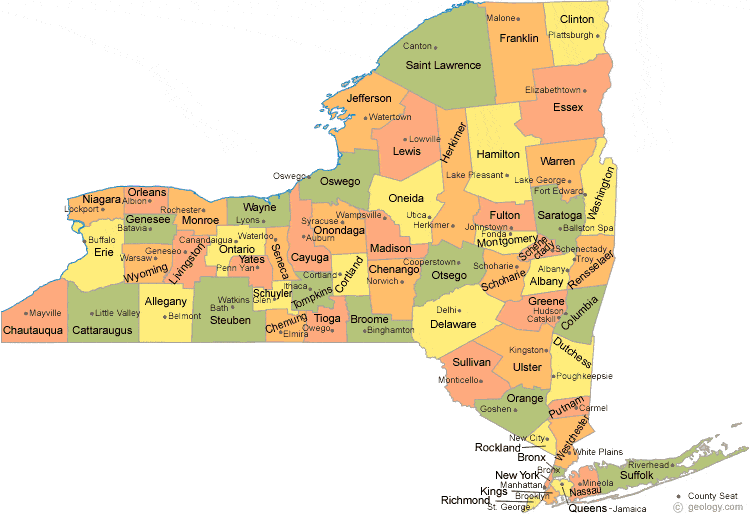
Understanding the Relationship Between Boroughs and Counties
For most visitors and even daily residents, the term “borough” is far more common and relevant than “county.” When you book a hotel, look for attractions, or navigate the subway system, you’ll be thinking in terms of boroughs. For instance, you might book a suite in a Manhattan hotel, visit a landmark in Brooklyn, or seek out authentic cuisine in Queens. However, the county designation becomes relevant in certain legal and governmental contexts, such as court systems, property records, and census data.
The co-extensiveness means that each borough operates as a distinct community with its own cultural identity, historical narrative, and specific attractions, while its underlying county provides the framework for state-level judicial and administrative processes. This dual identity ensures that the local character of each area is preserved within the larger metropolitan sprawl. This structure is a testament to the city’s ability to evolve and integrate diverse communities while maintaining a sense of localized governance, making it a rich tapestry for travelers to explore, offering everything from luxury travel experiences in Manhattan to budget-friendly explorations in the outer boroughs, all contributing to the vibrant mosaic of New York City life.

A Historical Perspective: The Consolidation of New York City
The 1898 consolidation was a monumental event that transformed New York City into one of the world’s largest urban centers. It merged the original City of New York (which was Manhattan and part of the Bronx), the City of Brooklyn, the western part of Queens County, and all of Richmond County (Staten Island). This expansion created the modern New York City and its five boroughs. The decision to retain the county designations while creating the new borough system was a pragmatic one, balancing the existing governmental structures with the need for a unified municipal administration. This historical background provides valuable context for understanding the city’s complex identity, highlighting how different regions, each with its own history and character, came together to form the global powerhouse it is today. For history enthusiasts, exploring the distinct narratives of each borough before and after consolidation offers a deeper appreciation of their individual evolution and collective destiny.
Exploring Each County/Borough: A Traveler’s Guide
Each of New York City’s five counties, or boroughs, offers a distinct experience, from bustling urban landscapes to serene green spaces, catering to every type of traveler. Whether you’re interested in luxury travel, budget-friendly adventures, family trips, or business stays, understanding the unique offerings of each borough is crucial for planning your perfect New York City itinerary.
New York County (Manhattan): The Iconic Heartbeat
New York County, synonymous with the borough of Manhattan, is arguably the most recognizable and densely populated part of New York City. It’s the island that never sleeps, boasting a concentration of world-famous landmarks, high-end hotels, and cultural institutions.
- Key Attractions: From the dazzling lights of Times Square and the tranquil expanse of Central Park to the historic majesty of the Statue of Liberty and the breathtaking views from the Empire State Building or Top of the Rock, Manhattan is a treasure trove of iconic sights. Broadway theaters offer unparalleled live entertainment, while museums like the Metropolitan Museum of Art and the Museum of Modern Art (MoMA) house masterpieces. The vibrant neighborhoods like Greenwich Village, SoHo, and the Upper East Side each offer their own distinct charm for exploration.
- Accommodation: Manhattan offers an extensive range of accommodations. Luxury hotels such as The St. Regis New York, The Plaza Hotel, and Mandarin Oriental, New York cater to discerning travelers with opulent suites and unparalleled amenities. Boutique hotels abound in areas like Flatiron and NoMad, while more budget-friendly options can be found further uptown or downtown. Apartments and long-term stays are also available, particularly for business travelers or those seeking a more immersive experience.
- Lifestyle: This borough is the epitome of the “city that never sleeps.” It’s a hub for business travel, offering state-of-the-art convention centers and corporate facilities. For those seeking a luxury lifestyle, Manhattan provides world-class shopping on Fifth Avenue, Michelin-starred dining, and an exclusive nightlife. It’s also incredibly diverse, offering cultural experiences from Chinatown to Harlem, and a thriving arts scene.
Kings County (Brooklyn): Culture, Creativity, and Community
Kings County, or Brooklyn, has evolved into a global symbol of cool, creativity, and community. Once considered Manhattan’s quieter neighbor, Brooklyn now stands as a destination in its own right, celebrated for its vibrant arts scene, diverse culinary landscape, and distinctive neighborhoods.
- Key Attractions: The iconic Brooklyn Bridge offers stunning views of the Manhattan skyline, leading directly into the charming, cobblestoned streets of DUMBO (Down Under the Manhattan Bridge Overpass). Prospect Park, designed by the creators of Central Park, offers lush green spaces and family-friendly activities. For a dose of nostalgia and seaside fun, Coney Island beckons with its historic amusement park rides and boardwalk. Explore neighborhoods like Williamsburg for trendy boutiques and nightlife, Bushwick for street art and galleries, and Park Slope for beautiful brownstones and a relaxed atmosphere.
- Accommodation: Brooklyn offers a growing number of stylish hotels, from boutique options in Williamsburg like The William Vale and Wythe Hotel to larger establishments in Downtown Brooklyn. Apartment rentals and long-term stays are also popular here, offering a more residential and authentic feel, ideal for family trips or extended visits.
- Lifestyle: Brooklyn embodies a more relaxed yet vibrant lifestyle. It’s a haven for artists, musicians, and foodies, boasting an incredible array of diverse restaurants, farmers’ markets, and craft breweries. It’s particularly appealing for family trips, with numerous parks, child-friendly museums, and cultural activities. The borough is also a fantastic destination for those interested in local culture, independent shops, and a thriving live music scene.
Bronx County (The Bronx): Green Spaces and Rich History
Bronx County, home to the borough of the Bronx, is New York City’s only mainland borough and a place of unexpected natural beauty, rich history, and vibrant communities. Often overlooked by first-time visitors, the Bronx offers unique attractions and a genuine slice of New York City life.
- Key Attractions: Nature lovers will revel in the vastness of the Bronx Zoo, one of the largest metropolitan zoos in the world, and the stunning New York Botanical Garden, a National Historic Landmark. Sports fans can catch a New York Yankees game at Yankee Stadium in the Concourse neighborhood. For a serene escape, Wave Hill offers beautiful public gardens and a cultural center overlooking the Hudson River. The Edgar Allan Poe Cottage provides a glimpse into the life of the famous writer.
- Accommodation: While the Bronx has fewer upscale hotel options compared to Manhattan or Brooklyn, it offers a range of comfortable and often more budget-friendly accommodations, including chain hotels and local guesthouses. These are suitable for travelers seeking good value or those specifically visiting attractions within the borough.
- Lifestyle: The Bronx is celebrated for its authentic cultural experiences, particularly its strong Latino and African American heritage. It’s the birthplace of hip-hop and boasts a thriving arts scene. It’s an ideal destination for those interested in exploring diverse culinary traditions, vibrant street art, and extensive green spaces. The lifestyle here is more local and community-focused, offering a different pace from the frenetic energy of Manhattan.
Queens County (Queens): The World’s Borough
Queens County, or Queens, lives up to its moniker as “the World’s Borough,” being one of the most ethnically diverse urban areas globally. This diversity translates into an incredibly rich cultural tapestry, from its unparalleled food scene to its varied neighborhoods and thriving artistic communities.
- Key Attractions: Flushing Meadows-Corona Park, a legacy of the 1939 and 1964 World’s Fairs, is home to the Unisphere, the Queens Museum, and the USTA Billie Jean King National Tennis Center. Art enthusiasts will appreciate MoMA PS1 in Long Island City, an innovative contemporary art institution. The neighborhood of Astoria boasts a vibrant Greek community, excellent restaurants, and the Museum of the Moving Image. The borough is also a foodie paradise, with every cuisine imaginable, particularly evident in neighborhoods like Jackson Heights and Flushing.
- Accommodation: Queens offers a wide array of accommodation options, often at a more competitive price point than Manhattan. You’ll find numerous modern hotels, especially in Long Island City, which provides easy access to Manhattan via a short subway ride. It’s also a practical choice for travelers flying into LaGuardia Airport or JFK Airport, with many hotels offering airport shuttles. Long-term stay apartments and serviced residences are also available.
- Lifestyle: Queens offers a truly global lifestyle experience. It’s a prime destination for food tourism, allowing visitors to embark on a culinary journey around the world without leaving the borough. It’s excellent for family trips, with diverse parks and cultural festivals. The pace is generally more relaxed than Manhattan, offering a balance of urban amenities and residential charm.
Richmond County (Staten Island): A Ferry Ride Away
Richmond County, co-extensive with Staten Island, offers a refreshing change of pace from the city’s hustle and bustle. While often perceived as primarily residential, Staten Island has its own unique attractions and provides some of the most spectacular, free views of the Manhattan skyline and the Statue of Liberty.
- Key Attractions: The most famous “attraction” is undoubtedly the Staten Island Ferry itself, which offers a picturesque commute and serves as an excellent way to see the city’s harbor. Once on the island, visitors can explore the Snug Harbor Cultural Center & Botanical Garden, a beautiful complex of gardens, museums, and performance venues. The Staten Island Greenbelt provides extensive natural areas for hiking and outdoor activities. The Staten Island Museum and the National Lighthouse Museum offer insights into local history and maritime heritage.
- Accommodation: Staten Island is predominantly residential, with fewer hotel options compared to the other boroughs. However, there are comfortable hotels, particularly near the ferry terminal and along major thoroughfares, offering a quieter base for exploring New York City. These often provide excellent value for travelers prioritizing a peaceful environment.
- Lifestyle: Life on Staten Island is more suburban and laid-back. It’s ideal for those seeking a tranquil retreat after a day of sightseeing in Manhattan or Brooklyn. It caters to nature enthusiasts, offering abundant parks and green spaces, and provides an authentic, residential New York City experience distinct from the urban core. For a unique perspective on the city, a visit to Staten Island is highly recommended.
Planning Your New York City Adventure: Tips for Every Traveler
Navigating New York City requires a good strategy, especially when considering its diverse boroughs/counties. From choosing the right accommodation to experiencing local culture, here are some tips to help you make the most of your trip, whether it’s a luxury getaway, a budget-conscious adventure, a family vacation, or a crucial business stay.
Choosing Your Accommodation: Borough by Borough
Your choice of accommodation location will profoundly impact your New York City experience.
- Manhattan: If convenience to major landmarks, a bustling atmosphere, and upscale options are your priority, Manhattan is ideal. Expect higher prices, but also unparalleled access to attractions, fine dining, and entertainment. Consider areas like Midtown for first-timers, or Downtown neighborhoods like SoHo or the West Village for a more boutique, neighborhood feel.
- Brooklyn & Queens: For a balance of value, local culture, and good access to Manhattan, Brooklyn (especially Williamsburg or DUMBO) and Queens (particularly Long Island City or Astoria) are excellent choices. These boroughs offer vibrant local scenes, diverse food options, and a range of accommodation from trendy hotels to comfortable apartment rentals, perfect for families or longer stays.
- The Bronx & Staten Island: For the most budget-friendly options, a quieter atmosphere, or specific interests (like the Bronx Zoo or Staten Island Greenbelt), these boroughs offer unique charm. While transportation to Manhattan might take a bit longer, the savings and the opportunity to experience a different side of New York City can be well worth it.
Consider using booking platforms that allow you to compare hotels, resorts, suites, and apartments across different boroughs, reading reviews to find the perfect fit for your needs and budget.
Navigating the City: Travel and Transportation
New York City’s public transportation system, primarily the MTA subway and bus lines, is extensive and efficient.
- Subway: This is often the fastest way to get around, especially between boroughs. Purchase a MetroCard (or use OMNY for tap-to-pay) and familiarize yourself with the subway map. Even if you’re staying outside Manhattan, most neighborhoods in Brooklyn and Queens are well-connected by subway.
- Buses: Buses are useful for shorter distances, crossing major avenues, or reaching areas not covered by the subway. They also offer a chance to see more of the city at street level.
- Taxis & Ride-sharing: Yellow cabs and ride-sharing services are readily available, though they can be more expensive and slower due to traffic, especially in Manhattan.
- Ferry: The Staten Island Ferry is free and iconic. Other ferry services, like the NYC Ferry, offer scenic routes along the rivers, connecting various points in Manhattan, Brooklyn, Queens, and the Bronx.
Experiencing Local Culture and Cuisine
One of the greatest joys of visiting New York City is immersing yourself in its diverse local culture and world-class food scene.
- Food Tours: Consider taking a food tour in neighborhoods like Greenwich Village, the Lower East Side, Jackson Heights, or Flushing to sample authentic cuisines from around the globe.
- Neighborhood Exploration: Dedicate time to wander through different neighborhoods. Each offers a distinct atmosphere, from the artistic vibe of Bushwick to the historic charm of Harlem or the European feel of Astoria. Seek out local markets, independent shops, and community events to truly connect with the city’s pulse.
- Performing Arts: Beyond Broadway, explore off-Broadway and off-off-Broadway theaters, jazz clubs in Greenwich Village, and live music venues in Brooklyn.
Beyond the Obvious: Discovering Hidden Gems
While iconic landmarks are a must-see, New York City truly shines in its lesser-known spots.
- Rooftop Bars: Discover hidden rooftop bars for breathtaking skyline views away from the crowds.
- Community Gardens: Stumble upon serene community gardens, especially in the East Village or Brooklyn.
- Public Art: Explore the city’s extensive public art installations and vibrant street art scenes in areas like Bushwick.
- Specialty Museums: Beyond the major institutions, discover niche museums like the Tenement Museum or the New York Transit Museum.
Embracing the unexpected and allowing for serendipitous discoveries will enrich your travel experiences and create lasting memories.
In conclusion, the administrative structure of New York City, where its five boroughs double as five distinct counties—New York County (Manhattan), Kings County (Brooklyn), Bronx County (The Bronx), Queens County (Queens), and Richmond County (Staten Island)—is a testament to its unique history and complex identity. This duality ensures that while the city functions as a single, cohesive entity, each area maintains its own vibrant character, offering a world of diverse experiences for every traveler. From the iconic landmarks and luxury accommodations of Manhattan to the artistic hubs of Brooklyn, the green spaces of the Bronx, the global culinary scene of Queens, and the tranquil charm of Staten Island, New York City promises an unforgettable adventure. By understanding its county/borough structure, visitors can better plan their journey, discover hidden gems, and truly immerse themselves in the rich tapestry that is New York City. Whether you’re seeking a quick getaway or a long-term stay, the Big Apple’s distinct counties invite you to explore, indulge, and create memories that will last a lifetime.
LifeOutOfTheBox is a participant in the Amazon Services LLC Associates Program, an affiliate advertising program designed to provide a means for sites to earn advertising fees by advertising and linking to Amazon.com. Amazon, the Amazon logo, AmazonSupply, and the AmazonSupply logo are trademarks of Amazon.com, Inc. or its affiliates. As an Amazon Associate we earn affiliate commissions from qualifying purchases.