
Embarking on a journey through the Empire State, whether it’s for the vibrant cultural tapestry of New York City, the serene landscapes of Upstate New York, or a business trip to Albany, often involves navigating its extensive road networks. For many drivers, the allure of tinted windows — offering enhanced privacy, reduced glare, and a touch of personal style — is undeniable. However, like many states, New York has specific regulations governing vehicle window tinting. Understanding these laws is not just a matter of compliance; it’s crucial for ensuring a smooth, penalty-free travel experience and contributing to overall road safety.
For visitors and residents alike, deciphering the nuances of New York’s tint laws can seem complex. This guide aims to demystify these regulations, providing a comprehensive overview that considers the perspectives of tourists renting a car, long-term visitors enjoying the state’s diverse attractions, and local drivers. We’ll explore the specific legal requirements, the rationale behind them, and practical advice for staying on the right side of the law, ensuring your journey through iconic locales like Long Island, the Hudson Valley, or towards the majestic Niagara Falls is as seamless as possible. From understanding visible light transmittance (VLT) percentages to navigating exemptions, this article will equip you with the knowledge to drive confidently and lawfully across the state.
Navigating New York’s Vehicle Tint Regulations: A Traveler’s Guide
Driving in New York requires an awareness of its unique vehicle laws, and window tinting is a significant aspect often overlooked by travelers. The state’s regulations are designed to balance driver and passenger privacy with the imperative for road safety and law enforcement visibility. For anyone planning a road trip, relocating, or simply renting a car to explore destinations from Manhattan to the Adirondack Mountains, a clear understanding of these rules is essential to avoid unexpected fines or delays. These regulations are not arbitrary; they reflect a careful consideration of safety, visibility for law enforcement officers during traffic stops, and overall road conditions, especially during varying weather and light conditions.
Understanding Visible Light Transmittance (VLT)
At the heart of New York’s tint law is the concept of Visible Light Transmittance (VLT). VLT refers to the percentage of visible light that passes through the window film and glass. A lower VLT percentage means darker tint, allowing less light to pass through. Conversely, a higher VLT percentage indicates a lighter tint, allowing more light in. New York law specifies different VLT percentages for various windows on a vehicle. For instance, windows with a VLT of 70% mean that 70% of outside light can pass through, making them relatively light. Understanding this percentage is crucial because it dictates how dark your vehicle’s windows can legally be. Many states have different VLT requirements, which can be a point of confusion for out-of-state drivers. Therefore, knowing New York’s specific thresholds is the first step towards compliance.
Specifics for Front, Side, and Rear Windows
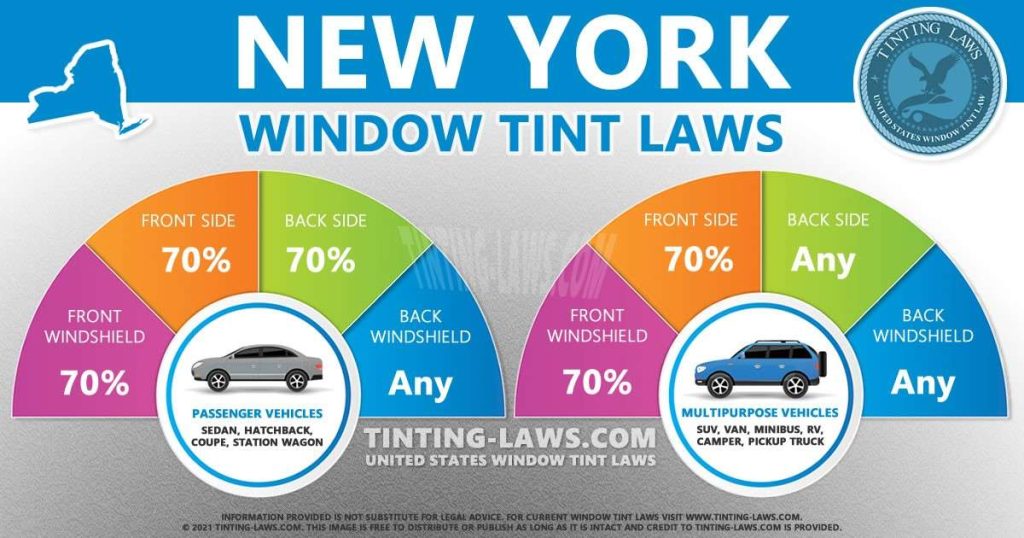
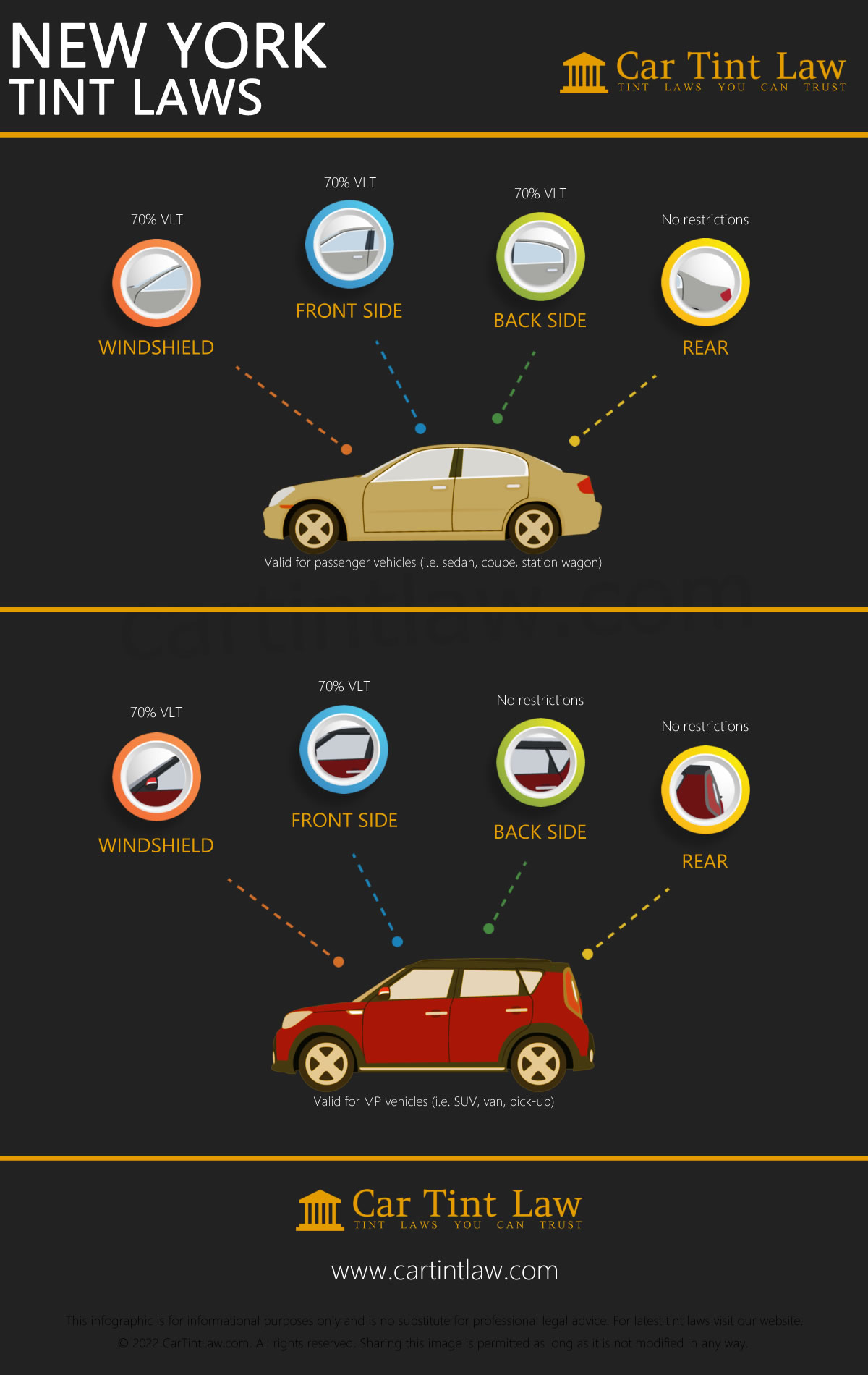
New York tint laws are quite precise about where tint can be applied and how dark it can be:
- Windshield: The law prohibits any tint on the windshield below the AS-1 line, which is typically a line marked on the glass by the manufacturer, usually around 5 or 6 inches from the top. Above this line, non-reflective tint is generally permitted. The purpose of this regulation is to ensure maximum visibility for the driver, which is paramount for safety, especially in challenging driving conditions or congested urban environments like New York City.
- Front Side Windows: This is where New York has one of the strictest requirements. The front side windows – those to the immediate left and right of the driver – must allow at least 70% of visible light to pass through. This effectively means very light tint, or no tint at all. This rule is particularly important for law enforcement officers, allowing them to clearly see into the vehicle during traffic stops, enhancing their safety and the safety of the occupants.
- Rear Side Windows: For the windows located behind the driver and front passenger, the rules become more lenient. If the vehicle is equipped with outside rearview mirrors on both sides, there are no restrictions on how dark the tint can be for these windows. This provision acknowledges the desire for increased privacy for rear passengers and protection from sunlight, especially beneficial for families traveling with children or for individuals seeking more solitude during their travels.
- Rear Window: Similar to the rear side windows, if your vehicle has dual outside rearview mirrors, there are no restrictions on the darkness of the tint for the rear window. This offers flexibility for vehicle owners to customize their rear window tinting to their preference, whether for aesthetic reasons, heat reduction, or privacy, without compromising crucial visibility provided by side mirrors.
Exemptions and Medical Waivers
While the laws are generally strict, New York does provide for certain exemptions. The most common exemption is for individuals with specific medical conditions that make them highly sensitive to sunlight. To qualify for this, an individual must obtain a medical exemption certificate from the New York State Department of Motor Vehicles (DMV). This certificate must be carried in the vehicle at all times and presented upon request by law enforcement. The process typically involves a doctor’s certification of the medical condition and an application to the DMV. It’s important to note that even with a medical exemption, there may still be limits on the degree of tint allowed, often slightly darker than the standard 70% VLT but not opaque. Additionally, certain vehicles, such as those used for specific commercial purposes or governmental operations, may also have different regulations. Always verify with the DMV if you believe your vehicle or situation falls under a special category.
The Rationale Behind Tint Laws: Safety, Visibility, and Enforcement
The stringent tint laws in New York are not arbitrary impositions but are rooted in fundamental principles of public safety, operational efficiency for law enforcement, and clear visibility for all road users. For a state as bustling and diverse as New York, where traffic can range from congested urban arteries in Brooklyn to winding rural roads, these regulations play a vital role in maintaining order and reducing risks. Understanding the ‘why’ behind these laws can help both residents and visitors appreciate their importance, especially when considering the implications for their own travel experiences, whether they’re driving to see the Statue of Liberty or embarking on a scenic drive through the Hudson Valley.
Why Tint Matters for Law Enforcement and Road Safety
The primary reason for regulating window tint, particularly on front side windows, is to ensure the safety of law enforcement officers during traffic stops. When an officer approaches a vehicle, the ability to see clearly inside and observe the occupants is crucial. Dark tint obscures this view, creating a potentially dangerous situation for the officer, who cannot assess the number of occupants or their movements. This visibility is also vital for identifying suspicious activity or individuals, contributing to broader public safety. From the driver’s perspective, excessively dark tint can also compromise visibility, especially during nighttime driving, adverse weather conditions like heavy rain or snow, or when making turns and lane changes. Reduced visibility increases the risk of accidents, posing a threat to the driver, passengers, and other road users. New York’s varied climate and driving environments, from metropolitan areas to rural stretches, necessitate clear lines of sight to prevent collisions and ensure everyone reaches their destination safely.
Potential Penalties for Non-Compliance
Ignoring New York’s tint laws can lead to various penalties, which can quickly turn a pleasant trip into a costly ordeal. The state classifies illegal window tint as a traffic infraction. If pulled over, a driver may receive a ticket, typically resulting in a fine. While the initial fine might seem minor, the total cost can escalate, especially if the driver is also charged with other infractions or if the tint is not removed promptly. The primary penalty is a fine that can range from around $50 to $150, depending on the jurisdiction and the officer’s discretion. Beyond the financial cost, drivers are usually required to remove the illegal tint. This often means additional expenses for professional tint removal and, if desired, replacement with compliant tint. Failure to remove the tint or rectify the violation within a specified period could lead to further fines or even more severe consequences. For out-of-state drivers, non-compliance can be particularly frustrating, as they might be unfamiliar with the local laws and find themselves having to deal with the issue far from home.
Tint Laws and Your New York Travel Experience
For travelers venturing into or across New York, understanding the state’s window tint laws is more than just avoiding a ticket; it’s about ensuring a hassle-free and enjoyable experience. Whether you’re planning a luxurious stay in a New York City hotel, a family adventure exploring Upstate New York’s natural beauty, or a business trip to Albany, your vehicle’s window tint can subtly impact your journey. The choices you make regarding tint can influence comfort, style, and ultimately, the smooth progression of your itinerary. This section delves into how tint laws intersect with various aspects of travel and lifestyle within the Empire State.
Renting a Car in New York: What to Know About Tint
When you rent a car from agencies located in New York, whether at major airports like JFK or smaller local branches, the vehicles provided should already be compliant with state laws. Rental companies are responsible for ensuring their fleet meets all legal requirements, including window tint. However, it’s always a good practice to quickly inspect the vehicle. While highly unlikely, if you notice unusually dark tint on the front side windows of your rental, it’s advisable to bring it to the rental company’s attention before driving off. This preemptive check can save you from potential headaches down the road. If you’re renting from an individual or a non-traditional service, exercising greater scrutiny is prudent. The responsibility for legal compliance ultimately rests with the driver, so a quick visual check can offer peace of mind, allowing you to focus on navigating the bustling streets of Times Square or the serene routes of the Adirondack Mountains.

Road Tripping to New York: Interstate Compliance
One of the most common pitfalls for drivers is the varying tint laws across state lines. A window tint that is perfectly legal in Pennsylvania or New Jersey might be illegal the moment you cross into New York. For travelers on extended road trips, especially those originating from states with more lenient tint regulations, this is a critical consideration. Before embarking on your journey to experience the iconic landmarks and diverse culture of New York, it’s highly recommended to familiarize yourself with New York’s specific VLT requirements, particularly for front side windows. If your vehicle has tint that doesn’t meet New York’s 70% VLT rule for front side windows, you risk being stopped and ticketed. While some officers might offer a warning, others will enforce the law strictly. Proactive measures, such as temporarily removing non-compliant tint or using a different vehicle, can prevent disruptions to your travel plans and save you from unexpected expenses.
Lifestyle Considerations: Privacy, Style, and Comfort
Beyond legalities, window tint often intersects with lifestyle choices. For many, tint provides an enhanced sense of privacy, especially when navigating crowded urban areas like Brooklyn or Manhattan. It allows families to maintain a more secluded environment for children in the back seats, protecting them from curious glances. From a style perspective, tint can significantly alter a vehicle’s appearance, lending it a sleek, sophisticated, or sporty look that resonates with a luxury travel aesthetic. Functionally, tint also contributes to comfort by reducing heat buildup inside the vehicle, which can be particularly beneficial during New York’s hot summer months, and by mitigating glare from the sun or headlights, thus improving driving comfort. However, these lifestyle benefits must always be weighed against the legal requirements. Achieving a balance that satisfies personal preference while adhering to New York’s tint laws is key to enjoying both the aesthetic and practical advantages without inviting legal trouble.
Ensuring a Smooth Journey: Tips for Drivers in New York
Navigating the roads of New York should be an exciting and memorable experience, whether you’re chasing waterfalls near Niagara Falls, exploring the historic streets of Albany, or immersing yourself in the hustle and bustle of New York City. Understanding and complying with tint laws is a fundamental step in ensuring your journey remains smooth and free of unnecessary complications. By taking a few proactive measures, you can confidently drive through the Empire State, knowing you’re fully compliant with local regulations.
Checking Your Vehicle’s Tint
Before you set out, especially if you’re unsure about your vehicle’s tint compliance, it’s wise to perform a quick check.
- Visual Inspection: For front side windows, aim for a clear, unobstructed view into the vehicle. If the tint appears significantly darker than the rear windows (assuming they are factory-tinted or lightly aftermarket-tinted), it might be too dark.
- Professional Assessment: The most accurate way to verify VLT is with a tint meter. Many automotive shops, tint installers, and even some law enforcement agencies have these devices. A quick visit to a local tint shop in New York can give you a precise VLT reading for your windows and confirm compliance.
- Documentation: If you recently had tint installed, ensure the installer provided documentation specifying the VLT percentage. Reputable installers will always ensure their work meets local regulations and can provide proof.
Remember, the goal is for the front side windows to allow at least 70% of visible light to pass through. If your windows are darker than this, consider having the non-compliant tint removed and, if desired, replaced with legal film.
Staying Informed with DMV Resources
The New York State Department of Motor Vehicles (DMV) is the ultimate authority on vehicle regulations in the state. Their website is an invaluable resource for the most current and official information regarding tint laws, including any updates or changes. Before a significant trip or if you have specific questions, reviewing the relevant sections on the DMV site can provide definitive answers and peace of mind. Additionally, information regarding medical exemptions and the application process can be found there. Staying informed directly from the source ensures that you are relying on accurate, up-to-date information, which is critical for legal compliance and a worry-free travel experience across the diverse landscapes of New York.
In conclusion, navigating New York’s tint laws is a straightforward process once you understand the core regulations. By adhering to the VLT percentages, especially for front side windows, and being aware of the rationale behind these laws, you can ensure your travels through this magnificent state are as enjoyable as they are lawful. Whether you’re exploring the urban jungles, natural wonders, or charming towns, a compliant vehicle means one less thing to worry about, allowing you to fully immerse yourself in the rich experiences New York has to offer. Safe travels!
LifeOutOfTheBox is a participant in the Amazon Services LLC Associates Program, an affiliate advertising program designed to provide a means for sites to earn advertising fees by advertising and linking to Amazon.com. Amazon, the Amazon logo, AmazonSupply, and the AmazonSupply logo are trademarks of Amazon.com, Inc. or its affiliates. As an Amazon Associate we earn affiliate commissions from qualifying purchases.