
The Pacific Northwest is a region of captivating beauty, vibrant cities, and diverse landscapes, and at its heart lie two of America’s most beloved urban centers: Seattle, Washington, and Portland, Oregon. For many travelers exploring this corner of the continent, the question isn’t just “how far apart are they?” but “how can I best experience the journey between them?” This comprehensive guide will not only answer the fundamental question of distance but also delve into the myriad ways to travel, what to see along the way, and why a trip encompassing both Seattle and Portland offers an unforgettable experience for every type of traveler.
Separated by a relatively short distance, these two powerhouse cities offer distinct flavors of Pacific Northwest culture. Seattle, often called the Emerald City, is renowned for its tech innovation, bustling Pike Place Market, and iconic Space Needle, set against a stunning backdrop of water and mountains. Portland, on the other hand, embraces its “Keep Portland Weird” ethos with a thriving food scene, craft breweries, extensive green spaces, and a unique, independent spirit. Whether you’re planning a rapid business trip, a leisurely family vacation, or an immersive cultural exploration, understanding the journey between these two hubs is your first step to unlocking the best of the Pacific Northwest.

The Distance and Primary Routes
At its core, the distance between Seattle, Washington, and Portland, Oregon, is approximately 174 miles (280 kilometers) when traveling directly along Interstate 5 (I-5). While this direct route provides the most efficient path, the actual travel time and experience can vary significantly based on your chosen mode of transport and whether you opt for scenic detours.
By Car: The Classic I-5 Journey
Driving is by far the most popular and flexible way to travel between Seattle and Portland. The drive typically takes between 2.5 to 3.5 hours under ideal conditions, but traffic, especially around urban centers like Tacoma or during peak hours, can extend this considerably. Interstate 5 is a well-maintained, multi-lane highway that offers a relatively straightforward drive.
Pros of Driving:
- Flexibility: You set your own schedule, stopping whenever and wherever you please.
- Scenic Detours: The car allows for easy access to national parks, coastal towns, and other attractions off the main highway.
- Luggage: Ample space for suitcases, sporting equipment, or purchases from local markets.
- Cost-Effective for Groups: When split among several passengers, the cost of gas can be more economical than individual tickets for public transport.
Cons of Driving:
- Traffic: Congestion in and around both cities, particularly during rush hour, can be frustrating.
- Parking: Finding and paying for parking in downtown areas of Seattle and Portland can be expensive and challenging.
- Environmental Impact: Higher carbon footprint compared to public transportation options.
For those considering a road trip, ensure your vehicle is in good condition, and always check traffic conditions before departing. Rental cars are readily available at both Seattle-Tacoma International Airport (SEA) and Portland International Airport (PDX).
Public Transportation: Train and Bus Options
For travelers who prefer to relax and let someone else do the driving, both train and bus services provide comfortable and convenient alternatives.
Train: Amtrak Cascades
The Amtrak Cascades route is a favorite among many, offering a picturesque journey that largely avoids highway traffic. The train travels along the Puget Sound and through charming towns, providing scenic views that are not visible from the I-5. The journey typically takes about 3.5 to 4 hours.
Pros of Train Travel:
- Scenic Views: Enjoy stunning vistas of the Pacific Northwest coastline and landscapes.
- Comfort: Spacious seating, onboard dining cars, and Wi-Fi make for a relaxing trip.
- Convenience: Stations are often centrally located in both cities, reducing the need for extensive transfers.
- Eco-Friendly: A greener alternative to driving or flying.
Cons of Train Travel:
- Less Flexible Schedule: Fewer daily departures compared to buses or the freedom of driving.
- Potential Delays: While less frequent than traffic, train delays can occur.
Bus Services: Greyhound and FlixBus
Several bus companies operate routes between Seattle and Portland, including Greyhound and FlixBus. These are generally the most budget-friendly options, with travel times similar to driving, ranging from 3 to 4.5 hours depending on stops and traffic.
Pros of Bus Travel:
- Affordability: Often the cheapest way to travel between the two cities.
- Frequency: Multiple daily departures provide more scheduling flexibility than trains.
- Accessibility: Bus stations are typically well-connected to local public transport networks.
Cons of Bus Travel:
- Comfort: Seating can be less spacious than on a train, and amenities may vary.
- Traffic: Buses are subject to the same traffic delays as cars on I-5.
- Less Scenic: The route primarily sticks to the highway.
Taking to the Skies: Air Travel
While seemingly counter-intuitive for such a short distance, flights between Seattle-Tacoma International Airport (SEA) and Portland International Airport (PDX) are available, primarily through regional carriers like Alaska Airlines and Horizon Air. The flight itself is very short, typically around 45 minutes to an hour.
Pros of Air Travel:
- Speed: Fastest actual travel time in the air.
- Convenience for Connecting Flights: Ideal if you’re already flying into or out of one of these airports for a longer journey.
Cons of Air Travel:
- Overall Time: When accounting for check-in, security, boarding, and travel to and from airports (which are often outside city centers), the total door-to-door travel time can often exceed that of driving or even the train.
- Cost: Generally the most expensive option.
- Environmental Impact: Highest carbon footprint per passenger for such a short distance.
For most travelers, unless connecting to another flight, driving or taking the train offers a more practical and often more enjoyable experience for the Seattle-Portland corridor.
Exploring the Journey: Stops and Scenic Detours
The journey between Seattle and Portland doesn’t have to be a race to the finish line. The Pacific Northwest is rich with natural beauty, charming towns, and unique attractions, making the road trip an experience in itself. Depending on your time and interests, you can transform a simple commute into an unforgettable adventure.
Coastal Routes vs. Inland Highways
While I-5 is the most direct route, travelers with an extra day or two can opt for more scenic alternatives.
The Coastal Route:
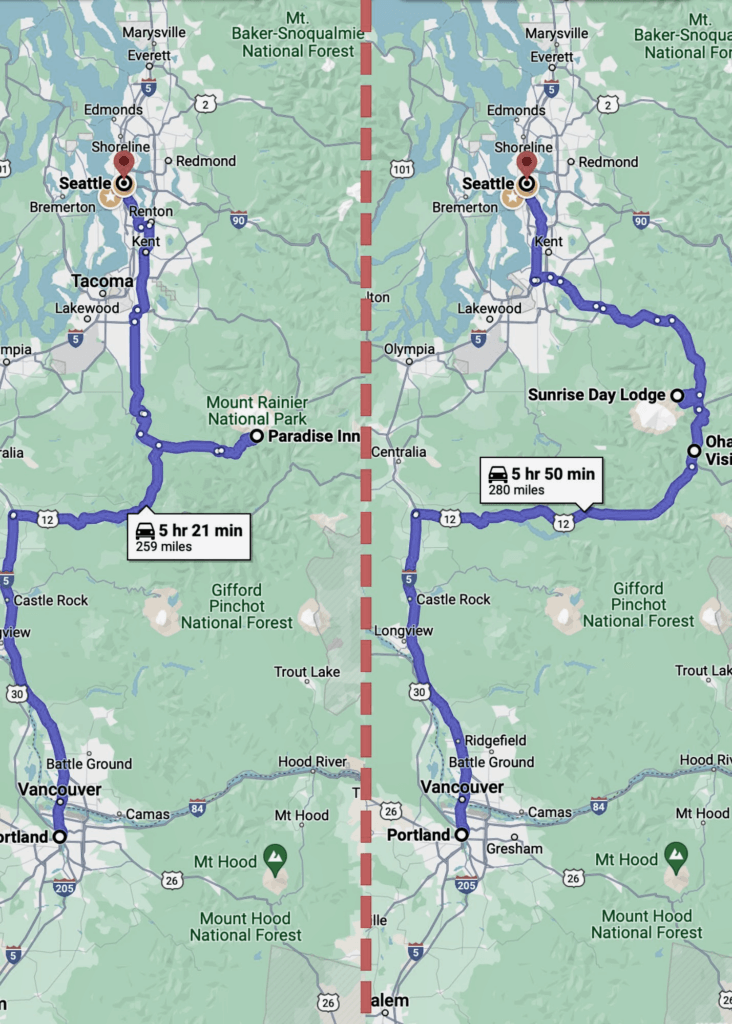
Taking Highway 101 along the Oregon and Washington coast adds significant mileage and time (expect 6-8+ hours of driving without stops), but it offers breathtaking ocean views and access to picturesque seaside towns.
- Cannon Beach, Oregon: Famous for Haystack Rock, tide pools, and art galleries. It’s an ideal spot for a stroll on the beach or an overnight stay.
- Tillamook Creamery, Oregon: A must-stop for cheese and ice cream lovers, offering tours, tastings, and a gift shop.
- Long Beach Peninsula, Washington: Home to the longest continuous beach in the United States, perfect for kite flying, horseback riding, or simply enjoying the vast expanse of sand.
The Mountains and Valleys Route:
For those intrigued by majestic peaks and lush forests, a detour inland can lead to stunning natural wonders.
- Mount Rainier National Park, Washington: A detour from I-5 to the east allows you to explore the active volcano and surrounding alpine meadows, offering incredible hiking and photo opportunities. This is a significant detour, often requiring a dedicated day trip.
- Columbia River Gorge National Scenic Area, Oregon: Just east of Portland, this area boasts spectacular waterfalls like Multnomah Falls, numerous hiking trails, and panoramic viewpoints. It’s an easy day trip from Portland or a worthy addition to your drive if approaching Portland from the east.
Must-See Attractions Along the Way
Even if you stick to I-5, there are several worthwhile stops that can break up the journey and enhance your experience.
- Tacoma, Washington: Situated just south of Seattle, Tacoma offers the impressive Museum of Glass and the scenic Point Defiance Park.
- Olympia, Washington: The capital of Washington State, Olympia is home to the stunning Washington State Capitol Building and a charming downtown area with local shops and eateries.
- Centralia, Washington: A historic railroad town with a revitalized downtown, perfect for antique shopping or a quick coffee break.
- Lewis and Clark State Park, Washington: Just off I-5 near Chehalis, this park offers hiking trails through old-growth forests, a pleasant spot to stretch your legs.
- Maryhill Winery (near Goldendale, Washington): While a bit of a detour east of I-5, this winery offers spectacular views of the Columbia River Gorge and excellent Washington wines. It’s more of a destination in itself.
Choosing to explore these stops transforms the drive into a richer travel experience, allowing you to immerse yourself deeper into the diverse offerings of the Pacific Northwest.
A Tale of Two Cities: Why Visit Both Seattle and Portland
While the journey between Seattle and Portland offers its own rewards, the ultimate goal for many is to experience the unique character of each destination. These two cities, though geographically close, possess distinct personalities that complement each other perfectly for a comprehensive Pacific Northwest itinerary.
Seattle’s Iconic Landmarks and Urban Charms
Seattle is a global hub, a city of innovation, stunning natural beauty, and a rich cultural tapestry. Its skyline, dominated by the futuristic Space Needle, hints at the forward-thinking spirit within.
Key Attractions in Seattle:
- Space Needle: An absolute must-visit, offering panoramic views of the city, Puget Sound, and surrounding mountains like Mount Rainier.
- Pike Place Market: Immerse yourself in the bustling atmosphere of one of the oldest continually operated public markets in the United States. Watch the fishmongers throw fish, explore artisan crafts, and savor fresh local produce. Don’t forget to visit the original Starbucks nearby.
- Chihuly Garden and Glass: Located at the base of the Space Needle, this museum showcases the stunning glass artwork of Dale Chihuly, an experience of vibrant color and intricate forms.
- Museum of Pop Culture (MoPOP): A vibrant museum dedicated to contemporary popular culture, featuring exhibits on music, science fiction, and fantasy.
- Seattle Waterfront: Enjoy a stroll along the revitalized waterfront, take a ferry to nearby islands for breathtaking views, or visit the Seattle Aquarium.
- Ferry to Bainbridge Island: A short and incredibly scenic ferry ride offers spectacular views of the Seattle skyline and a charming small town to explore.
Seattle also boasts a vibrant food scene, from fresh seafood to innovative farm-to-table restaurants, and a thriving coffee culture. Its proximity to natural wonders like Olympic National Park and the San Juan Islands makes it a perfect base for outdoor excursions.
Portland’s Quirky Culture and Culinary Delights
Just a few hours south, Portland offers a delightful contrast. Known for its laid-back atmosphere, commitment to local and sustainable living, and an artistic, independent streak, Portland is a haven for foodies, nature lovers, and those seeking unique urban experiences.
Key Attractions in Portland:
- Powell’s City of Books: The world’s largest independent bookstore, a multi-story paradise for bibliophiles. You can easily spend hours exploring its vast collection.
- Food Cart Pods: Portland is famous for its diverse and delicious food cart scene. These clusters of mobile kitchens offer everything from ethnic cuisine to gourmet treats, often at unbeatable prices.
- International Rose Test Garden at Washington Park: Enjoy breathtaking views of the city and Mount Hood amidst thousands of blooming roses. Washington Park also houses the serene Portland Japanese Garden and the Oregon Zoo.
- Craft Breweries and Coffee Shops: Portland is a mecca for craft beer enthusiasts, with numerous breweries offering tours and tastings. The city’s coffee scene is equally robust, with independent roasters and cozy cafes around every corner.
- Pearl District: Once an industrial area, this trendy neighborhood is now home to art galleries, boutiques, upscale restaurants, and beautifully converted warehouses.
- Unique Neighborhoods: Explore the vibrant streets of Mississippi Avenue or the bohemian vibe of the Hawthorne District for quirky shops, vintage finds, and diverse eateries.
- Voodoo Doughnut: A Portland institution known for its bizarre and creative doughnut flavors (and often a long line!).
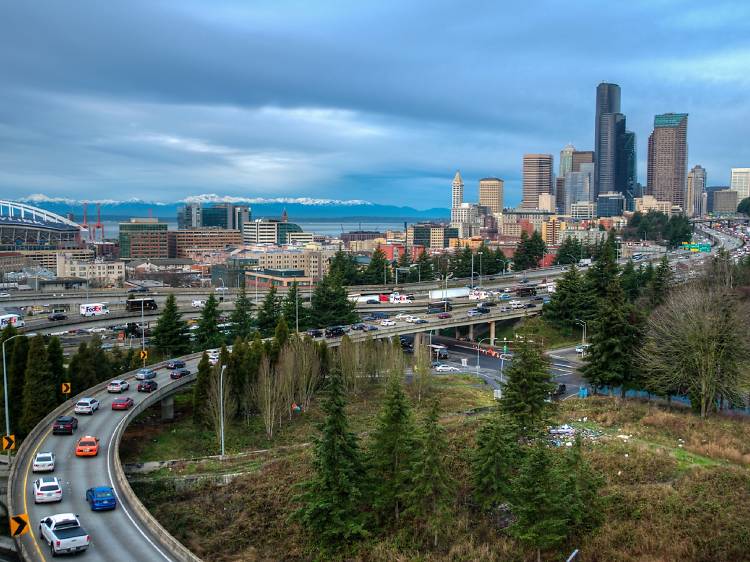
From Seattle’s sleek modernism to Portland’s bohemian charm, visiting both cities provides a holistic view of the Pacific Northwest’s unique character, blending urban sophistication with a deep appreciation for nature and individuality.
Planning Your Trip: Accommodation and Travel Tips
Successfully navigating your trip between Seattle and Portland involves more than just knowing the distance; it’s about smart planning, choosing the right accommodation, and embracing the local lifestyle. Whether you’re on a luxury travel excursion, a budget travel adventure, a family trip, or a business stay, these tips will help you maximize your experience.
Finding the Perfect Stay: Hotels and Alternative Options
Both Seattle and Portland offer a wide range of accommodation options to suit every preference and budget.
Hotels:
From opulent luxury hotels like the Four Seasons Seattle or the Sentinel Hotel Portland to comfortable boutique hotels and reliable chain accommodations, you’ll find plenty of choices. When booking, consider factors like proximity to attractions, public transport access, and amenities such as fitness centers, dining options, or suites for extra space. Reading reviews and doing a comparison of prices across various platforms can lead to the best deals.
Alternative Accommodations:
- Vacation Rentals (Apartments, Villas): For families, groups, or those seeking a long-term stay, apartments or villas rented through platforms like Airbnb or VRBO can offer more space, a kitchen, and a taste of local living.
- Hostels: Ideal for budget travel or solo adventurers, hostels in both cities provide affordable dormitory-style or private rooms, often with communal spaces for socializing.
- Resorts: If you’re looking for a more immersive, amenity-rich experience, consider resorts just outside the city centers, offering spas, golf courses, or natural settings.
Booking Tips:
- Book in advance: Especially during peak seasons (summer, holidays, major events), popular hotels and attractions can fill up quickly.
- Consider loyalty programs: If you frequently stay with a particular hotel chain, leverage your points for discounts or upgrades.
- Read recent reviews: Always check what recent guests have to say about cleanliness, service, and location.
Maximizing Your Experience: Essential Travel Advice
To make your Seattle and Portland adventure truly exceptional, keep these general travel tips in mind:
- Best Time to Visit: The summer months (June to September) offer the warmest weather and least rain, ideal for outdoor activities and scenic drives. However, this is also peak tourist season, so expect larger crowds and higher prices. Spring and fall provide a good balance of pleasant weather, fewer crowds, and vibrant seasonal beauty. Winter can be wet but offers a cozy, festive atmosphere, especially around the holidays.
- Packing Essentials: Layers are key in the Pacific Northwest, as weather can change quickly. Pack waterproof outerwear, comfortable walking shoes (you’ll be doing a lot of exploring!), and an umbrella.
- Public Transportation: Both cities have excellent public transport systems. Seattle has its Link Light Rail, buses, and streetcars, while Portland offers the MAX Light Rail, streetcar, and bus network. Utilize these to navigate city centers, reduce parking stress, and experience local life.
- Embrace Local Culture and Food: Don’t shy away from trying local specialties. In Seattle, that means fresh seafood, coffee, and diverse international cuisine. In Portland, dive into the food cart scene, craft beer, and innovative farm-to-table restaurants. Seek out local events, farmers’ markets, and independent shops to truly capture the essence of each city.
- Stay Hydrated and Active: With so much to see and do, it’s easy to get caught up. Remember to stay hydrated and take advantage of the numerous parks and walking paths available in both cities.
- Digital Tools: Utilize navigation apps, local transit apps, and online guides to enhance your trip planning and on-the-go experience. Many attractions offer online booking for tickets, which can save time.
By considering the distance, modes of travel, potential detours, distinct charms of Seattle and Portland, and practical planning tips, your journey through the Pacific Northwest will be as smooth and enriching as the destinations themselves. From the tech-savvy urban landscape of Seattle to the quirky, foodie paradise of Portland, an unforgettable adventure awaits.
LifeOutOfTheBox is a participant in the Amazon Services LLC Associates Program, an affiliate advertising program designed to provide a means for sites to earn advertising fees by advertising and linking to Amazon.com. Amazon, the Amazon logo, AmazonSupply, and the AmazonSupply logo are trademarks of Amazon.com, Inc. or its affiliates. As an Amazon Associate we earn affiliate commissions from qualifying purchases.