
Embarking on a journey through the vast and vibrant landscapes of Texas offers an unparalleled experience, whether you’re chasing the urban allure of Houston and Dallas, soaking in the unique culture of Austin, or exploring the historic charm of San Antonio. From the bustling city centers to the serene Big Bend National Park and the pristine beaches of Galveston, the Lone Star State is a treasure trove of destinations and attractions. For many, driving is the preferred mode of travel, allowing for flexibility to discover hidden gems and famous landmarks at one’s own pace. However, amidst the excitement of exploration, it’s crucial for both residents and visitors alike to be aware of the state’s traffic laws and, more importantly, the potential financial repercussions of not adhering to them. A traffic ticket can swiftly transform a meticulously planned budget travel adventure or even a lavish luxury travel escape into an unexpected financial drain, impacting everything from your vacation fund to your daily lifestyle budget.
The cost of a traffic ticket in Texas is rarely straightforward. It’s not just the initial fine printed on the citation; it’s a complex web of base fines, court costs, state surcharges, and potential long-term increases in insurance premiums. These hidden costs can accumulate rapidly, turning a seemingly minor infraction into a significant financial burden. Understanding this intricate system is vital for anyone navigating the state’s roads, especially those on a family trip or a business stay, where time and money are often at a premium. This comprehensive guide will delve into the various components that contribute to the total cost of a traffic ticket in Texas, explore common violations, and offer insights into how these unexpected expenses can affect your tourism plans and overall financial well-being. By equipping yourself with this knowledge, you can drive smarter, avoid costly mistakes, and ensure your Texas experience remains as enjoyable and budget-friendly as possible.
Understanding the Financial Layers of Texas Traffic Tickets
When you receive a traffic ticket in Texas, it’s easy to assume the amount listed on the citation is the final cost. However, this is often just the tip of the iceberg. The true financial impact can be far more extensive due to various fees, surcharges, and long-term consequences. These layers combine to create a significant financial burden that can disrupt travel plans, affect personal budgets, and cause considerable stress.
Base Fines and Court Costs: The Immediate Impact
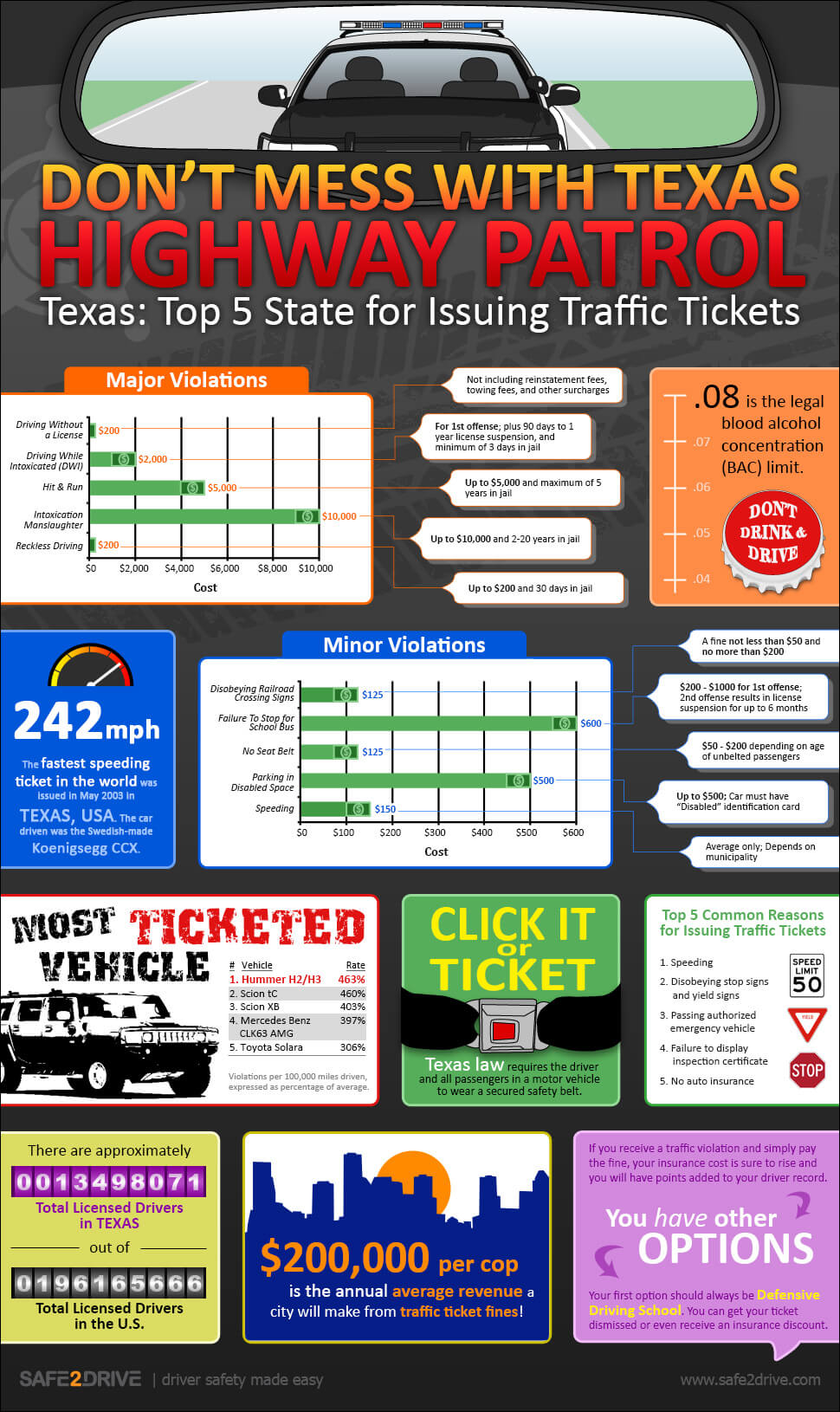
The initial fine amount for a traffic violation in Texas is determined by the specific offense and the jurisdiction in which it occurred. While state law provides a general framework, individual cities and counties have some discretion in setting their fine schedules. This means a speeding ticket in Houston might cost slightly more or less than an identical violation in Austin, for example. Common offenses like speeding, running a stop sign, or a seatbelt violation typically have base fines ranging from $100 to $300. However, these are merely the starting points.
Adding to the base fine are mandatory court costs and administrative fees, which can substantially inflate the total amount due. These fees cover the operational expenses of the municipal or justice court system, including filing fees, judicial fees, and administrative surcharges. Depending on the county and the specific court, these additional costs can easily add $50 to $150 or more to the original fine. For instance, a ticket with a base fine of $150 could quickly become a $250-$300 expense once all court costs are factored in. Furthermore, certain violations, such as those occurring in school zones or construction zones, carry significantly higher base fines and can have additional penalties tacked on, immediately pushing the total well over $400 or $500.
State Surcharges and Driver Responsibility Program
Beyond the local fines and court costs, Texas used to impose additional state surcharges through the Driver Responsibility Program (DRP), which could add hundreds or even thousands of dollars to a driver’s financial obligations over several years. While the DRP was largely repealed in 2019 and replaced with an enhanced fine system, the state still levies significant surcharges for specific types of serious traffic offenses.
Under the current system, offenses like Driving While Intoxicated (DWI), driving without insurance, or driving with an invalid license can trigger substantial state surcharges. For example, a first-time DWI conviction can lead to an annual surcharge of $1,000 for three years, totaling $3,000, in addition to court fines, legal fees, and other penalties. Subsequent DWI convictions or those involving high blood alcohol content carry even higher surcharges, reaching $1,500 or $2,000 annually. Similarly, driving without a valid license or insurance can incur annual surcharges of $250 for three years. These state-mandated fees are separate from and in addition to any local court fines and are paid directly to the Department of Public Safety (DPS). For someone visiting Texas, these unexpected multi-year financial commitments can be particularly devastating, impacting their financial stability long after their trip concludes.
Insurance Premium Hikes: The Hidden Long-Term Cost
Perhaps one of the most significant yet often overlooked costs associated with a traffic ticket in Texas is the potential increase in your automobile insurance premiums. When a moving violation is reported to your insurance provider, it often signals an increased risk, leading to higher rates. The exact increase varies widely depending on several factors: the severity of the offense, your driving history, your insurance company’s policies, and even your credit score.
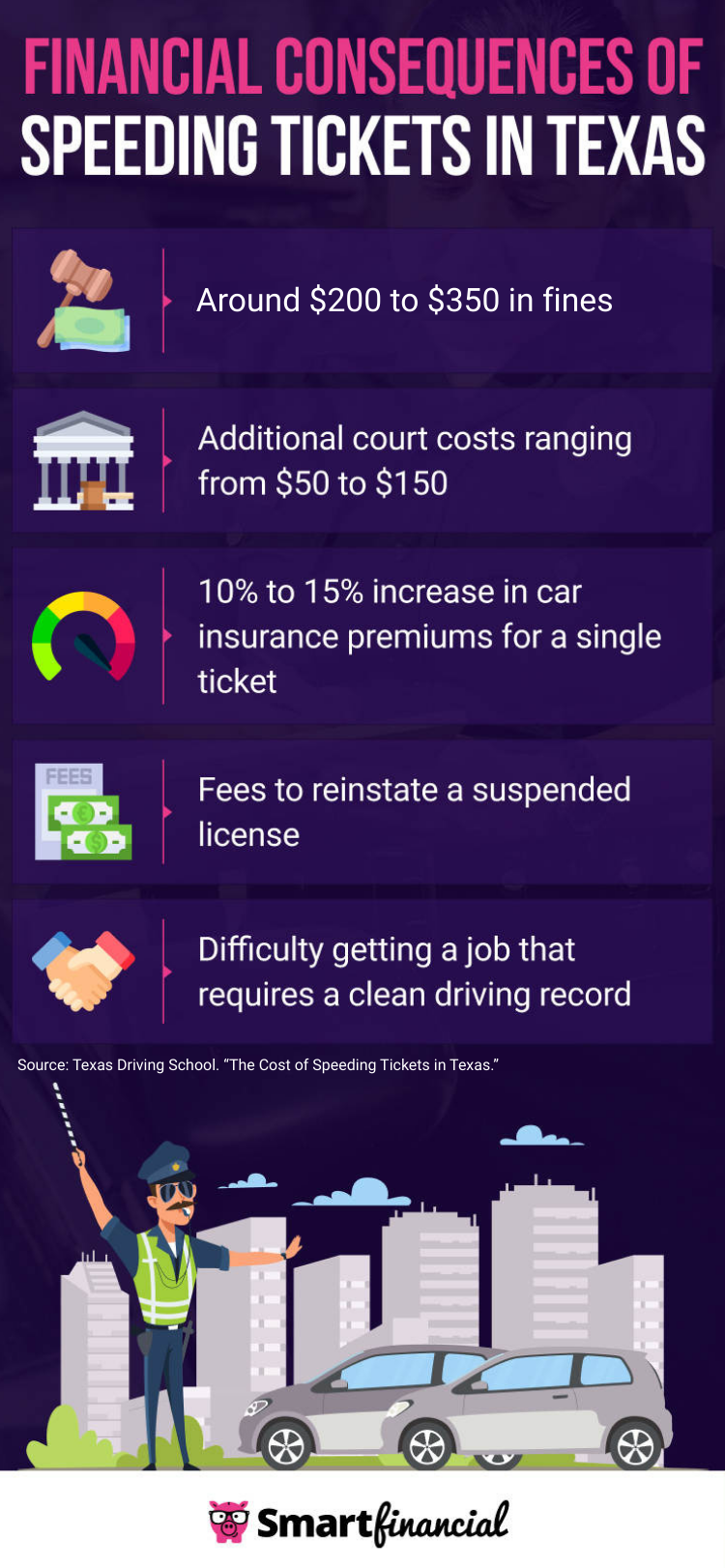
A single speeding ticket can cause your annual premium to jump by 10% to 20%, or even more, for three to five years. For instance, if you currently pay $1,200 annually for insurance, a ticket could add an extra $120 to $240 per year. Over a three-year period, this translates to an additional $360 to $720 in insurance costs. More severe infractions, such as reckless driving or DWI, can lead to much more substantial increases, potentially doubling or tripling your premiums, or even resulting in policy cancellation. The cumulative effect of these increases can easily eclipse the initial fine and court costs, making the insurance premium hike the single most expensive aspect of a traffic ticket. This long-term financial drain can significantly impact a household’s lifestyle budget, reducing discretionary spending on things like travel, dining, or other activities they might enjoy.
Common Violations and Their Estimated Costs
Understanding the typical costs associated with various traffic violations can help drivers in Texas better gauge their potential financial exposure and encourage safer driving habits. While exact figures can vary by jurisdiction, these estimates provide a general idea.
Speeding Tickets: The Most Frequent Offense
Speeding is arguably the most common traffic violation, and its cost in Texas is directly proportional to how far over the limit you were driving.
- 1-10 mph over the limit: Typically ranges from $150 to $250, including court costs.
- 11-15 mph over the limit: Often falls between $200 and $300.
- 16-20 mph over the limit: Expect costs in the $250 to $350 range.
- 25 mph or more over the limit: These violations can quickly escalate, potentially reaching $350 to $500 or more, especially if deemed reckless driving.
Aggravating factors significantly increase these fines:
- School Zones: Speeding in a school zone can double the fine, often starting around $300 to $400.
- Construction Zones (with workers present): Fines are substantially higher, often $400 to $600 or more, due to the increased danger to road crews.
These heightened penalties reflect the state’s emphasis on safety in vulnerable areas.

Seatbelt and Child Safety Seat Violations
Texas has strict seatbelt laws for all occupants.
- Adult Seatbelt Violation (driver or passenger): Typically costs around $200 to $250, including court fees. There are no points assessed to your driving record for this, but it is a conviction.
- Child Safety Seat Violation: These are taken very seriously and carry higher fines, often ranging from $250 to $350. This applies to children under a certain age and height not properly restrained. The goal is to ensure the safety of the youngest passengers, particularly crucial for family trips.
Parking and Other Minor Infractions
While generally less costly than moving violations, parking tickets and other minor infractions can still add up.
- Parking Violations (e.g., expired meter, illegal parking): Fines usually range from $30 to $75, but if left unpaid, they can lead to late fees, vehicle impoundment, or even warrants, significantly increasing the total cost.
- Expired Registration/Inspection Sticker: If not rectified promptly, fines can be around $150 to $250, plus the cost of renewal/inspection.
- Running a Stop Sign or Red Light (non-camera): These moving violations typically range from $200 to $350.
Serious Offenses: DWI/DUI and Reckless Driving
These are not merely expensive; they carry severe legal and personal consequences.
- Driving While Intoxicated (DWI): A first-time DWI can result in fines up to $2,000, court costs, mandatory state surcharges of $3,000 over three years, legal fees (often thousands of dollars), license suspension, mandatory classes, and potential jail time. The total financial impact can easily exceed $10,000 to $15,000 when all factors are considered.
- Reckless Driving: This can lead to fines up to $200 for a first offense, potential jail time, and significant increases in insurance premiums. If combined with other infractions, the penalties can be much higher.
For travelers, encountering any of these serious offenses can immediately derail a trip, leading to legal complications, impounded vehicles, and a very unpleasant and costly experience that could severely impact their personal freedom and finances for years to come.
Navigating the Texas Justice System: Options and Consequences
Receiving a traffic ticket can be daunting, but understanding your options and the potential consequences is crucial. In Texas, you typically have a choice: pay the ticket or contest it. Each path has its own implications, particularly for your driving record and financial well-being.
Paying the Ticket vs. Contesting It
For many minor offenses, paying the ticket might seem like the simplest solution. It avoids court appearances and closes the matter quickly. However, paying the ticket is an admission of guilt, and the conviction will be reported to the Department of Public Safety (DPS), potentially leading to points on your driving record and subsequent insurance premium increases. If you’re confident you committed the offense and the fine is manageable, paying might be acceptable, but be aware of the long-term insurance implications.
Contesting a ticket, on the other hand, means pleading “not guilty” and appearing in court to present your case. This option is advisable if you believe you were wrongly accused, if there are extenuating circumstances, or if you wish to negotiate for a lesser charge or alternative disposition. While it requires time and effort, contesting a ticket can potentially lead to a dismissal, a reduced fine, or an opportunity to keep the offense off your driving record, saving you money in the long run on insurance premiums. It’s often worth exploring, especially for out-of-state drivers who might face additional complexities with their home state’s DMV.
Deferred Disposition and Defensive Driving: Keeping Your Record Clean
Texas offers two primary avenues to keep a traffic conviction off your driving record, provided you meet certain eligibility criteria:
-
Deferred Disposition: This option allows you to have your case dismissed after successfully completing a probationary period, typically 90 to 180 days. During this time, you must not receive any new citations. There is usually an administrative fee for deferred disposition, which can be similar to or slightly higher than the original fine, but the benefit is avoiding a conviction on your record. This is a particularly attractive option for individuals who want to avoid insurance hikes and maintain a clean driving history.
-
Defensive Driving Course: For eligible moving violations, you can request to take a state-approved defensive driving course. Upon successful completion of the course and payment of court costs and an administrative fee, the ticket will be dismissed and will not appear on your driving record. To be eligible, you typically cannot have taken a defensive driving course within the past 12 months, the offense cannot be too severe (e.g., speeding 25 mph over the limit or more), and you must possess a valid Texas driver’s license or permit (though some courts may allow out-of-state drivers). The cost of the course itself is usually around $25 to $50, in addition to court fees. This option is highly recommended as it not only prevents points and insurance increases but also helps refresh your knowledge of traffic laws, making you a safer driver.
Both deferred disposition and defensive driving are excellent strategies for mitigating the long-term financial impact of a traffic ticket, especially for those concerned about their overall lifestyle budget and travel plans.
Consequences of Ignoring a Ticket
Ignoring a traffic ticket in Texas is perhaps the worst possible course of action and can lead to severe and escalating penalties.
- Increased Fines and Fees: The original fine will often be subject to late fees and additional administrative charges, significantly inflating the amount due.
- Warrants: If you fail to appear in court or pay your ticket by the due date, the court can issue a warrant for your arrest. This means you could be pulled over and taken to jail at any time.
- Driver’s License Suspension: The Department of Public Safety (DPS) can suspend your driver’s license for failure to appear (FTA) or failure to pay (FTP). Driving with a suspended license is a criminal offense, carrying even more serious penalties, including additional fines, jail time, and an even longer suspension period.
- Inability to Renew Registration: You will not be able to renew your vehicle’s registration if you have outstanding warrants or unpaid traffic tickets.
- Criminal Record: For serious infractions or repeated failures to respond, what started as a simple traffic ticket can escalate into a criminal offense, with implications for employment, housing, and other aspects of your lifestyle.
For travelers, ignoring a ticket can lead to unimaginable stress, legal hassles, and the complete disruption of their journey. It’s always best to address a traffic ticket promptly and explore all available options to resolve it legally and responsibly.
Beyond the Fine: The Broader Impact on Travel and Lifestyle
A traffic ticket, especially in a state as vast as Texas, is more than just a minor inconvenience; it carries a ripple effect that can significantly impact your travel plans and overall lifestyle. From unexpected financial strains to emotional stress, understanding these broader implications can highlight the importance of diligent driving.
Budgeting for the Unexpected: Derailing Travel Plans
Whether you’re planning a thrilling adventure to explore the local culture in San Antonio, a culinary tour enjoying food in Austin, or a relaxing stay at a luxurious resort or boutique hotel in Dallas, your travel budget is likely a carefully constructed plan. An unexpected traffic ticket can quickly throw this budget into disarray. The immediate fines and court costs, which can range from a couple of hundred to over a thousand dollars for more serious offenses, directly cut into funds allocated for accommodation, dining, attractions, or souvenirs.
For those on a tight budget travel plan, this can mean making difficult choices: cutting short their trip, opting for cheaper hotels, foregoing planned excursions, or reducing spending on experiences that define the journey. Even for luxury travel enthusiasts, unexpected expenses can be frustrating and diminish the enjoyment of an otherwise lavish experience. The long-term costs, such as increased insurance premiums, further compound this financial strain, potentially affecting future travel opportunities or daily discretionary spending. A single error on the road can thus have a domino effect, undermining the very purpose of your Texas tourism adventure.
Stress and Time Investment: Beyond Monetary Costs
Beyond the monetary costs, dealing with a traffic ticket introduces a significant amount of stress and demands a considerable investment of time. For a resident, this might mean taking time off work for court appearances, spending hours researching options like defensive driving courses, or consulting with legal professionals. For a visitor, the logistical challenges are amplified. Having to appear in a Texas court from another state or country can be incredibly complicated, expensive, and time-consuming, transforming what should have been a memorable vacation into a legal entanglement.
The mental burden of an outstanding ticket, the uncertainty of its outcome, and the effort required to resolve it can detract significantly from the enjoyment of your trip or even everyday life. Instead of focusing on exploring landmarks like the Alamo or enjoying the vibrant music scene in Austin, your thoughts might be consumed by court dates, legal fees, or the potential for license suspension. This emotional and temporal cost is often overlooked but can be just as impactful as the financial one, disrupting your sense of peace and making your lifestyle more complicated than it needs to be.
Planning Your Texas Trip Wisely: Preventing Future Issues
The best way to mitigate the broader impact of traffic tickets is, of course, to avoid them altogether. For anyone planning to drive in Texas, whether it’s for a quick weekend getaway or an extended business stay, proactive measures are key:
- Understand Local Laws: Familiarize yourself with Texas specific traffic laws, including speed limits, seatbelt requirements, and mobile phone usage rules. Speed limits can vary significantly between rural highways, urban freeways, and residential areas, and knowing these can prevent accidental infractions.
- Drive Cautiously: Adhere to posted speed limits, maintain a safe following distance, and be mindful of school and construction zones where fines are often doubled. Defensive driving isn’t just about avoiding tickets; it’s about ensuring your safety and the safety of others.
- Be Prepared: Carry your driver’s license, vehicle registration, and proof of insurance at all times. If pulled over, remain calm, be polite, and follow the officer’s instructions.
- Don’t Ignore It: If you do receive a ticket, address it immediately. Research your options, consult with the court, or seek legal advice if necessary. Ignoring it will only compound the problems.
By exercising caution and awareness, travelers can ensure their Texas adventure remains focused on creating wonderful memories, rather than navigating the complexities and costs of the state’s traffic justice system. Whether your journey takes you to iconic destinations or off-the-beaten-path attractions, a smooth, ticket-free ride is essential for an enjoyable experience.
Conclusion
The question “How Much Are Traffic Tickets In Texas?” reveals a much more intricate answer than a simple dollar figure. It encompasses not only the initial fine but also a cascade of court costs, state surcharges, and the enduring burden of increased insurance premiums. What might appear as a minor infraction can quickly accumulate into hundreds, or even thousands, of dollars in unexpected expenses, severely impacting your financial planning and overall lifestyle.
For residents, these costs can strain household budgets, affecting everything from daily expenses to long-term savings. For travelers embarking on a Texas adventure, whether it’s a family trip exploring local culture, a business stay in a bustling city, or a luxury travel escape to a serene resort, a traffic ticket can transform a carefully crafted itinerary into a stressful, budget-draining ordeal. Funds allocated for exploring attractions, indulging in food, enjoying comfortable accommodation in charming hotels, or experiencing unique activities can instead be diverted to fines and legal fees.
The key takeaway is clear: diligence and awareness on the road are paramount. By understanding Texas traffic laws, adhering to speed limits, and being prepared for potential contingencies, you can significantly reduce your risk of receiving a ticket. Should you find yourself cited, addressing the issue promptly and exploring options like deferred disposition or defensive driving can help mitigate the long-term financial repercussions. Ultimately, a proactive and responsible approach to driving ensures that your journey through the magnificent state of Texas remains focused on discovery and enjoyment, rather than the unforeseen costs of a traffic violation. Drive safely, plan wisely, and savor every moment of your Texas tourism experience.
LifeOutOfTheBox is a participant in the Amazon Services LLC Associates Program, an affiliate advertising program designed to provide a means for sites to earn advertising fees by advertising and linking to Amazon.com. Amazon, the Amazon logo, AmazonSupply, and the AmazonSupply logo are trademarks of Amazon.com, Inc. or its affiliates. As an Amazon Associate we earn affiliate commissions from qualifying purchases.