
The name “Five Points” evokes a vivid, often gritty, historical image in the tapestry of New York City. It’s a place intrinsically linked to the city’s narrative, a historical nexus of immigration, poverty, and burgeoning cultural identity. However, for the contemporary traveler seeking a specific geographical point on a map, the answer to “Where is Five Points, New York?” is not as straightforward as a single street corner.
Five Points was not a formally designated neighborhood with fixed boundaries in the way that, say, Greenwich Village or Harlem are today. Instead, it was a notorious slum and densely populated area that emerged in the mid-19th century, situated around the intersection of five streets: Anthony Street (now Worth Street), Cross Street (now Mosco Street), Orange Street (now Baxter Street), Mulberry Street, and Little Water Street. This confluence of thoroughfares, located in what is now primarily Lower Manhattan, became the epicenter of one of the city’s most infamous tenement districts.
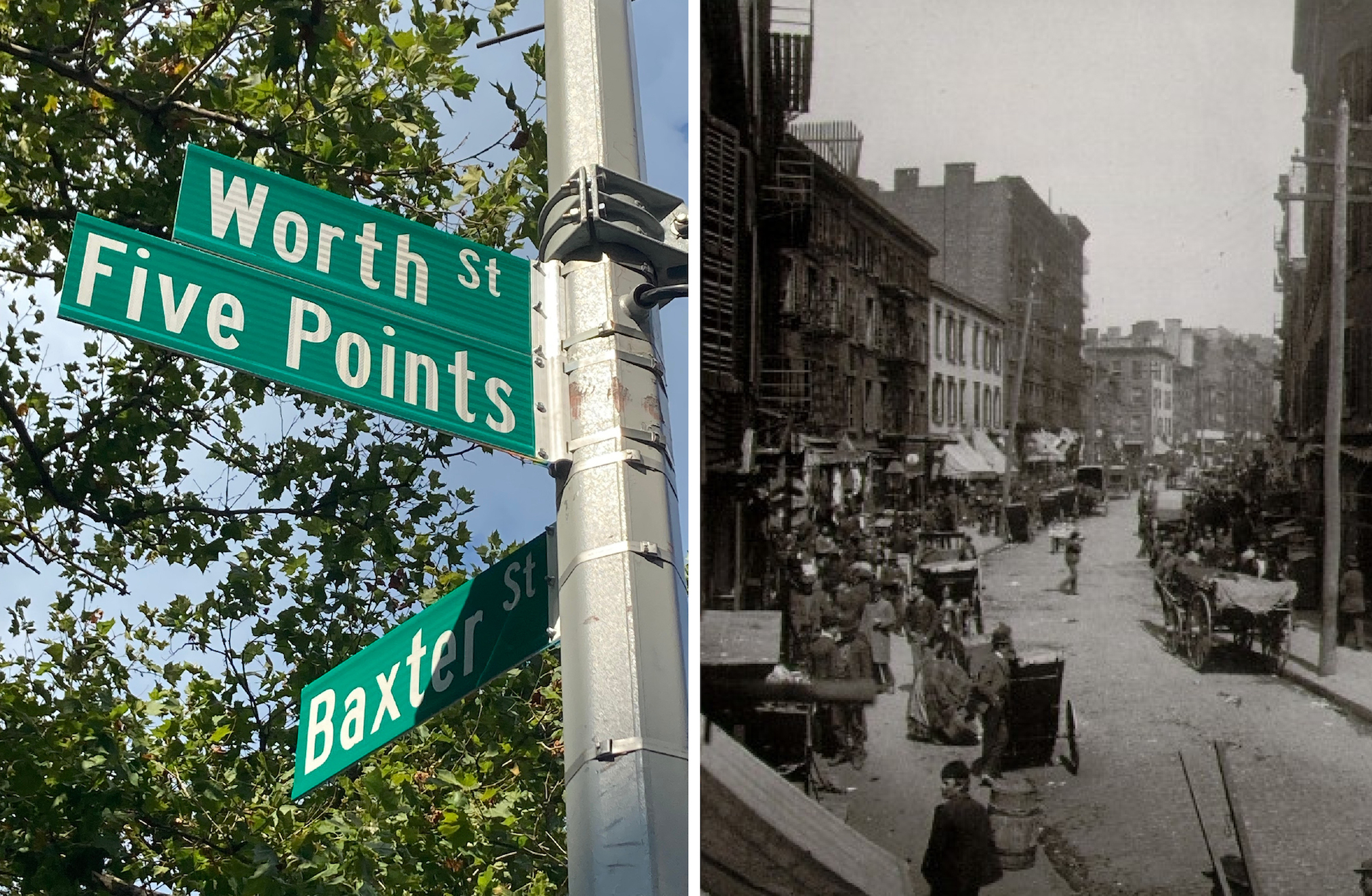
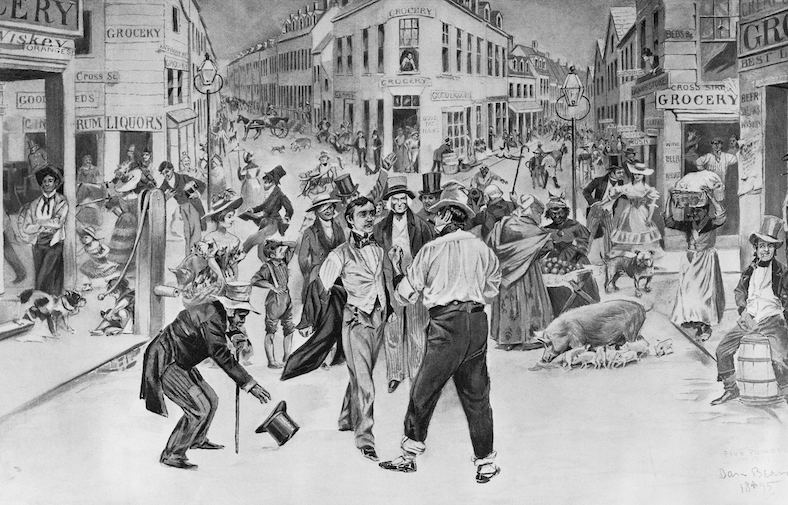
Understanding the location of Five Points requires a journey back in time, to an era when New York City was rapidly expanding and absorbing waves of immigrants, particularly from Ireland and Germany. The area was characterized by overcrowded, unsanitary tenements, rampant crime, and widespread poverty. Yet, it was also a crucible of American cultural development, where diverse communities forged new identities and traditions that would profoundly shape the nation.
The Geographical Footprint of a Historical Phenomenon
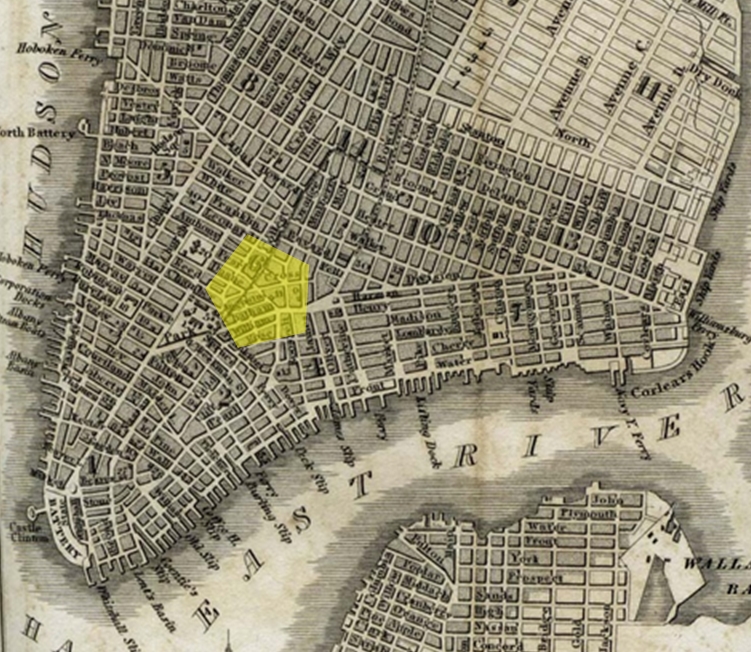
While there is no single, current “Five Points” district to navigate, its historical heartland lies within the modern-day boundaries of Chinatown, with significant overlap into areas that are now part of Little Italy and the civic center of the city. Specifically, the infamous intersection itself, the physical nexus from which the area derived its name, would have been located near the present-day intersection of Baxter Street and Park Row.
Tracing the Street Layout
To visualize its former geography, one must imagine the street plan of the 19th century.
- Anthony Street: This street is now known as Worth Street, running east-west.
- Cross Street: This street is now Mosco Street, running parallel to Canal Street.
- Orange Street: This street is now Baxter Street, a major north-south artery that still exists.
- Mulberry Street: This well-known street still runs through the area, forming another leg of the historical intersection.
- Little Water Street: This street no longer exists in its original form, having been absorbed or reconfigured by later urban development. It was situated near the intersection of modern-day Centre Street and Worth Street.
The area was situated to the east of City Hall Park and west of the Bowery. The infamous Five Points Mission and numerous other social reform institutions were established in this district, attempting to address the dire living conditions.
Evolution and Erasure: From Slum to Modernity
The history of Five Points is one of transformation. The extreme poverty and squalor that defined it in the mid-19th century began to recede, though the area remained a hub for immigrant communities for decades. Subsequent urban planning and redevelopment projects significantly altered the landscape, effectively erasing much of the physical evidence of the original Five Points.
The Impact of Redevelopment
Major infrastructural projects, including the construction of new streets, the building of courthouses, and the expansion of public works, reshaped the topography. The most significant redevelopment directly impacting the heart of Five Points was the creation of the Civic Center. This involved clearing large swathes of the tenement buildings and establishing a more ordered, governmental landscape.
The area’s transformation is perhaps best exemplified by the fate of Paradise Square, the central open space at the Five Points intersection, which was eventually covered over and became the site of buildings. The physical manifestation of the slum, with its tightly packed, dilapidated structures, was largely demolished by the early 20th century.
Echoes of Five Points: Cultural Significance and Modern Tourism
While the physical remnants of the original Five Points slum are scarce, its cultural legacy endures, making it a significant point of historical interest for visitors to New York City. Understanding its location is less about finding a precise address and more about exploring the neighborhoods that now occupy its former space and the historical narratives associated with them.
Exploring the Legacy
Today, visitors can explore the vicinity of the historical Five Points by visiting the surrounding neighborhoods:
- Chinatown: Much of the former Five Points district is now enveloped by the vibrant and bustling streets of Chinatown. Walking through its markets, sampling its cuisine, and observing its daily life offers a glimpse into a different but equally rich immigrant story that unfolded on the same land.
- Little Italy: Adjacent to Chinatown, Little Italy also occupies some of the historical territory of Five Points. While the original Italian immigrant population has largely dispersed, the area retains its cultural flavor through restaurants and festivals.
- Civic Center: The governmental buildings in the Civic Center, such as the Manhattan Municipal Building and the Supreme Court of New York County, stand on land that was once densely populated tenement housing. This stark contrast between past and present underscores the profound urban transformation.
Historical Sites and Markers
While there isn’t a single, prominent landmark marking “Five Points” itself, visitors interested in the area’s history can seek out:
- The Tenement Museum: Located on the Lower East Side, a neighboring district that shared many of the same immigrant struggles, The Tenement Museum offers an immersive experience into the lives of immigrant families who resided in similar conditions to those in Five Points.
- Historical Tours: Several guided walking tours of Lower Manhattan focus on the history of immigration, crime, and social reform, often dedicating significant portions to the story of Five Points and its geographical context. These tours provide invaluable context and bring the past to life through narrative.
- St. Patrick’s Cathedral (Old Cathedral): The original site of the Five Points Mission was near the location of the old St. Patrick’s Cathedral, which predates the current famous cathedral on Fifth Avenue. While the old cathedral is gone, its historical significance to the area is notable. The site is now part of Columbus Park, which itself was created on former Five Points land.
In conclusion, “Five Points, New York” is not a destination one can simply pinpoint on a modern map. It exists primarily as a historical landmark, a potent symbol of a transformative era in New York City’s development. Its geographical location is now dispersed across vibrant contemporary neighborhoods, a testament to the city’s relentless evolution. To understand where Five Points was, one must explore the legacy embedded within the streets of Chinatown and the Civic Center, and engage with the stories of the millions who passed through its tumultuous history.
LifeOutOfTheBox is a participant in the Amazon Services LLC Associates Program, an affiliate advertising program designed to provide a means for sites to earn advertising fees by advertising and linking to Amazon.com. Amazon, the Amazon logo, AmazonSupply, and the AmazonSupply logo are trademarks of Amazon.com, Inc. or its affiliates. As an Amazon Associate we earn affiliate commissions from qualifying purchases.