
Oklahoma, often affectionately called the “Sooner State,” occupies a distinctive position within the geographic and cultural landscape of the United States. Situated in the South Central region, it is a state shaped by its unique history, diverse topography, and a vibrant spirit that draws travelers seeking authentic American experiences. Understanding Oklahoma’s location is the first step to unlocking its many attractions, from its sprawling plains to its rich cultural heritage.
Geographic Positioning and Neighboring States
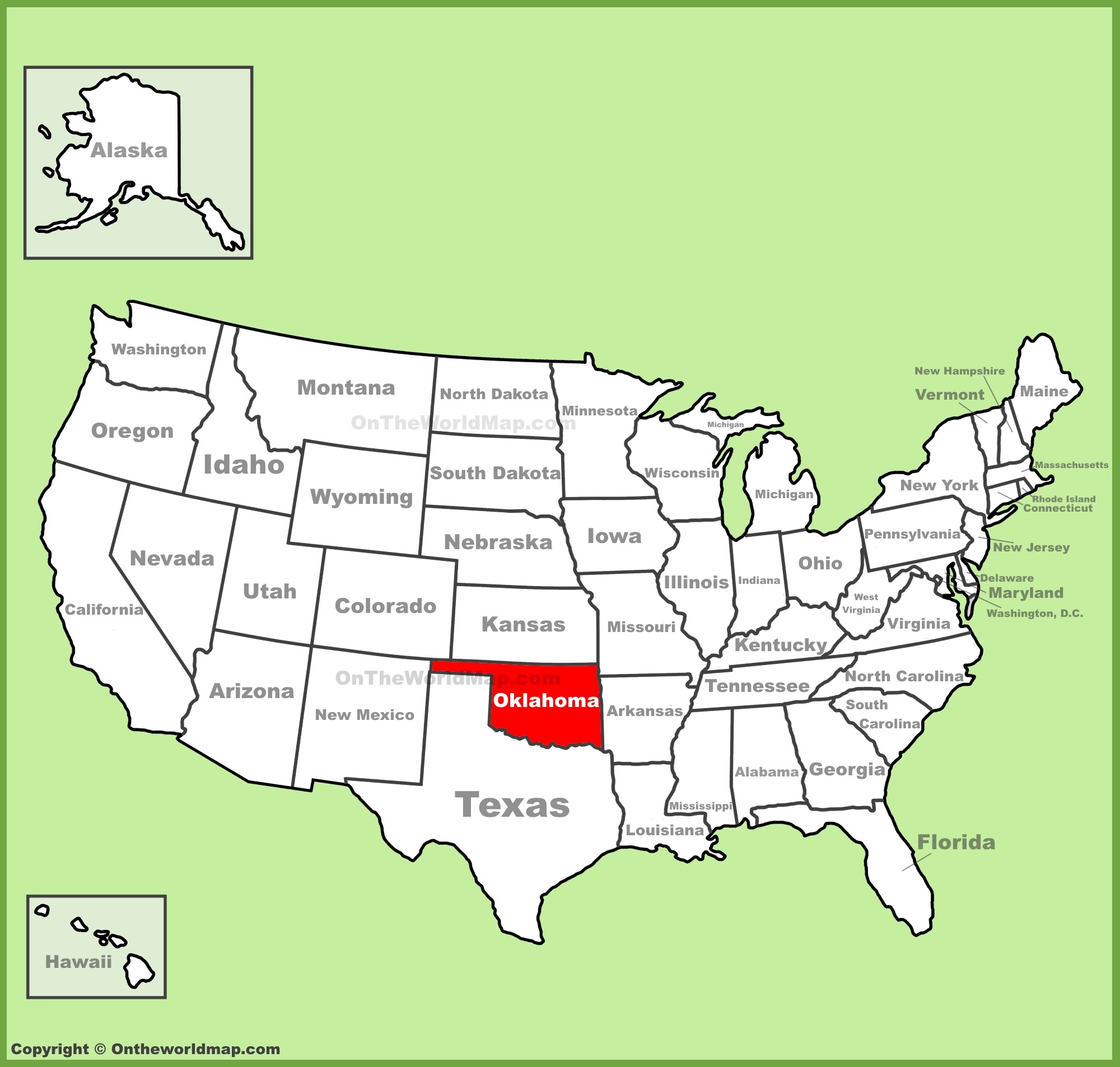
To pinpoint Oklahoma on the map, one must consider its central placement within the contiguous United States. It is bordered by six other states, each contributing to the region’s distinct character and influencing Oklahoma’s own development.

Northern Boundaries: Kansas and Colorado
To the north, Oklahoma shares a border with Kansas. This boundary line, largely defined by the 37th parallel north latitude, places Oklahoma squarely in the heart of the country. The influence of the Great Plains is evident in both states, with vast expanses of prairie giving way to rolling hills as one travels southward into Oklahoma. To the northwest, a small panhandle section of Oklahoma touches the southeastern corner of Colorado, further emphasizing its central positioning and proximity to the Rocky Mountain region’s eastern foothills.
Eastern Frontiers: Missouri and Arkansas
The eastern edge of Oklahoma is defined by its borders with Missouri to the northeast and Arkansas to the east. These borders are marked by more varied terrain, including the Ozark Mountains in the northeast, which extend into Oklahoma, and the Ouachita Mountains further south. This mountainous region offers a stark contrast to the western plains and is a significant draw for nature enthusiasts. The Arkansas River also plays a crucial role in defining parts of this eastern border, a vital waterway that has historically supported transportation and agriculture.
Southern Lines: Texas and New Mexico
To the south, Oklahoma’s longest border is with the vast state of Texas. This extensive boundary is a significant geographical and cultural marker, with the Red River forming much of the natural separation. The southern half of Oklahoma shares characteristics with its Texan neighbor, including an abundance of oil and gas resources and a deep connection to cowboy culture. To the southwest, a sliver of Oklahoma’s panhandle meets the eastern edge of New Mexico, further cementing its role as a bridge between the plains and the more arid landscapes of the American Southwest.
The Panhandle: A Distinctive Extension
One of Oklahoma’s most geographically distinctive features is its long, narrow panhandle. This western extension stretches for 166 miles, is approximately 34 miles wide, and lies between Colorado and Texas. It forms the westernmost part of the state, giving Oklahoma a unique L-shape on the map. This panhandle is a quintessential part of the High Plains, characterized by flat, arid terrain and a rich history tied to cattle ranching and the Dust Bowl era.
Topography and Natural Landscapes
Oklahoma’s location dictates its diverse topography, which ranges from forested hills to expansive plains and rugged mountains. This variety provides a wealth of natural beauty and outdoor recreational opportunities.
The Ozark Plateau and Ouachita Mountains
In the northeastern and southeastern parts of the state, respectively, lie the Ozark Plateau and the Ouachita Mountains. These highlands are characterized by rolling hills, dense forests, crystal-clear lakes, and abundant wildlife. The Ozarks, with their rugged beauty, offer hiking trails, fishing spots, and a tranquil escape. The Ouachitas, a more ancient and rugged mountain range, boast impressive peaks and are a haven for those seeking solitude and challenging outdoor adventures. These regions are a significant departure from the flatter lands to the west and south, showcasing the state’s diverse geological formations.
The Great Plains and Red Bed Plains
The vast majority of Oklahoma’s landmass is dominated by the Great Plains, a seemingly endless expanse of prairie that rolls westward. This region is the heartland of ranching and agriculture, with wheat fields stretching to the horizon and iconic American bison often seen roaming in conservation areas. Within the broader Great Plains context, Oklahoma also features the Red Bed Plains, named for the distinctive red soil that characterizes much of the landscape, particularly in the central and southern parts of the state. This region is also historically significant for its oil and gas production, a defining industry for Oklahoma.
The Gypsum Hills and Wichita Mountains
Further west, the Gypsum Hills offer a more unusual landscape of buttes, mesas, and colorful sedimentary rock formations, a testament to ancient geological processes. To the southwest, the Wichita Mountains rise dramatically from the surrounding plains, presenting a rugged and picturesque terrain. This ancient mountain range, with its granite peaks and sprawling wilderness, is a designated National Wildlife Refuge, protecting a diverse ecosystem and offering opportunities for hiking, climbing, and wildlife viewing. It is a place where one can truly feel the raw, untamed beauty of Oklahoma.
Cultural Significance and Connection to Place
Oklahoma’s location has profoundly shaped its cultural identity, fostering a unique blend of Native American heritage, Southern charm, and Western grit. Understanding where Oklahoma is situated helps in appreciating the historical events and cultural movements that have defined the state.
The Crossroads of American Culture
Being situated in the South Central United States, Oklahoma acts as a cultural crossroads. It is home to numerous federally recognized Native American tribes, whose ancestral lands and vibrant cultures are an integral part of the state’s fabric. The history of westward expansion, the Dust Bowl migration, and the settlement of the West are all deeply intertwined with Oklahoma’s geography. This confluence of histories has created a distinctive Oklahoma culture, evident in its music, art, cuisine, and the resilient spirit of its people.
Hub for Transportation and Commerce
Oklahoma’s central location has historically made it a vital hub for transportation and commerce. Major interstate highways crisscross the state, connecting the East Coast to the West Coast and the North to the South. The Oklahoma City metropolitan area and Tulsa serve as significant economic engines, drawing industries from manufacturing and aerospace to energy and technology. The presence of major waterways, like the Arkansas River, has also historically facilitated trade and development.

Gateway to the Southwest and the Great Plains
For travelers, Oklahoma’s position serves as a gateway to diverse regions. To the west lies the allure of New Mexico and the vast landscapes of the American Southwest. To the east, the rolling hills and forests offer a transition towards the more verdant landscapes of the Ozarks. The north beckons with the wide-open spaces of the Great Plains. This strategic placement allows visitors to experience a remarkable range of American geography and culture within a single journey, making Oklahoma a compelling destination for exploration and discovery.
In essence, Oklahoma’s placement on the United States map is far more than a geographical coordinate; it is the very foundation of its identity. From the towering mountains of the Ouachitas to the boundless horizons of the Great Plains, the state’s location has sculpted its landscapes, forged its history, and imbued its people with a spirit of resilience and hospitality. To truly appreciate Oklahoma, one must first understand its place, a central point where the diverse narratives of America converge and a unique story unfolds.
LifeOutOfTheBox is a participant in the Amazon Services LLC Associates Program, an affiliate advertising program designed to provide a means for sites to earn advertising fees by advertising and linking to Amazon.com. Amazon, the Amazon logo, AmazonSupply, and the AmazonSupply logo are trademarks of Amazon.com, Inc. or its affiliates. As an Amazon Associate we earn affiliate commissions from qualifying purchases.