
Understanding the employment landscape in any region is crucial for businesses, potential residents, and policymakers alike. For those considering a move to or investment in Oregon, or for current residents gauging their economic well-being, the unemployment rate is a key indicator. This article delves into the current unemployment figures for Oregon, examining historical trends, influencing factors, and what these numbers signify for the state’s economy and its diverse communities, from the vibrant city of Portland to the coastal towns and agricultural heartlands.
Understanding Unemployment Rates in Oregon
The unemployment rate is a measure of the percentage of the labor force that is actively seeking employment but unable to find a job. It’s a critical metric that reflects the health of an economy. A lower unemployment rate generally signifies a robust economy with ample job opportunities, while a higher rate can indicate economic slowdowns or structural challenges.

Current Unemployment Data
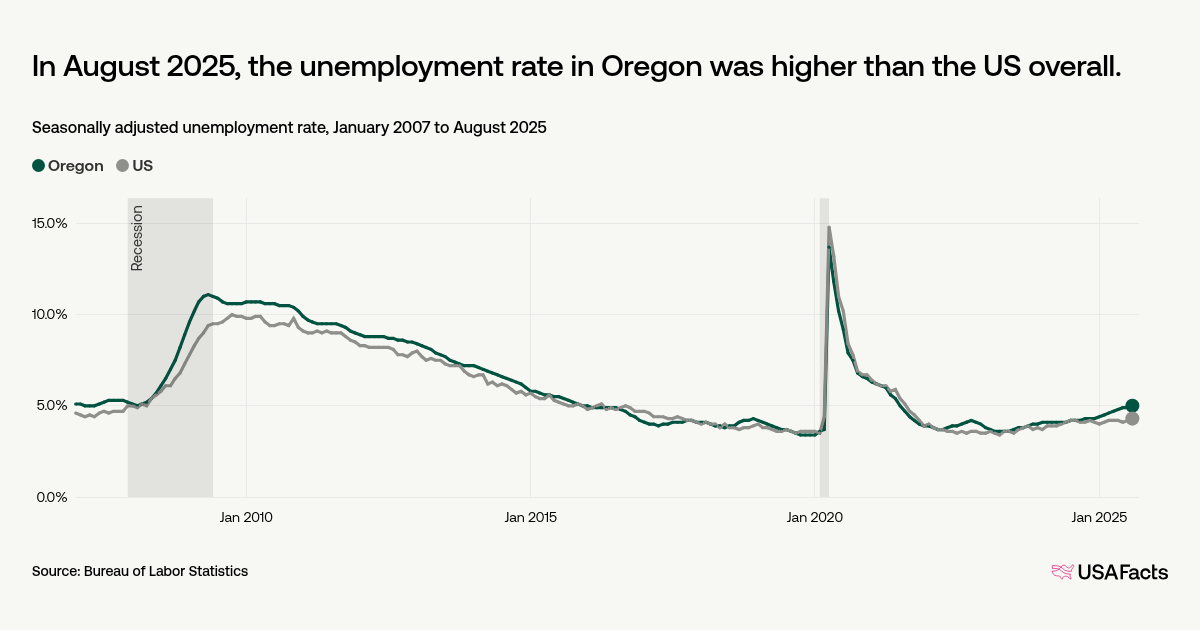
As of the most recent reporting periods, Oregon’s unemployment rate has shown fluctuations, mirroring national economic trends while also exhibiting unique state-specific dynamics. Government agencies, such as the Oregon Employment Department, regularly publish these figures, providing a snapshot of the labor market. These statistics are typically released monthly and are based on surveys of households and employers.
It’s important to note that unemployment rates are not static. They can change month-to-month due to seasonal factors, economic shocks, and policy changes. For instance, the post-pandemic recovery period saw significant shifts in employment across various sectors, and Oregon was no exception. Understanding these fluctuations requires looking beyond a single data point to observe broader patterns.
Historical Trends and Context
To fully grasp the current unemployment situation in Oregon, it’s beneficial to examine its historical trajectory. The state has experienced periods of both low and high unemployment, influenced by factors such as technological advancements, shifts in major industries, and broader economic recessions.
Historically, Oregon’s economy has been strong in sectors like technology (often referred to as the “Silicon Forest”), agriculture, timber, and manufacturing. Changes within these dominant industries have had a direct impact on employment levels. For example, declines in the timber industry in past decades led to significant job losses in certain regions, prompting economic diversification efforts. Conversely, the growth of the tech sector, particularly around Portland, has been a major driver of job creation.
The Great Recession of 2008-2009, for instance, hit Oregon particularly hard, with unemployment rates climbing significantly. The subsequent recovery was a gradual process, with different regions and industries bouncing back at varying paces. More recently, the COVID-19 pandemic caused an unprecedented surge in unemployment as businesses closed or scaled back operations. The rebound since then has been a testament to the resilience of the state’s workforce and economy, though challenges remain.
Factors Influencing Oregon’s Unemployment Rate
Several interconnected factors influence the unemployment rate in Oregon. These range from broad economic forces to specific state-level policies and demographic shifts.
Economic Sectors and Job Growth
The composition of Oregon’s economy plays a pivotal role. Growth in high-demand sectors such as technology, healthcare, and professional services typically leads to lower unemployment rates, as more job opportunities become available. Conversely, sectors experiencing contraction or automation can contribute to higher unemployment.
- Technology Sector: Oregon, particularly the Portland metropolitan area, has a thriving technology industry, often called the “Silicon Forest.” Companies like Intel have a significant presence, contributing thousands of jobs. Growth in software development, semiconductor manufacturing, and related fields directly impacts the state’s overall employment figures.
- Healthcare and Social Assistance: This sector is a consistent source of employment and tends to be more resilient during economic downturns. The aging population and increasing demand for medical services ensure steady job creation.
- Agriculture and Food Processing: Oregon’s fertile lands support a robust agricultural sector, from vineyards in the Willamette Valley to berry farms and timber. Related industries like food processing also provide substantial employment.
- Tourism and Hospitality: Coastal towns, the Columbia River Gorge, and cities like Portland attract tourists, creating jobs in hotels, restaurants, and recreational activities. This sector can be sensitive to economic conditions and seasonal fluctuations.
Demographics and Workforce Trends
The demographic makeup of Oregon and its workforce trends also influence unemployment. Factors such as the age distribution of the population, migration patterns, and the skill sets of the available workforce are all significant.
- Labor Force Participation Rate: This refers to the percentage of the working-age population that is either employed or actively looking for work. A declining participation rate can mask underlying employment issues, as it means fewer people are counted in the labor force.
- Skills Gap: If the skills possessed by the workforce do not match the skills demanded by employers, this can lead to higher unemployment, even when job openings exist. Initiatives aimed at workforce training and education are crucial for addressing this.
- Migration: Oregon has experienced periods of population growth due to in-migration. While this can boost economic activity, it also adds pressure on the job market to absorb new workers.
Policy and Economic Conditions
State and federal policies, as well as broader economic conditions, have a profound impact on unemployment.
- Minimum Wage Laws: Changes in minimum wage can affect employment levels, particularly in low-wage sectors, though the extent of this impact is a subject of ongoing economic debate.
- Investment and Business Climate: Government incentives for businesses, regulatory environments, and the overall ease of doing business in Oregon can attract new companies and encourage expansion, leading to job creation.
- Interest Rates and Inflation: National and global economic conditions, such as interest rate policies set by the Federal Reserve and inflation rates, influence business investment and consumer spending, which in turn affect employment.
- Trade Policies: As a state with significant international trade, Oregon is sensitive to changes in trade agreements and tariffs that can impact export-oriented industries.
Regional Variations in Unemployment
Oregon is a diverse state, and its unemployment rates are not uniform across all its regions. Different areas have unique economic drivers and face distinct challenges.
Metropolitan Areas vs. Rural Communities
The most populous areas, such as the Portland metropolitan area, tend to have lower unemployment rates due to a more diversified economy and a higher concentration of industries that require a skilled workforce. However, even within metropolitan areas, specific neighborhoods or demographics might experience higher rates.
In contrast, rural Oregon, including areas in the eastern part of the state or in more remote agricultural and timber regions, can sometimes face higher unemployment. These areas may be more reliant on a few key industries, making them more vulnerable to economic downturns in those specific sectors. The decline of traditional industries like logging has had a lasting impact on employment in many rural communities.
Coastal and Southern Oregon
The Oregon Coast, with its reliance on tourism and fishing, experiences seasonal employment fluctuations. Unemployment rates can rise during the off-season. Southern Oregon, including cities like Medford and Grants Pass, has a mixed economy with strengths in agriculture, timber, and a growing healthcare sector. Unemployment figures here can reflect the health of these diverse industries.
Implications of Oregon’s Unemployment Rate
The unemployment rate in Oregon has significant implications for individuals, businesses, and the state government.
For Individuals and Families
A low unemployment rate generally means more job security, higher wages, and greater opportunities for career advancement. Conversely, high unemployment can lead to financial strain, reduced consumer spending, increased demand for social services, and potential outward migration of workers seeking opportunities elsewhere. The ability of individuals to find work that aligns with their skills and provides a living wage is a fundamental aspect of economic well-being.
For Businesses and Investment
A healthy job market with low unemployment is attractive to businesses. It signals a strong consumer base and a readily available pool of talent. However, extremely low unemployment can also lead to labor shortages, driving up wages and potentially increasing operating costs for businesses. This can, in turn, influence their decision-making regarding expansion or relocation. Businesses in Oregon must navigate this balance, investing in workforce development and competitive compensation to attract and retain employees.
For State Policy and Economic Development
The Oregon Employment Department and other state agencies use unemployment data to inform policy decisions. This includes developing workforce training programs, attracting new industries, supporting small businesses, and managing unemployment benefits. Understanding the nuances of unemployment – by industry, region, and demographic group – allows for more targeted and effective economic development strategies. For instance, if a particular region faces persistent high unemployment, the state might implement specific initiatives to revitalize that area’s economy.
Navigating Oregon’s Labor Market
For those seeking employment in Oregon, or for employers looking to hire, understanding the current labor market dynamics is essential.
Resources for Job Seekers
The Oregon Employment Department offers a wealth of resources for job seekers, including job listings, career counseling, training program information, and workshops on resume writing and interviewing skills. Websites like Indeed and LinkedIn are also valuable platforms for discovering opportunities across the state, from Eugene to Bend.
Attracting and Retaining Talent
For employers, creating a positive work environment, offering competitive compensation and benefits, and investing in employee development are key to attracting and retaining talent, especially in a competitive labor market. Understanding the specific needs and trends within different industries is also crucial for successful recruitment.

The Future Outlook
The future unemployment rate in Oregon will be shaped by national economic trends, global events, technological advancements, and the state’s own policy choices. Continued investment in education and workforce development, fostering innovation, and promoting sustainable economic growth will be critical to maintaining a healthy and dynamic labor market for all Oregonians. Monitoring the latest unemployment data remains a vital step for anyone engaged with the state’s economic landscape.
LifeOutOfTheBox is a participant in the Amazon Services LLC Associates Program, an affiliate advertising program designed to provide a means for sites to earn advertising fees by advertising and linking to Amazon.com. Amazon, the Amazon logo, AmazonSupply, and the AmazonSupply logo are trademarks of Amazon.com, Inc. or its affiliates. As an Amazon Associate we earn affiliate commissions from qualifying purchases.