
The question of when Puerto Rico officially became part of the United States is steeped in a history that intertwines with colonial expansion, war, and evolving political status. While often referred to as a U.S. territory, its journey to this designation is a complex narrative, crucial for understanding its present-day relationship with the mainland and its unique cultural identity.
The Spanish Colonial Era and the Road to Cession
For over four centuries, Puerto Rico was a colony of Spain. Its history began with the arrival of Christopher Columbus in 1493 during his second voyage, marking the beginning of European influence on the island, then inhabited by the indigenous Taíno people. Under Spanish rule, the island served as a strategic military outpost and a trading center in the Caribbean.
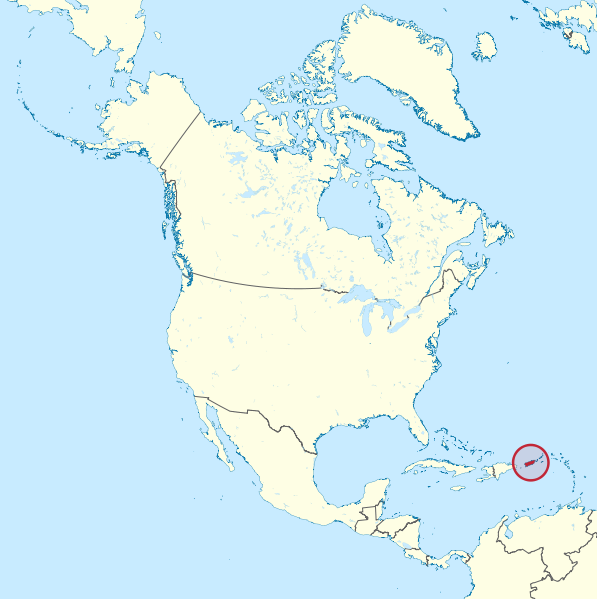
Despite periods of unrest and calls for greater autonomy, Puerto Rico remained a Spanish possession until the late 19th century. A significant movement towards self-governance gained momentum, culminating in the granting of the Autonomic Charter of 1897. This charter provided Puerto Rico with a level of autonomy, allowing for an elected parliament and a governor appointed by the Spanish Crown but acting on the advice of the local government. This was a crucial step, signaling a shift away from direct colonial rule and a move towards a more self-determined future.
However, this newfound autonomy was short-lived. The geopolitical landscape of the late 19th century was dominated by rising global powers and shifting alliances. The United States, under President William McKinley, was on the cusp of a significant expansionist phase, fueled by economic ambitions and a growing sense of manifest destiny.
The Spanish-American War and the Treaty of Paris
The pivotal moment that led to Puerto Rico becoming part of the United States was the Spanish-American War of 1898. The war, ostensibly triggered by the sinking of the USS Maine in Havana Harbor, quickly expanded beyond Cuba. U.S. forces invaded Puerto Rico in July 1898, facing minimal resistance from the Spanish colonial forces. The military campaign was swift, and the island was occupied by American troops.
The war concluded with the signing of the Treaty of Paris on December 10, 1898. This treaty formally ended the Spanish-American War and dictated the terms of Spain’s surrender. As part of the agreement, Spain ceded several of its colonial territories to the United States, including Cuba, Guam, and, most significantly for this discussion, Puerto Rico.
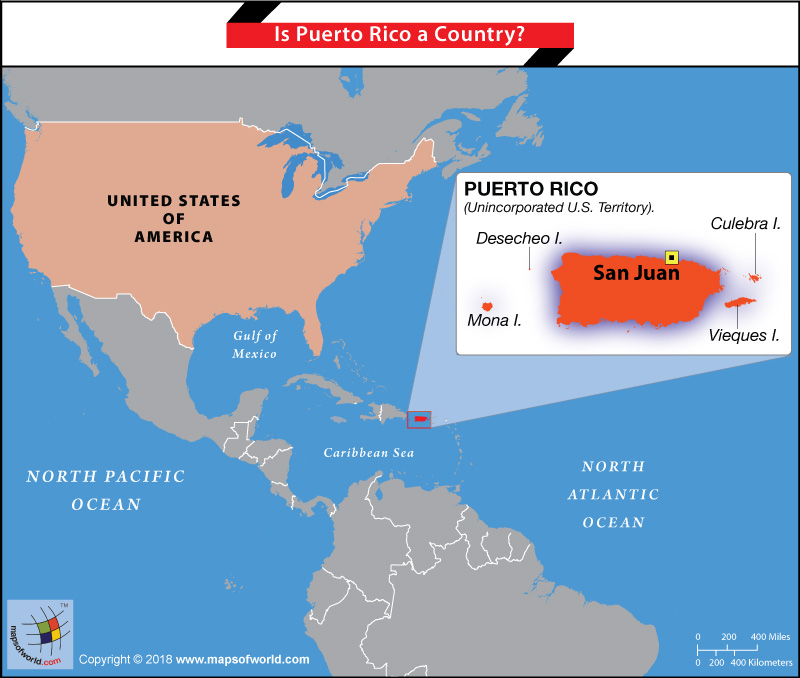
Under the terms of the treaty, Puerto Rico was no longer a Spanish colony but became a possession of the United States. This marked a fundamental shift in the island’s sovereignty and its people’s destiny, transforming it from a centuries-old Spanish territory into an unincorporated territory of a new global power. The transfer of sovereignty was not a decision made by the people of Puerto Rico but rather a consequence of a war fought and a treaty signed by two sovereign nations.
The Foraker Act and the Establishment of a U.S. Territory
Following the Treaty of Paris, the legal and political status of Puerto Rico was further defined by U.S. legislation. In 1900, the U.S. Congress passed the Organic Act of 1900, commonly known as the Foraker Act. This act officially established a civilian government in Puerto Rico and defined its status as an unincorporated territory of the United States.
The Foraker Act was a significant piece of legislation that laid the groundwork for the island’s governance for decades. It created a framework for an elected governor, a legislative assembly, and a court system, all operating under the ultimate authority of the U.S. Congress. However, it also stipulated that the U.S. Constitution did not fully apply to Puerto Rico, a key characteristic of unincorporated territories. This meant that while residents were subject to U.S. laws, they did not have the same rights and protections as citizens residing in the mainland United States.
Crucially, the Foraker Act did not grant Puerto Ricans U.S. citizenship. This would come later. The act essentially formalized Puerto Rico’s status as a possession, subject to the plenary powers of the U.S. Congress. This distinction between an “incorporated” territory (which would eventually become a state) and an “unincorporated” territory (a possession) has been a central point of contention and legal debate regarding Puerto Rico’s political future.
The Path to Citizenship and Commonwealth Status
The journey from a ceded territory to a more defined political relationship continued. In 1917, the U.S. Congress passed another Organic Act, known as the Jones-Shafroth Act. This legislation was a landmark development as it granted statutory U.S. citizenship to all inhabitants of Puerto Rico. This was a significant shift, aligning the legal status of Puerto Ricans more closely with that of citizens on the mainland, although important distinctions remained regarding political representation and voting rights in presidential elections.
The Jones-Shafroth Act also reorganized the island’s government, establishing a bill of rights and creating a popularly elected Senate. However, the ultimate authority of the U.S. Congress over Puerto Rico remained.
A further evolution in Puerto Rico’s political status occurred in 1950 with the passage of Public Law 600 by the U.S. Congress. This law authorized Puerto Rico to draft its own constitution. In 1952, Puerto Ricans ratified their constitution, establishing the Commonwealth of Puerto Rico (Estado Libre Asociado de Puerto Rico). This established a new form of self-governance, but importantly, it did not alter Puerto Rico’s fundamental status as an unincorporated territory under the sovereignty of the United States. The “commonwealth” status is often described as a unique political relationship that grants significant internal autonomy while maintaining ties to the U.S. federal government.

The Lasting Question of Status
The question of “When Puerto Rico became part of the USA?” is therefore not a single event but a process. The initial cession occurred in 1898 with the Treaty of Paris, formalizing its status as a U.S. possession. Subsequent legislation, such as the Foraker Act and the Jones-Shafroth Act, defined its governance and granted citizenship, culminating in the establishment of the Commonwealth in 1952.
Despite these developments, the political status of Puerto Rico remains a subject of ongoing debate and aspiration for its residents. Discussions about statehood, enhanced commonwealth, or independence continue to shape the island’s political landscape and its relationship with the United States. Understanding this historical trajectory is essential for appreciating the complexities of Puerto Rico as a destination and as a vibrant community with a unique cultural heritage inextricably linked to its U.S. territorial status. The island’s rich history, from its indigenous roots to its colonial past and its current U.S. territory status, makes it a compelling place to visit and understand.
LifeOutOfTheBox is a participant in the Amazon Services LLC Associates Program, an affiliate advertising program designed to provide a means for sites to earn advertising fees by advertising and linking to Amazon.com. Amazon, the Amazon logo, AmazonSupply, and the AmazonSupply logo are trademarks of Amazon.com, Inc. or its affiliates. As an Amazon Associate we earn affiliate commissions from qualifying purchases.