
The question of political representation often surfaces when discussing the unique status of Puerto Rico as a U.S. territory. While residents are U.S. citizens and serve in the U.S. military, they are notably excluded from voting in U.S. presidential elections. This disenfranchisement is rooted in a complex history and legal framework that defines the island’s relationship with the mainland United States. Understanding this distinction is crucial for anyone interested in the political landscape of the United States and the rights of its citizens.
A Historical and Legal Framework
The current status of Puerto Rico as an unincorporated territory of the United States is a direct result of the Spanish-American War and subsequent legislation. Following the war in 1898, Spain ceded Puerto Rico to the United States under the Treaty of Paris. This marked the beginning of a new political chapter for the island, one that has been defined by a series of U.S. congressional acts and Supreme Court decisions.
The Insular Cases
A pivotal moment in defining the relationship between the United States and its newly acquired territories, including Puerto Rico, were the Insular Cases. These Supreme Court rulings, decided in the early 20th century, established the doctrine that incorporated territories, like Alaska and Hawaii before statehood, were an integral part of the U.S. and subject to constitutional protections. Unincorporated territories, on the other hand, were deemed as possessions of the United States, not parts of it.
This distinction meant that the U.S. Constitution did not automatically apply in full force to unincorporated territories. For Puerto Rico, this led to a situation where its residents are U.S. citizens but do not possess all the rights and privileges afforded to citizens residing in states. The right to vote for the U.S. President falls under these withheld privileges.
The Foraker Act and the Jones-Shafroth Act
The Foraker Act of 1900, officially the Organic Act of 1900, established a civilian government in Puerto Rico and further solidified its status as an unincorporated territory. It granted residents statutory U.S. citizenship in 1917 through the Jones-Shafroth Act, but this citizenship was not accompanied by full political rights. The acts laid the groundwork for a system where Puerto Rico had a locally elected governor and legislature, but ultimate authority remained with the U.S. Congress.
The intent of these acts, as interpreted by courts and policymakers, was to allow the U.S. to acquire and govern territories without necessarily extending full political rights or the prospect of immediate statehood. This has resulted in a perpetual debate about the island’s sovereignty and its ultimate political destiny, with options ranging from enhanced autonomy to statehood or independence.
The Electoral College and the Presidential Vote
The U.S. presidential election is not a direct popular vote but rather an indirect election through the Electoral College. Each state is allocated a number of electors based on its total number of representatives in Congress (House + Senate). The District of Columbia also has electors. States then typically award their electoral votes on a winner-take-all basis.
Representation in Congress
Puerto Rico currently has a Resident Commissioner in the U.S. House of Representatives. This official can vote in committee but does not have a vote on the House floor. Puerto Rico has no representation in the U.S. Senate. Because the island does not have voting representation in Congress, it is not allocated any electors in the Electoral College. This is a direct consequence of its territorial status.
The Concept of “One Person, One Vote”
The exclusion of Puerto Rico from the presidential election directly challenges the principle of “one person, one vote” that is fundamental to American democracy. While Puerto Ricans are subject to U.S. laws and the U.S. military draft, they cannot cast a ballot for the individual who leads the nation and makes decisions that significantly impact their lives. This has been a persistent source of frustration and a key issue in ongoing discussions about the island’s political future.

The Debate Over Political Status
The question of why Puerto Rico cannot vote for the U.S. President is intrinsically linked to the broader debate about its political status. For decades, residents have engaged in plebiscites and discussions to determine whether the island should pursue statehood, independence, or maintain its current territorial status, perhaps with adjustments.
Statehood Movement
Advocates for statehood argue that it would grant Puerto Rico full political equality, including the right to vote for President and have full representation in Congress. They believe statehood would bring economic benefits through federal programs and increased investment. Historically, several referendums have shown significant support for statehood, though the results have been contested or have not led to decisive action from the U.S. Congress.
Independence Movement
Those who favor independence believe that it is the only way for Puerto Rico to achieve true self-determination and break free from what they perceive as a colonial relationship. They argue that independence would allow the island to forge its own economic and social policies, unburdened by the dictates of the U.S. federal government.
Enhanced Commonwealth Status
Another option is an enhanced commonwealth status, which would maintain a connection with the United States but grant Puerto Rico greater autonomy and perhaps even some form of limited voting rights in presidential elections or representation in Congress. However, the specifics of such a status are often vague and have not been clearly defined or widely agreed upon.
Implications for Residents and Democracy
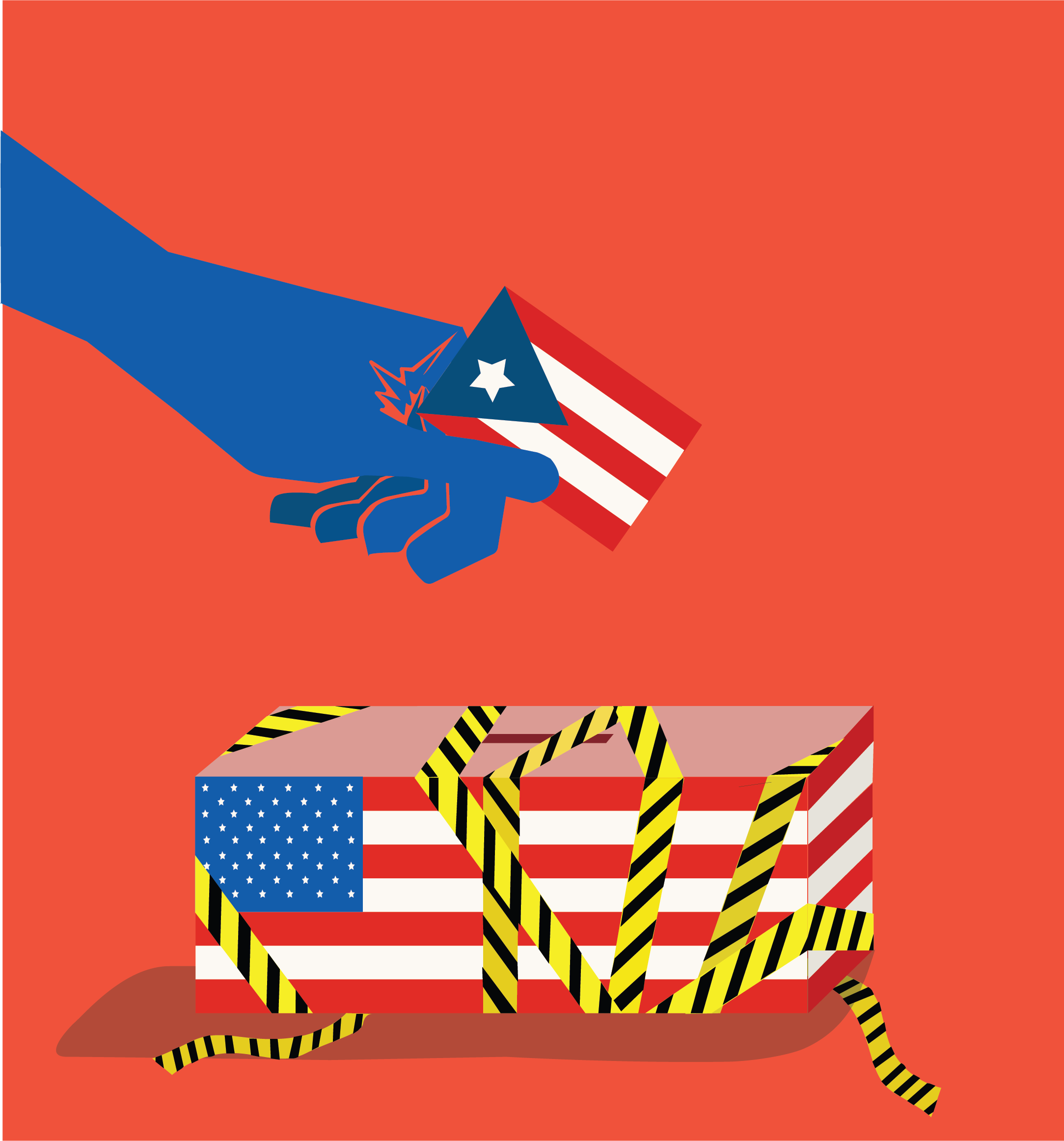
The inability of Puerto Rico residents to vote for the U.S. President has profound implications for their sense of belonging and their participation in the democratic process. It creates a peculiar situation where U.S. citizens residing in the territory are treated differently from those residing in states.
Taxation and Military Service
A key point of contention is the discrepancy in federal taxation and benefits. While residents of Puerto Rico generally do not pay federal income tax on income earned on the island, they do pay other federal taxes, such as Social Security and Medicare taxes. Furthermore, Puerto Ricans have served and died in every major U.S. conflict since World War I, highlighting their commitment to the nation despite lacking full political rights. This disparity fuels the argument that taxation without representation is unjust.
Impact on Policy and Representation
The lack of presidential voting rights also means that presidential candidates often pay less attention to the specific needs and concerns of Puerto Rico compared to swing states or states with significant electoral influence. Policies enacted by the U.S. government can have a substantial impact on the island’s economy, healthcare, and infrastructure, yet the people most affected have no direct say in choosing the leaders who make these decisions.
The Path Forward
The question of why Puerto Rico cannot vote for the U.S. President remains an open one, tied to complex legal interpretations, historical precedents, and ongoing political negotiations. The resolution of this issue hinges on a decision by the U.S. Congress, which has the ultimate authority to determine the political status of its territories. Until a change in status occurs, the residents of Puerto Rico will continue to be U.S. citizens without the fundamental right to cast a ballot in the nation’s highest office.
LifeOutOfTheBox is a participant in the Amazon Services LLC Associates Program, an affiliate advertising program designed to provide a means for sites to earn advertising fees by advertising and linking to Amazon.com. Amazon, the Amazon logo, AmazonSupply, and the AmazonSupply logo are trademarks of Amazon.com, Inc. or its affiliates. As an Amazon Associate we earn affiliate commissions from qualifying purchases.