
The question “How far is Seattle to Portland?” is more than just a geographical inquiry; it’s the starting point for a journey, a contemplation of the distances between two vibrant Pacific Northwest cities. Whether you’re planning a quick weekend getaway, a scenic road trip, or a business excursion, understanding the proximity and the various ways to traverse it is crucial. This guide will break down the distances, travel times, and offer insights into the best methods for making the trip between Seattle and Portland.
The Direct Distance and Driving Time
The most direct answer to “How far is Seattle to Portland?” is approximately 174 miles (about 280 kilometers) when measured along the most common driving routes. This distance, while not vast, encompasses a journey through diverse landscapes and offers a glimpse into the unique character of the Pacific Northwest.
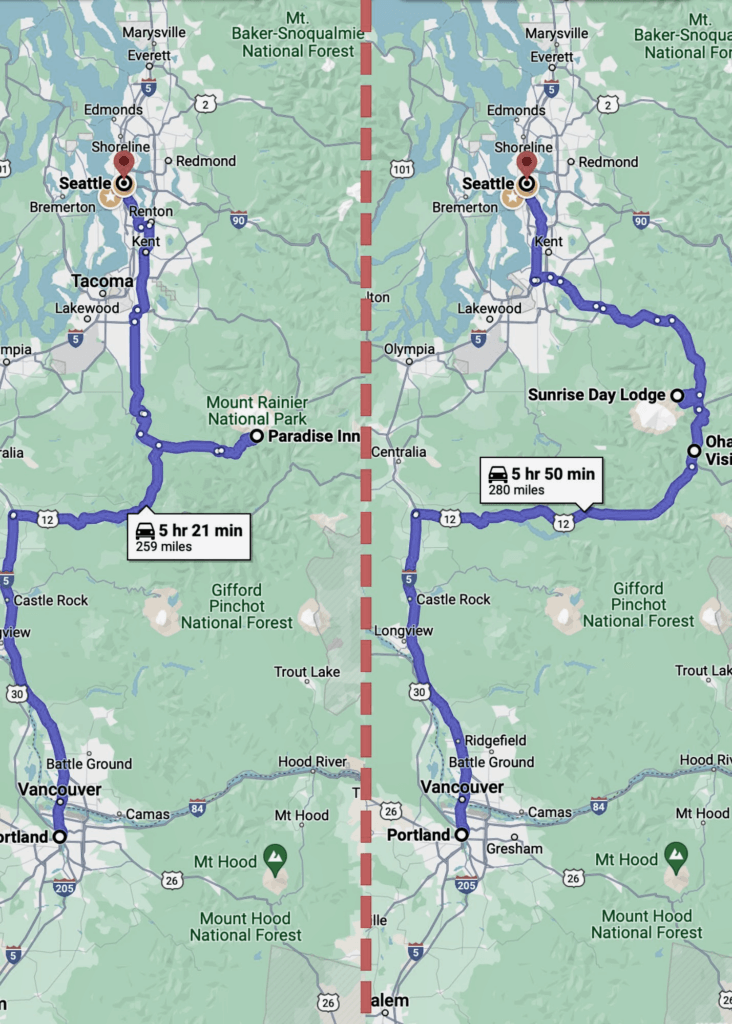
I-5: The Primary Artery
The dominant route connecting Seattle and Portland is Interstate 5 (I-5). This major north-south freeway is the backbone of transportation for the region, and the stretch between these two cities is heavily trafficked but generally well-maintained.
- Driving Time: Under ideal conditions, the drive can take as little as 3 hours. However, this is a highly optimistic estimate. Realistically, factoring in potential traffic, especially around Seattle and Portland during peak hours, construction, and rest stops, the journey typically ranges from 3.5 to 4.5 hours. Weekends and holidays can significantly extend this time.
- Key Considerations: Drivers should be aware of variable speed limits and the presence of construction zones. The route passes through several smaller towns and cities, offering opportunities for quick stops for gas or a coffee. The scenery, while not dramatic for much of the drive, offers glimpses of evergreen forests and agricultural land.
Alternative Driving Routes and Scenic Options
While I-5 is the most efficient, it’s not the only way to travel between Seattle and Portland. For those seeking a more leisurely pace or a more picturesque experience, alternative routes present themselves.
- US-101 (Coastal Route): For a significantly longer but immensely scenic drive, one could theoretically detour westward to take portions of U.S. Route 101. This would involve venturing towards the Washington coast, exploring towns like Aberdeen or Olympia, and then heading south through Oregon‘s coastal towns like Astoria before making an inland turn towards Portland. This route is dramatically longer, potentially adding many hours, and is best suited for dedicated road trips focused on coastal exploration.
- SR-16 and I-705 (via Tacoma): A slight variation on the I-5 route involves taking State Route 16 (SR-16) and Interstate 705 (I-705) to pass through Tacoma. This can sometimes offer slightly different traffic patterns, though it ultimately rejoins I-5. It might be a preferred option for those wishing to make a brief stop in Tacoma to see attractions like the Museum of Glass or the Point Defiance Park.
Traveling by Air: Speed and Convenience
For those prioritizing speed, air travel offers a swift alternative to driving. The distance between Seattle and Portland is well within the range of short-haul flights, making it a convenient option for business travelers or those with limited time.
Seattle-Tacoma International Airport (SEA) to Portland International Airport (PDX)
Both Seattle and Portland boast major international airports that serve this route regularly.
- Flight Duration: The actual flight time is remarkably short, often just 45 to 60 minutes. This makes it seem like a negligible distance in the air.
- Total Travel Time: However, it’s crucial to account for the entire travel experience. This includes travel to and from the airports, check-in procedures, security screening, boarding, and deplaning. When these factors are added, the total door-to-door travel time can often rival or even exceed the driving time, especially if one lives close to I-5 and their destination in the other city is also easily accessible from the freeway.
- Airlines and Frequency: Several airlines operate frequent flights on this route, including Alaska Airlines and United Airlines. Booking in advance can often secure more favorable fares.
Public Transportation: A Relaxed Approach

For travelers who prefer to avoid the stress of driving or the airport hustle, public transportation provides a viable and often more relaxed way to cover the distance between Seattle and Portland.
Amtrak: The Cascades Train
The Amtrak Cascades train service is a popular and scenic option for traveling between these two cities. It offers a comfortable and relaxing way to experience the journey, with the added benefit of not having to navigate traffic.
- Route and Scenery: The train route offers pleasant views of the Puget Sound region and the rolling hills of southwestern Washington and northwestern Oregon. It often travels closer to the waterfront in parts of Tacoma and passes through charming smaller towns.
- Travel Time: The train journey typically takes around 4 hours, which is comparable to the driving time under moderate traffic conditions. However, it allows passengers to relax, work, or enjoy the scenery without the demands of driving.
- Stations: In Seattle, trains depart from King Street Station. In Portland, the destination is Union Station. Both stations are centrally located and offer connections to local public transit systems.
- Amenities: Amtrak trains typically offer comfortable seating, Wi-Fi (though often spotty), and a café car for purchasing snacks and beverages. Business class options are also available for enhanced comfort.
Bus Services: Budget-Friendly Options
Several private bus companies operate services between Seattle and Portland, offering a more budget-conscious alternative to both flying and the train.
- Providers: Companies like FlixBus and formerly, BoltBus and Greyhound, provide multiple daily departures.
- Travel Time: Bus travel times can vary significantly depending on traffic and the number of stops. Typically, the journey can range from 3.5 to 5 hours.
- Pick-up and Drop-off Locations: Departure and arrival points are usually in convenient, accessible locations within each city, often near major transit hubs.
- Comfort and Amenities: While comfort levels can vary by provider, modern buses often offer Wi-Fi, power outlets, and reclining seats.
Planning Your Trip: Factors to Consider
When determining the “how far” and “how to” for your Seattle to Portland journey, several factors should guide your decision.
Time Constraints
- Short on Time: If you have a very tight schedule, flying might seem appealing, but remember to factor in airport procedures. A direct drive on I-5 during off-peak hours could be equally, if not more, efficient.
- Flexible Schedule: For a more relaxed experience, the Amtrak train offers a pleasant journey without the stress of traffic. This is ideal for travelers who want to enjoy the ride.
Budget
- Budget-Conscious: Bus services are generally the most economical option. Driving yourself can also be cost-effective, especially for groups, when considering fuel and potential parking costs in the cities.
- Mid-Range: Amtrak train tickets can offer good value, especially when booked in advance.
- Higher End: Flights can be expensive, especially for last-minute bookings, but can be competitive with advance planning.

Travel Style and Preferences
- Scenery Lovers: While I-5 is functional, it’s not the most scenic. If you enjoy views, consider the Amtrak route or plan a much longer, dedicated road trip exploring coastal or mountain byways.
- Comfort Seekers: Amtrak’s Business Class or even the standard seating offers a comfortable way to travel. For driving, a modern vehicle and planning for stops can enhance comfort.
- Environmental Consciousness: Public transportation options like trains and buses generally have a lower carbon footprint per passenger than individual car trips or flights.
Ultimately, the distance between Seattle and Portland is a manageable one, opening up a wealth of possibilities for exploration and connection between these two iconic Pacific Northwest hubs. Whether you choose the efficiency of the highway, the speed of the skies, or the relaxed pace of the rails, the journey itself is part of the adventure.
LifeOutOfTheBox is a participant in the Amazon Services LLC Associates Program, an affiliate advertising program designed to provide a means for sites to earn advertising fees by advertising and linking to Amazon.com. Amazon, the Amazon logo, AmazonSupply, and the AmazonSupply logo are trademarks of Amazon.com, Inc. or its affiliates. As an Amazon Associate we earn affiliate commissions from qualifying purchases.