
Navigating the open roads of Texas on a motorcycle offers a unique sense of freedom and adventure. From the sprawling plains to the vibrant cityscapes, the Lone Star State provides a diverse backdrop for any motorcyclist. However, before you kick off your boots and hit the highway, understanding the legal requirements is paramount. This guide delves into the specifics of motorcycle licensing in Texas, ensuring you’re fully prepared for a safe and lawful riding experience.
Understanding Texas Motorcycle Licensing Requirements
The state of Texas, through its Department of Public Safety (DPS), has clear regulations regarding who needs and how to obtain a motorcycle license. The primary piece of legislation governing this is the Texas Transportation Code. Generally, if you operate a motorcycle or a motor-driven cycle on public roads, a specific license endorsement is required.
Who Needs a Motorcycle License?
In essence, anyone operating a motorcycle on public roadways in Texas must possess a valid driver’s license with a motorcycle (M) endorsement. This applies to a wide range of two-wheeled vehicles, including:
- Motorcycles: Standard motorcycles designed for street use.
- Motor-driven Cycles: This category can be a bit broader and includes vehicles like scooters with engines over 50cc or those capable of exceeding 30 miles per hour.
- Mopeds: While many mopeds are designed to be ridden without a license, if a moped meets certain engine size or speed criteria in Texas, it may fall under the motorcycle licensing requirements.
There are limited exceptions, primarily for individuals operating on private property and not on public roads. However, for the vast majority of riders, a motorcycle license is a non-negotiable requirement. Riding without the proper endorsement can result in traffic citations, fines, and potentially affect your ability to obtain future licenses.
Types of Motorcycle Licenses and Endorsements
Texas offers a layered approach to licensing, and for motorcycles, this typically involves adding an endorsement to an existing driver’s license.
- Class M License: This is the primary designation for motorcycle operators. It is usually obtained as an endorsement to a regular driver’s license (Class A, B, or C). If you do not already hold a driver’s license, you will go through a process to obtain a Class M license as your primary form of identification for operating a motorcycle.
- Learner’s Permit (Class M): For new riders under 18, or those over 18 who wish to practice before taking the full road test, a motorcycle learner’s permit is available. This permit comes with specific restrictions, such as not being allowed to ride between sunset and sunrise or carrying passengers.
It’s crucial to understand that a standard driver’s license alone does not grant permission to operate a motorcycle. The distinct “M” endorsement is what signifies your qualification to ride.
How to Obtain a Motorcycle License in Texas
The process for obtaining your motorcycle license or endorsement in Texas is designed to ensure riders have the necessary knowledge and skills. It generally involves a combination of coursework, written tests, and practical skills testing.
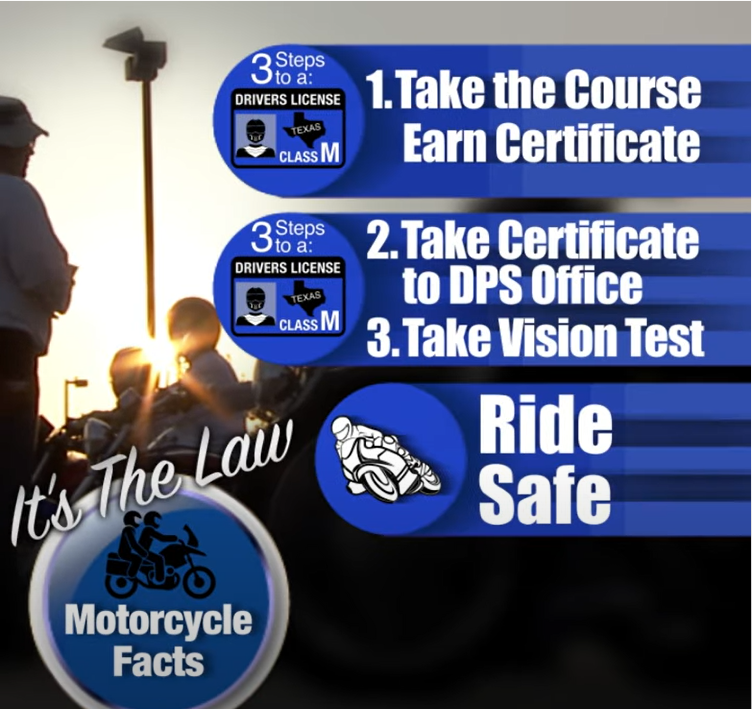
The Motorcycle Safety Course Route
One of the most common and often preferred ways to obtain a motorcycle license is by completing an approved motorcycle safety course. The state of Texas recognizes and partners with various certified motorcycle safety training providers.
- Texas Motorcycle Safety Program (TMSP): This program, administered by the Texas Department of Public Safety, offers courses like the Basic RiderCourse (BRC) and the Experienced RiderCourse (ERC).
- Benefits of the TMSP: Successful completion of the BRC typically waives the requirement for a separate DPS skills test. For individuals under 18, completing the BRC is mandatory and also fulfills the driver education requirement. For those 18 and older, it exempts them from the riding test at the DPS driver license office. Additionally, many insurance companies offer discounts to riders who have completed a certified safety course.
The curriculum for these courses covers essential topics such as:
- Basic motorcycle control: Starting, stopping, turning, and shifting.
- Hazard avoidance: Techniques for reacting to unexpected situations.
- Cornering: Proper body positioning and speed control.
- Braking: Effective stopping strategies.
- Road strategy: Defensive riding and anticipating other road users.
- Legal and safety responsibilities: Understanding traffic laws and personal safety gear.
The Traditional DPS Testing Route
For those who choose not to take a motorcycle safety course, or for specific situations, the traditional route through the DPS driver license office is available. This process generally involves:
- Written Knowledge Test: You will need to pass a written test covering motorcycle laws, safe riding practices, and Texas traffic regulations. This test is often administered at a local Texas DPS driver license office.
- Vision Test: A standard vision test to ensure adequate eyesight for driving.
- Riding Skills Test (Road Test): This is a practical demonstration of your riding abilities. You will be required to operate a motorcycle on a designated course and perform specific maneuvers under the observation of a DPS examiner. These maneuvers typically include:
- Cone weave: Demonstrating control at slow speeds.
- Turning: Executing smooth and controlled turns.
- U-turn: Performing a U-turn within a designated area.
- Quick stop: Executing a sudden, controlled stop.
- Obstacle swerve: Demonstrating the ability to avoid an unexpected obstacle.
It is highly recommended to bring your own registered and insured motorcycle for the skills test, as the DPS may not always provide one. Ensure your motorcycle is in good working order.
Eligibility Requirements for a Motorcycle License
Before you can even begin the testing or course process, certain eligibility criteria must be met. These are standard for most driver’s licenses in Texas but are worth reiterating for clarity.
Age Requirements
- Under 18: Applicants under 18 years of age must complete the TMSP Basic RiderCourse (BRC) and hold a learner’s permit for at least six months. They must also complete a driver education program if they don’t already have a provisional driver’s license. The TMSP course fulfills the motorcycle-specific driver education requirement.
- 18 and Over: Applicants 18 years of age or older can choose between completing the TMSP BRC or taking the written and skills tests at a DPS driver license office.
Residency and Identification
You must be a legal resident of Texas. Proof of residency and identity will be required, typically through documents such as a birth certificate, passport, or other government-issued identification.
Medical Conditions
If you have any medical conditions that might impair your ability to operate a motorcycle safely, you may need to provide a medical evaluation or be subject to additional testing. The DPS may require a medical certificate from a physician.
Specific Considerations for Tourists and New Residents
For those visiting Texas or new to the state, understanding how your existing motorcycle license from another jurisdiction or the process for obtaining a Texas license as a new resident is essential.
Out-of-State Licenses
If you hold a valid motorcycle license or endorsement from another U.S. state, you generally do not need to obtain a new Texas license immediately. However, once you establish residency in Texas (typically defined as residing in the state for more than 180 days), you are required to obtain a Texas driver’s license with the appropriate motorcycle endorsement. This process usually involves surrendering your out-of-state license and completing the necessary Texas requirements. You may be able to transfer your endorsement without retaking the skills test, depending on reciprocity agreements between states. It’s always best to confirm the specifics with the Texas DPS.
Temporary Visitors
Tourists who are legally licensed to operate a motorcycle in their home country or state are generally permitted to ride in Texas for the duration of their visit, provided their license is valid. However, they must adhere to all Texas traffic laws. If a visitor plans to purchase or lease a motorcycle and remain in Texas for an extended period, they will likely need to obtain a Texas motorcycle license.
Safety and Legal Compliance Beyond the License
While obtaining the correct license is a critical step, it is by no means the only aspect of safe and legal motorcycle operation in Texas.
Motorcycle Gear Requirements
Texas law mandates specific safety gear for motorcycle riders. Wearing this gear is not just about compliance; it’s about significantly increasing your survivability in the event of an accident.
- Helmet: All motorcycle riders and passengers under the age of 21 must wear a helmet that meets federal safety standards (DOT-approved). Riders 21 and over who have completed a TMSP-approved safety course or hold a valid motorcycle license may be exempt from helmet requirements, but wearing a helmet is strongly recommended for all riders regardless of age or licensing status.
- Eye Protection: Adequate eye protection is also required for all riders, whether it’s a face shield on a helmet, goggles, or safety glasses.
Insurance Requirements
Like all vehicle operators in Texas, motorcycle owners must carry liability insurance. This insurance is crucial for covering damages or injuries you might cause to others in an accident. Minimum coverage amounts are set by Texas law.
Vehicle Registration and Inspection
Your motorcycle must be properly registered with the state of Texas and display valid license plates. Additionally, most motorcycles require a state safety inspection annually to ensure they meet minimum safety standards.

Understanding Texas Traffic Laws
Riding a motorcycle requires a heightened awareness of your surroundings and a thorough understanding of Texas traffic laws. This includes:
- Lane Splitting: Lane splitting, where a motorcycle rides between lanes of traffic, is illegal in Texas.
- Sharing Lanes: Motorcycles are entitled to the full width of a lane, just like other vehicles.
- Visibility: Motorcycles are less visible than cars. Riders should make every effort to be seen, using headlights at all times and positioning themselves strategically in their lane.
- Following Distances: Maintaining a safe following distance is even more critical for motorcycles, as they can stop much faster than cars.
By adhering to these legal and safety guidelines, and ensuring you possess the correct motorcycle license for your operations in Texas, you can enjoy the unparalleled freedom of two-wheeled travel responsibly and confidently. Always prioritize safety and stay informed about the latest regulations.
LifeOutOfTheBox is a participant in the Amazon Services LLC Associates Program, an affiliate advertising program designed to provide a means for sites to earn advertising fees by advertising and linking to Amazon.com. Amazon, the Amazon logo, AmazonSupply, and the AmazonSupply logo are trademarks of Amazon.com, Inc. or its affiliates. As an Amazon Associate we earn affiliate commissions from qualifying purchases.