
The landscape of education in the United States is continually evolving, with discussions around parental rights, student outcomes, and the role of public versus private institutions taking center stage. Within this national dialogue, Texas stands out as a state with a complex and dynamic approach to educational choice. While the term “school choice” can encompass a variety of programs designed to offer families alternatives to their assigned public schools, Texas has navigated this terrain with a unique set of legislative actions and ongoing debates. Understanding the extent and nature of school choice in the Lone Star State requires a deep dive into its policies, the motivations behind them, and the potential impacts on its diverse student population.

The Spectrum of Educational Alternatives in Texas
Texas offers a tiered system of educational alternatives that fall under the broad umbrella of school choice, though not all are uniformly embraced or as widely implemented as in some other states. The primary mechanisms that facilitate choice for families include open enrollment charter schools, magnet schools, and, more recently, the introduction of education savings accounts (ESAs) and tax credit scholarship programs. Each of these avenues provides distinct pathways for students to access educational environments that may better suit their individual needs or family preferences.
Charter Schools: Expanding the Public School Frontier
Texas charter schools, often referred to as “open-enrollment public charter schools,” represent a significant component of the state’s school choice offerings. These schools are independently operated but are still considered public schools, meaning they are tuition-free and accessible to all Texas students. They operate under a “charter” granted by the Texas Education Agency (TEA) or an authorizing entity, which outlines their mission, educational program, and operational framework. This autonomy allows charter schools to innovate in their curriculum, teaching methods, and school culture, offering unique educational experiences that may not be available in traditional public school districts.
Autonomy and Innovation
The operational flexibility granted to charter schools is a key driver of their appeal. They can often design specialized curricula focusing on areas like STEM, the arts, or specific pedagogical approaches such as Montessori or project-based learning. This innovation can attract students seeking a particular educational focus, or those who may not be thriving in a more traditional setting. For example, a student with a strong aptitude for science might seek out a STEM-focused charter school in Austin, while a family prioritizing a highly structured academic environment might look for a college-preparatory charter in Houston. The TEA oversees these schools, ensuring accountability for academic performance and financial management, but the day-to-day operations allow for a level of entrepreneurial spirit not typically found in traditional public schools.
Accessibility and Enrollment
While charter schools are open to all Texas residents, enrollment procedures can vary. Many operate on a lottery system if they receive more applications than available spots, particularly for popular or high-performing schools. This lottery system ensures fairness in admission, but it can also mean that not all students who wish to attend a specific charter school will be able to secure a place. Geographic accessibility is also a factor, as charter schools are distributed across the state, and students may need to travel to attend their preferred choice.
Magnet Schools: Specialized Programs within Traditional Districts
Magnet schools are another important element of school choice within Texas. Unlike charter schools, which are typically standalone entities, magnet schools are usually part of larger, traditional independent school districts. Their defining characteristic is their specialized curriculum or theme, designed to attract students from across the district who have a particular interest or talent. This can range from performing arts and visual arts to advanced academics, vocational training, or specific career pathways like healthcare or engineering.
Attracting Diverse Student Bodies
The purpose of magnet programs is often to foster diversity and integration within school districts by drawing students from different socioeconomic and demographic backgrounds towards a common educational pursuit. By offering specialized programs, districts aim to provide enriching opportunities that might otherwise be limited to more affluent areas or private institutions. For instance, a district in Dallas might establish an arts-focused magnet school that attracts aspiring young artists and musicians from various neighborhoods, creating a vibrant and diverse student body united by their passion for the arts.
District-Level Choice
Choosing a magnet school typically involves navigating the enrollment process of the specific school district. This may require meeting certain academic criteria or demonstrating an interest in the school’s specialized theme. While the student remains enrolled in their district, the magnet program offers a focused educational experience that deviates from the standard curriculum offered at other schools within that same district.
Education Savings Accounts (ESAs) and Tax Credit Scholarship Programs: Emerging Pathways
In recent years, Texas has seen the emergence of policies aimed at providing financial assistance for families to pursue educational options outside of traditional public schools. These include Education Savings Accounts (ESAs) and tax credit scholarship programs, though their implementation and scope in Texas have been subjects of significant legislative debate and legal challenges.
Education Savings Accounts (ESAs)
ESAs, in principle, provide parents with a sum of money deposited into a state-approved savings account. These funds can then be used to pay for a variety of qualified educational expenses, including tuition at private schools, tutoring services, textbooks, and educational therapies. The idea is to empower parents with the financial means to customize their child’s education based on their unique needs and preferences. While Texas has explored and debated ESA legislation, widespread implementation has been limited and often tied to specific student populations or pilot programs, facing ongoing legal and political hurdles.
Tax Credit Scholarship Programs
Tax credit scholarship programs operate differently. Instead of directly funding students, these programs incentivize private donors or corporations to contribute to scholarship funds. In return, these donors receive tax credits, effectively reducing their tax liability to the state. The funds collected are then distributed as scholarships to students, enabling them to attend private schools or other approved educational programs. Similar to ESAs, the development and expansion of these programs in Texas have been contentious, with discussions revolving around accountability, funding mechanisms, and the potential impact on public education.

The Driving Forces Behind School Choice in Texas
The push for school choice in Texas is fueled by a confluence of factors, primarily centered on enhancing educational quality, promoting parental empowerment, and fostering greater accountability within the education system. Advocates often point to perceived shortcomings in the traditional public school system as a catalyst for seeking alternatives.
Parental Empowerment and Individualized Education
A core tenet of the school choice movement is the belief that parents should have the ultimate authority in deciding where and how their children receive their education. Proponents argue that a one-size-fits-all approach to education is insufficient for a diverse student population with varying learning styles, academic needs, and personal interests. School choice initiatives aim to grant parents the agency to select schools that align with their values, pedagogical preferences, and their child’s specific developmental and academic requirements. This could mean choosing a school with a strong emphasis on religious instruction, a particular academic methodology like Waldorf education, or a program tailored to students with special needs.
Accountability and Competition
Another significant argument in favor of school choice is its potential to drive accountability and foster healthy competition among educational institutions. When public schools face the possibility of students opting out for alternative options, it is argued that they are incentivized to improve their performance, curriculum, and overall educational environment. Similarly, private schools or charter schools that rely on student enrollment to sustain themselves must demonstrate their effectiveness to attract and retain students and their families. This competitive dynamic, proponents suggest, can lead to a higher standard of education across the board, benefiting all students, not just those who utilize choice programs.
Addressing Educational Disparities
For some, school choice is seen as a critical tool for addressing educational disparities and providing opportunities for students in underserved communities. Families living in areas with underperforming public schools may find that charter schools or private schools, often supported by scholarships or ESAs, offer a pathway to a better education that would otherwise be inaccessible due to cost or proximity. The aim is to level the playing field, ensuring that a child’s zip code does not predetermine their educational destiny.
Challenges and Criticisms of School Choice in Texas
Despite the arguments in favor of school choice, these policies are not without their challenges and criticisms. Concerns often revolve around issues of equity, accountability, potential impacts on public education funding, and the adequacy of oversight for alternative schools.
Equity and Access Concerns
One of the most significant criticisms leveled against school choice programs is the potential for them to exacerbate existing inequities rather than alleviate them. Critics argue that the most successful or desirable choice options, particularly well-regarded private schools or popular charter schools, may have selective admissions processes or resource requirements that effectively exclude disadvantaged students. While scholarships and ESAs aim to bridge this gap, they may not always cover the full cost of tuition, fees, transportation, and other associated expenses, making them inaccessible to the poorest families. Furthermore, the logistical challenges of transportation can also limit choices for families without reliable means to get their children to schools outside their immediate neighborhood.
Accountability and Oversight
Ensuring robust accountability for all educational providers, whether public, charter, or private, is a persistent challenge. While traditional public schools are subject to state and federal regulations and standardized testing, the oversight mechanisms for private schools participating in choice programs can be less stringent. Questions arise about how to consistently measure academic progress, ensure fiscal responsibility, and maintain quality standards across a diverse array of educational institutions. The Texas Education Agency (TEA) plays a role in overseeing charter schools and certain aspects of choice programs, but the depth and breadth of this oversight are often points of contention.
Impact on Public School Funding
A common concern among opponents of broad school choice initiatives is the potential impact on the funding of traditional public schools. When public funds, or tax credits that represent foregone public revenue, are diverted to support students in non-public settings, it can lead to reduced resources for the public school system, which serves the vast majority of Texas students. Critics argue that this diversion of funds could weaken the very institutions that are foundational to the state’s educational infrastructure, potentially leading to larger class sizes, fewer program offerings, and diminished resources for students who remain in public schools.
The Future of School Choice in Texas
The debate surrounding school choice in Texas is ongoing and dynamic, reflecting broader national discussions about the future of education. Legislative sessions often see proposed bills aimed at expanding or modifying existing choice programs, while court challenges and public opinion continue to shape the landscape.
Legislative Trends and Debates
Texas has a history of cautious expansion of school choice, often marked by intense legislative debate. While some neighboring states have embraced expansive voucher or ESA programs, Texas has generally pursued a more incremental approach. Future legislative efforts are likely to continue focusing on refining existing programs, potentially expanding eligibility for ESAs or tax credit scholarships, and strengthening accountability measures for participating schools. The political climate and the priorities of elected officials will undoubtedly play a significant role in determining the trajectory of school choice policies in the state.
Evolving Educational Models
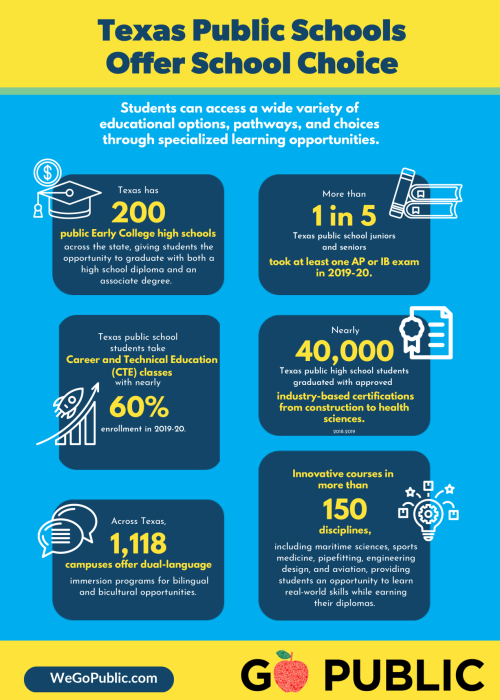
Beyond formal choice programs, the broader trend towards diverse educational models, including online learning, hybrid schooling, and innovative pedagogical approaches, also contributes to the evolving concept of educational choice. Even within traditional public schools, districts are increasingly exploring specialized academies and flexible learning pathways to meet student needs. This diversification of educational offerings, regardless of the specific policy framework, signifies a move towards a more personalized and responsive approach to education that aligns with the core principles of school choice.
In conclusion, Texas presents a multifaceted picture when it comes to school choice. While the state offers avenues such as charter schools and magnet programs that have been established for some time, newer forms of choice, like ESAs and tax credit scholarships, are still navigating their place in the educational ecosystem, facing both fervent support and significant opposition. The ultimate path forward will likely be shaped by continued legislative action, judicial review, and the ongoing dialogue about how best to serve the educational needs of all Texas students.
LifeOutOfTheBox is a participant in the Amazon Services LLC Associates Program, an affiliate advertising program designed to provide a means for sites to earn advertising fees by advertising and linking to Amazon.com. Amazon, the Amazon logo, AmazonSupply, and the AmazonSupply logo are trademarks of Amazon.com, Inc. or its affiliates. As an Amazon Associate we earn affiliate commissions from qualifying purchases.