
Achieving a GED (General Educational Development) credential in Texas is a significant accomplishment, opening doors to further education, career advancement, and personal growth. This comprehensive guide outlines the essential steps and resources available to individuals seeking to earn their GED in the Lone Star State. From understanding eligibility requirements to navigating the testing process and preparing for success, we cover everything you need to know to embark on this educational journey.
Understanding the GED in Texas
The GED test is a series of standardized exams designed to measure high school-level academic skills. Earning a GED is equivalent to graduating from high school and is recognized by most colleges, universities, and employers across the United States, including within Texas. The GED program in Texas is administered by the Texas Department of Public Safety (TXDPS) GED Program. It is important to distinguish the GED from other high school equivalency tests, as the GED is the most widely accepted credential.

Eligibility Requirements
To be eligible to take the GED tests in Texas, candidates must meet specific criteria. The primary requirements are:
- Age: Applicants must be at least 16 years old. For individuals aged 16 or 17, specific parental or guardian consent and school withdrawal documentation are required. Those under 16 are generally not eligible unless they have successfully completed a high school program.
- Residency: You must be a resident of Texas. Proof of residency may be required, such as a valid Texas driver’s license, Texas identification card, or utility bills.
- High School Diploma: You must not currently be enrolled in high school and must not have already received a high school diploma from a United States high school.
- Language: The GED tests can be taken in English or Spanish.
The GED Test Structure
The GED test battery consists of four subject areas, each assessed through a separate module:
- Mathematical Reasoning: This section covers algebra, geometry, data analysis, and basic numeracy. It assesses your ability to solve problems using mathematical concepts and procedures.
- Reasoning Through Language Arts: This module evaluates your reading comprehension, informational text analysis, and argumentative writing skills. It includes both multiple-choice questions and an essay.
- Science: This test comprises questions related to life science, physical science, and Earth and space science. It focuses on scientific inquiry, data interpretation, and understanding scientific concepts.
- Social Studies: This section assesses your knowledge of U.S. history, civics and government, economics, and geography. It also includes skills in reading informational texts and analyzing data.
Each test module is computer-based and lasts for a specific duration. Candidates must pass all four modules to earn their GED credential.
Preparing for the GED Test in Texas
Effective preparation is key to successfully passing the GED tests. Texas offers a variety of resources to help individuals get ready for the exams.
GED Practice Tests
Before embarking on formal preparation, taking a GED practice test can help you gauge your current knowledge and identify areas where you need the most focus. These practice tests can simulate the actual testing experience and provide valuable insights into your strengths and weaknesses.
GED Preparation Programs
Numerous GED preparation programs are available throughout Texas. These programs are often offered by:
- Community Colleges: Many Texas community colleges offer GED preparation classes, often at little to no cost. These courses provide structured learning environments, qualified instructors, and access to study materials.
- Adult Education Centers: Various non-profit organizations and community centers throughout the state provide free or low-cost GED classes. These centers are often community-focused and cater to diverse learning needs.
- Online Resources: A wealth of online GED preparation materials and courses are available. These can be a flexible option for individuals who prefer to study at their own pace or have busy schedules. Some popular online platforms include Kaplan GED, Tallo GED, and the official GED website.
When choosing a preparation program, consider factors such as class schedules, location, cost, instructor qualifications, and the availability of study materials. Attending a structured program can provide the guidance and support needed to build a strong foundation in all four GED subject areas.
Study Materials and Strategies

Beyond formal programs, self-study can also be highly effective. This involves utilizing GED preparation books, online resources, and study guides. Developing a consistent study schedule, breaking down complex topics into manageable sections, and practicing regularly are crucial. Active learning techniques, such as creating flashcards, summarizing information, and working through practice problems, can enhance retention.
For the Reasoning Through Language Arts module, practicing essay writing and understanding the scoring rubric is essential. In Mathematical Reasoning, dedicating time to mastering fundamental math concepts and practicing with a calculator (the GED allows the use of a Texas Instruments TI-30XS scientific calculator on some sections) is vital. For Science and Social Studies, focus on understanding key concepts, analyzing charts and graphs, and recalling important historical events and figures.
The GED Testing Process in Texas
Once you feel adequately prepared, the next step is to register for and take the GED tests. The official GED testing service in Texas is managed through GED.com.
Registration and Scheduling
- Create an Account: Visit GED.com and create a secure account. This account will be your portal for registration, scheduling, and accessing your scores.
- Locate a Testing Center: Use the website’s locator tool to find an official GED testing center near you in Texas. These centers are authorized to administer the GED tests.
- Schedule Your Tests: Within your GED.com account, you can select the specific test modules you wish to take and schedule them for your preferred dates and times. You do not have to take all four tests at once; you can schedule them individually or in any order.
Test Day Procedures
On test day, arrive at the testing center early to allow time for check-in. You will need to present valid, government-issued identification, such as a driver’s license or passport. Mobile phones and other electronic devices are typically not permitted in the testing room. The testing center staff will provide instructions on the computer-based testing system and the rules of the examination.
Scoring and Passing the GED
Each GED test module is scored on a scale of 100 to 200. A passing score for each module is 145. Therefore, to earn your GED credential, you must achieve a minimum score of 145 on all four tests, for a total scaled score of at least 580. There is also a “High Desert” score of 165-174 for each test, which indicates a higher level of skill, and a “College Ready” score of 175-200, which signifies readiness for college-level coursework. The Texas GED Program also has a minimum score requirement of 165 on the Reasoning Through Language Arts extended response section.
Receiving Your GED Transcript and Certificate
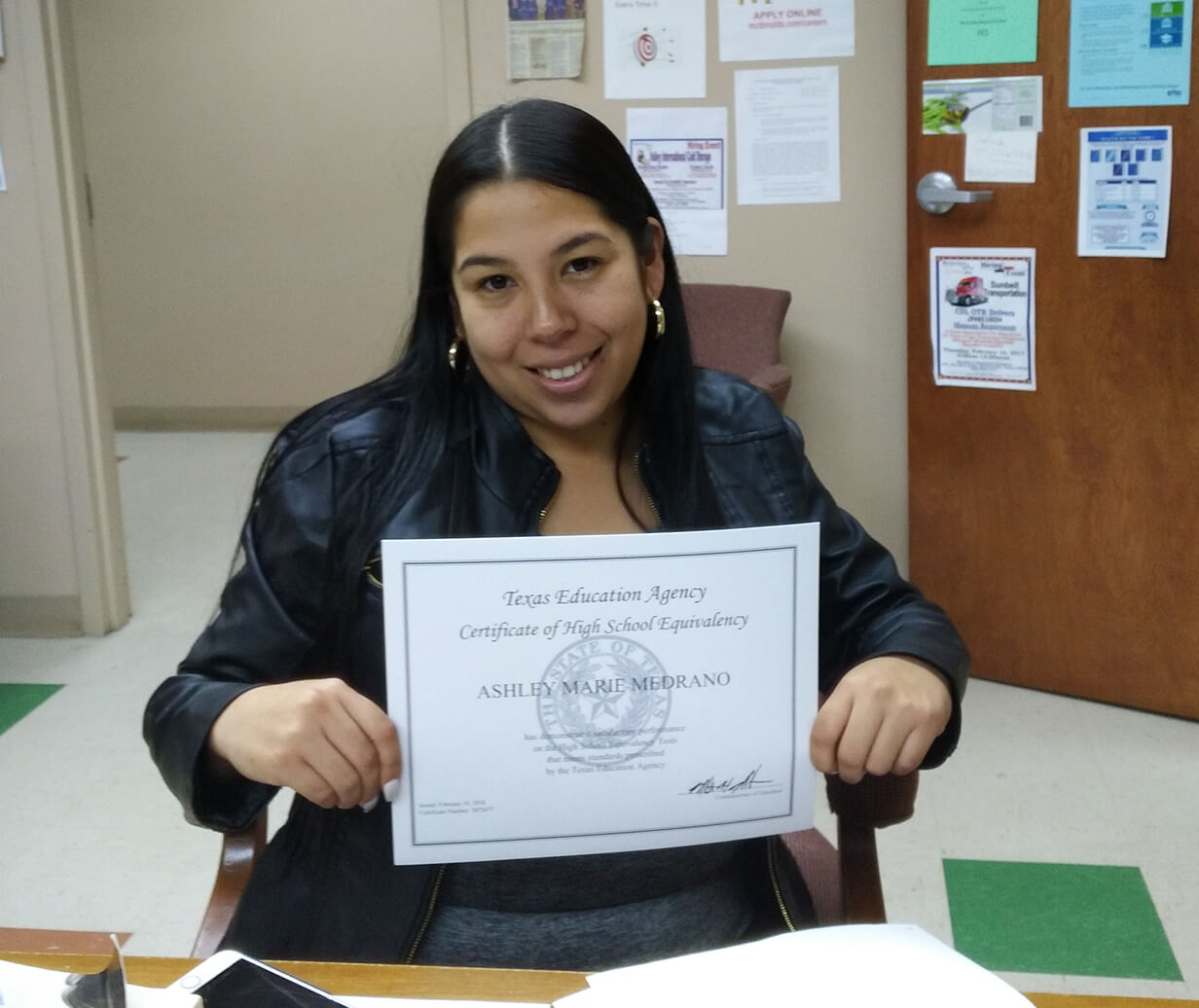
Upon successfully passing all four GED tests, you will receive your official GED transcript and certificate from the Texas Department of Public Safety (TXDPS) GED Program. These documents are important for future educational and employment pursuits. You can typically order duplicate copies if needed through the TXDPS GED Program website or by contacting them directly.
Beyond the GED: Next Steps in Texas
Earning your GED is a remarkable achievement, and it serves as a stepping stone to various opportunities.
Further Education
With your GED in hand, you are eligible to apply to colleges and universities in Texas and beyond. Community colleges often offer a more accessible entry point for students with a GED, providing pathways to associate degrees or transfer programs to four-year institutions. Many institutions recognize the GED as equivalent to a high school diploma for admission purposes. Exploring financial aid options, such as federal student loans and grants, can make higher education more attainable.
Career Opportunities
A GED credential can significantly enhance your employment prospects. Many employers require a high school diploma or equivalent for job openings. Having a GED can open doors to higher-paying positions, promotions, and vocational training programs. Consider exploring Texas Workforce Commission resources, which offer career counseling, job placement assistance, and training opportunities for individuals looking to advance their careers.
Vocational Training and Certifications
For those interested in skilled trades or specific career paths, vocational training programs and certification courses are excellent options. Many Texas community colleges and technical schools offer programs in fields such as healthcare, information technology, skilled trades, and manufacturing. Completing these programs can lead to in-demand careers and stable employment.
The journey to obtaining a GED in Texas is a testament to dedication and perseverance. By understanding the requirements, utilizing available preparation resources, and navigating the testing process effectively, you can successfully achieve this valuable credential and unlock a brighter future.
LifeOutOfTheBox is a participant in the Amazon Services LLC Associates Program, an affiliate advertising program designed to provide a means for sites to earn advertising fees by advertising and linking to Amazon.com. Amazon, the Amazon logo, AmazonSupply, and the AmazonSupply logo are trademarks of Amazon.com, Inc. or its affiliates. As an Amazon Associate we earn affiliate commissions from qualifying purchases.