
Losing a vehicle title can feel like a significant hurdle, especially when navigating the bureaucratic landscape of the Texas Department of Motor Vehicles (TxDMV). Whether it was misplaced, destroyed in an unfortunate incident, or simply vanished, the process of obtaining a replacement title is essential for proving ownership and facilitating future transactions like selling your vehicle. This guide will walk you through the steps required to replace a lost vehicle title in Texas, ensuring you can get back on the road with all your documentation in order. Understanding the process not only saves time but also prevents potential complications that can arise from incomplete paperwork.

Understanding the Texas Vehicle Title and Its Importance
A vehicle title, officially known as a Certificate of Title, is a legal document that establishes ownership of a motor vehicle. In Texas, this document is issued by the Texas Department of Motor Vehicles (TxDMV). It serves as proof that you are the legal owner of the vehicle and is crucial for a variety of purposes. Without a valid title, you cannot legally sell your vehicle, transfer ownership, or even register it in some instances. It contains vital information such as the vehicle’s make, model, year, Vehicle Identification Number (VIN), and the owner’s name and address. This makes it a critical piece of documentation for any vehicle owner.
Why You Need a Replacement Title
There are several scenarios that necessitate the replacement of a lost or damaged vehicle title:
- Misplacement: Titles can easily be misplaced during moves, when organizing documents, or simply due to everyday oversight.
- Damage: Water damage, fire, or general wear and tear can render a title illegible or unusable.
- Theft: In unfortunate circumstances where a vehicle is stolen, the title might be lost along with it.
- Previous Owner’s Title: If you purchased a vehicle and the previous owner did not provide a title, you will need to go through a process to obtain one as the new owner.
- Lien Release: Once a loan on a vehicle is paid off, the lienholder will typically release their lien on the title. If this release document is lost, a replacement title may be needed.
Key Information on a Texas Vehicle Title
Familiarizing yourself with the information typically found on a Texas vehicle title can be beneficial. This includes:
- Vehicle Identification Number (VIN): A unique 17-character code identifying your specific vehicle.
- Make, Model, and Year: Basic identification of the vehicle.
- Owner(s) Name(s) and Address: Details of the legal owner(s).
- Lienholder Information: If a loan is still active, the details of the financial institution holding the lien will be present.
- Odometer Reading: At the time of title issuance or transfer.
- Title Number: A unique identifier for that specific title document.
Possessing this information will make the replacement process smoother, as you’ll be able to readily provide the necessary details to the TxDMV.
The Process of Obtaining a Replacement Title in Texas
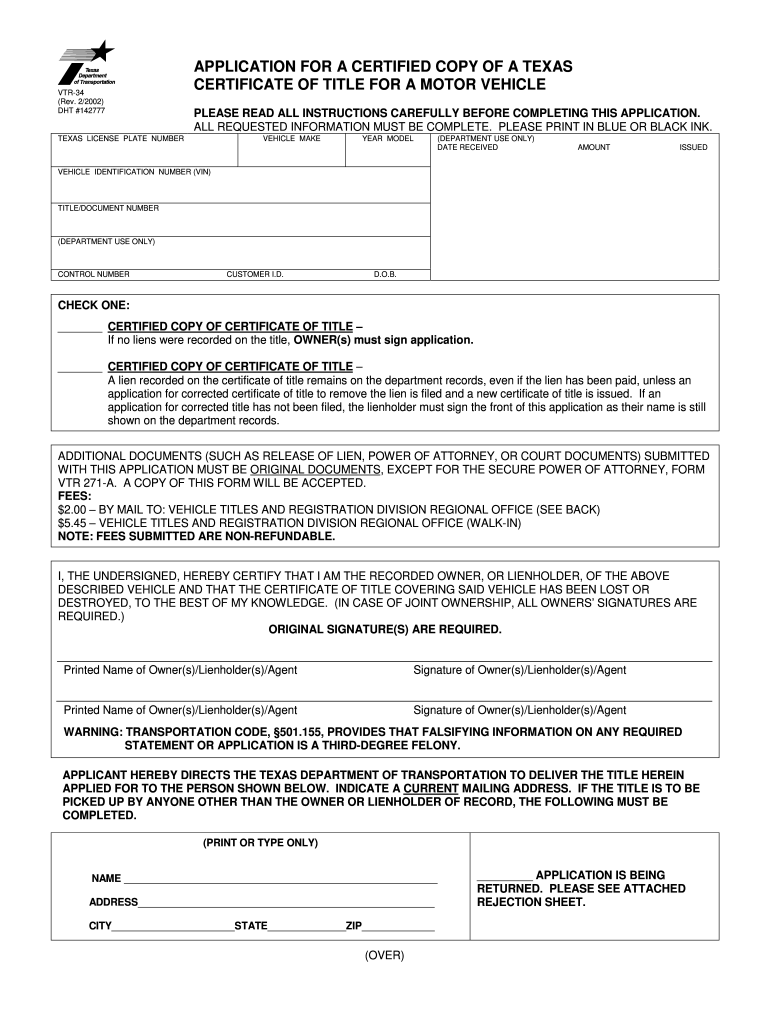
Replacing a lost vehicle title in Texas involves a formal application process with the TxDMV. The primary form you will need is the Application for a Certified Copy of Title (Form VTR-34). This form requires accurate information about you, your vehicle, and the circumstances of the lost title.
Step-by-Step Guide to Application
-
Obtain the Application Form: Download the “Application for a Certified Copy of Title” (Form VTR-34) from the official TxDMV website or pick up a copy from your local county tax assessor-collector’s office. It’s crucial to use the most current version of the form.
-
Complete the Application Thoroughly: Fill out all sections of the VTR-34 form accurately and legibly. Missing or incorrect information can delay the process. You will need to provide:
- Your full legal name and current address.
- The vehicle’s VIN, make, model, and year.
- The license plate number of the vehicle.
- The reason for requesting a certified copy (e.g., lost, stolen, damaged).
- The names and addresses of any lienholders, if applicable.
- A signature and date.
-
Gather Supporting Documentation: In addition to the completed application, you will likely need to provide proof of identity and ownership. This may include:
- Proof of Identity: A valid Texas driver’s license or identification card. If you are out of state, you may need to provide a photocopy of your out-of-state driver’s license.
- Proof of Ownership: While you are requesting a replacement because the title is lost, having any previous registration documents or bill of sale can be helpful. The TxDMV will use its records to verify your ownership based on the VIN and your information.
- Lien Release (if applicable): If your vehicle is no longer financed, and you are replacing a title that had a lien on it, you may need to provide proof that the lien has been satisfied.
-
Submit Your Application: You have a few options for submitting your application:
- Mail: Send the completed application and all supporting documents to the address specified on the form for the TxDMV Title and Registration Division.
- In Person: Visit your local county tax assessor-collector’s office. Many of these offices are equipped to handle title transactions. It is advisable to call ahead to confirm they can process title replacement requests and what specific documents they require.
-
Pay the Required Fee: There is a fee for a certified copy of a vehicle title. The amount can change, so it’s best to check the TxDMV website or inquire at your local county tax office for the current fee. Payment is typically accepted in the form of cash, check, or money order.
-
Wait for Processing: Once your application is submitted and processed, the TxDMV will mail the certified copy of your title to the address you provided. Processing times can vary, but it typically takes several weeks. You can often track the status of your application online through the TxDMV website.
Special Circumstances and Considerations
While the general process for replacing a lost title is straightforward, certain situations may require additional steps or documentation. Understanding these nuances can help avoid unexpected delays.
Vehicles Purchased Without a Title
If you purchased a vehicle and the seller did not provide a title, or the title provided was invalid, you may need to apply for a bonded title. This is a more complex process that involves obtaining a surety bond to protect against future claims on the vehicle. The bonded title process essentially serves as proof of ownership when you cannot produce a traditional title. You will need to work with a bonding company and the TxDMV throughout this procedure.
Lost Title with Active Lien
If there is an active lien on your vehicle and you need to replace the title, the lienholder will be involved. The TxDMV will need to be aware of the lienholder’s interest. The new title issued will typically still show the lienholder’s information. Once the lien is satisfied, the lienholder will then endorse the title, and you may need to apply for a new title reflecting the release of the lien.
Salvage or Rebuilt Titles
If your vehicle has a salvage or rebuilt title, the process for replacement might have specific requirements. These titles indicate that a vehicle has been declared a total loss by an insurance company and subsequently repaired. The TxDMV maintains specific procedures for these types of vehicles, and you should consult their resources or a county tax office for guidance.
Out-of-State Titles
If you previously owned a vehicle with an out-of-state title and lost it while it was registered in Texas, you will generally need to contact the motor vehicle department of the state where the title was originally issued. Once you have obtained a replacement title from that state, you can then register the vehicle in Texas and obtain a Texas title if desired.

Tips for a Smooth Replacement Process
To ensure your experience obtaining a replacement vehicle title in Texas is as efficient as possible, consider these helpful tips:
- Act Promptly: The sooner you begin the replacement process after realizing your title is lost, the better. This prevents any potential issues if you need to sell or transfer ownership of the vehicle unexpectedly.
- Visit the Official TxDMV Website: The Texas Department of Motor Vehicles website (TxDMV) is the most reliable source for forms, fee information, and updates on procedures. Always download forms directly from the official source.
- Call Ahead to Your Local County Tax Office: If you plan to submit your application in person, calling your local county tax assessor-collector’s office beforehand can save you a trip. Confirm their hours, accepted payment methods, and any specific local requirements. This is especially helpful if you are in a smaller town or a more rural area.
- Keep Copies: Make copies of your completed application and any supporting documents you submit. This provides you with a record of your submission.
- Be Patient: The TxDMV processes a large volume of applications. While efforts are made to expedite requests, allow ample time for processing and delivery.
By following these steps and tips, you can successfully navigate the process of replacing a lost vehicle title in Texas and ensure your ownership documentation is up-to-date. This vital step safeguards your investment and allows for seamless transactions in the future, whether you’re planning a road trip across the country or simply need to update your vehicle’s registration in your home state.
LifeOutOfTheBox is a participant in the Amazon Services LLC Associates Program, an affiliate advertising program designed to provide a means for sites to earn advertising fees by advertising and linking to Amazon.com. Amazon, the Amazon logo, AmazonSupply, and the AmazonSupply logo are trademarks of Amazon.com, Inc. or its affiliates. As an Amazon Associate we earn affiliate commissions from qualifying purchases.