
The Family and Medical Leave Act (FMLA) is a landmark federal law that provides eligible employees with job-protected, unpaid leave for specific family and medical reasons. While FMLA is a federal law, its application and nuances can vary slightly depending on individual state laws. For residents of Texas, understanding how FMLA works is crucial for navigating significant life events without jeopardizing their employment. This article delves into the intricacies of FMLA in Texas, outlining eligibility, qualifying reasons for leave, and the practicalities of utilizing this vital benefit.
Understanding FMLA Eligibility in Texas
To qualify for FMLA leave, an employee must meet specific criteria set forth by the Department of Labor. These criteria ensure that the benefit is available to those who have demonstrated a commitment to their employer and are in situations where temporary absence is necessary.
Employer Coverage
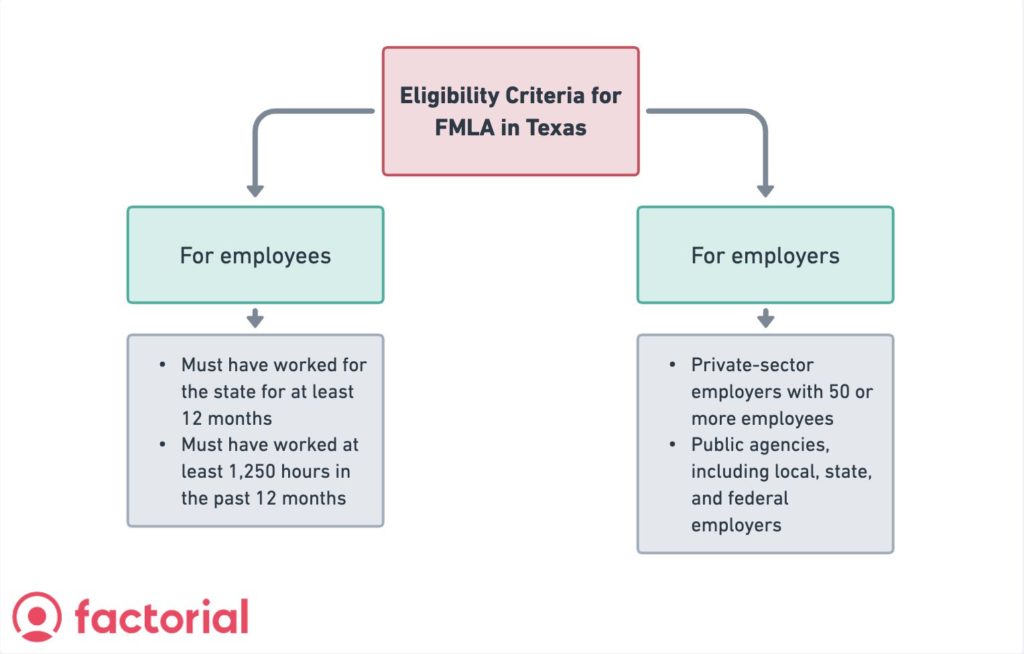
The FMLA applies to private sector employers with 50 or more employees in the workplace and within a 75-mile radius. This also includes public agencies and public or private elementary and secondary schools. Therefore, a significant number of employers in Texas, particularly larger corporations and public institutions, will be subject to FMLA regulations. Smaller businesses, while not directly covered by FMLA, may offer similar leave policies as a benefit or due to company culture.
Employee Eligibility
Beyond employer coverage, employees themselves must meet certain individual eligibility requirements:
- Employment Duration: The employee must have worked for the covered employer for at least 12 months. These months do not need to be consecutive. For example, someone who worked for an employer for six months, left, and then returned to work for the same employer for another six months would meet this requirement.
- Hours of Service: The employee must have worked at least 1,250 hours of service during the 12 months immediately preceding the start of FMLA leave. This excludes any time taken off for vacation, sick leave, or other paid time off.
- Worksite Location: The employee must work at a worksite where the employer has at least 50 employees within a 75-mile radius. This is important for larger companies with multiple locations across Texas or the nation.
Tracking the 12 Months
Employers can use different methods to determine the 12-month period for FMLA eligibility, provided they choose one method and use it consistently for all employees. The most common methods include:
- The Calendar Year: The leave entitlement is based on the calendar year.
- Any Fixed 12-Month Period: This could be a fiscal year, a year measured from the date an employee’s FMLA leave begins, or another fixed 12-month period.
- The “Rolling” 12-Month Period: This method measures backward from the date an employee uses any FMLA leave. Under this method, an employee would be entitled to 12 weeks of leave over the course of any 12-month period. For example, if an employee takes two weeks of FMLA leave starting on March 1, 2023, they can take another 10 weeks of FMLA leave until February 29, 2024. The employer must clearly communicate which method they use to track FMLA leave.
Qualifying Reasons for FMLA Leave in Texas
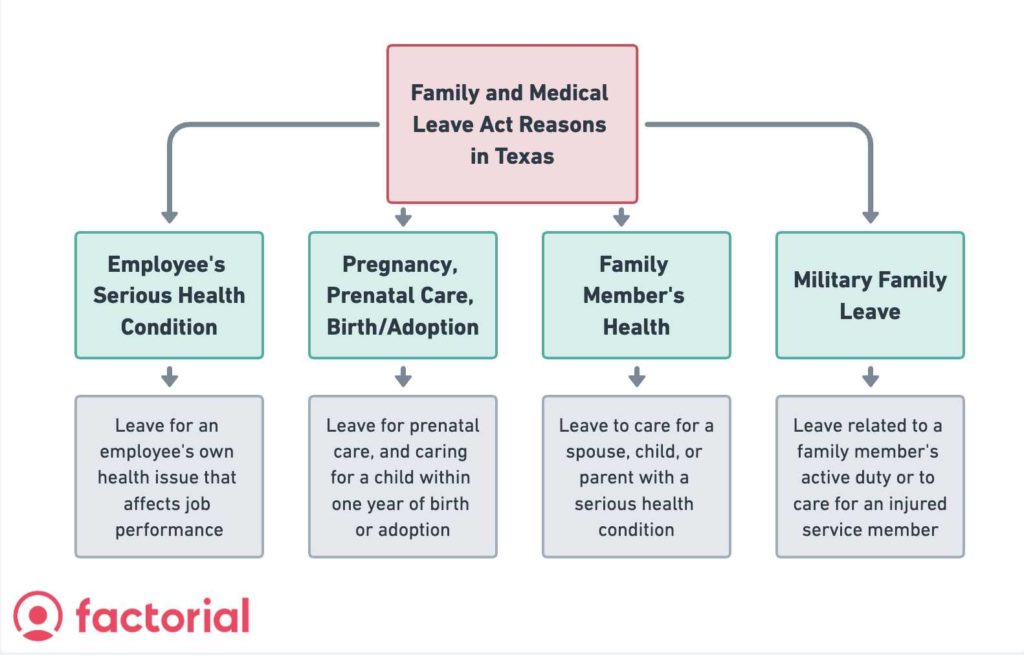
FMLA provides job-protected leave for specific qualifying reasons that impact an employee’s ability to perform their job duties due to serious health conditions or significant family events.
Serious Health Conditions
A “serious health condition” is defined by FMLA as an illness, injury, impairment, or physical or mental condition that involves:
- Inpatient care: Any period of incapacity or treatment requiring an overnight stay in a hospital, hospice, or residential medical care facility.
- Continuing treatment: This includes a period of incapacity lasting more than three consecutive days and requiring multiple treatments or a permanent long-term condition requiring continuous treatment under the supervision of a health care provider. This also covers a period of incapacity which the employee or person is unable to perform the regular duties of their employment.
- Pregnancy and prenatal care: This includes incapacity due to pregnancy, or for prenatal care when receiving treatment from a health care provider.
- Chronic conditions: Conditions that require periodic visits to a health care provider for treatment and continue over a period of time, generally more than three consecutive days. Examples include asthma, diabetes, and epilepsy.
- Permanent or long-term conditions: Conditions that require continuing treatment or supervision by a health care provider and may not be curable. Examples include Alzheimer’s disease, severe strokes, or terminal illnesses.
- Conditions requiring multiple treatments: Any period of absence to receive multiple treatments (including any period of recovery therefrom) either for restorative surgery after an accident or injury, or for a condition that would likely result in a period of incapacity of more than three consecutive days without such treatment.
Family-Related Qualifying Reasons
FMLA also allows for leave to care for certain family members:
- Birth of a Child: To bond with a newborn child. This leave must generally be completed within one year of the child’s birth.
- Placement of a Child for Adoption or Foster Care: To bond with a newly adopted or foster child. Similar to birth leave, this must generally be taken within one year of placement.
- Care for a Spouse, Child, or Parent with a Serious Health Condition: This is one of the most common uses of FMLA. It allows an employee to take time off to provide medical care, including physical or psychological care, for a family member who has a serious health condition. This can include making arrangements for a third-party care, or providing substitute for such care or treatment.
- Military Family Leave:
- Qualifying Exigency Leave: For a spouse, child, or parent of a service member called to active duty or on active duty status. This leave can be used for various reasons related to the call-up, such as attending military events, arranging for child care, or dealing with financial or legal arrangements.
- Military Caregiver Leave: For a spouse, child, parent, or next of kin of a service member who is undergoing medical treatment, recuperation, or therapy; is in convalescence; or is otherwise on the military retired list or in transition out of the active military. This leave allows up to 26 workweeks in a single 12-month period to care for the injured service member.
How to Request and Utilize FMLA Leave in Texas
Navigating the FMLA process requires clear communication and proper documentation. Employees in Texas should follow these steps to ensure a smooth experience.
Providing Notice
Employees are generally required to provide 30 days’ advance notice when the need for FMLA leave is foreseeable, such as for a planned medical procedure or the birth of a child. If the need for leave is unforeseen, such as a medical emergency, the employee must provide notice as soon as practicable. The notice does not have to specifically use the term “FMLA” but must be sufficient to inform the employer that the employee is unable to perform the essential functions of their job, that the absence is due to a serious health condition or family reason, and the expected duration of the absence.
Employer Responsibilities
Upon receiving notice, the employer must:
- Provide Eligibility Notice: Within five business days of receiving notice of the need for FMLA leave, the employer must provide the employee with a notice (FMLA Form WH-381) explaining their eligibility for FMLA, their rights and responsibilities, and the consequences of failing to meet FMLA requirements.
- Request Designation Notice: The employer must also provide a notice (FMLA Form WH-382) asking the employee to provide certification for the leave.
Certification of Health Care Provider
For serious health conditions, employers have the right to require medical certification from a health care provider. This certification typically includes:
- The date the serious health condition began.
- The probable duration of the condition.
- Sufficient medical facts to support the need for leave.
- If the leave is to care for a family member, information confirming the family relationship and the serious health condition of the family member.
Employees are generally given 15 calendar days to return the completed certification, though extensions may be granted if it is not practicable to obtain the certification within that timeframe.
Intermittent Leave and Reduced Work Schedule
FMLA allows for intermittent leave or a reduced work schedule when medically necessary.
- Intermittent Leave: This allows an employee to take leave in blocks of time shorter than their full leave entitlement. For example, an employee undergoing chemotherapy might only need to take off a few days each month for treatment.
- Reduced Work Schedule: This means reducing the number of hours the employee works at a time, whether by reducing the number of hours per workday or the number of days per workweek.
Employers are generally required to grant intermittent leave or a reduced work schedule for the birth, adoption, or foster care of a child, provided the employee requests it and the leave is taken within one year of the birth or placement. For other qualifying reasons, intermittent leave or a reduced schedule must be medically necessary.
Maintenance of Benefits
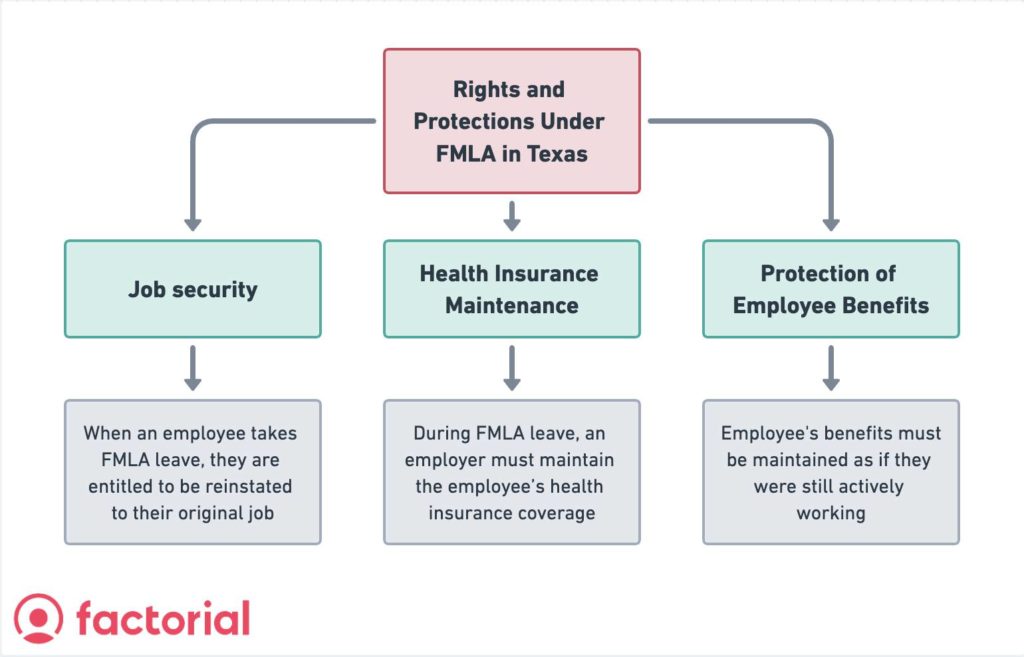
During FMLA leave, employers must maintain the employee’s group health benefits under the same terms and conditions as if the employee had continued to work. If the employee’s benefits are provided through a multi-employer plan or a plan maintained by a consortium of employers, the employer is responsible for ensuring that the plan continues to provide the benefits. For other types of benefits, such as life insurance or disability insurance, an employer is generally not required to continue such benefits during FMLA leave.
Return to Work
Upon returning from FMLA leave, employees are entitled to be restored to their original job or to an equivalent position. An equivalent position is defined as one that is virtually identical to the employee’s former position in terms of pay, benefits, and other employment conditions. It must also involve the same or substantially similar duties, responsibilities, privileges, and status.
Texas-Specific Considerations and Related Benefits
While FMLA is a federal law, Texas has its own employment laws and considerations that may interact with or supplement FMLA protections.
Texas Family Leave Act (TFLA)
It’s important to note that Texas does not have a state-specific family leave act that mirrors FMLA’s broad protections. Many other states have enacted their own versions of family leave, often providing broader coverage or longer leave periods than federal FMLA. However, Texas relies on the federal FMLA for its primary family and medical leave protections. This means that the eligibility requirements and qualifying reasons outlined by the federal law are the ones that apply to most employees in Texas.
Texas Workers’ Compensation
For employees who experience a work-related injury or illness, Texas has a workers’ compensation system. While FMLA provides job protection for recovery from serious health conditions, workers’ compensation specifically covers injuries and illnesses sustained during the course of employment. In such cases, an employee may be eligible for both FMLA leave for job protection and workers’ compensation benefits for medical treatment and lost wages. It is crucial to coordinate these benefits to ensure seamless support.
State and Local Government Employees
While the federal FMLA covers many public sector employees, some employees of state and local governments in Texas might have additional protections or specific policies. For example, the Texas Government Code may outline leave policies for state employees, which could include provisions for family or medical reasons. These policies may run concurrently with FMLA or provide additional benefits not covered by the federal law.
Employer Policies and Other Leave
Many employers in Texas, even those not subject to FMLA due to size, offer their own leave policies. These can include:
- Paid Sick Leave: Some employers provide paid sick leave that can be used for personal illness or to care for family members.
- Short-Term and Long-Term Disability Insurance: These insurance policies can provide income replacement during periods of disability due to illness or injury.
- Paid Time Off (PTO): Many companies offer PTO that employees can use for any reason, including family or medical needs.
Employees should always review their employer’s employee handbook or speak with their HR department to understand all available leave options.
In conclusion, while the Family and Medical Leave Act (FMLA) is a federal law, its application in Texas is governed by federal regulations. Understanding the eligibility criteria, qualifying reasons, and the process for requesting leave is paramount for Texas residents. By staying informed and communicating effectively with employers, employees can leverage FMLA to manage critical personal and family needs without compromising their employment stability.
LifeOutOfTheBox is a participant in the Amazon Services LLC Associates Program, an affiliate advertising program designed to provide a means for sites to earn advertising fees by advertising and linking to Amazon.com. Amazon, the Amazon logo, AmazonSupply, and the AmazonSupply logo are trademarks of Amazon.com, Inc. or its affiliates. As an Amazon Associate we earn affiliate commissions from qualifying purchases.