
When embarking on a journey into the world of poker, particularly the widely popular variant known as Texas Holdem, understanding the fundamental components of the game is paramount. Among these essential elements is the deck of cards used. This may seem like a simple question, but for those new to the game, or even experienced players looking for a refresher on the basics, clarity is key. The answer to “How many cards in Texas Holdem?” directly impacts gameplay, betting structures, and the sheer probability that governs every hand dealt.
The Standard Deck: The Foundation of Poker
At its core, Texas Holdem utilizes a standard 52-card deck. This is the universally recognized configuration for most popular card games played across the globe, from bridge to solitaire. This deck is comprised of four suits: hearts, diamonds, clubs, and spades. Each suit contains thirteen cards, ranging from the Ace (which can typically be played as high or low) through the number cards 2 through 10, and then the face cards: Jack, Queen, and King.
Suits and Ranks: A Deeper Dive
Understanding the composition of the deck is crucial for strategic play. The four suits are distinct but hold equal value in Texas Holdem. This means a pair of Kings of hearts is no stronger than a pair of Kings of spades. The rank of the cards, however, is the primary determinant of hand strength. The hierarchy is as follows, from highest to lowest: Ace, King, Queen, Jack, 10, 9, 8, 7, 6, 5, 4, 3, 2. However, in straights, the Ace can also be the lowest card, forming a “wheel” straight: A-2-3-4-5.
The total number of cards in play, therefore, is calculated by multiplying the number of suits by the number of ranks: 4 suits * 13 ranks = 52 cards. This foundational knowledge is the bedrock upon which all Texas Holdem strategy is built. Without this understanding, grasping concepts like hand combinations, probabilities of hitting certain cards, or the impact of discarding and drawing (in other poker variants, though not directly applicable to the initial deal in Holdem) becomes significantly more challenging.
The Role of Jokers and Other Cards
In the context of a standard game of Texas Holdem, jokers are not used. The integrity of the game relies on the predictability and the finite nature of the 52-card deck. Introducing jokers would fundamentally alter the probabilities and the established hand rankings, requiring a completely different set of rules and strategies.
Variations and Custom Decks
While the 52-card deck is the standard, it’s worth noting that some casual or home games might occasionally incorporate jokers, often designated as wild cards. However, when discussing official tournaments, casino play, or serious strategic study of Texas Holdem, the absence of jokers is a given. This strict adherence to the 52-card deck ensures fairness and a level playing field for all participants. The predictability of a 52-card system allows for the development of sophisticated mathematical models and probability calculations that underpin advanced poker strategy.

The Deal: Distributing the 52 Cards
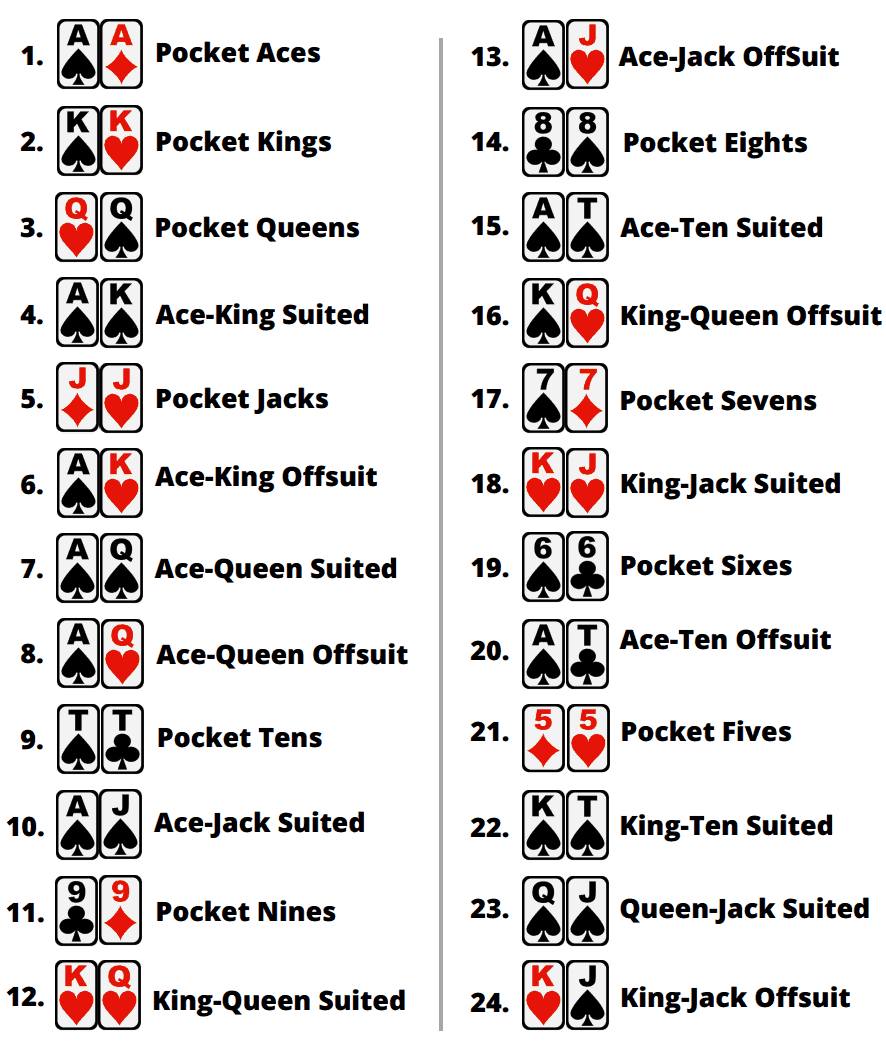
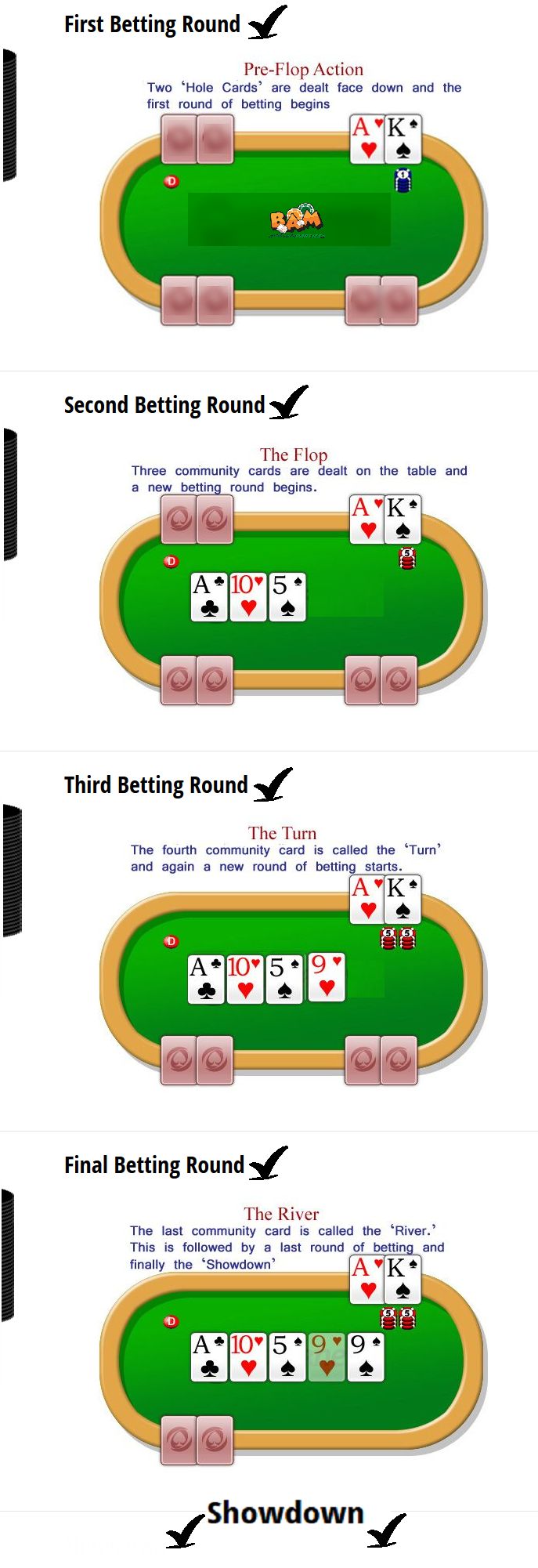
In a game of Texas Holdem, each player is dealt two private “hole” cards. These cards are dealt face down and are only visible to the player holding them. The game then proceeds with the introduction of community cards, dealt face up on the table.
The Community Cards and the Final Hand
The community cards, also known as the “board,” consist of five cards in total, revealed in stages: the “flop” (three cards), the “turn” (one card), and the “river” (one card). Players then combine their two hole cards with the five community cards to form the best possible five-card poker hand. This means that at any given point in the game, a maximum of 52 cards from the single deck are available for distribution and revelation. The dealer’s role is to manage the shuffling and distribution of these cards, ensuring that each participant receives their allotted share of the 52-card deck. The anticipation and strategy involved in piecing together the best hand from this limited pool of 52 cards is the essence of Texas Holdem’s enduring appeal.
The number of cards in play never exceeds the 52 of the standard deck. Even in a full table of ten players, with each receiving two hole cards, only twenty cards are dealt privately. The remaining thirty-two cards are then dealt as community cards. Therefore, across all players and the board, no more than 52 cards are ever in active play from a single deck during a hand. This finite nature of the card pool is what makes the mathematical analysis of poker so fascinating and what allows for the development of nuanced strategies based on card counting and probability.
The Significance of the 52-Card Deck in Strategy
The fixed number of 52 cards in a Texas Holdem deck is not merely a detail; it is the very engine that drives the game’s strategic depth and probabilistic calculations. Every decision a player makes – from betting to folding – is implicitly or explicitly influenced by the odds of what cards might still be remaining in the deck or in their opponents’ hands.
Probability and Odds: The Mathematical Heart of Holdem
Understanding that there are only 52 cards allows players to begin calculating probabilities. For instance, knowing there are four Aces in the deck, a player holding one Ace can immediately understand that there are only three other Aces remaining. This simple piece of information can be critical in assessing the strength of an opponent’s potential hand or the likelihood of hitting a specific draw. Similarly, knowing the combinations of cards that make up different poker hands (e.g., the number of ways to make a flush or a full house) allows players to estimate the likelihood of their opponents holding such hands.
Card Removal and Outs
The concept of “outs” is central to this probabilistic thinking. An “out” is any card that, if dealt, will improve a player’s hand to a winning one. The number of outs a player has is directly dependent on the known cards in play (their own hole cards, the community cards) and, indirectly, the cards their opponents might hold. Because the deck is limited to 52 cards, once cards are seen, they are removed from the possible pool of future cards. This principle of “card removal” is a sophisticated aspect of Texas Holdem strategy. A player who understands which cards are not available can make more informed decisions about the strength of their hand and their opponent’s potential holdings. For example, if many high cards (Kings, Queens, Aces) have already been dealt on the board or are known to be in opponents’ hands, the probability of an opponent holding a strong starting hand like pocket Kings or Queens decreases.
The consistent and finite nature of the 52-card deck provides the framework for countless strategic considerations, from basic hand selection to advanced tilt-control and opponent profiling. Without this fundamental understanding, a player is essentially navigating the complex waters of Texas Holdem blindfolded, relying purely on luck rather than skill. The elegance of the game lies in how this simple, universally understood tool – the 52-card deck – can generate such a rich tapestry of strategy and excitement. Whether you are playing at a friendly game at home or at a prestigious event like the World Series of Poker, the answer remains the same: 52 cards form the foundation of every hand dealt in Texas Holdem.
LifeOutOfTheBox is a participant in the Amazon Services LLC Associates Program, an affiliate advertising program designed to provide a means for sites to earn advertising fees by advertising and linking to Amazon.com. Amazon, the Amazon logo, AmazonSupply, and the AmazonSupply logo are trademarks of Amazon.com, Inc. or its affiliates. As an Amazon Associate we earn affiliate commissions from qualifying purchases.