
Texas, a state renowned for its vast landscapes, rich history, and independent spirit, is geographically diverse and politically intricate. A fundamental aspect of understanding this immense state lies in its administrative divisions. While many might be familiar with its sprawling cities and iconic landmarks, a crucial element for navigating and comprehending its structure is its county system. This article delves into the precise number of counties in Texas, exploring the significance of these administrative units and their role in shaping the Texan experience for residents and visitors alike.
Understanding the County as an Administrative Unit
Before we pinpoint the exact number, it’s essential to grasp what a county represents, particularly within the context of Texas. Counties are the primary administrative subdivisions of a state. In Texas, they serve as the most fundamental local government entities, providing essential services and administering state laws. Each county is governed by a commissioners court, comprised of a county judge and four county commissioners, elected from specific precincts within the county.
These bodies are responsible for a wide array of functions that directly impact the daily lives of Texans. This includes the maintenance of roads and bridges, law enforcement through the county sheriff’s office, the operation of local jails, property tax collection, administering elections, and maintaining vital records such as birth, death, and marriage certificates. Furthermore, counties play a critical role in public health, disaster preparedness, and the operation of local courthouses and justice systems.
The size and population of Texas counties vary dramatically. From the densely populated urban centers of Harris County and Dallas County to the vast, sparsely populated expanses of West Texas, each county possesses a unique character and set of challenges. This diversity in scale underscores the adaptability of the county system to serve vastly different communities within the Lone Star State. Understanding this foundational element of Texas governance is key to appreciating the state’s complex tapestry.
Historical Evolution of Texas Counties
The system of counties in Texas has a long and storied history, deeply intertwined with the state’s journey from Spanish colonial territory to its current status. The concept of dividing land into manageable administrative districts is not new to Texas; it was a practice inherited from its various historical predecessors.
During the era of Spanish and Mexican rule, territorial divisions existed, although they differed in structure from the modern county. When Texas declared its independence in 1836, the Republic of Texas adopted a county system that bore a strong resemblance to the one found in the United States. The early Republic established counties to provide a framework for governance, law, and order in a rapidly expanding frontier.
The process of county formation was dynamic, particularly during the 19th century. As settlers moved into new areas, the need for local governance became apparent, leading to the establishment of new counties. This often involved partitioning existing, larger counties. The Texas Legislature played a significant role in this process, authorizing the creation of new counties through legislative acts. There were periods of rapid county creation, especially during periods of significant population growth and westward expansion.
A notable aspect of Texas county history is the constitutional provision that limits the size of a county. Historically, a minimum of 900 square miles was required for the creation of a new county, although this has since been amended. This historical context helps explain why some Texas counties are exceptionally large, encompassing vast geographical areas. The legacy of this historical development continues to shape the geographical and administrative landscape of Texas today, with each county bearing the imprint of its unique origin story.
The Definitive Number of Texas Counties
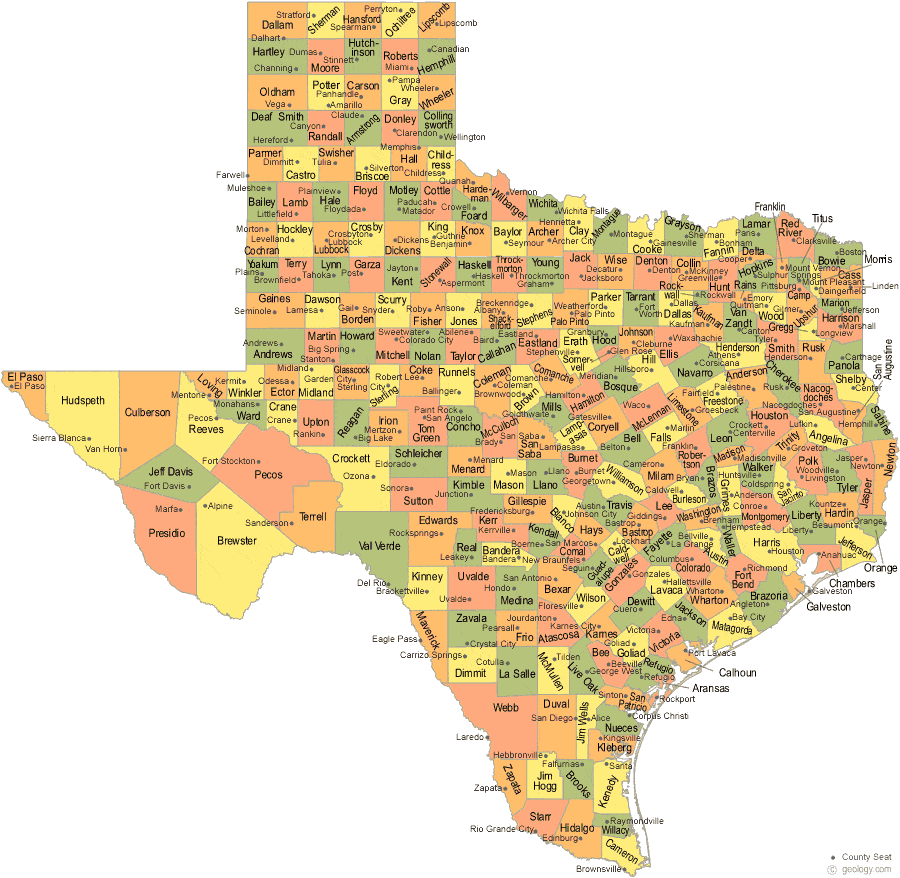
The question of “How Many Counties in Texas?” has a clear and definitive answer. As of the present day, Texas has 254 counties. This number makes Texas the state with the most counties in the United States, a testament to its immense size and its historical development.
This number has remained consistent for many decades. While new counties were actively created throughout the 19th and early 20th centuries, the process has stabilized. The establishment of a new county in Texas requires a specific legislative process, and the current administrative and population distribution has led to a settled number.
The sheer quantity of counties underscores the decentralized nature of governance in Texas. This allows for a more localized approach to administration and service delivery, catering to the specific needs and characteristics of communities across this expansive state. Each of these 254 counties, from the bustling metropolises to the remote ranches, operates under its own unique set of local ordinances and priorities, all within the framework of state law.
Examining the Extremes: Largest and Smallest Counties
The diversity of Texas is perhaps best illustrated by looking at the extremes within its county system. The vastness of the state is mirrored in the dramatic differences in the size and population of its counties.
The Largest County by Area: Loving County
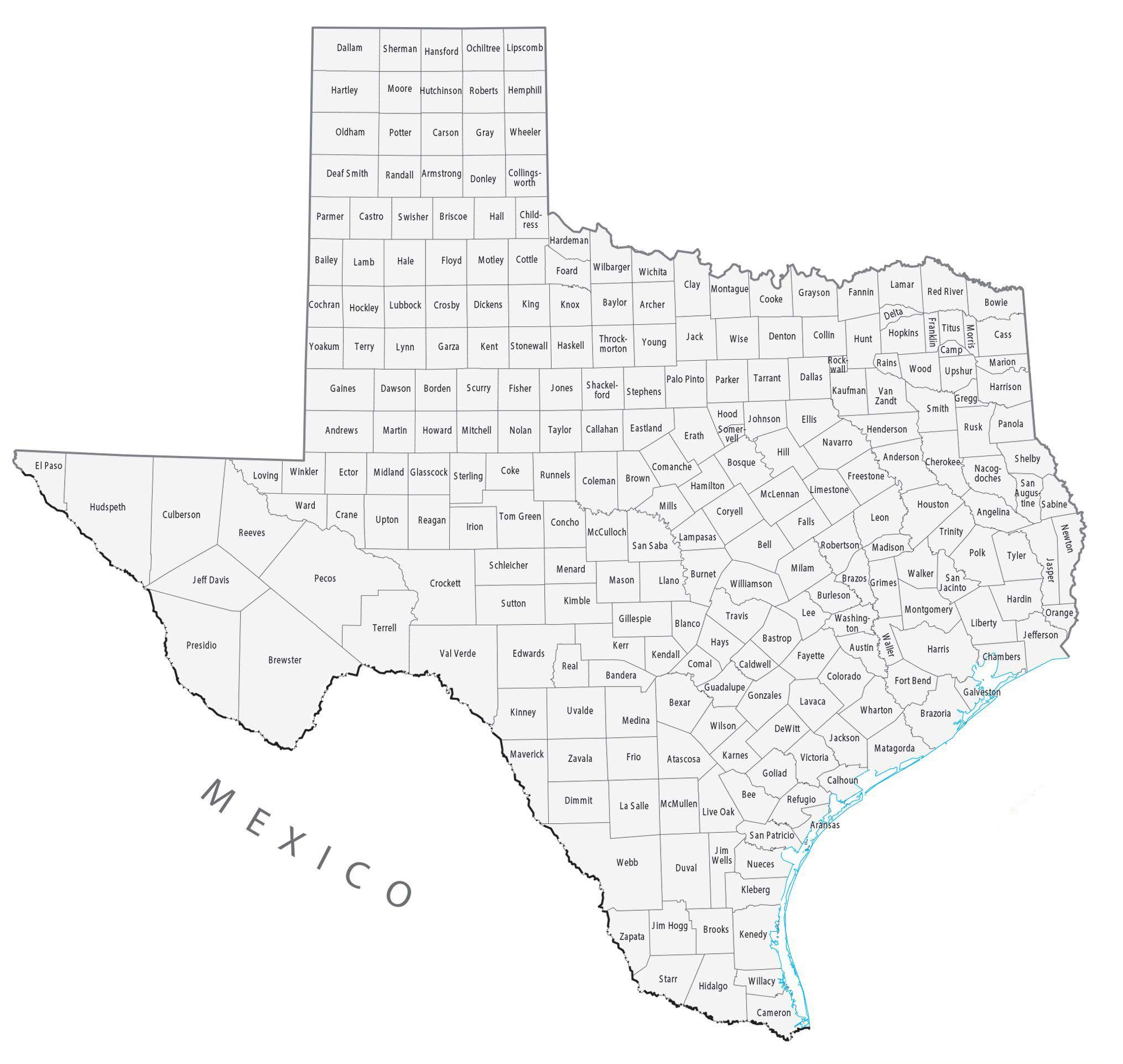
When considering sheer geographical expanse, Loving County stands out. Located in West Texas, it is the smallest in population but surprisingly substantial in land area. While it might not be a primary tourist destination in the same vein as some of Texas’s major cities, its vast, open spaces offer a glimpse into the quintessential West Texas landscape, characterized by rugged terrain and a sparse population that emphasizes self-reliance and the enduring spirit of the frontier. Its area contributes to the overall count of 254 counties, representing a unique facet of Texan geography.
The Smallest County by Area: Rockwall County
Conversely, Rockwall County, situated in the Dallas-Fort Worth metroplex, is the smallest county in Texas by land area. Despite its limited geographical footprint, it is home to a significant and growing population. This proximity to a major metropolitan area has led to rapid development and a dynamic community, demonstrating that even a small county can host a vibrant and economically active region. Its presence, despite its size, is vital to the complete count of 254 counties.
The Most Populous County: Harris County
The population distribution across Texas counties is as varied as their landmass. Harris County, home to the city of Houston, is the most populous county in Texas, and consistently ranks among the most populous in the United States. Its population exceeds that of many entire states, highlighting the immense scale of its urban center and the surrounding metropolitan area. Harris County is a hub of economic activity, cultural diversity, and a major gateway for international travel and commerce.
The Least Populous County: Loving County
As mentioned earlier, Loving County holds the distinction of being the least populous county in Texas. With a population that often hovers in the low hundreds, it represents the extreme end of sparse settlement. Life in Loving County is characterized by quietude, a strong sense of community among its few residents, and an economy often tied to the oil and gas industry. It serves as a reminder of the vast, undeveloped expanses that still exist within the borders of Texas.
Navigating Texas: The Importance of Counties for Travelers and Residents
Understanding the county system in Texas is not merely an academic exercise; it has practical implications for anyone planning a visit or residing within the state. For travelers, counties serve as crucial navigational markers and indicators of regional character.
Planning Your Texas Adventure
When planning a trip to Texas, the county system can be an invaluable tool for structuring your itinerary. Texas is so large that it’s often best to focus on specific regions or groups of counties. For instance, if you’re interested in the historic missions and vibrant culture of South Texas, you might focus your exploration on counties like Bexar County, home to San Antonio, or Cameron County in the Rio Grande Valley.
If your interests lie in the rugged beauty of West Texas and its unique geological formations, counties like Culberson County, where Guadalupe Mountains National Park is located, or Jeff Davis County with its observatories, would be key areas to consider. For those seeking the bustling energy of major cities, counties such as Dallas County and Travis County, home to Austin, offer world-class dining, entertainment, and cultural attractions.
Each county’s distinct identity often translates into unique local attractions, culinary specialties, and cultural events. Researching the counties you plan to visit can uncover hidden gems and authentic experiences that might otherwise be missed. The county seat, often a historic town, frequently serves as a focal point for local history and community life.

Local Governance and Services
For residents, counties are the bedrock of local governance and service provision. They are responsible for critical infrastructure, public safety, and essential administrative functions. The efficiency and effectiveness of these county-level services directly impact the quality of life for millions of Texans.
Understanding which county you reside in or are visiting is also important for practical matters such as voter registration, property tax information, and emergency services. Local law enforcement, emergency medical services, and disaster response are typically coordinated at the county level. Knowing your county can help you access these vital resources quickly and efficiently.
The 254 counties of Texas, each with its own history, geography, and community, collectively form the intricate administrative and social fabric of this vast and diverse state. Whether you are planning an epic road trip or simply seeking to understand the structure of the Lone Star State, the county system provides a fundamental framework for exploration and comprehension.
LifeOutOfTheBox is a participant in the Amazon Services LLC Associates Program, an affiliate advertising program designed to provide a means for sites to earn advertising fees by advertising and linking to Amazon.com. Amazon, the Amazon logo, AmazonSupply, and the AmazonSupply logo are trademarks of Amazon.com, Inc. or its affiliates. As an Amazon Associate we earn affiliate commissions from qualifying purchases.