
The question of teacher salaries in Texas is a multifaceted one, influenced by a dynamic interplay of district funding, experience levels, subject matter, and regional economic conditions. While specific figures can fluctuate, understanding the general trends and influencing factors provides a clearer picture of the compensation landscape for educators across the Lone Star State. This exploration delves into average salaries, the impact of various elements on pay, and the broader context within which teachers operate.
Average Teacher Salaries in Texas
On average, teachers in Texas can expect to earn a salary that is competitive within the national context, though variations can be significant. The National Education Association (NEA) consistently reports on teacher compensation, and their data often places Texas in the middle tier of states when it comes to average teacher pay. For the most recent reporting periods, average salaries have hovered around the $60,000 to $65,000 mark. However, it is crucial to recognize that this is an aggregate figure. The actual salary an individual teacher receives can deviate substantially from this average based on a multitude of factors.
Factors Influencing Teacher Pay
Several key elements contribute to the variation in teacher salaries across Texas:
District Wealth and Funding
The financial health of a school district is arguably the most significant determinant of teacher salaries. Wealthier districts, often located in more affluent suburban areas or those with robust commercial tax bases, tend to have more resources to allocate to teacher compensation. This can manifest in higher starting salaries, more generous pay raises, and better benefits packages. Conversely, districts in economically disadvantaged areas may struggle to offer competitive salaries, leading to challenges in attracting and retaining high-quality educators. The reliance on local property taxes for a substantial portion of school funding creates these disparities.
Experience Level and Years of Service
Like most professions, teaching in Texas rewards experience. Entry-level teachers typically start at the lower end of the salary scale, with their pay increasing incrementally with each additional year of service. Salary schedules, often referred to as “steps,” are common in many districts, detailing the pay increase a teacher receives for completing a specific number of years in the classroom. This structured progression incentivizes teachers to remain in the profession long-term.
Educational Attainment and Certifications
While a bachelor’s degree is the standard requirement for teaching in Texas, teachers who pursue advanced degrees, such as a master’s or doctorate, may see a corresponding increase in their salary. Many districts offer stipends or salary supplements for educators holding advanced degrees. Additionally, specialized certifications, particularly in high-demand subject areas like special education, bilingual education, or advanced mathematics and science, can also command higher pay.
Subject Area and Demand
Certain subject areas are consistently in higher demand, and Texas districts often offer financial incentives to attract teachers in these critical fields. Teachers specializing in STEM (Science, Technology, Engineering, and Mathematics) subjects, as well as special education and bilingual education, may find themselves earning more due to the ongoing shortages in these areas. The scarcity of qualified educators in these fields allows districts to compete more aggressively for talent.
Geographic Location within Texas
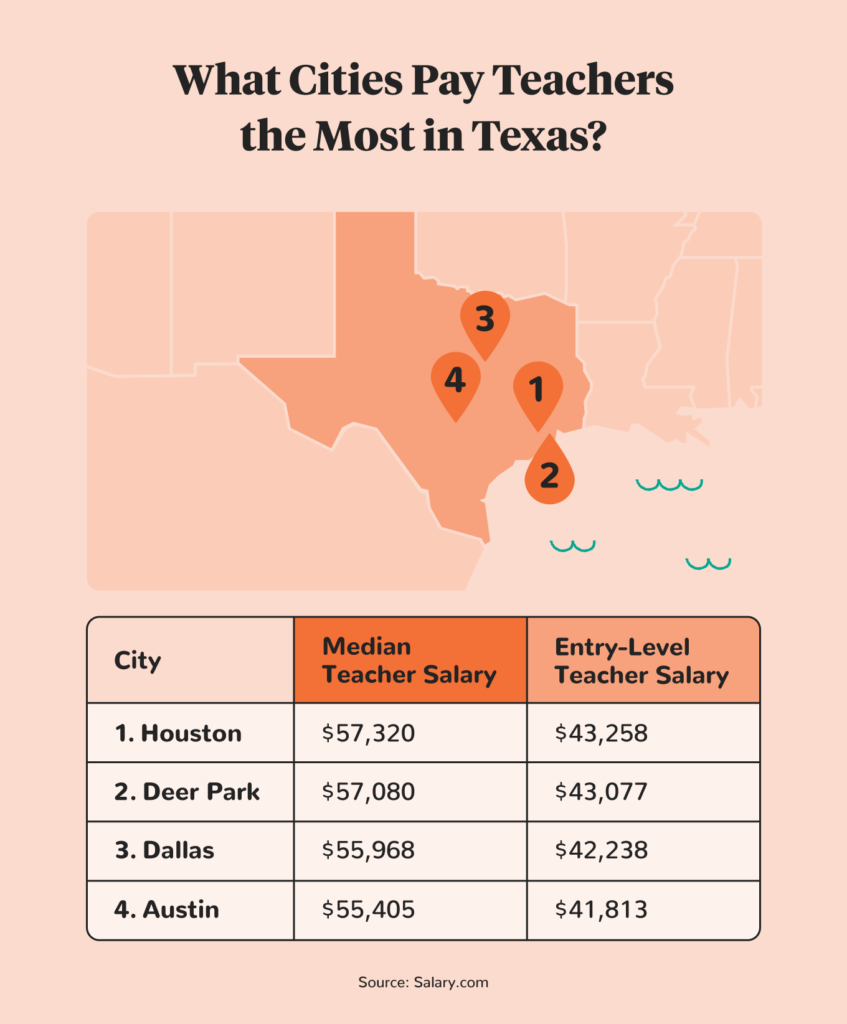
Texas is a vast state, and the cost of living and economic conditions vary significantly from one region to another. Major metropolitan areas like Houston, Dallas, San Antonio, and Austin often have higher average teacher salaries compared to rural or smaller town districts. This is partly due to the increased cost of living in these urban centers and the greater competition for skilled professionals. However, even within these large cities, individual school districts can have different salary structures.
Understanding Teacher Salary Schedules
Most Texas school districts utilize a structured salary schedule to determine teacher compensation. These schedules are typically based on a matrix that combines years of experience with the highest degree earned.

Components of a Salary Schedule
- Step (Experience): This column represents the number of years a teacher has completed in the profession. Each step typically corresponds to a predetermined salary increase.
- Lane (Education): This column denotes the teacher’s highest level of educational attainment. Common lanes include Bachelor’s degree, Master’s degree, and Doctorate degree. Some districts may also have lanes for additional graduate hours or specific certifications.
- Base Salary: The intersection of a specific step and lane on the schedule determines the teacher’s base salary.
- Additional Stipends and Supplements: Beyond the base salary, teachers may receive additional compensation for various roles or responsibilities. These can include coaching extracurricular activities (e.g., football, debate), advising clubs, leading departments, or taking on administrative duties outside of their regular teaching load.
How to Interpret a Salary Schedule
When reviewing a school district’s salary schedule, prospective teachers should look for the starting salary for their experience level and educational background. They should also examine the potential for salary growth over time. Understanding how quickly one can advance on the “steps” and whether additional compensation is available for professional development or advanced degrees can provide a long-term financial outlook.
Beyond the Base Salary: Benefits and Other Compensation
While the base salary is a primary component of a teacher’s compensation package, it is not the only factor contributing to their overall financial well-being. Texas school districts typically offer a range of benefits that add significant value to a teacher’s employment.
Health Insurance and Retirement Plans
- Health Insurance: Most districts provide health insurance coverage for teachers and often contribute a significant portion of the premium. The quality and cost-sharing of these plans can vary considerably between districts.
- Retirement: Public school teachers in Texas are part of the Teacher Retirement System of Texas (TRS). TRS is a defined-benefit pension plan, meaning that upon retirement, eligible educators receive a guaranteed monthly income for life, based on their years of service and average final compensation. Both teachers and the state contribute to the TRS fund.
Other Perks and Incentives
Some districts may offer additional incentives, such as:
- Signing Bonuses: Particularly for hard-to-fill positions or in high-demand areas.
- Retention Bonuses: To encourage experienced teachers to remain with the district.
- Housing Assistance: In some high-cost-of-living areas, certain districts might offer programs to help teachers with housing expenses.
- Professional Development Opportunities: While not direct monetary compensation, access to funded professional development can enhance a teacher’s skills and future earning potential.
Challenges and Future Outlook for Teacher Salaries in Texas
Despite efforts to improve teacher pay, Texas faces ongoing challenges in adequately compensating its educators. The state’s legislative approach to school finance, including the complexities of its funding formulas, often places constraints on how much districts can afford to spend on salaries.
The Impact of School Finance Reform
Discussions around school finance reform are perennial in Texas. Advocates for increased teacher pay argue that higher salaries are essential to attract and retain talented professionals, which in turn positively impacts student outcomes. However, achieving significant salary increases often requires substantial legislative action and potential shifts in state funding priorities.
Teacher Shortages and Their Economic Implications
The increasing demand for teachers, coupled with what many perceive as inadequate compensation, has led to teacher shortages in various subject areas and geographic regions across Texas. These shortages can result in larger class sizes, increased workload for existing teachers, and the hiring of less-qualified individuals to fill vacancies. Addressing these shortages necessitates a serious look at the economic viability of the teaching profession.

Advocacy and Potential for Change
Teacher advocacy groups, parent organizations, and legislative bodies are continuously engaged in discussions about how to improve the financial standing of teachers in Texas. Potential avenues for improvement include increased state funding for teacher salaries, incentives for teachers in critical shortage areas, and policies that support more equitable distribution of resources among school districts. The future of teacher pay in Texas will likely depend on the ongoing dialogue and commitment to valuing the critical role educators play in the state’s future.
LifeOutOfTheBox is a participant in the Amazon Services LLC Associates Program, an affiliate advertising program designed to provide a means for sites to earn advertising fees by advertising and linking to Amazon.com. Amazon, the Amazon logo, AmazonSupply, and the AmazonSupply logo are trademarks of Amazon.com, Inc. or its affiliates. As an Amazon Associate we earn affiliate commissions from qualifying purchases.